Categorization skills Normal Animals Worksheets for Ages 6-9
3 filtered results
-
From - To
Welcome to our "Categorization Skills Normal Animals Worksheets" designed for children ages 6-9! These engaging worksheets offer young learners the opportunity to develop essential categorization skills through fun, interactive activities centered around animals. Kids will explore various animal types, learn to group them based on characteristics, and enhance their critical thinking abilities in a playful format. Perfect for parents and educators alike, these resources foster a deeper understanding of the animal kingdom while promoting cognitive development. Download our worksheets today and watch your child's categorization skills grow as they embark on an exciting educational adventure!
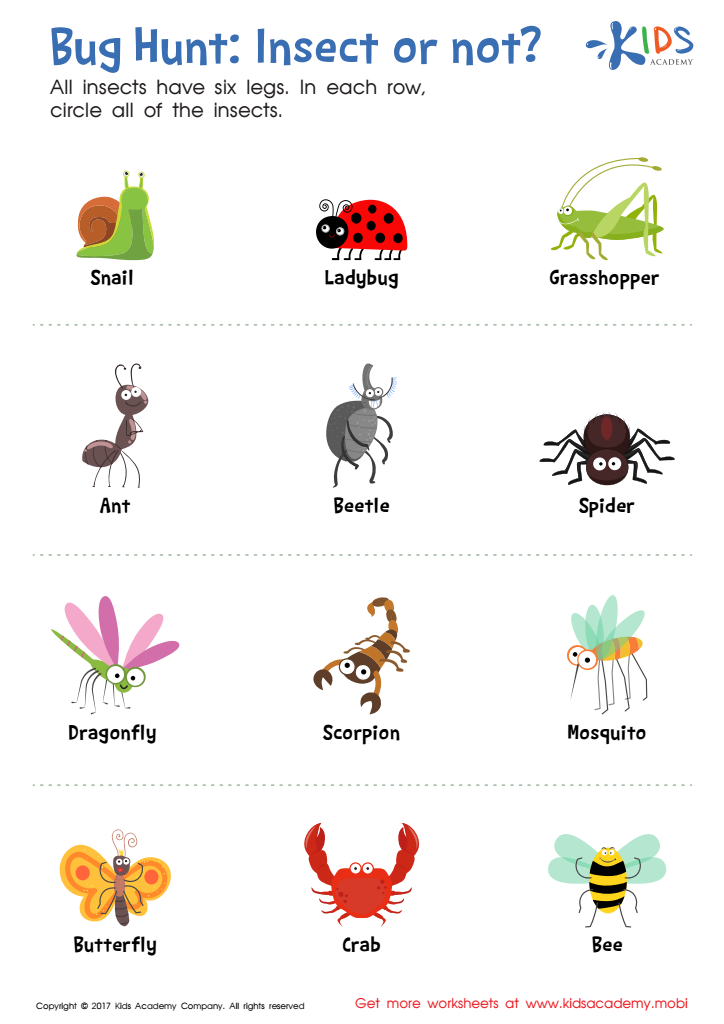
 Assign to My Students
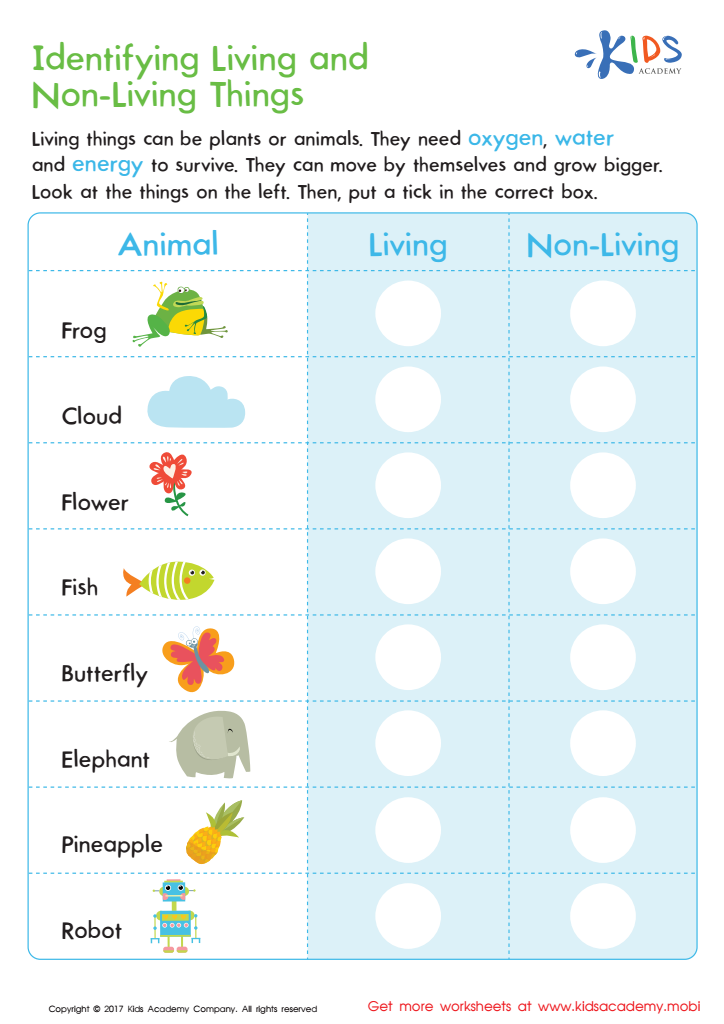
Identifying Living or Non–living Worksheet
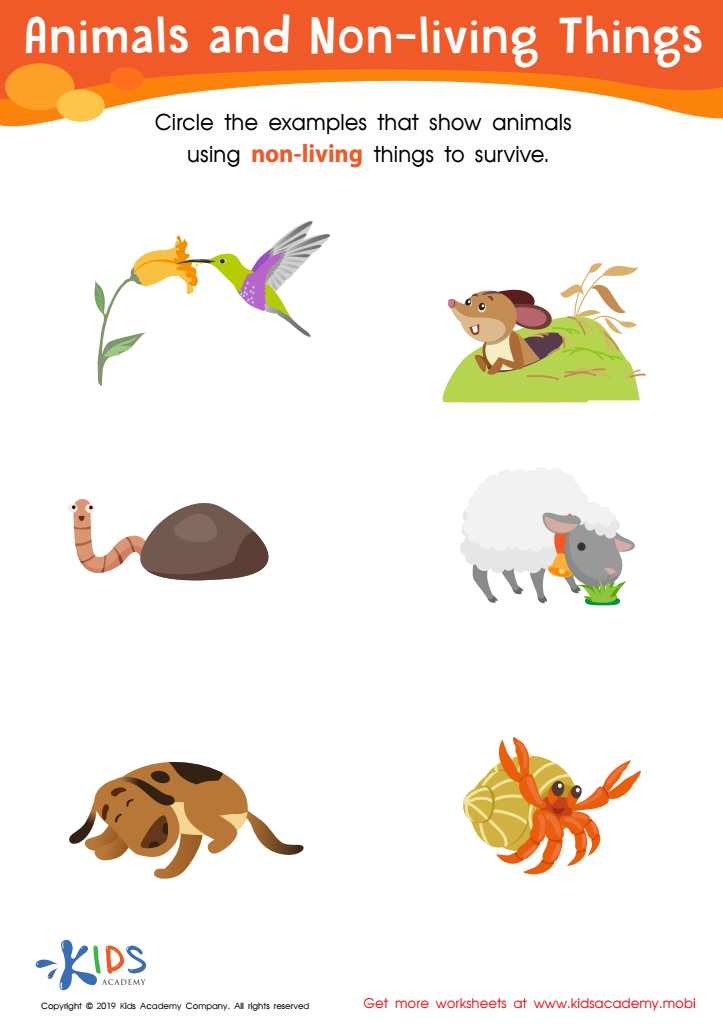
Animals and Non-Living Things Worksheet


%20(1).jpg)





Categorization skills are essential cognitive abilities that help children understand and organize the world around them. For children aged 6-9, particularly when it comes to learning about normal animals, these skills serve several critical purposes. First, they enable children to classify animals based on characteristics such as habitat, size, diet, or appearance. This not only enhances their understanding of biodiversity but also fosters critical thinking as they recognize relationships and differences among species.
Moreover, categorization skills contribute to the development of language and vocabulary. As children learn to label and categorize animals, they expand their linguistic capabilities and improve their communication skills. Engaging with animals in a structured way encourages curiosity and exploration, which are vital components of a child's learning process.
Parents and teachers should prioritize these skills because they lay the groundwork for more advanced learning in science and mathematics, where categorization is often used to solve problems. Furthermore, these skills nurture decision-making and analytical thinking, which are crucial in everyday life. By supporting the development of categorization skills related to normal animals, adults can help children build a solid foundation for lifelong learning and critical engagement with the world around them.








