Critical Thinking Normal Animals Worksheets for Ages 6-9
4 filtered results
-
From - To
Unlock the power of critical thinking with our engaging “Normal Animals Worksheets” for ages 6-9! Designed to stimulate young minds, these worksheets encourage students to analyze, question, and explore the fascinating world of animals. Featuring fun illustrations and thought-provoking questions, children will develop essential reasoning skills while learning about various species and their environments. Each worksheet promotes creativity and problem-solving, helping kids to connect ideas and think independently. Perfect for teachers and parents looking to enhance their child’s learning experience, these activities provide a fun way to build a sturdy foundation in critical thinking and scientific awareness. Dive into discovery today!
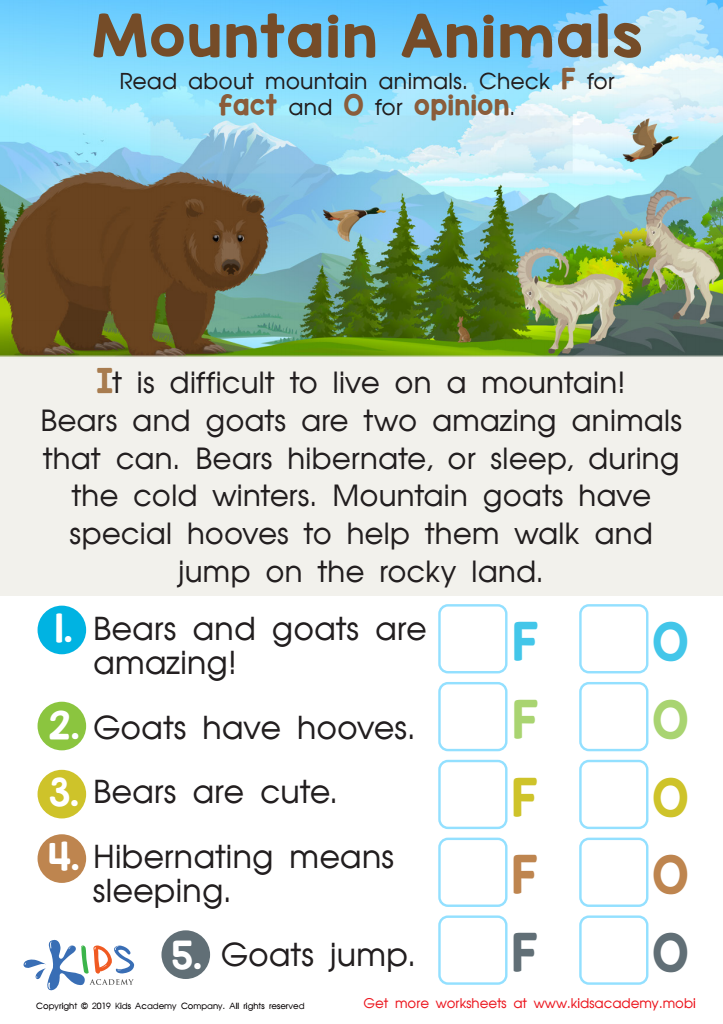
Mountain Animals Worksheet
 Assign to My Students
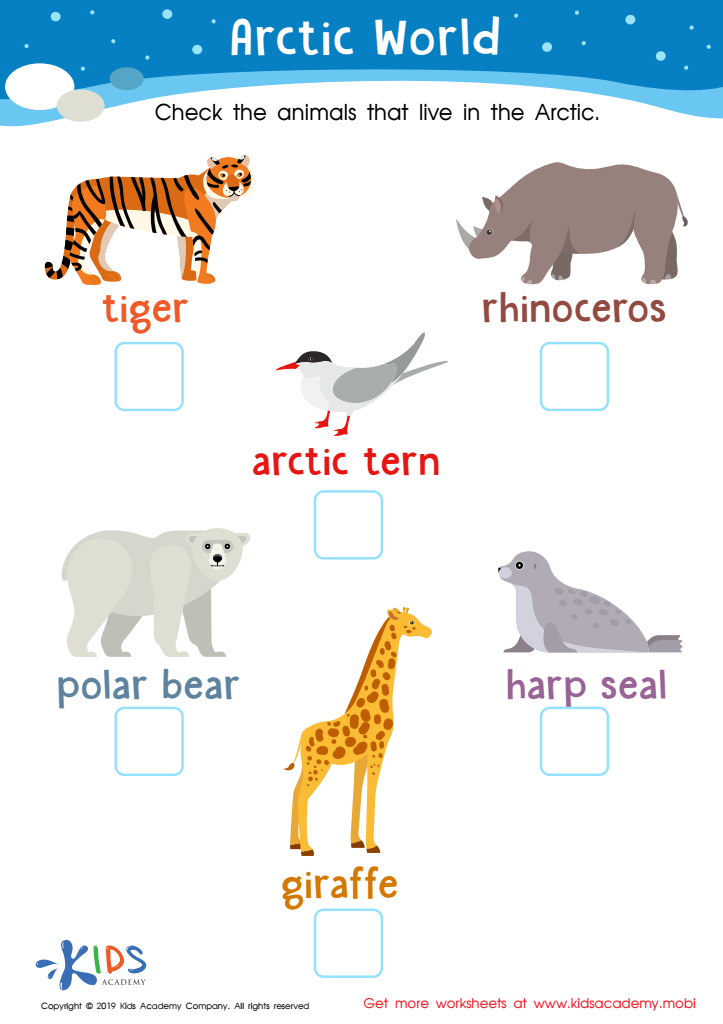
Arctic World Worksheet
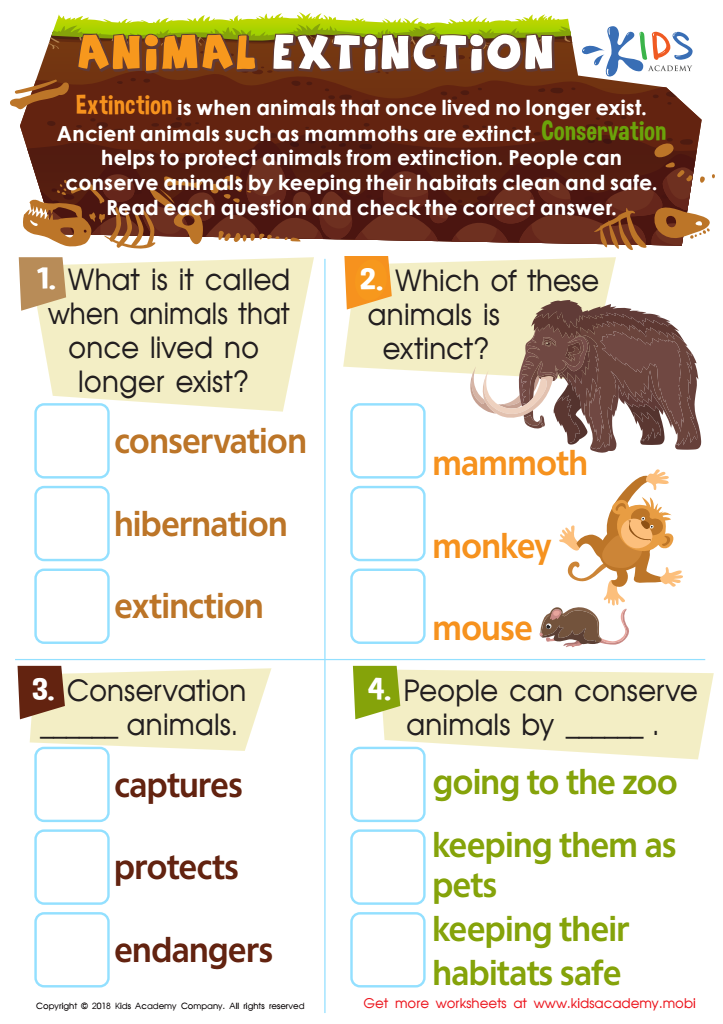
Animal Extinction Worksheet
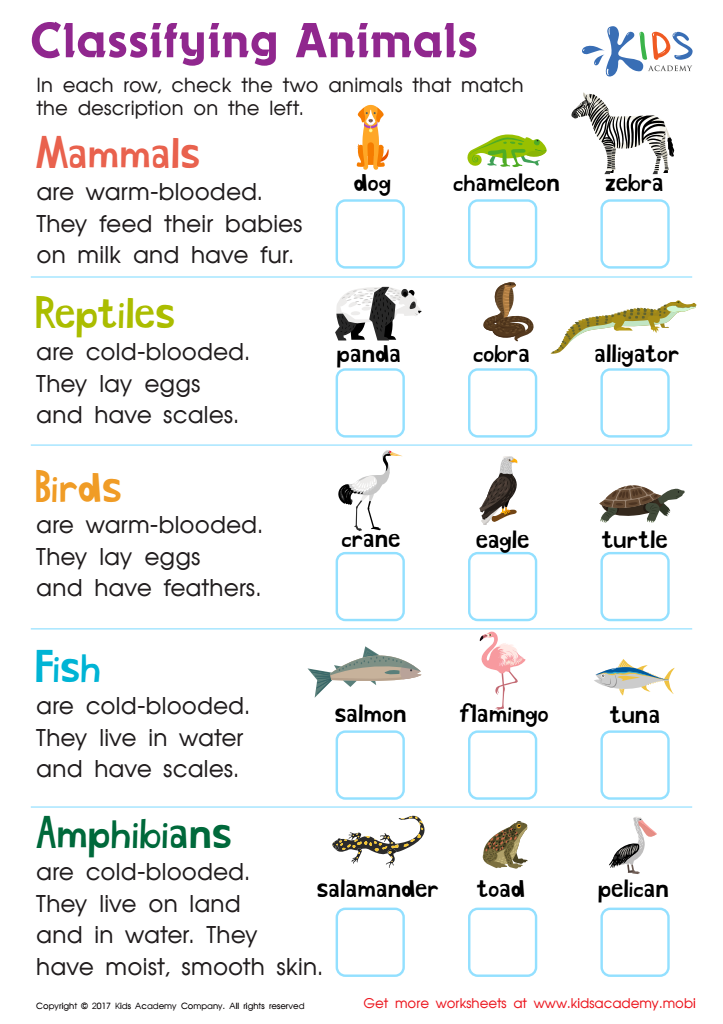
Classifying Animals Worksheet






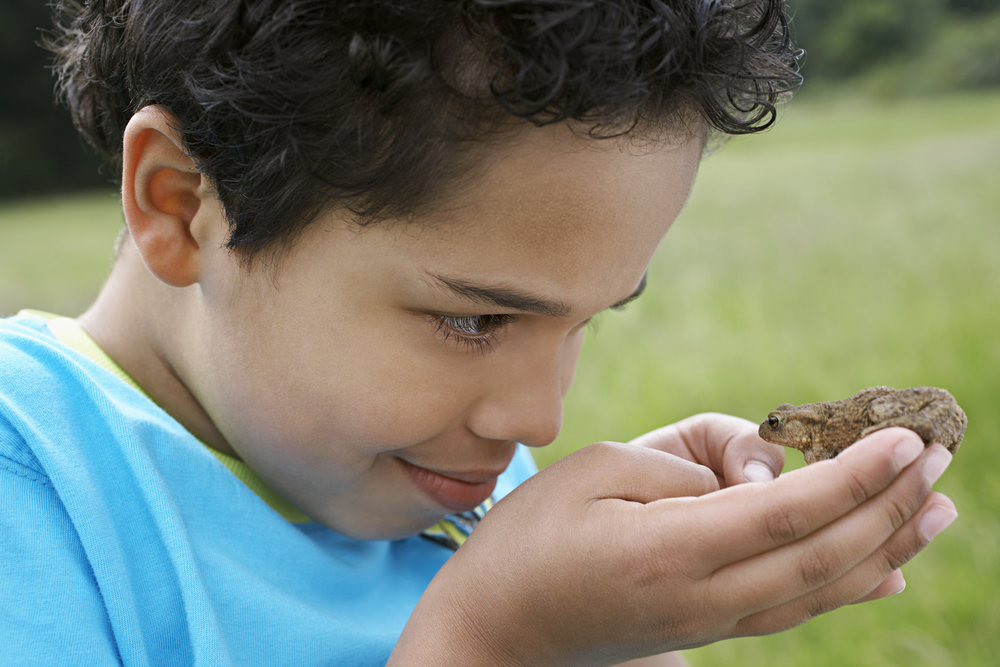

Critical Thinking Normal Animals is a vital educational tool for parents and teachers of children ages 6-9. At this developmental stage, children are naturally curious and eager to explore the world around them. Teaching them critical thinking skills through the lens of familiar animals allows for engaging and relatable learning.
By incorporating critical thinking exercises around animals, children can learn to analyze, evaluate, and synthesize information. They are encouraged to ask questions like, "Why do animals behave a certain way?" or "How does an animal's habitat affect its survival?" Such inquiries foster a deeper understanding of biology, ecology, and even social studies concepts, stimulating their imagination and intellectual growth.
Furthermore, critical thinking enhances problem-solving abilities, enabling children to tackle challenges creatively. Engaging in discussions about animals—like whether a specific habitat is suitable for a certain species—promotes not only cognitive skills but also encourages teamwork and communication through group activities.
Parents and teachers should care about Critical Thinking Normal Animals because it equips children with essential life skills. As they develop the ability to think critically, they become better prepared for future academic challenges and life in an increasingly complex world. Ultimately, nurturing these skills sets the foundation for lifelong learning.








