Understanding ecosystems Normal Worksheets for 6-Year-Olds
5 filtered results
-
From - To
Welcome to our vibrant world of "Understanding Ecosystems" worksheets designed for 6-year-olds! Our engaging and educational worksheets introduce young learners to the fascinating relationships between plants, animals, and their environments. Through fun activities and colorful illustrations, children will explore different ecosystems, understand food chains, and discover the importance of biodiversity. Each printable worksheet is crafted to foster curiosity and critical thinking, making science both enjoyable and educational. Perfect for classroom use or at-home learning, our resources provide a solid foundation in understanding the natural world, setting the stage for lifelong environmental awareness and appreciation.
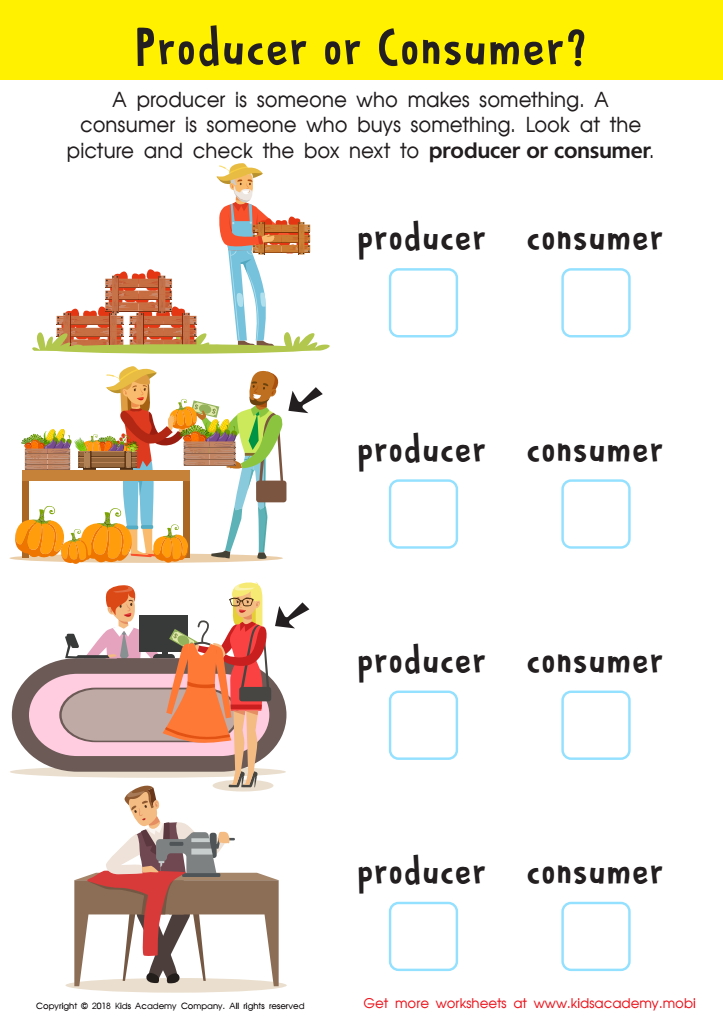
Producer or Consumer? Worksheet
 Assign to My Students
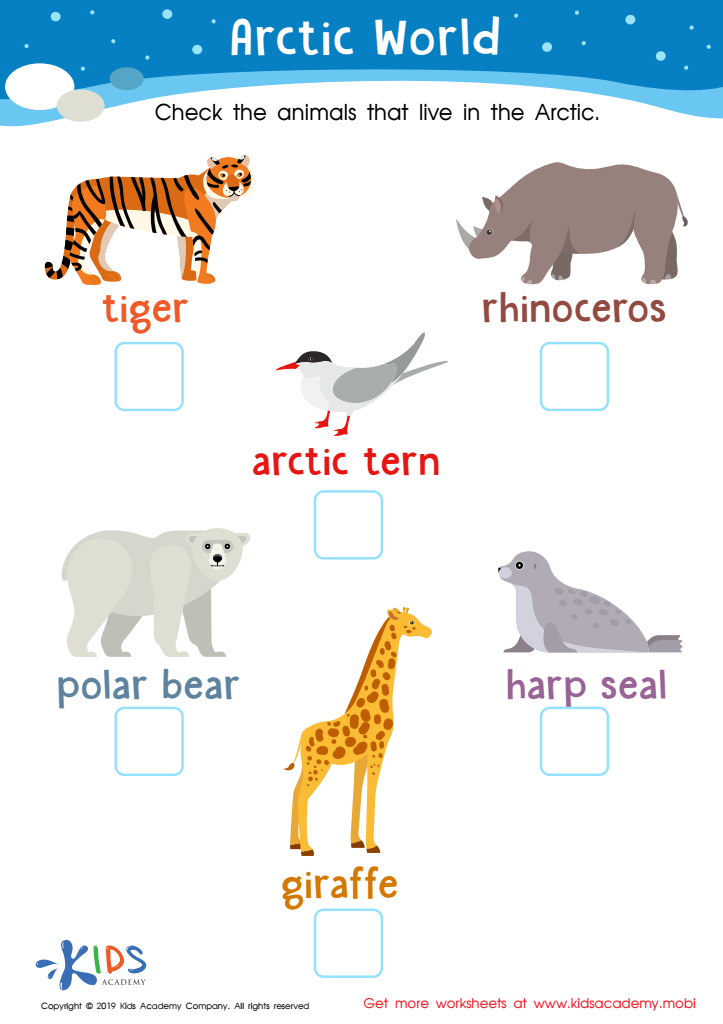
Arctic World Worksheet
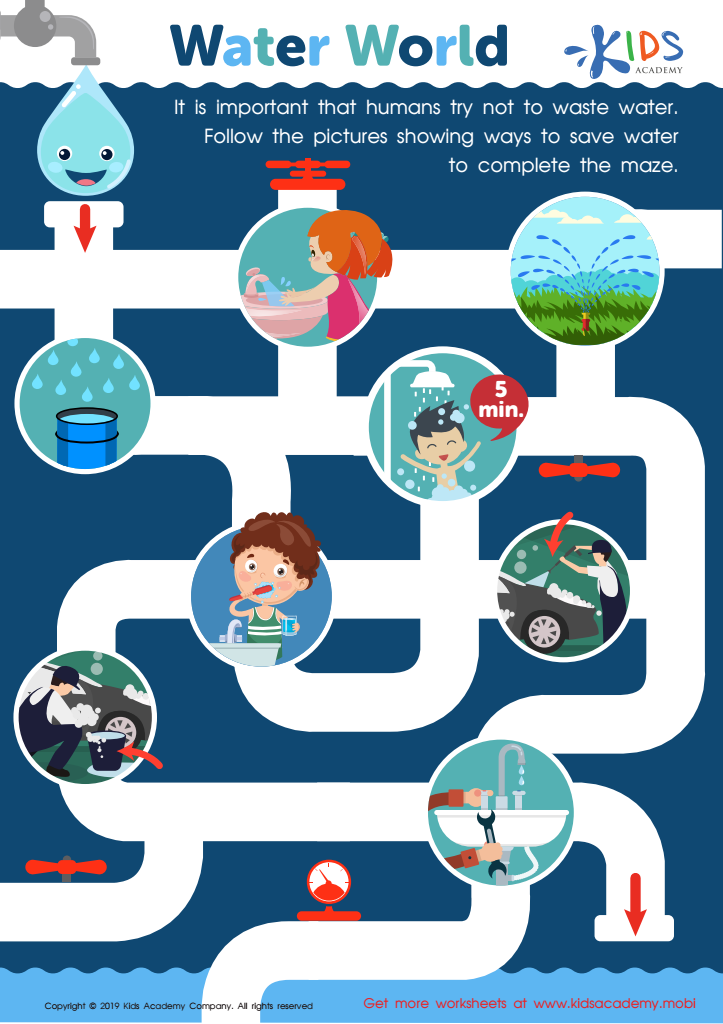
Water World Worksheet
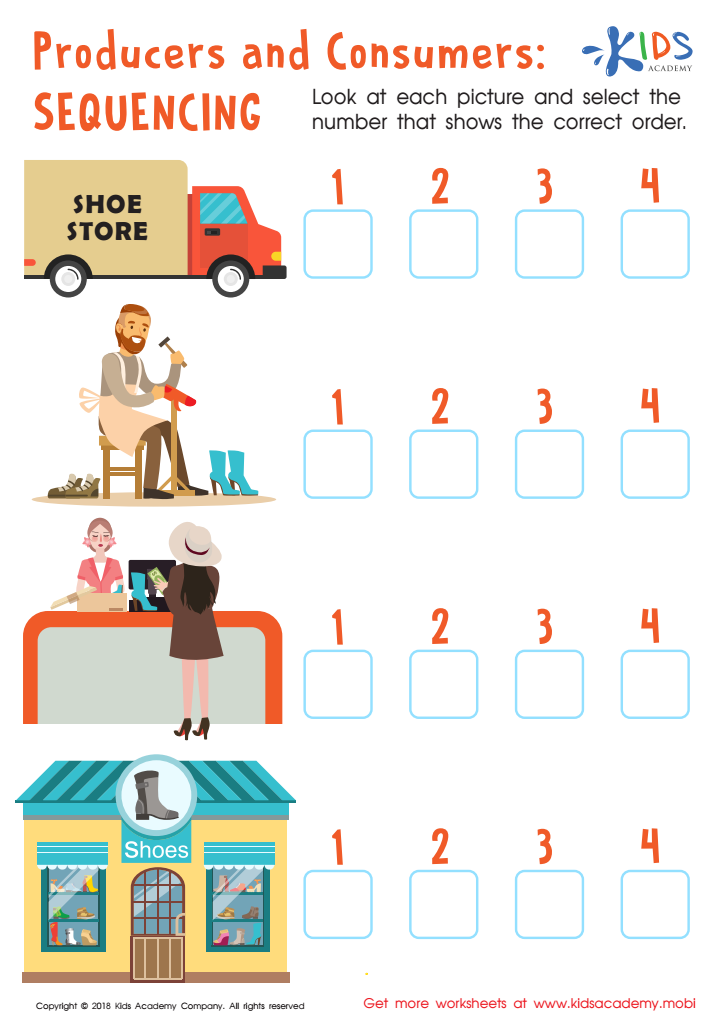
Producers and Consumers: Sequencing Worksheet
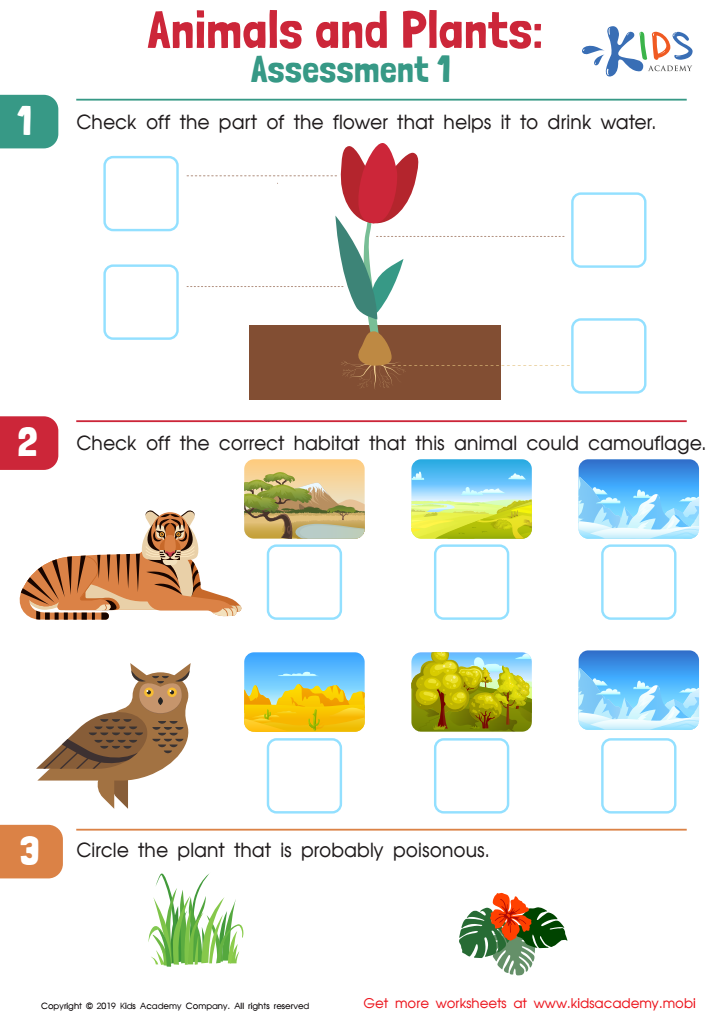
Animals and Plants: Assessment 1 Worksheet







Understanding ecosystems is important for young children because it sets the basis for environmental awareness and stewardship. At six years old, children are naturally curious and open to new concepts. Introducing them to ecosystems – the interconnected relationships between living organisms and their environment – helps them appreciate the natural world around them.
Parents and teachers should prioritize this topic because it fosters responsibility and respect for nature. When children learn about plants, animals, and their habitats, they begin to see the impact that human activities have on the environment. This can inspire them to make eco-friendly choices and develop sustainable habits early on.
Moreover, learning about ecosystems enhances cognitive and scientific skills. It encourages critical thinking as children explore cause-and-effect relationships within nature. For example, understanding how bees pollinate flowers and how animals rely on plants for food deepens their grasp of biology and environmental science. Additionally, hands-on activities, like observing soil or water samples, make science tangible and engaging for young minds.
Starting children on this path early ensures they develop a lifelong respect and care for our planet. By teaching them to value and protect ecosystems, we are nurturing the next generation of environmentally-conscious citizens who will be better equipped to tackle ecological issues in the future.








