Mathematical reasoning Normal Addition & Subtraction Worksheets for 6-Year-Olds
9 filtered results
-
From - To
Enhance your 6-year-old's early math skills with our Mathematical Reasoning Normal Addition & Subtraction Worksheets! These engaging, age-appropriate activities are designed to develop critical thinking and problem-solving abilities through fun exercises. Children will learn to approach addition and subtraction with confidence, improving their understanding of numerical concepts. Each worksheet encourages students to think critically and logically, promoting a solid foundational knowledge of math. Perfect for home or classroom use, our worksheets cater to various learning styles, ensuring that every child can benefit. Discover the joy of learning math today and watch your child thrive with our interactive resources!
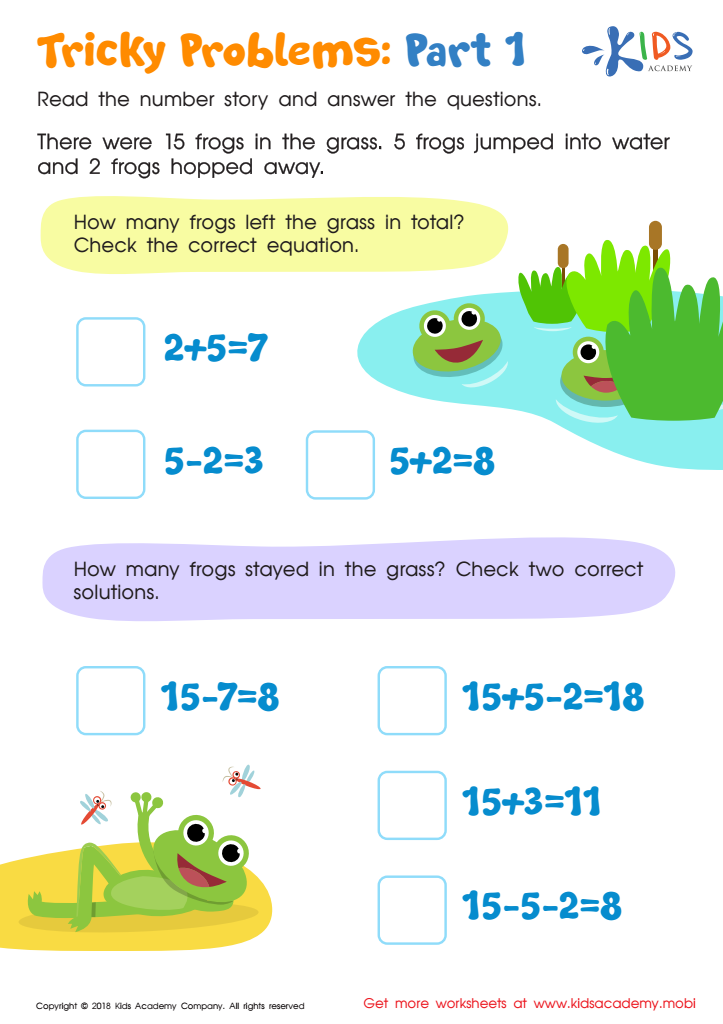
Tricky Problems Worksheet: Part 1
 Assign to My Students
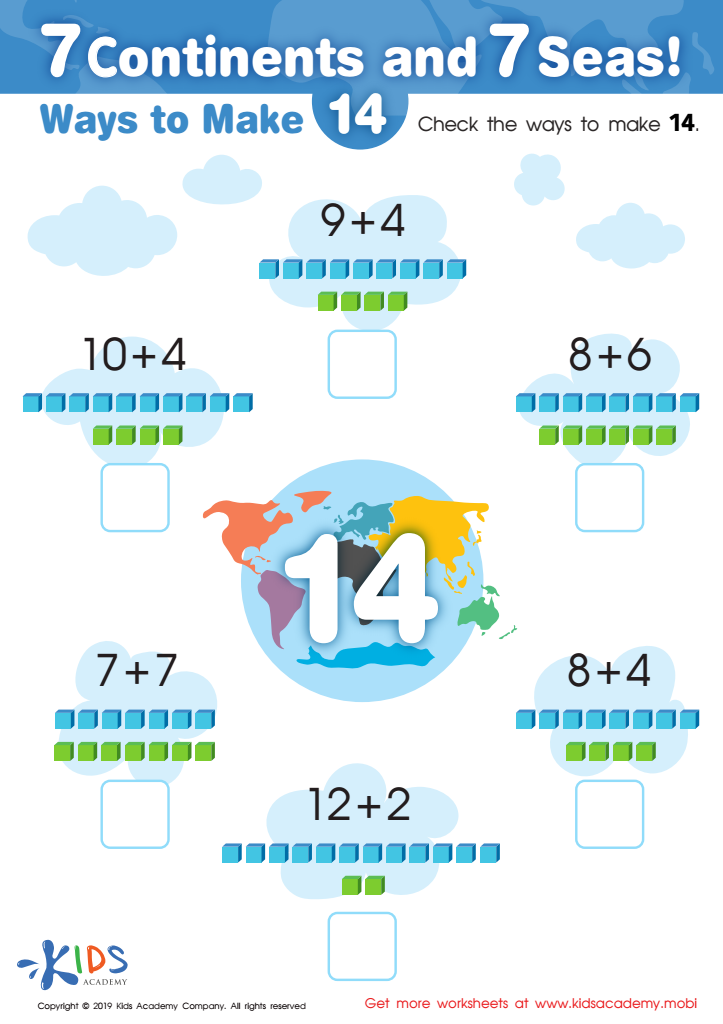
7 Continents and 7 Seas Worksheet
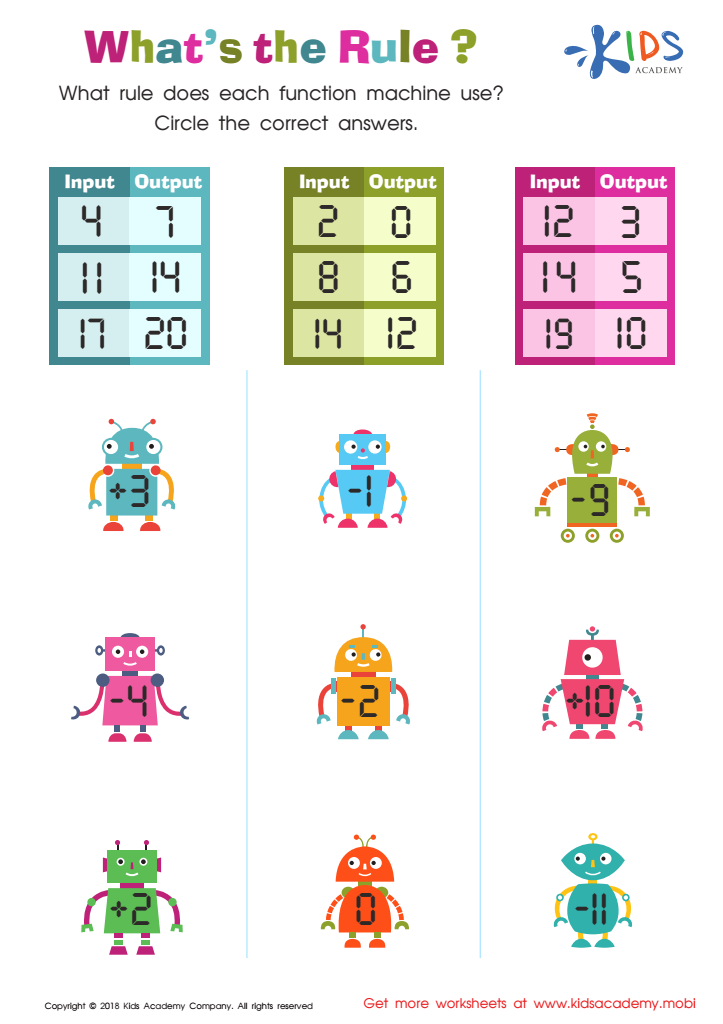
What's the Rule Worksheet
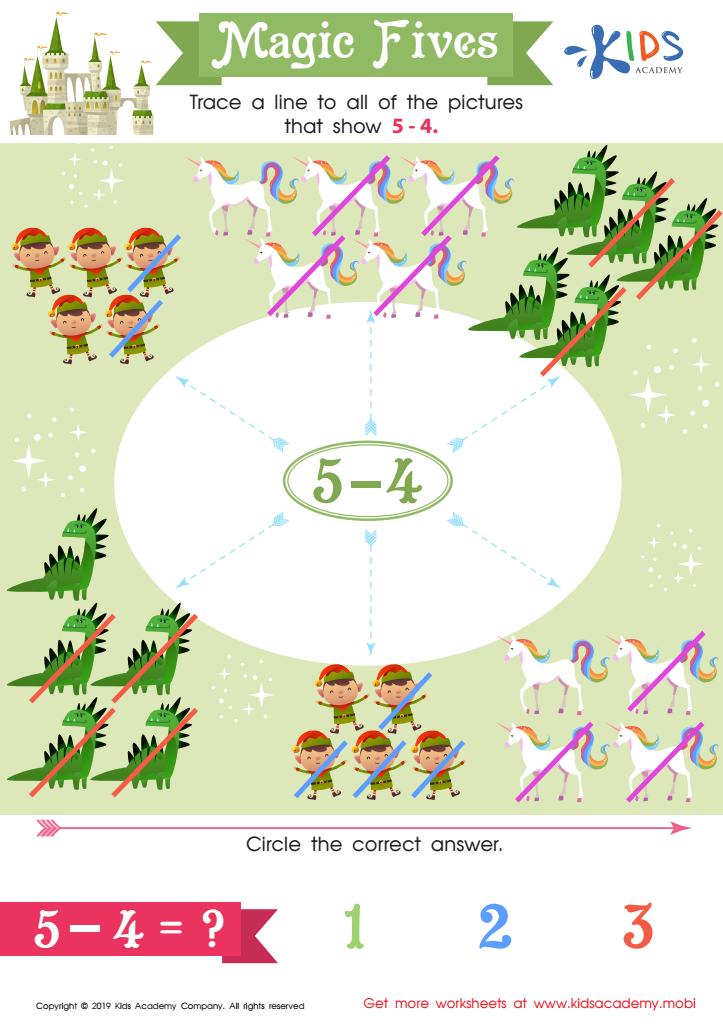
Magic Fives Worksheet
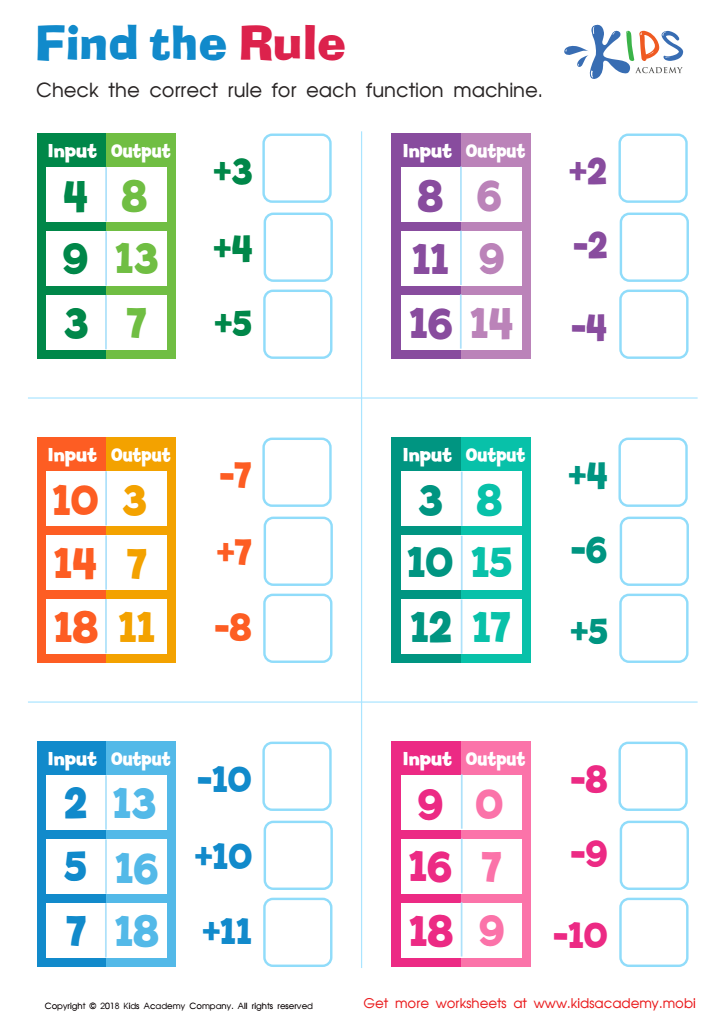
Find the Rule Worksheet
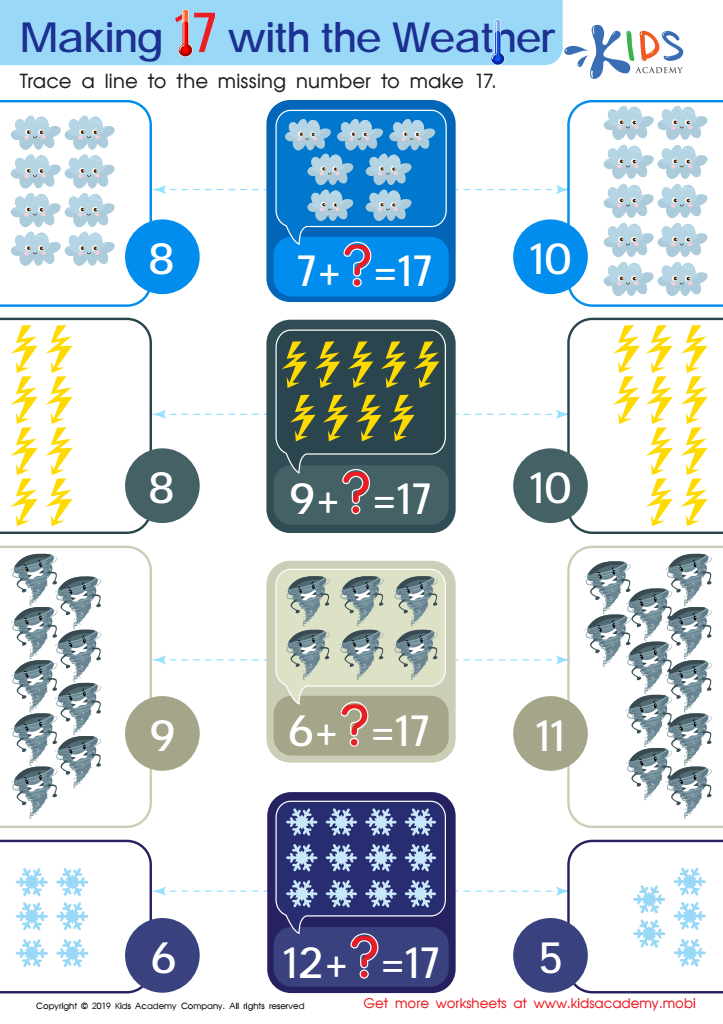
Making 17 with the Weather Worksheet
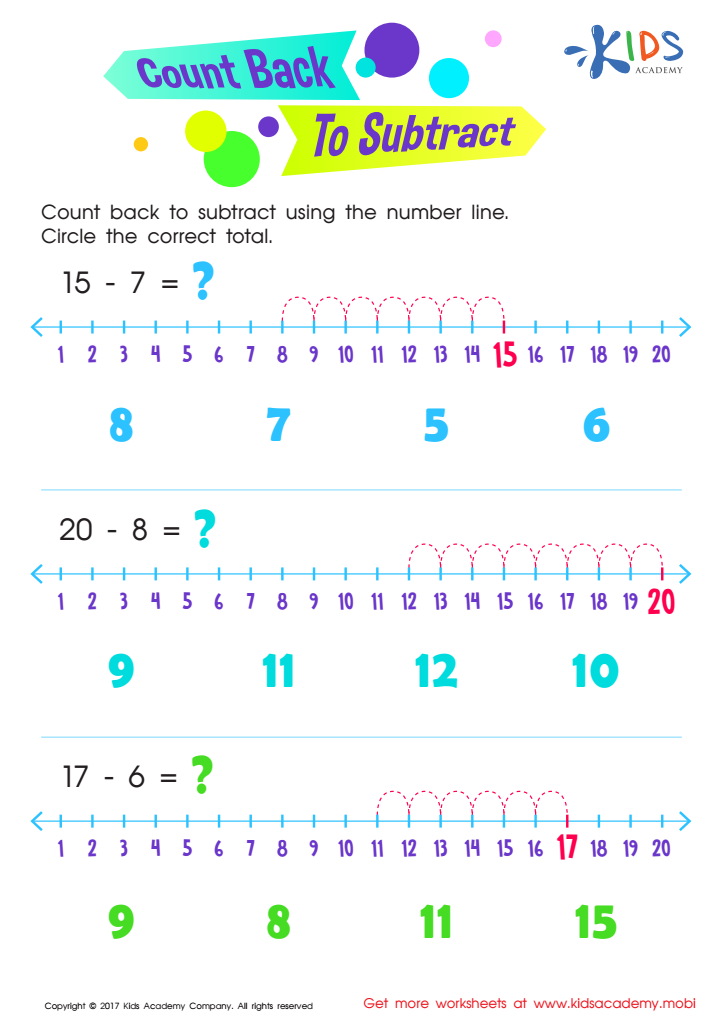
Count Back to Subtract Substraction Worksheet
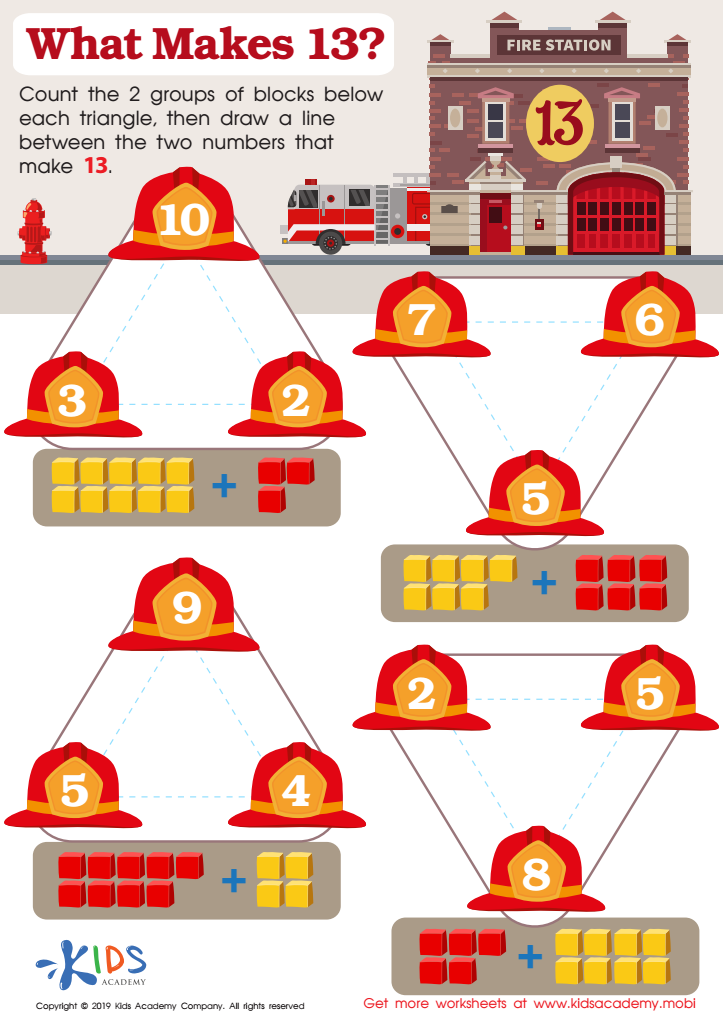
What Makes 13 Worksheet
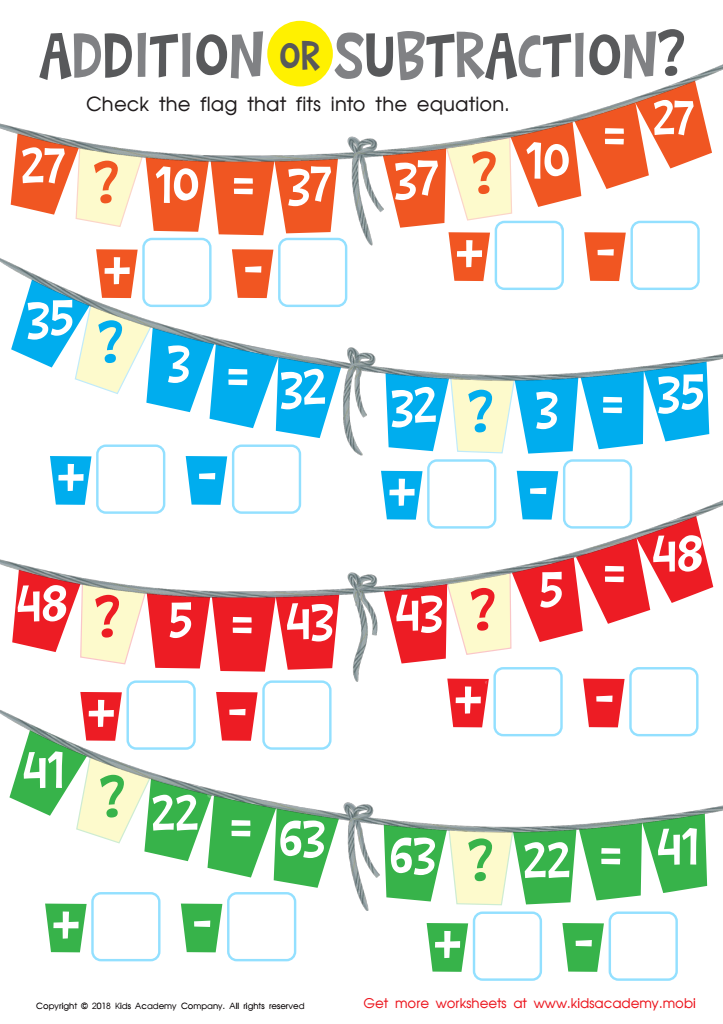
Addition or Subtraction? Worksheet








Mathematical reasoning in normal addition and subtraction is crucial for 6-year-olds as it lays the foundation for their overall learning and cognitive development. At this age, children begin to grasp essential concepts that will influence their future understanding of mathematics. Engaging in addition and subtraction helps them recognize patterns, develop problem-solving skills, and understand relationships between numbers.
Parents and teachers play a pivotal role in nurturing these skills, as early interventions can boost a child's confidence and competence in math. When children successfully solve simple problems, they experience a sense of accomplishment, which enhances their motivation to learn. Furthermore, mathematical reasoning fosters logical thinking, helping children make connections between different concepts, both in math and other subject areas.
Moreover, strong foundational math skills are essential for future academic achievement. In a world that increasingly relies on digital literacy and analytical thinking, a solid understanding of basic math principles will serve children well in their educational journeys and daily lives. Therefore, it is vital for parents and teachers to emphasize normal addition and subtraction, ensuring that children can approach mathematics with curiosity and confidence. Engaging in these critical early strategies can set the stage for lifelong academic success.








