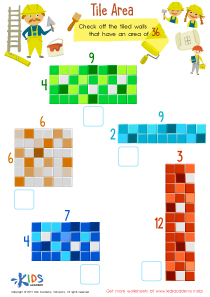
Addition skills Normal Numbers Worksheets for 6-Year-Olds
4 filtered results
-
From - To
Enhance your 6-year-old's math proficiency with our engaging Addition Skills Worksheets for normal numbers! Designed specifically for young learners, these worksheets make practicing addition fun and interactive. Featuring colorful illustrations and age-appropriate exercises, children will develop their math skills through counting and solving problems involving simple sums. Our easily accessible printable worksheets allow for effective at-home learning, reinforcing classroom concepts while fostering a love for math. With a variety of activities tailored to support different learning styles, your child will build confidence and become proficient in addition. Start transforming math lessons into enjoyable experiences today!
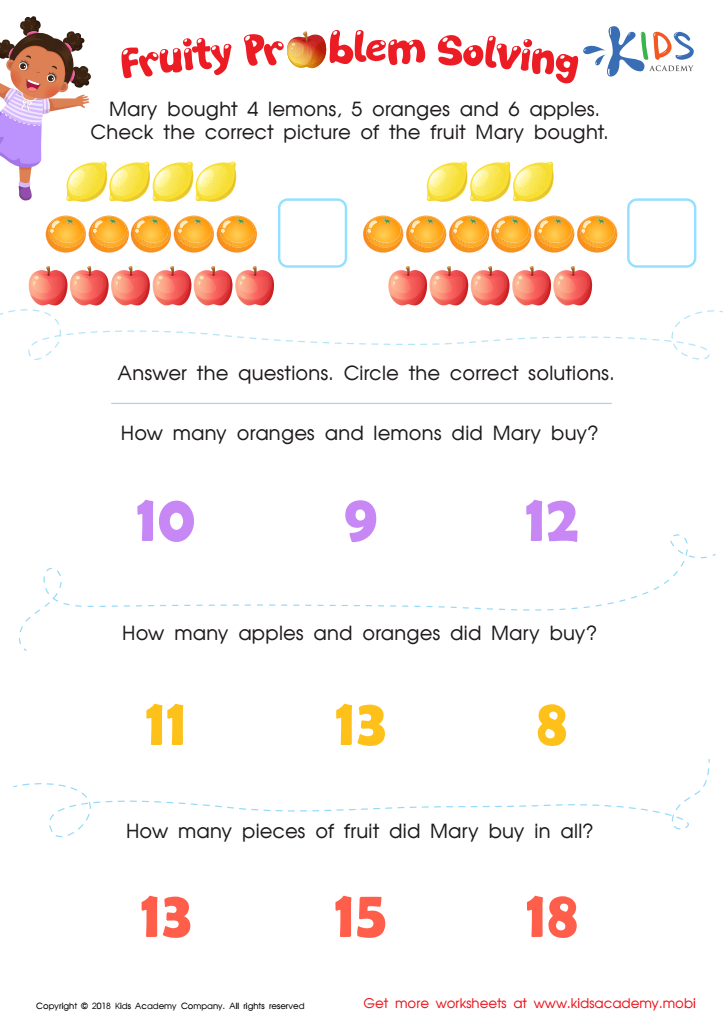
Fruity Problem Solving Worksheet
 Assign to My Students
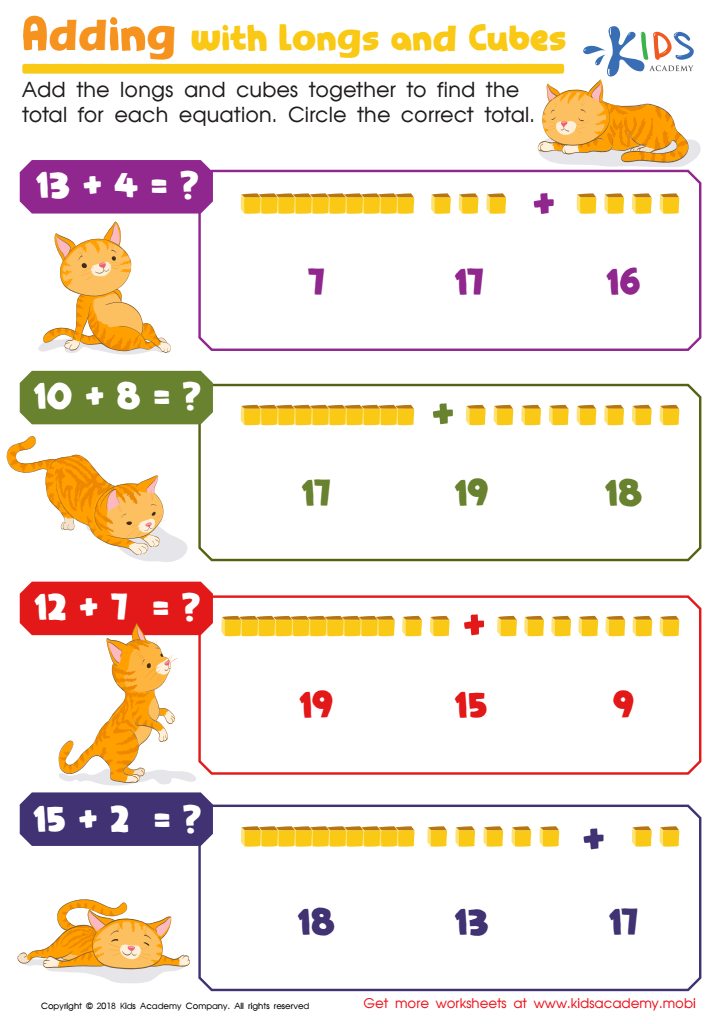
Adding With Longs and Cubes Worksheet
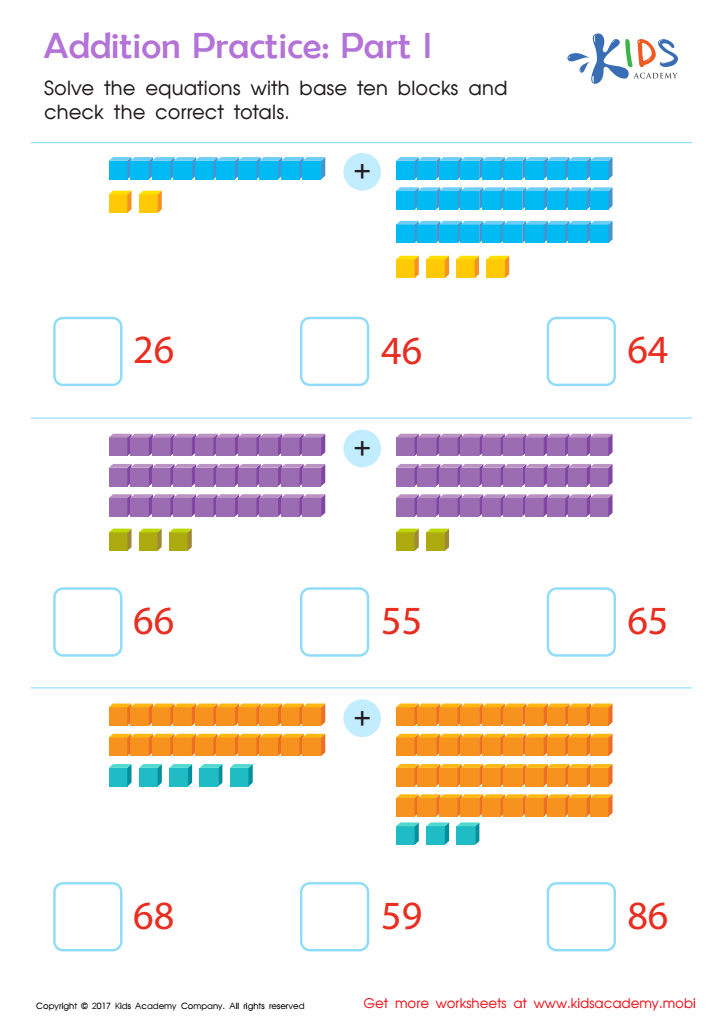
Addition Practice Sheet: Part 1
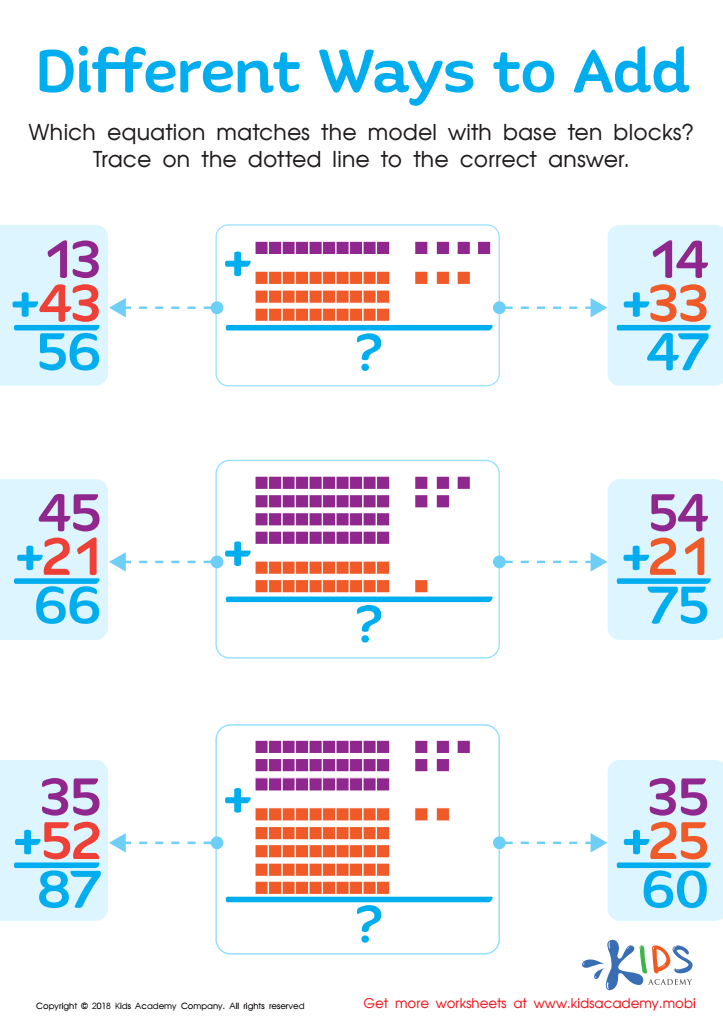
Different Ways to Add Worksheet








Teaching addition skills with normal numbers to 6-year-olds is crucial for several reasons. First and foremost, developing a solid foundation in mathematics at an early age promotes cognitive growth. Mastery of addition enhances problem-solving abilities and critical thinking skills, which are essential for future academic success.
Additionally, math skills are interlinked with everyday life. Early learners who grasp addition can better understand time, money management, and logical reasoning used in real-world scenarios, fostering independence and confidence outside the classroom.
From a psychological standpoint, showcasing early success in math boosts self-esteem and motivation to learn. When children comprehend addition, they experience a sense of achievement that encourages further exploration of mathematical concepts.
Moreover, addition skills prepare children for more complex math operations they will encounter in school, such as subtraction, multiplication, and division. Understanding these foundational skills reduces math-related anxiety and builds a positive attitude toward learning math as they progress.
Lastly, enlisting parental involvement in practicing addition can significantly enhance the learning experience. It strengthens the parent-child bond while emphasizing the importance of education. Consequently, teachers and parents sharing a focus on addition skills can more effectively support children’s academic journeys.