Visual learning enhancement Normal Worksheets for Ages 7-8
4 filtered results
-
From - To
Discover the perfect tools to boost your child's visual learning with our "Visual Learning Enhancement Normal Worksheets" for ages 7-8. These expertly designed worksheets from Kids Academy help young learners develop crucial skills through engaging visual activities. By merging colorful graphics with thought-provoking tasks, our worksheets make learning fun and effective. Ideal for fostering attention to detail, pattern recognition, and spatial awareness, these printables are perfect for both classroom and at-home use. Invest in your child’s educational journey today and watch them thrive in their visual learning capabilities with Kids Academy's trusted resources.
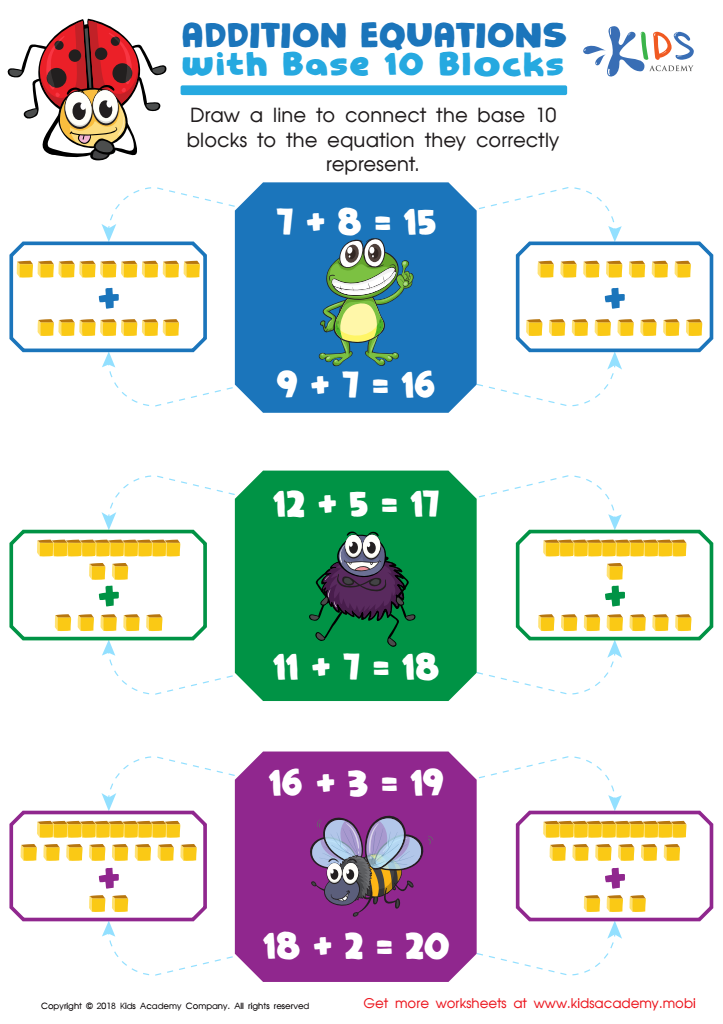
Addition Equations With Base 10 Blocks Worksheet
 Assign to My Students
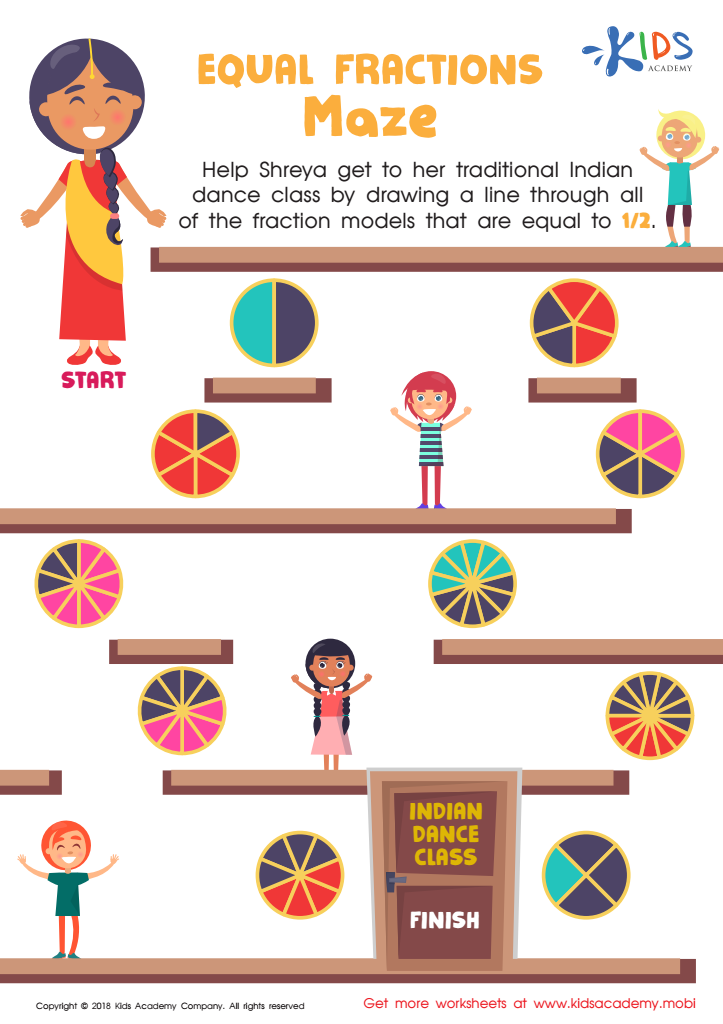
Equal Fractions Maze Worksheet
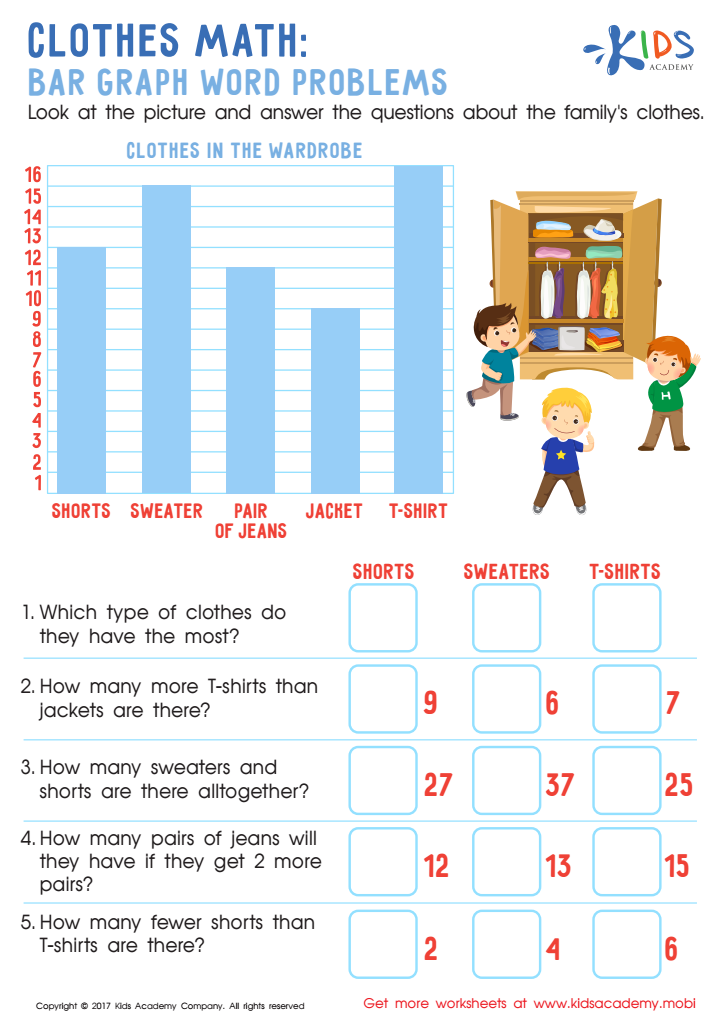
Clothes Math: Bar Graph Word Problems Worksheet
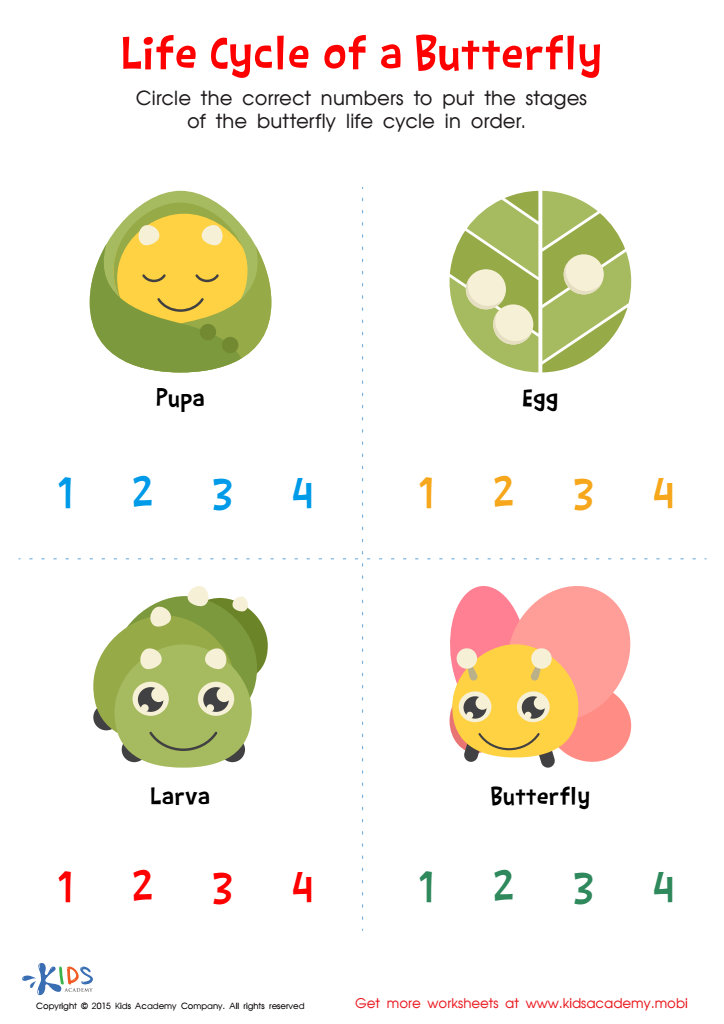
Life Cycle of Butterfly Printable






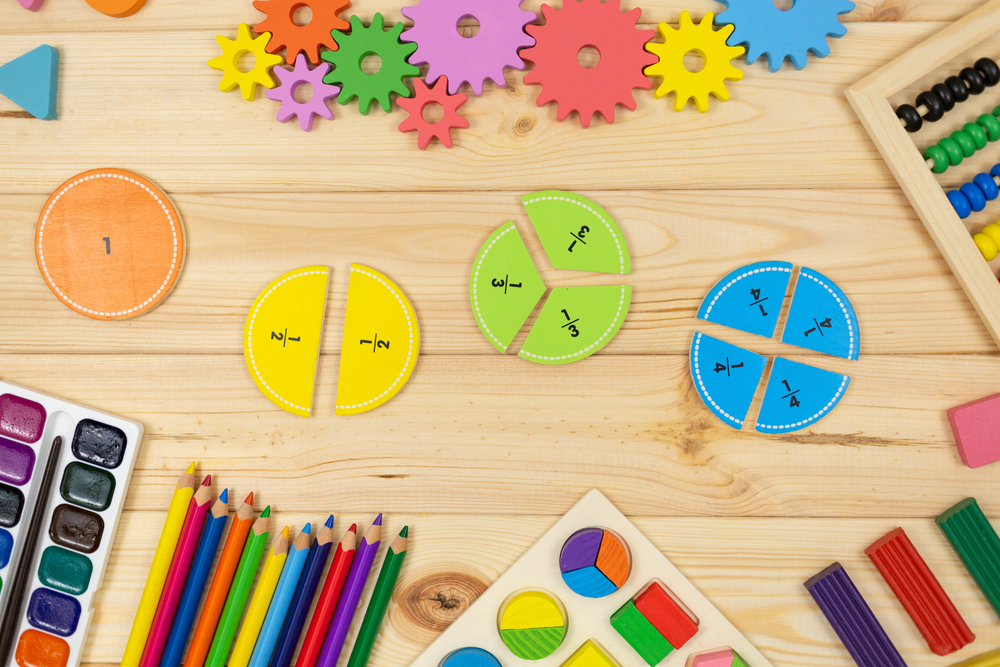

Visual learning enhancements are vital for children ages 7-8 because they align with the developmental characteristics and learning styles typical for this age group. At this stage, children are often visual learners, meaning they understand and retain information better when it is presented visually. For example, using images, colors, maps, and diagrams can make learning more concrete and less abstract, which is crucial for cognitive development.
Visual aids can simplify complex concepts, making them accessible and easier to grasp. When children see math problems represented with pictures or use graphic organizers to plan their writing, they engage more deeply with the material. This engagement enhances comprehension and retention, making learning both effective and enjoyable.
Moreover, visual learning supports differentiated instruction, allowing teachers and parents to cater to various learning needs and styles in the same classroom. It helps in accommodating children with diverse learning preferences and strengths, including those with learning difficulties who often benefit from visual instruction.
Incorporating visual learning tools fosters creativity and critical thinking, encouraging children to observe, analyze, and draw conclusions from what they see. This leads to a more rounded education, laying a strong foundation for lifelong learning and curiosity while boosting confidence and academic performance.
By prioritizing visual learning enhancements, parents and teachers can provide a richer, more inclusive, and effective educational experience that meets the unique developmental needs of young learners.








