Number Recognition Normal Addition & Subtraction Worksheets for Ages 7-8 - Page 2
26 filtered results
-
From - To
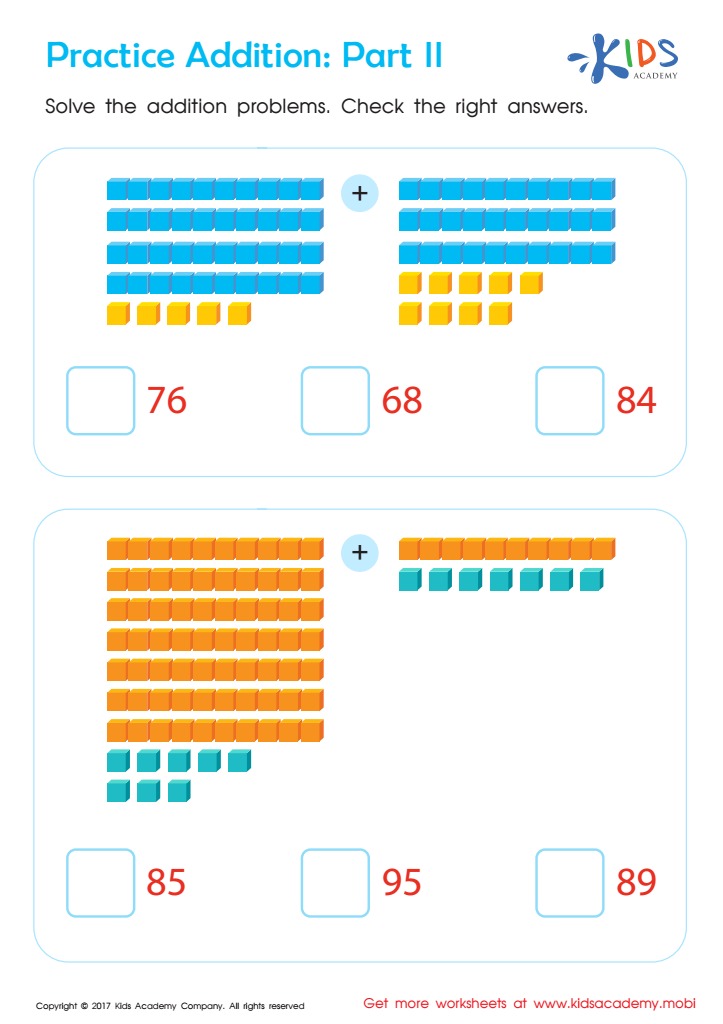
Practice Addition: Part 2 Worksheet
 Assign to My Students
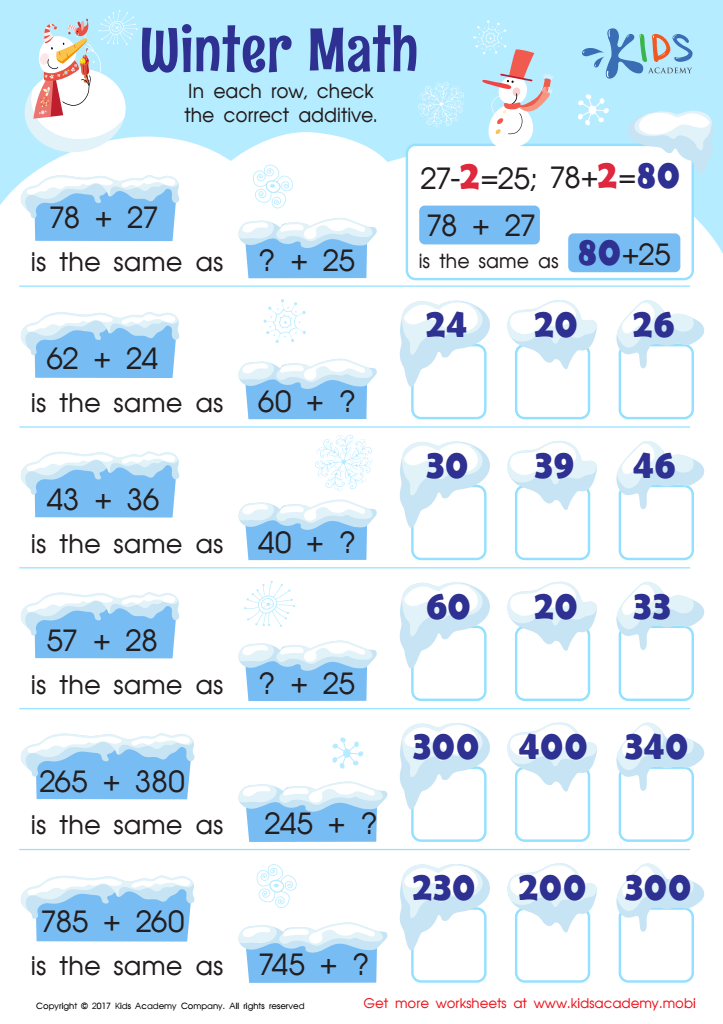
Free Addition Worksheet








Number recognition and basic addition and subtraction are foundational skills in mathematics for children ages 7-8. Mastery of these concepts is crucial as they serve as building blocks for more advanced mathematical learning. Parents and teachers should care deeply about promoting these skills because they foster not only academic success but also critical thinking and problem-solving abilities.
At this age, children begin to encounter multi-digit numbers and simple word problems, requiring them to apply their knowledge of basic arithmetic. A firm grasp of number recognition ensures children can easily navigate numerical information, making math less daunting and more enjoyable. Additionally, these skills are essential for real-world applications, such as budgeting, cooking, and time management.
Moreover, strong number sense and calculation abilities contribute to self-confidence in students. When children feel competent in math, they are more likely to engage in class and take on challenging tasks. Encouraging these skills can also support a positive mindset toward learning and critical educational outcomes in future grades. By investing time and resources into teaching addition and subtraction, parents and teachers are equipping children with essential tools for lifelong learning and success.








