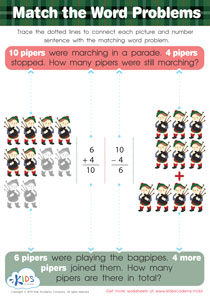
Counting skills Normal Addition Worksheets for Ages 7-8
5 filtered results
-
From - To
Enhance your child's counting skills with our Counting Skills Normal Addition Worksheets specifically designed for ages 7-8. These engaging worksheets provide a fun and interactive approach to mastering addition through counting. Students will develop a solid understanding of numerical relationships while improving their ability to add single and double-digit numbers. With a variety of exercises, including visual aids and practical problem-solving questions, our resources ensure your young learner stays motivated and confident in math. Perfect for at-home practice or classroom activities, these worksheets are an essential tool for fostering a strong foundation in addition and building essential counting skills. Explore today!
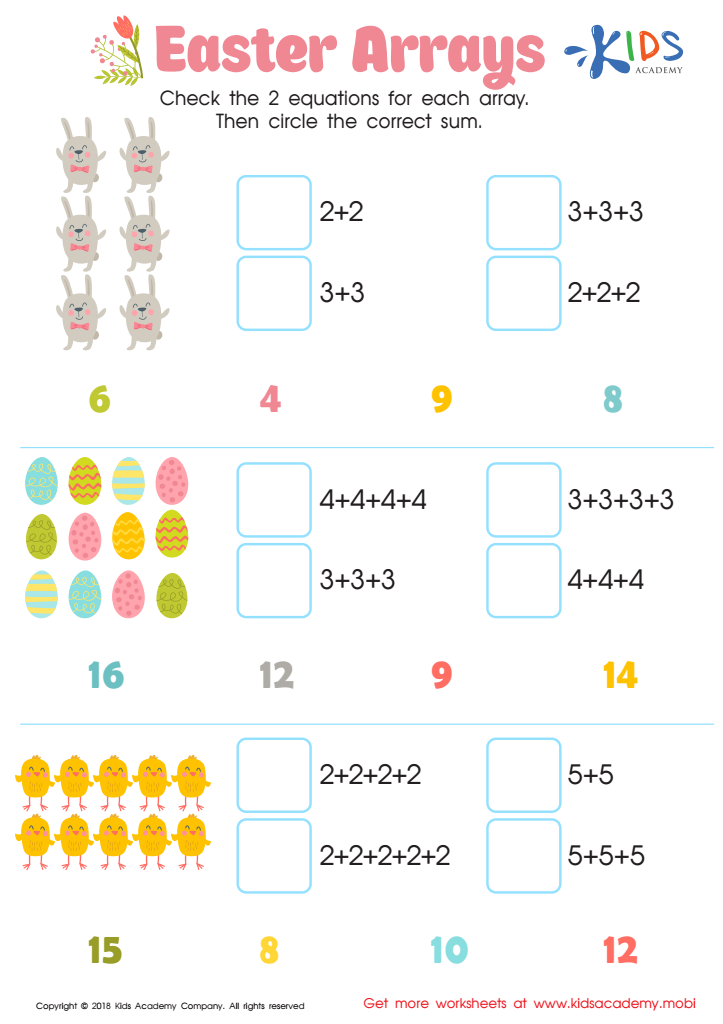
Easter Arrays Worksheet
 Assign to My Students
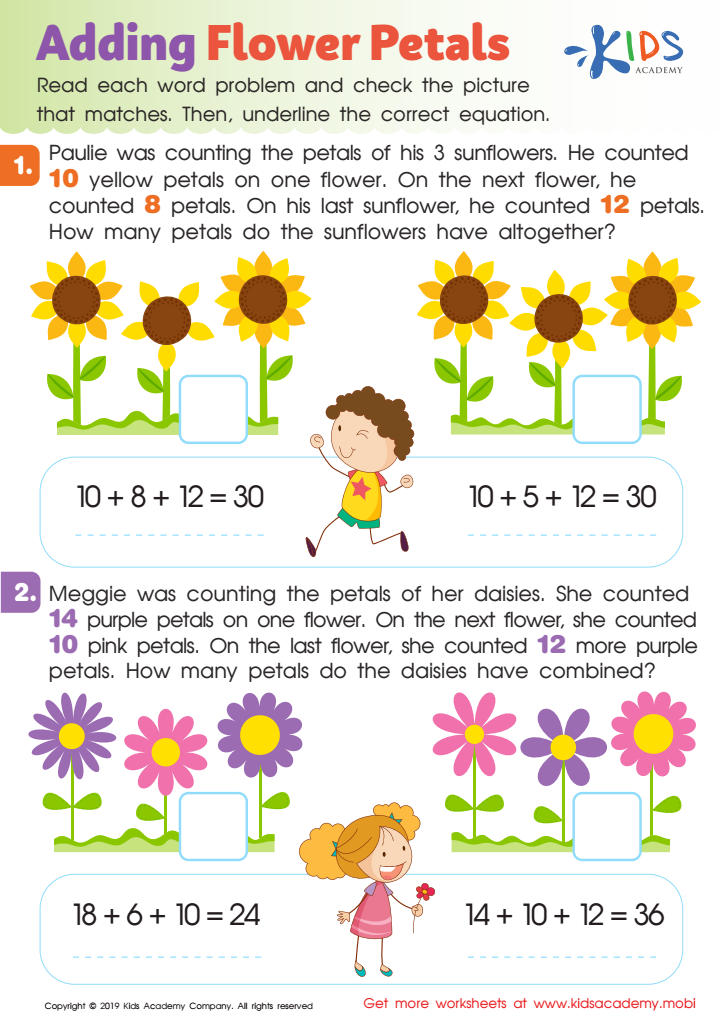
Adding Flower Petals Worksheet
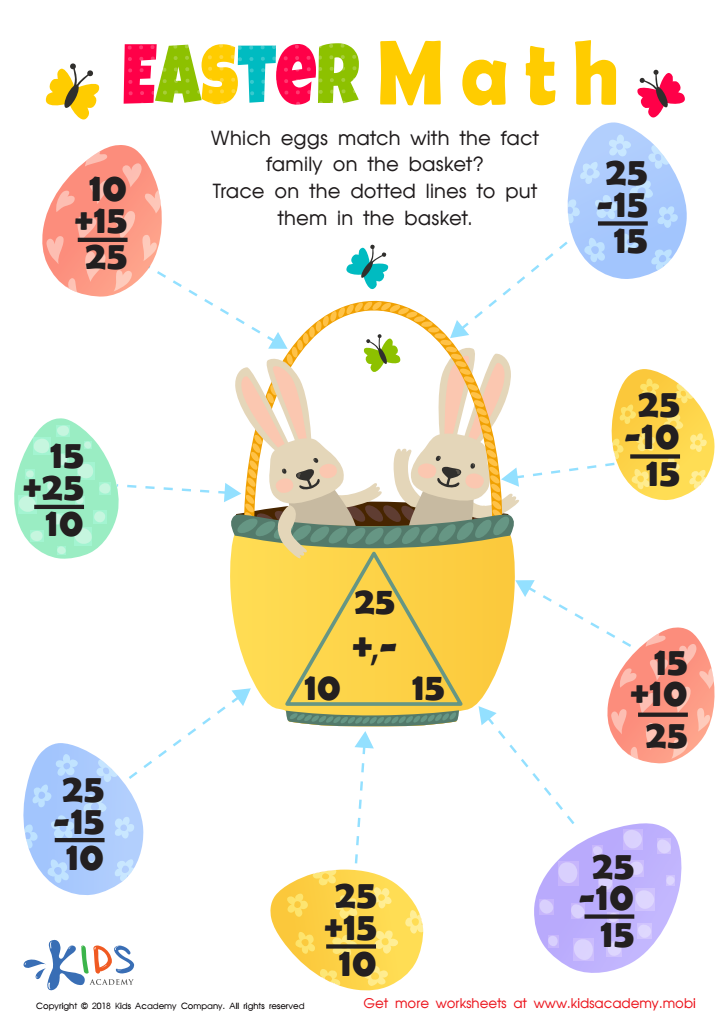
Fact Families: Easter Math Worksheet
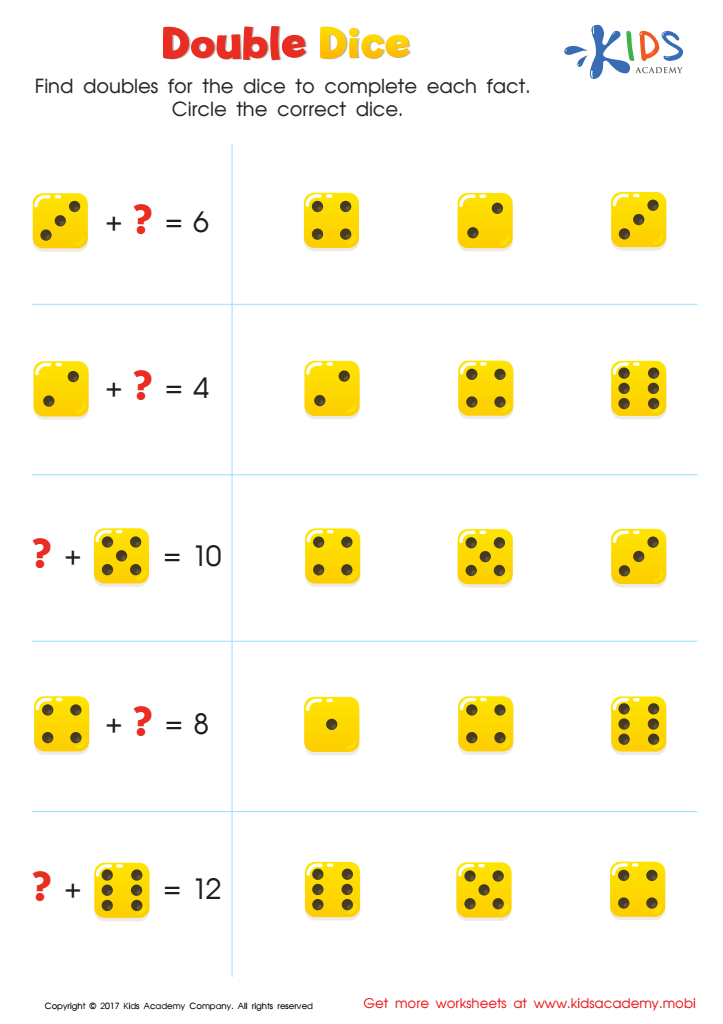
Addition Facts: Double Dice Worksheet
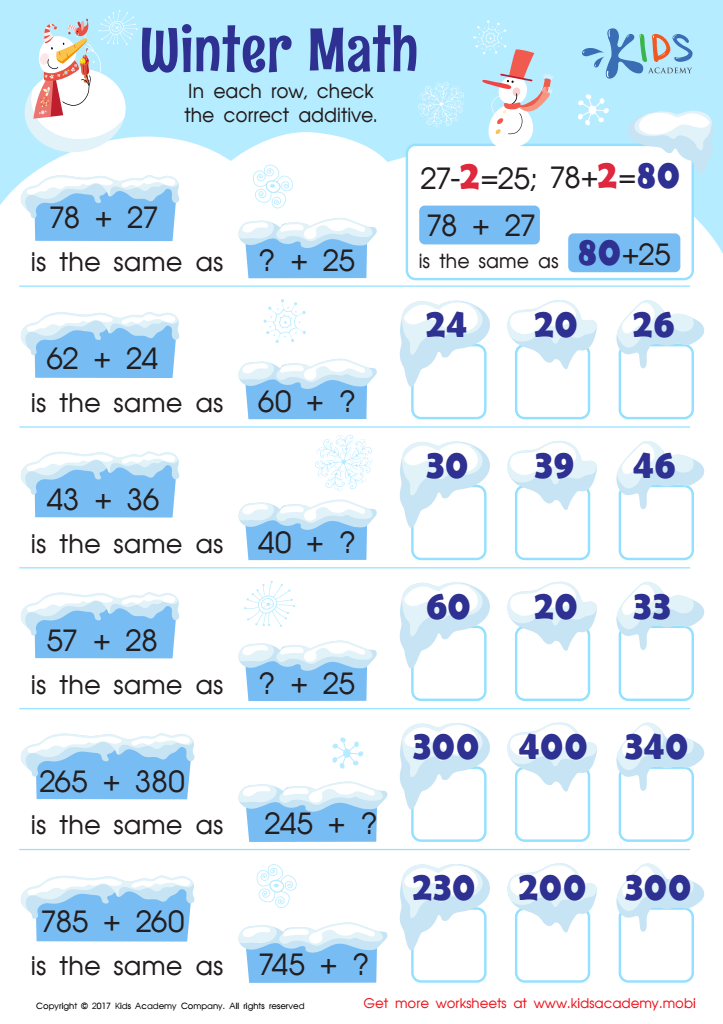
Free Addition Worksheet








Counting skills and normal addition are foundational mathematical competencies that young learners, particularly those aged 7-8, must develop. These skills are crucial because they form the basis for more complex mathematical concepts that students will encounter later in their education. Proficiency in counting assists children in grasping number sense, which aids them in understanding relationships between numbers and can improve their problem-solving abilities.
Moreover, counting and addition skills contribute significantly to students’ cognitive development, enhancing logical reasoning and critical thinking abilities. At this age, students are typically transitioning from concrete to more abstract reasoning, making it an ideal time to cultivate their understanding of numerical operations.
For parents and teachers, establishing a solid grasp of counting and addition can empower children to build confidence in their mathematical abilities, leading to a positive attitude towards the subject. Early mastery can prevent future math anxiety and help maintain motivation in learning. Furthermore, skills in basic arithmetic are not just academic; they are applicable in everyday life, preparing students for real-world situations, such as budgeting and measurement. Thus, nurturing these skills is essential for both educational success and practical life competency.