
Critical Thinking Normal Math Worksheets for Ages 7-8
11 filtered results
Difficulty Level
Grade
Age
-
From - To
Subject
Activity
Standards
Elevate young minds with our Critical Thinking Normal Math Worksheets for Ages 7-8. These engaging and thought-provoking activities are designed to hone essential math skills while fostering critical thinking abilities. Perfectly tailored for early learners, our worksheets challenge kids to solve problems, think logically, and approach math with curiosity and confidence. Each worksheet combines fun with learning, offering colorful, interactive exercises that cover key math concepts through puzzles and real-world scenarios. Empower your child’s educational journey with resources that make math exciting and brain-boosting. Ideal for classroom use or home practice, these worksheets are a gateway to developing a strong mathematical foundation.
Favorites
With answer key
Interactive
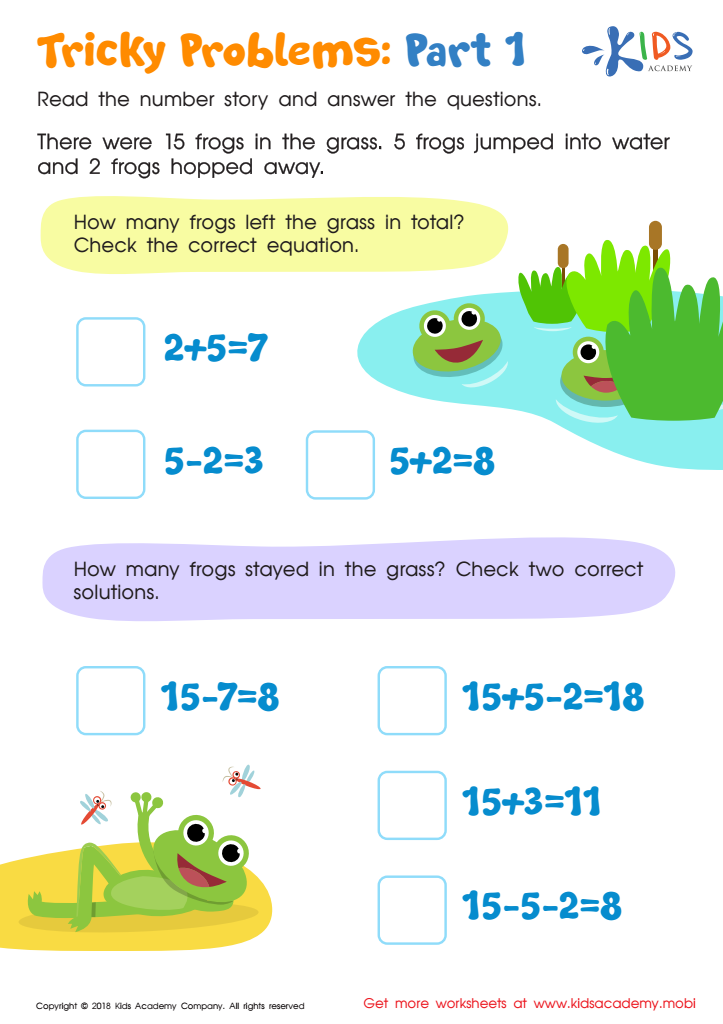
Tricky Problems Worksheet: Part 1
Visualizing word problems can help students solve them. This fun PDF worksheet encourages students to create mental images using math facts, then check boxes to match the equations for basic addition problems. It's a great way to build confidence in solving math.
 Assign to My Students
Tricky Problems Worksheet: Part 1
Worksheet
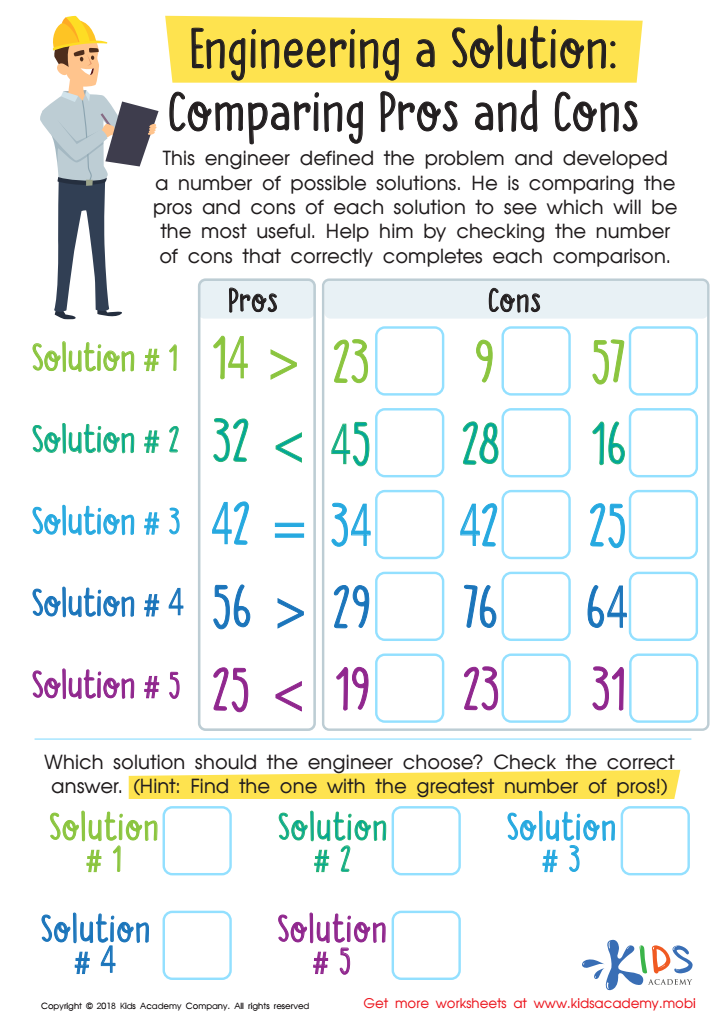
Engineering a Solution: Comparing Pros and Cons Worksheet
Help our little engineers assist the engineer in making a decision! They will solve the equations using greater than, less than, and equal to, and then decide the best solution for the problem using the pros and cons of each.
Engineering a Solution: Comparing Pros and Cons Worksheet
Worksheet
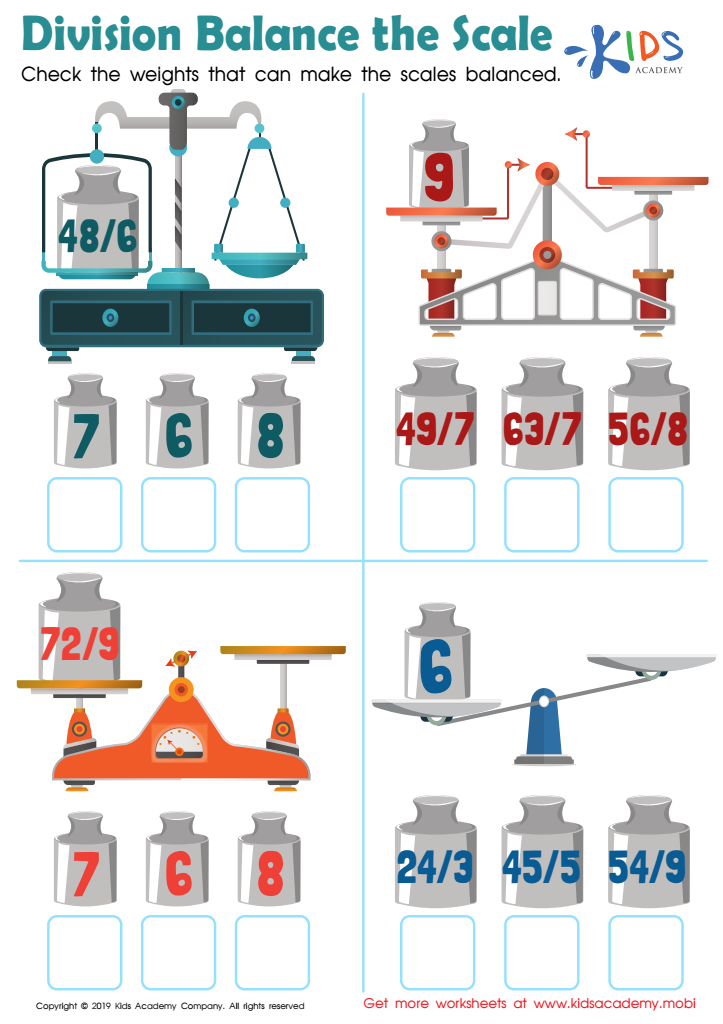
Division Balance the Scale Worksheet
Students can learn math better when they understand the relationships between numbers. This free worksheet helps them practice division: solving problems and matching the correct quotient to balance the scales. Fun visual boxes make it a unique way to engage with the material.
Division Balance the Scale Worksheet
Worksheet
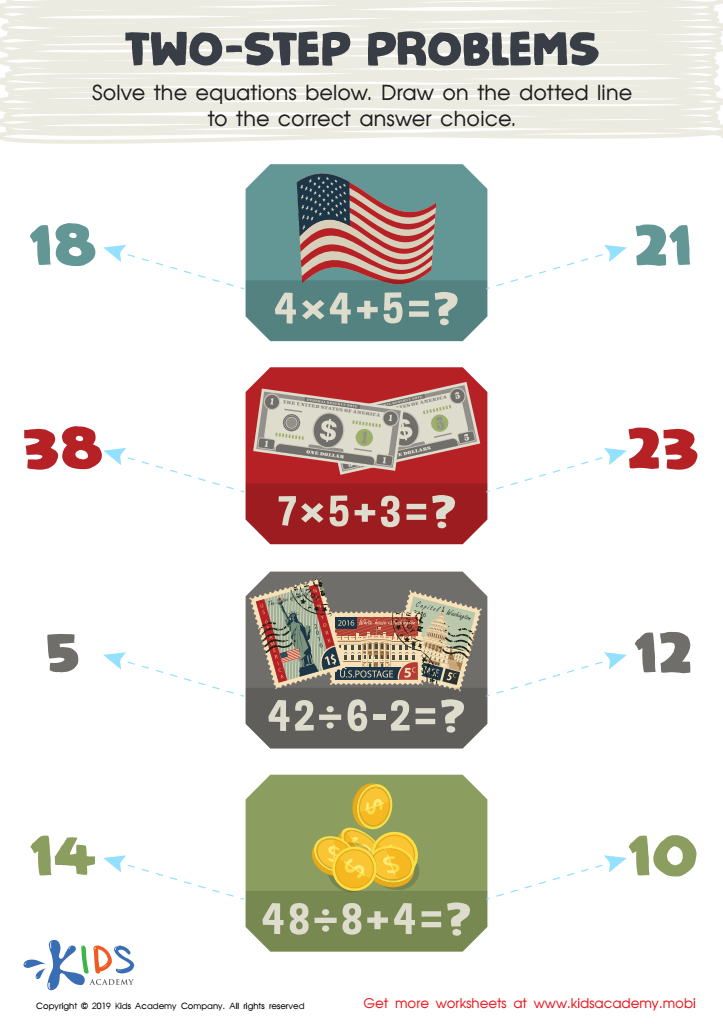
Two-Step Problems Worksheet
Help your child practice their math problem-solving skills with this worksheet. It covers the basics of subtractions, additions, multiplications, and divisions. With four simple equations, your kids can solve them and draw the correct answer on the dotted line. Reduce their strain and give them the help they need.
Two-Step Problems Worksheet
Worksheet
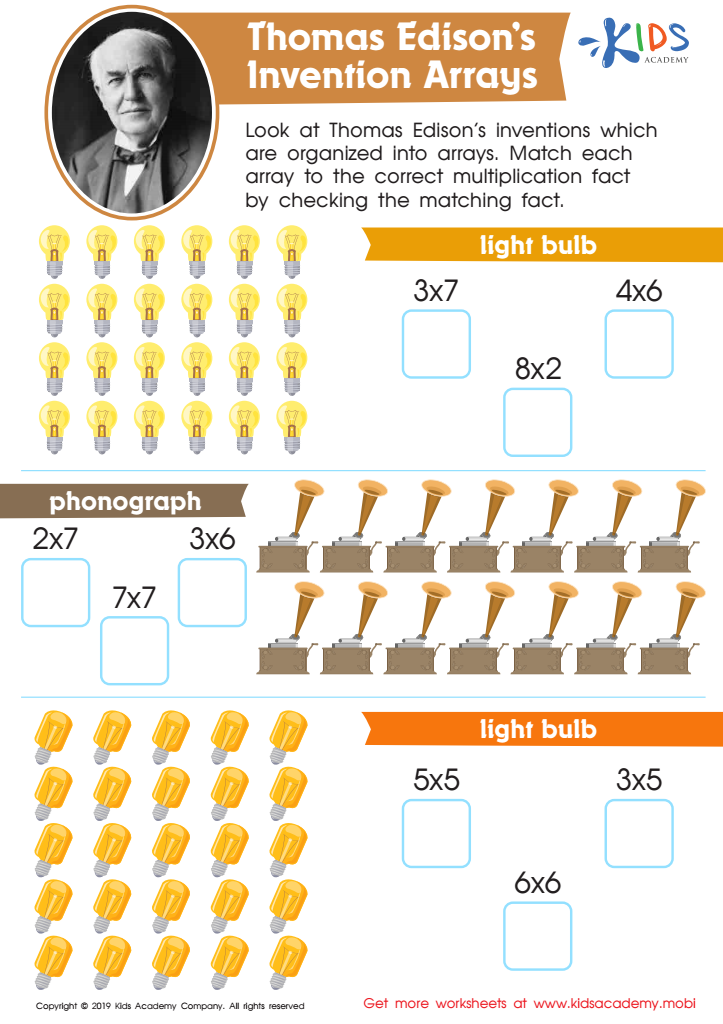
Thomas Edison’s Invention Arrays Worksheet
Test your students' knowledge on history by asking them what Thomas Edison invented. If they get the right answer, provide more information on other inventors. Check out this printout of Edison's light bulb inventions laid out in arrays. Get them to match each array to the correct multiplication fact.
Thomas Edison’s Invention Arrays Worksheet
Worksheet
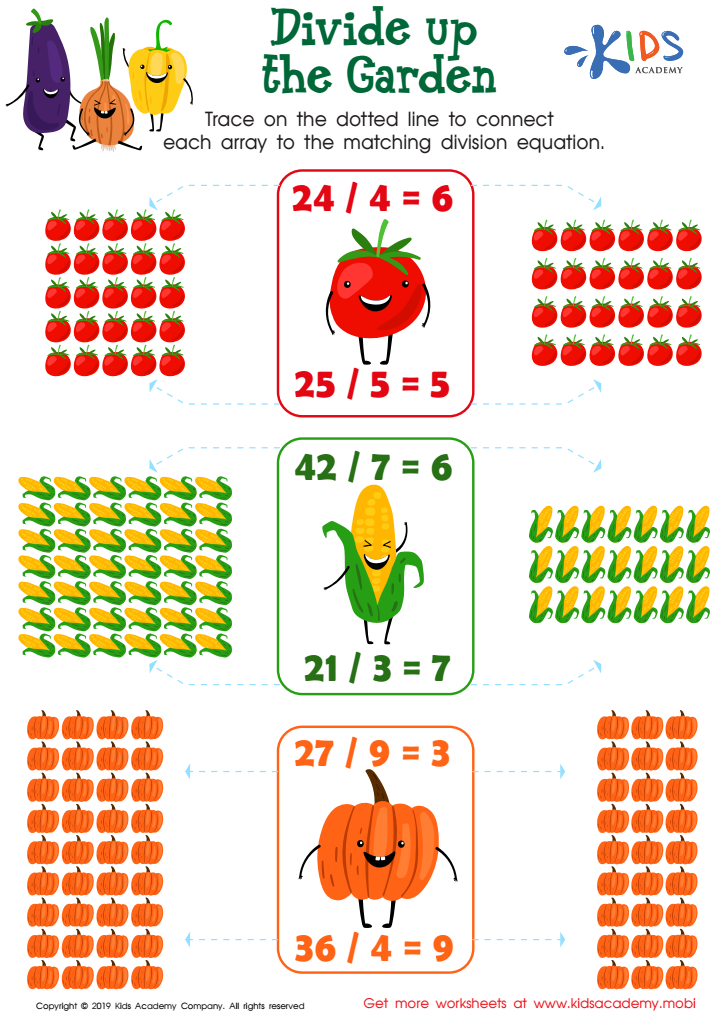
Divide up the Garden Worksheet
Dividing is simply grouping items into equal sets. This worksheet helps kids see division problems in array form. They'll match each equation with a picture group, using the lines provided. It's a great way for beginners to understand division more concretely.
Divide up the Garden Worksheet
Worksheet
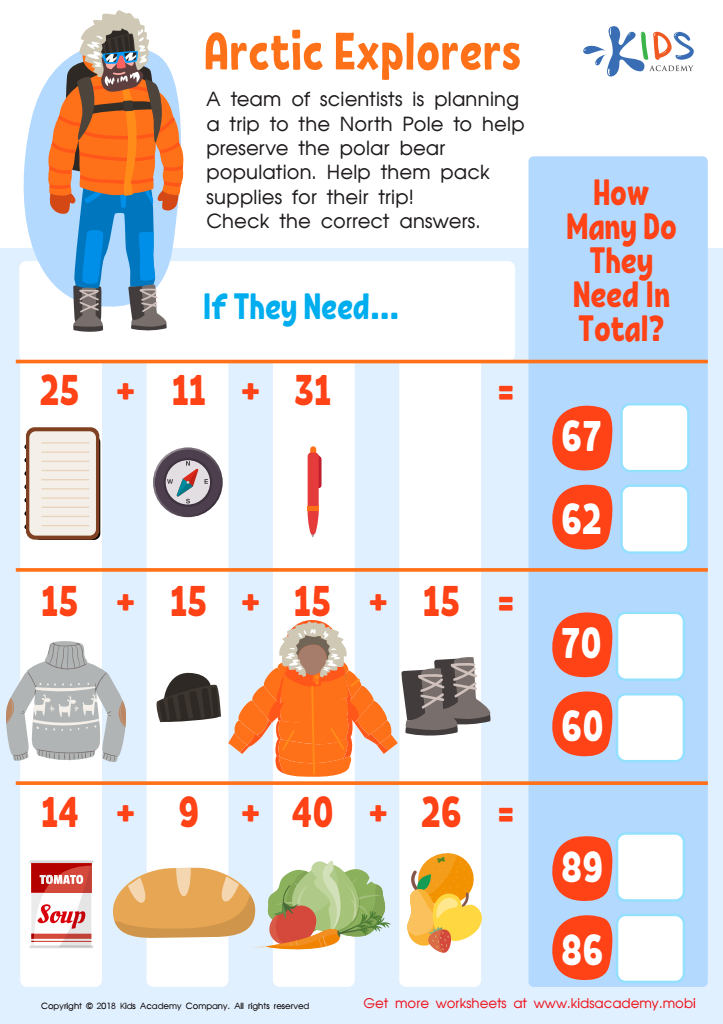
Arctic Explorers Worksheet
Help your child pack supplies for a team of scientists' trip to the North Pole! Before beginning, explain how efforts are needed to protect endangered animals like polar bears. Encourage them to check the correct clothing needed for the extremely cold region. For example, warm and protective clothing is essential.
Arctic Explorers Worksheet
Worksheet
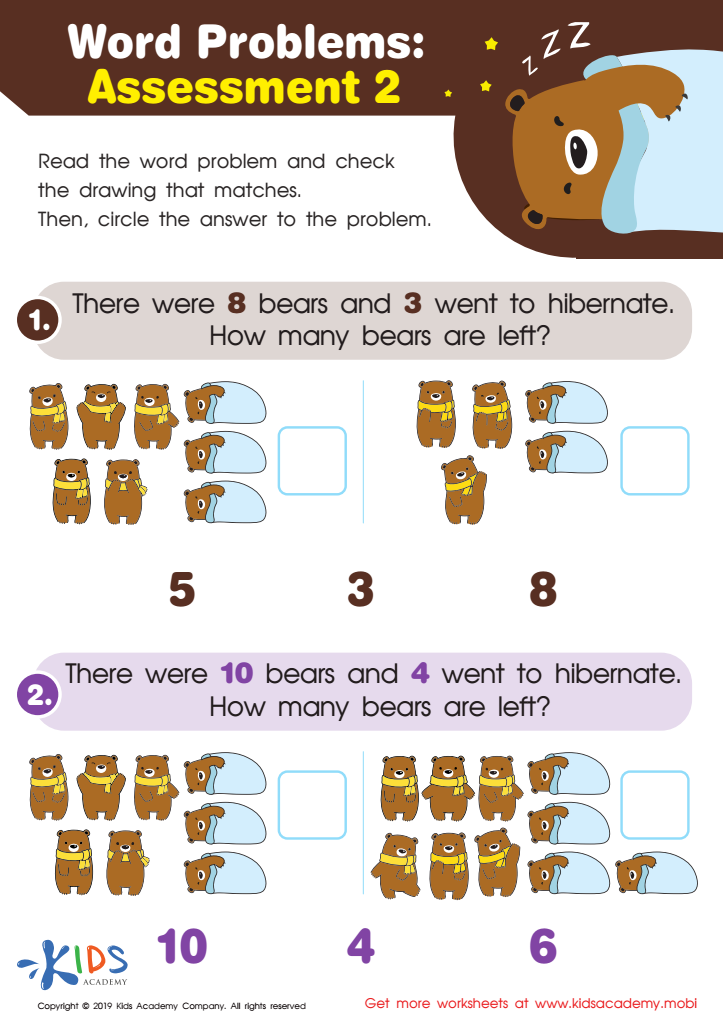
Word Problems: Assessment 2 Worksheet
This bear-themed worksheet is a great way to test subtraction skills. Have your child read the word problems and match the correct drawing with the answer. It's a fun way to quiz them without them even knowing. Enjoy counting cute snoozing bears! (80 words)
Word Problems: Assessment 2 Worksheet
Worksheet
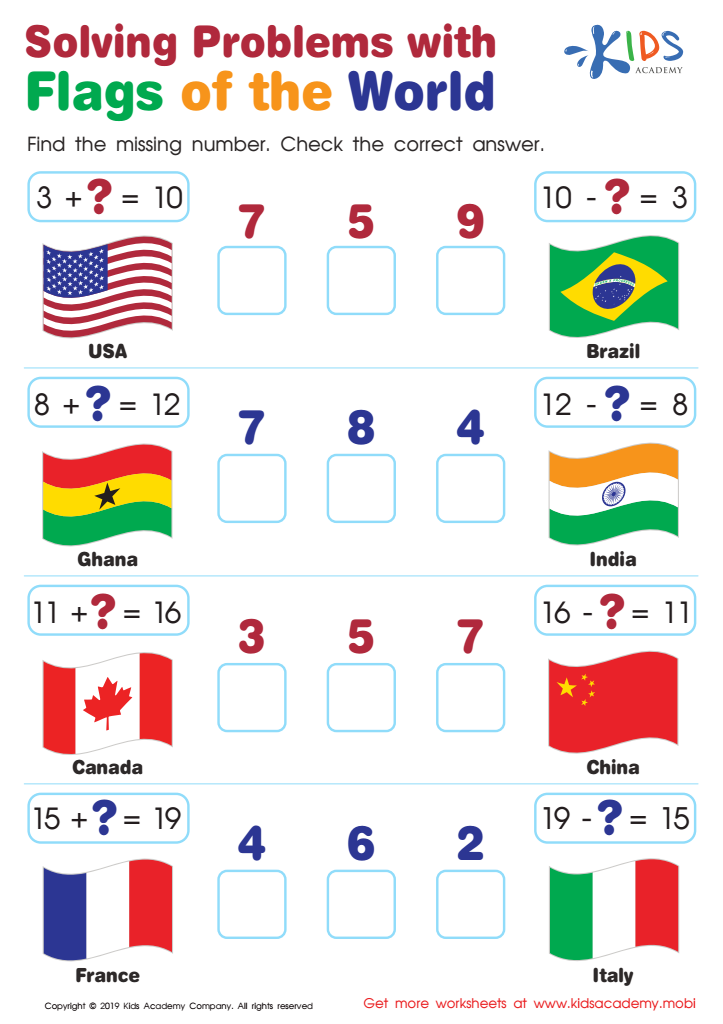
Solving Problems with Flags of the World Worksheet
Name some countries you know with your kids, then introduce their flags with this worksheet. Help them find the missing number in each addition problem, and then check the answer. It's a fun way to learn about different countries near and far.
Solving Problems with Flags of the World Worksheet
Worksheet
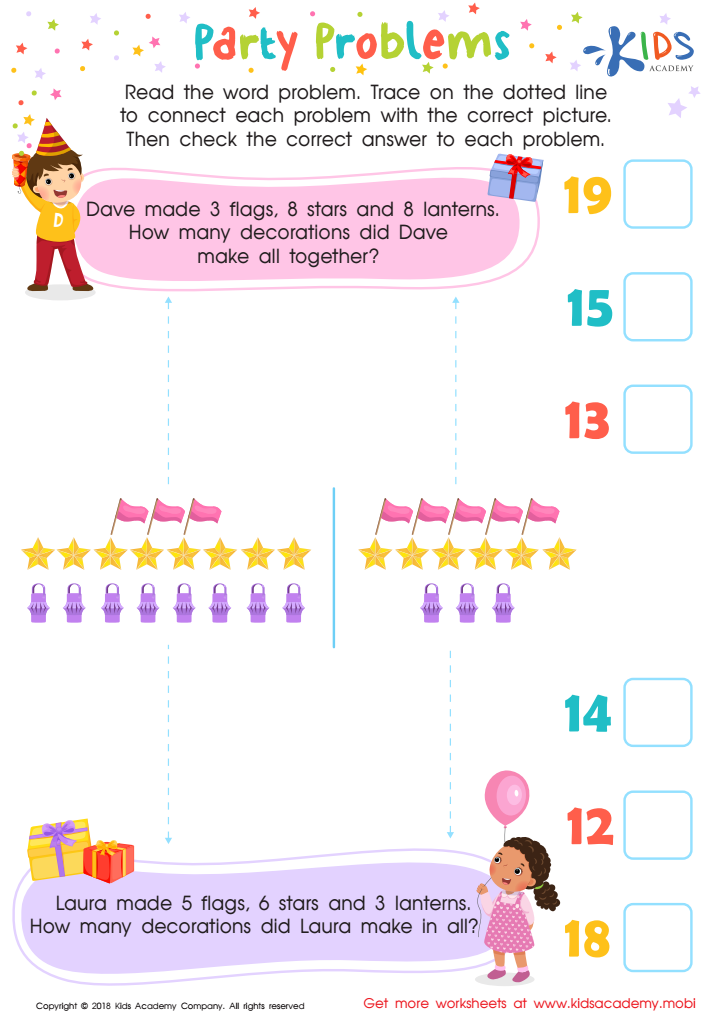
Party Problems Worksheet
Problems at parties? No problem! With this engaging PDF worksheet, your student can connect word problems to pictures, check correct answers, and find the sum of 3 addend problems. They'll be a party-saving hero in no time!
Party Problems Worksheet
Worksheet
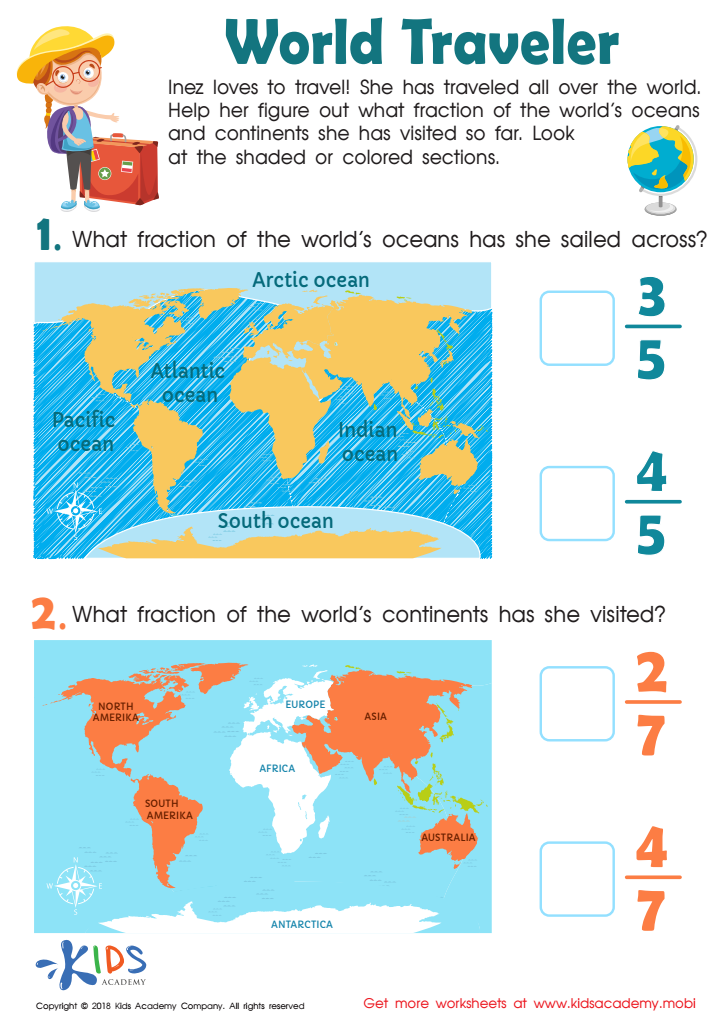
World Traveler Worksheet
Kids love exploring the world? Inez sure does! She's seen oceans and continents around the globe. Your kids can help her figure out what fraction of the world she has visited. Have them name all the countries they've been to, then look at the marked sections on the printout to find out!
World Traveler Worksheet
Worksheet
Join Kids Academy for Free
Who is primarily going to use this learning content?








Critical thinking skills are essential for young learners aged 7-8 because these foundational abilities significantly contribute to their overall cognitive development. At this age, children are beginning to transition from concrete to more abstract forms of thought. Encouraging critical thinking in normal math helps foster logical reasoning, problem-solving skills, and the ability to make connections between different concepts.
For instance, when children encounter a math problem, they learn to analyze the issue, identify patterns, and explore various solutions before choosing the best one. This process is crucial not only for math but for everyday decision-making and future academic challenges. Critical thinking encourages children to ask questions like "Why does this work?" and "What happens if I try a different strategy?" These queries promote a deeper understanding of math concepts rather than mere memorization.
Moreover, critical thinking in math extends beyond numbers and equations; it enhances overall learning by nurturing curiosity, encouraging persistence in the face of challenging tasks, and building confidence in their abilities to tackle new problems independently. For teachers and parents, instilling these skills early prepares children for a more advanced and interconnected world, ensuring they grow into thoughtful, innovative, and capable individuals. This is why critical thinking in math education for young learners deserves careful attention and encouragement.








