Geography knowledge Normal Math Worksheets for Ages 7-8
6 filtered results
-
From - To
Discover an exciting collection of "Geography Knowledge Normal Math Worksheets for Ages 7-8" designed to blend math skills with fascinating geographical facts. These engaging printables help young learners enhance their arithmetic abilities while exploring diverse geographical concepts and locations. Perfectly tailored for children aged 7-8, our worksheets make learning fun and interactive, sparking curiosity and reinforcing core math skills such as addition, subtraction, and simple problem-solving. Each worksheet is crafted to bolster geographic literacy alongside numeracy, making it an excellent addition to any educational toolkit. Elevate your child’s learning journey with our captivating and instructive geography-themed math resources.
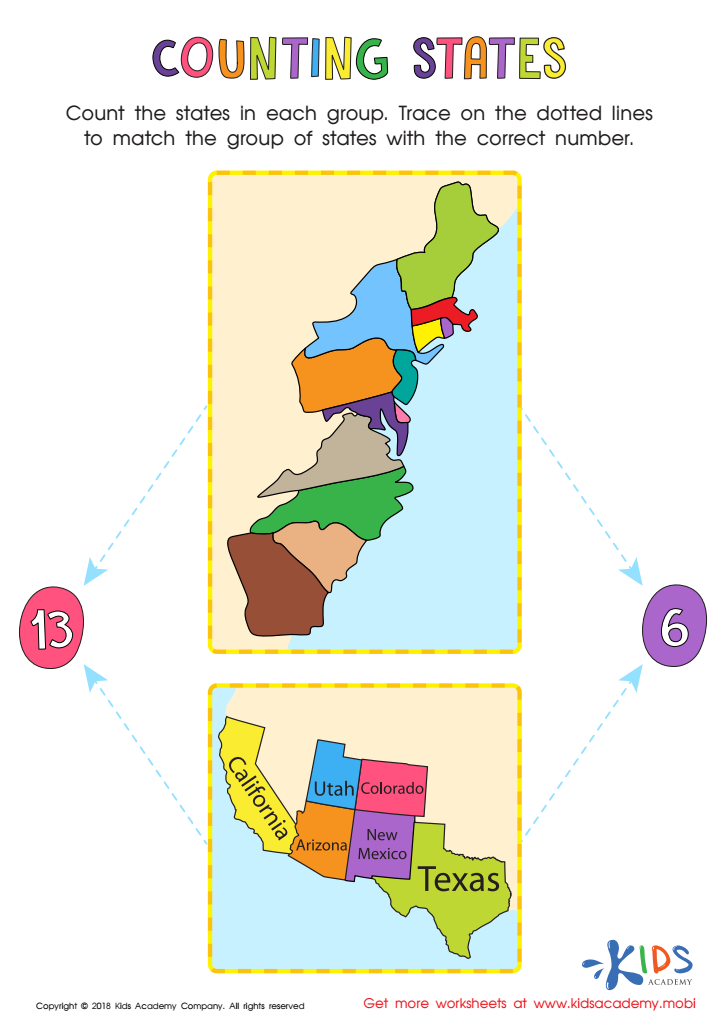
Counting States Worksheet
 Assign to My Students
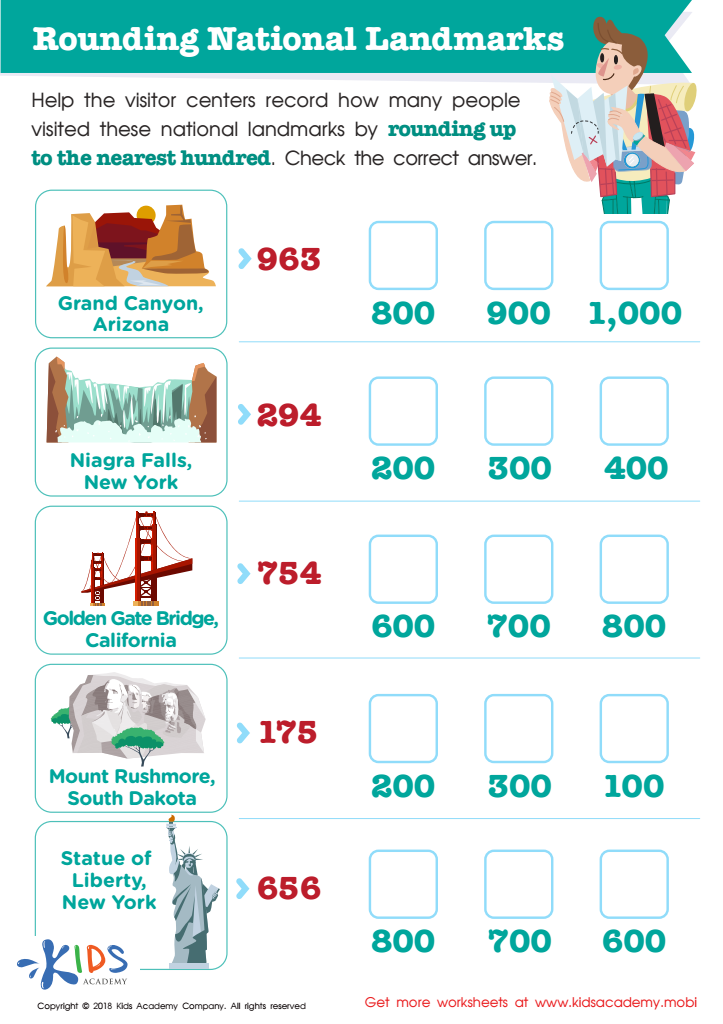
Rounding National Landmarks Worksheet
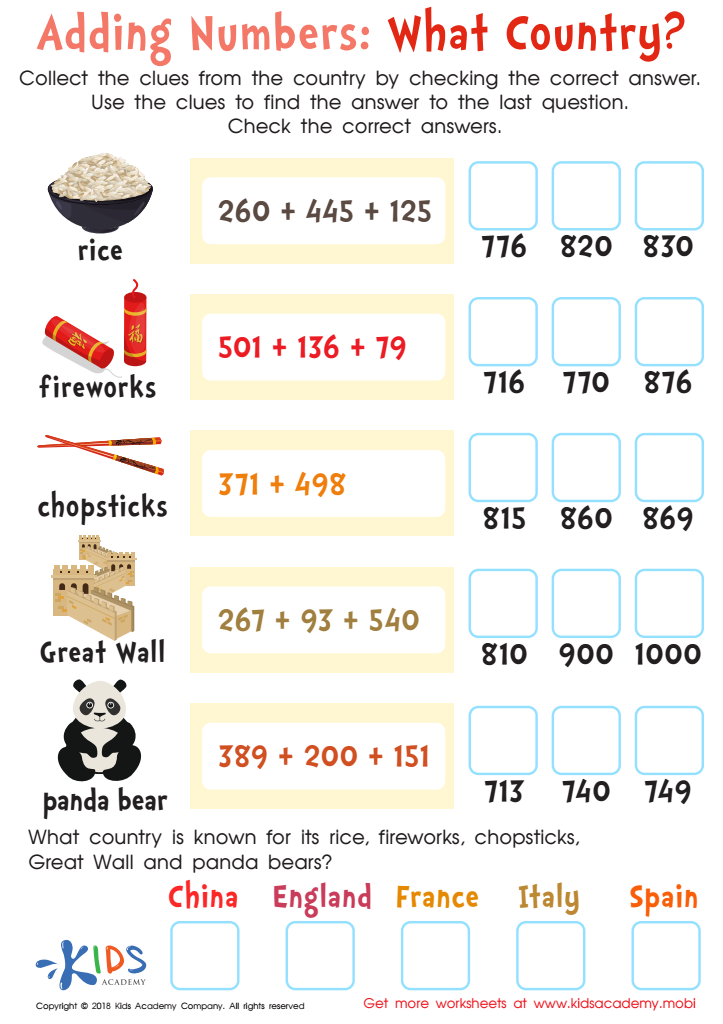
Adding Numbers: What Country Worksheet
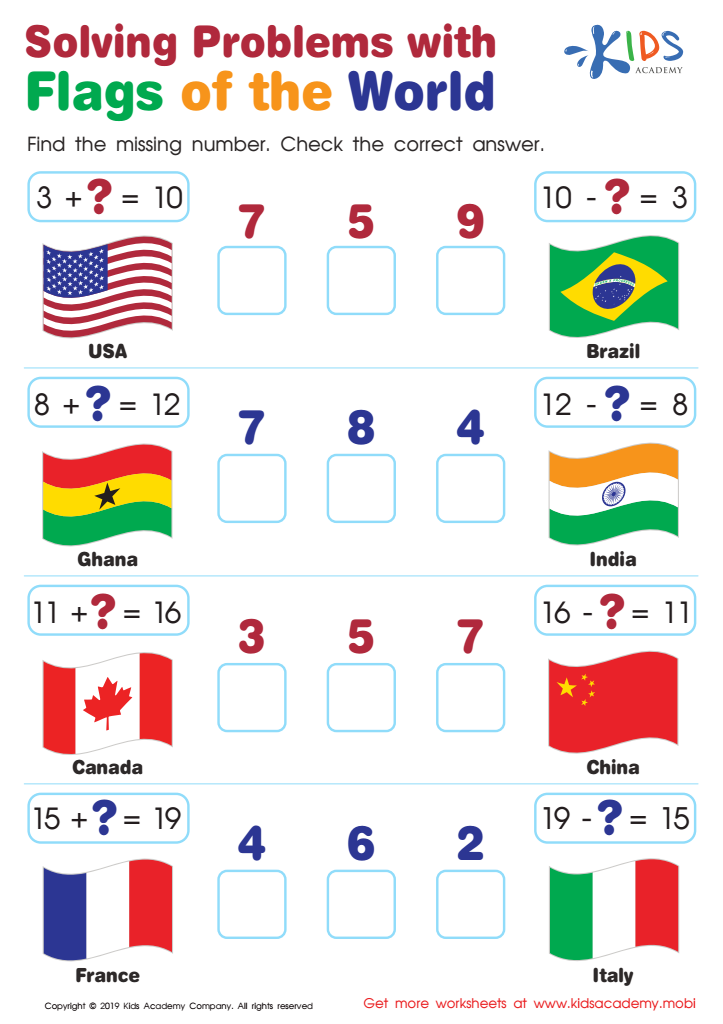
Solving Problems with Flags of the World Worksheet
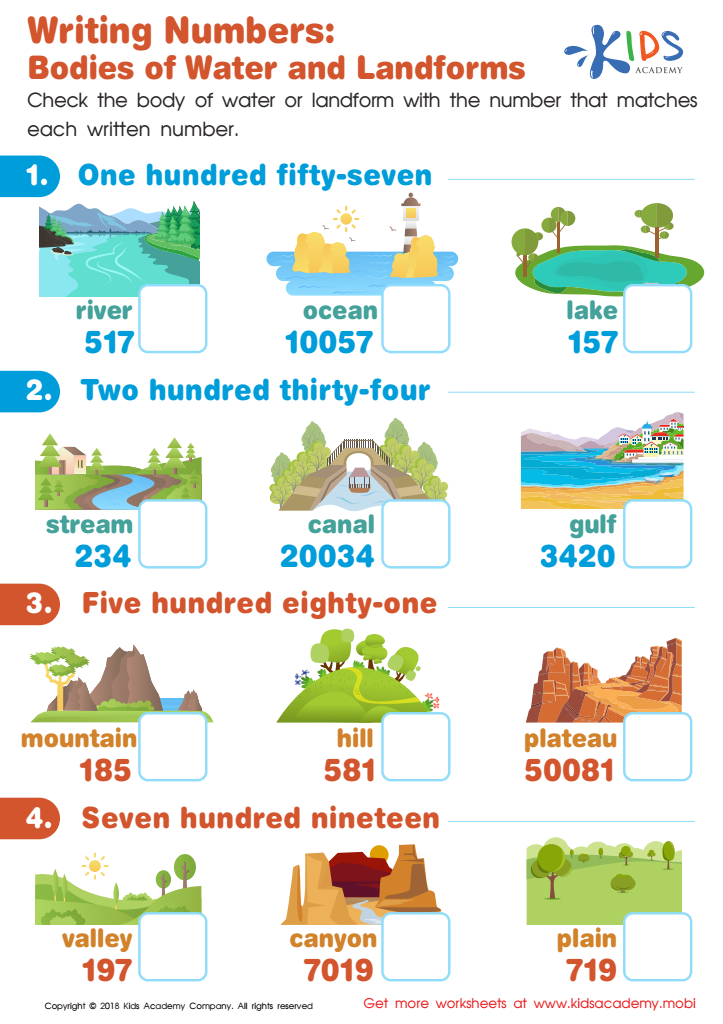
Bodies of Water and Landforms Writing Numbers Worksheet
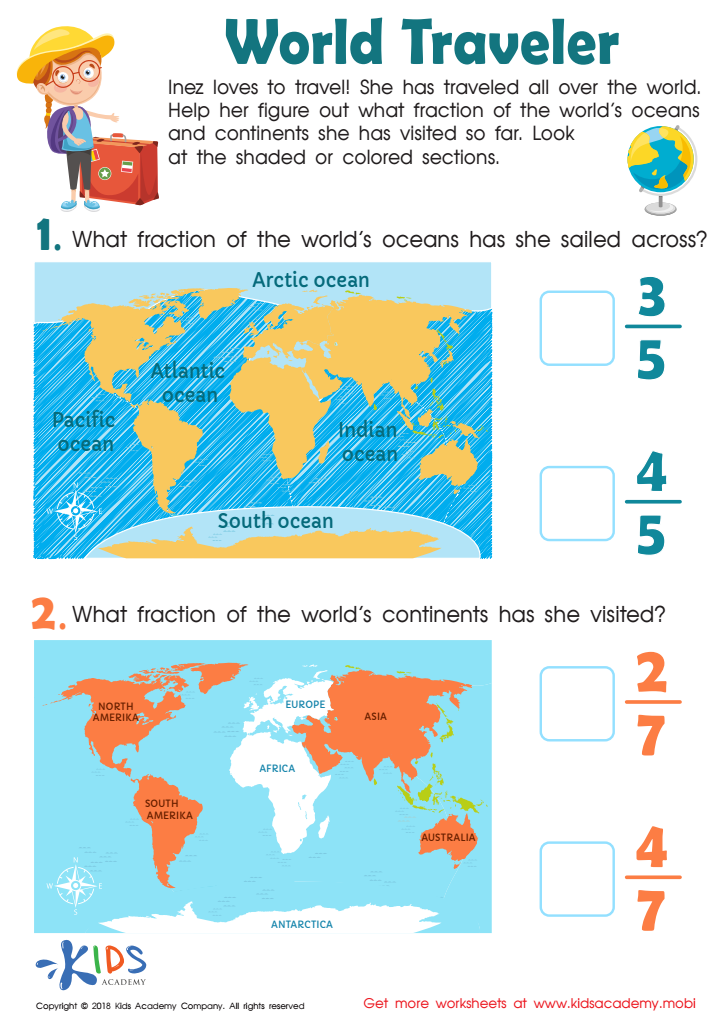
World Traveler Worksheet





.jpg)


Geography knowledge and math skills for children aged 7-8 form a critical part of their overall education and development. Parents and teachers should value geography because it expands children's understanding of the world around them. Learning about different cultures, landscapes, climates, and ecosystems fosters global awareness and empathy, encouraging kids to appreciate diversity and sustainability.
Incorporating geography into lessons can also enhance other academic areas like cultural studies, history, and even environmental science. For example, when learning about continents, children also practice their reading skills and when studying climate zones, they engage in basic scientific observation. Grasping geographical concepts like distance and mapping helps build spatial thinking, a key component in problem-solving and logical reasoning.
Math skills, similarly, are indispensable at this age as they lay a strong foundation for more complex mathematical concepts in the future. Basic operations like addition, subtraction, multiplication, and division, as well as an understanding of shapes, measurements, and patterns, all contribute to cognitive development. Math enhances critical thinking and analytical skills, enabling children to make sense of everyday tasks like time, money, and measurement.
In summary, geography and math not only enrich children's knowledge but also equip them with the tools necessary for critical thinking and real-world problem-solving. These subjects are crucial for their holistic development, preparing them for future academic and life challenges.








