
Interpreting data Normal Math Worksheets for Ages 7-8
3 filtered results
Difficulty Level
Grade
Age
-
From - To
Subject
Activity
Standards
Explore our engaging "Interpreting Data Normal Math Worksheets" designed for children aged 7-8. These printable worksheets help young learners develop essential skills in reading and analyzing data through fun activities. Each worksheet presents colorful graphs, charts, and tables that encourage children to interpret information, spot patterns, and solve problems. With exercises tailored for elementary understanding, students will enhance their critical thinking and data literacy in an enjoyable way. Ideal for classroom use or at-home learning, our collection supports educators and parents in guiding their children towards math proficiency. Download now and watch your child gain confidence in interpreting data!
Favorites
With answer key
Interactive
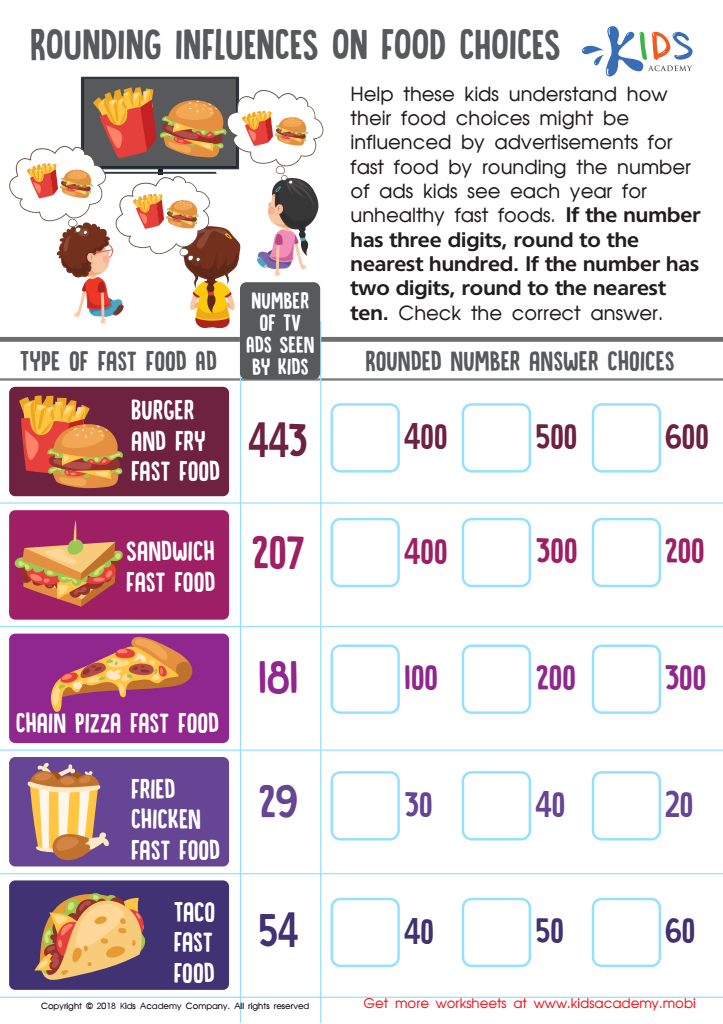
Rounding Influences Food Choices Worksheet
Kids find math more enjoyable when it reflects real-life scenarios. This free worksheet combines math and health! Kids view data on the number of ads they're exposed to in a year and must round the numbers to the nearest ten or hundred. Solve and check the correct answers to finish.
 Assign to My Students
Rounding Influences Food Choices Worksheet
Worksheet
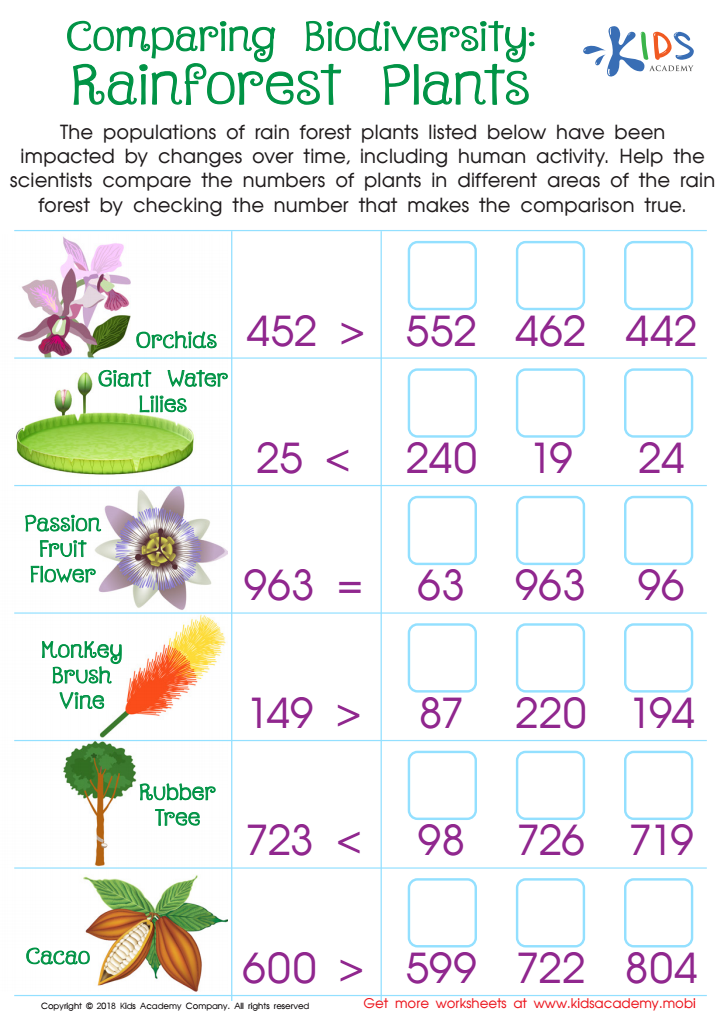
Comparing Biodiversity: Rainforest Plants Worksheet
Have your students learn about biodiversity in the rainforest and practice number sense and reasoning with this colorful PDF worksheet. Comparing the numbers of plants found in different areas of the rainforest, they'll combine eco-friendly science and math to make the number comparisons true.
Comparing Biodiversity: Rainforest Plants Worksheet
Worksheet
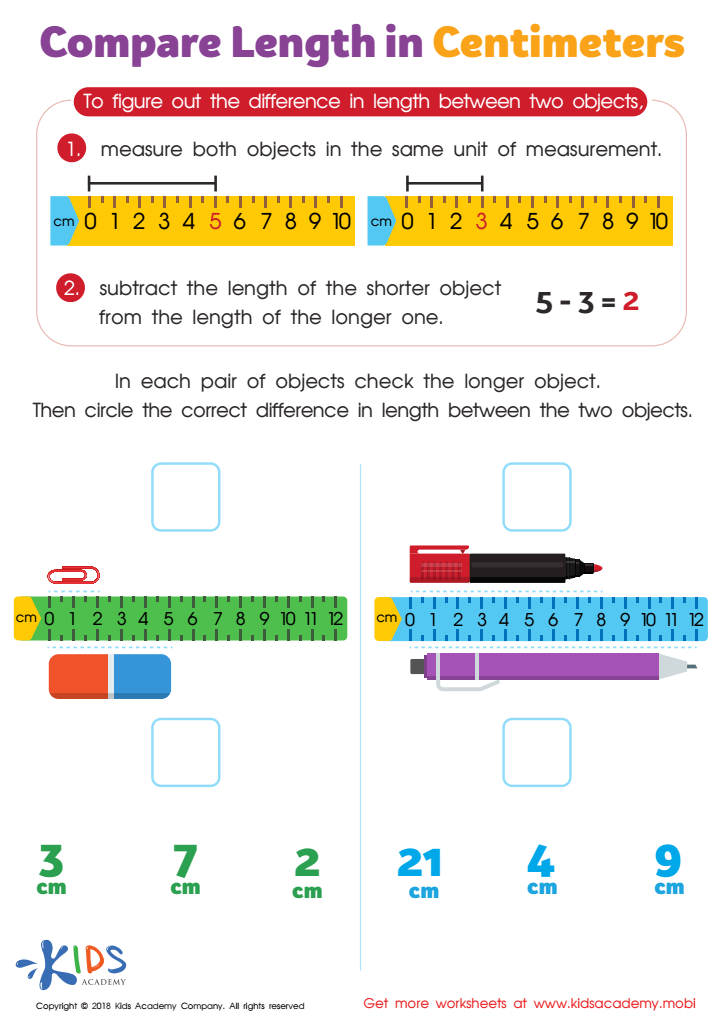
Compare Length in Centimeters Worksheet
To do this worksheet, your child needs to be able to measure accurately, add and subtract. They must measure both items and subtract the shorter from the longer to work out the difference in length.
Compare Length in Centimeters Worksheet
Worksheet
Join Kids Academy for Free
Who is primarily going to use this learning content?






Understanding data interpretation in mathematics is crucial for children aged 7-8, as it lays the foundation for critical thinking and problem-solving skills. At this developmental stage, students become more capable of analyzing and making sense of information presented in various forms, such as charts, graphs, and tables. Parents and teachers should recognize that interpreting data is not just a mathematical skill; it is a life skill that encourages logical reasoning and informed decision-making.
By focusing on data interpretation, educators help foster children's ability to summarize information, recognize patterns, and draw conclusions. This translates to better performance in subjects beyond math, including science and social studies, where data analysis is integral. Moreover, strong data literacy equips children to navigate an increasingly data-driven world, enhancing their ability to evaluate statistics in news, advertisements, and social media critically.
Furthermore, engaging with data encourages curiosity and exploration, promoting a love for learning. This foundational knowledge also prepares children for more complex concepts in later grades, setting them up for long-term academic success and preparing them for future careers in fields that demand analytical skills. Ultimately, understanding how to interpret data empowers children, enabling them to approach real-world situations with confidence and clarity.








