Interpreting data Normal Worksheets for Ages 7-9
4 filtered results
-
From - To
Unlock your child's potential in data interpretation with our engaging worksheets tailored for ages 7-9. Kids Academy offers a diverse range of printable activities designed to enhance children's analytical skills through fun and educational exercises. These worksheets introduce young learners to fundamental concepts like graphs, charts, and basic statistics, fostering critical thinking and problem-solving abilities. Our expertly crafted resources ensure learning is both effective and enjoyable, helping students grasp and apply essential data interpretation techniques in real-life situations. Boost your child's confidence and academic performance today with Kids Academy’s comprehensive interpreting data worksheets.
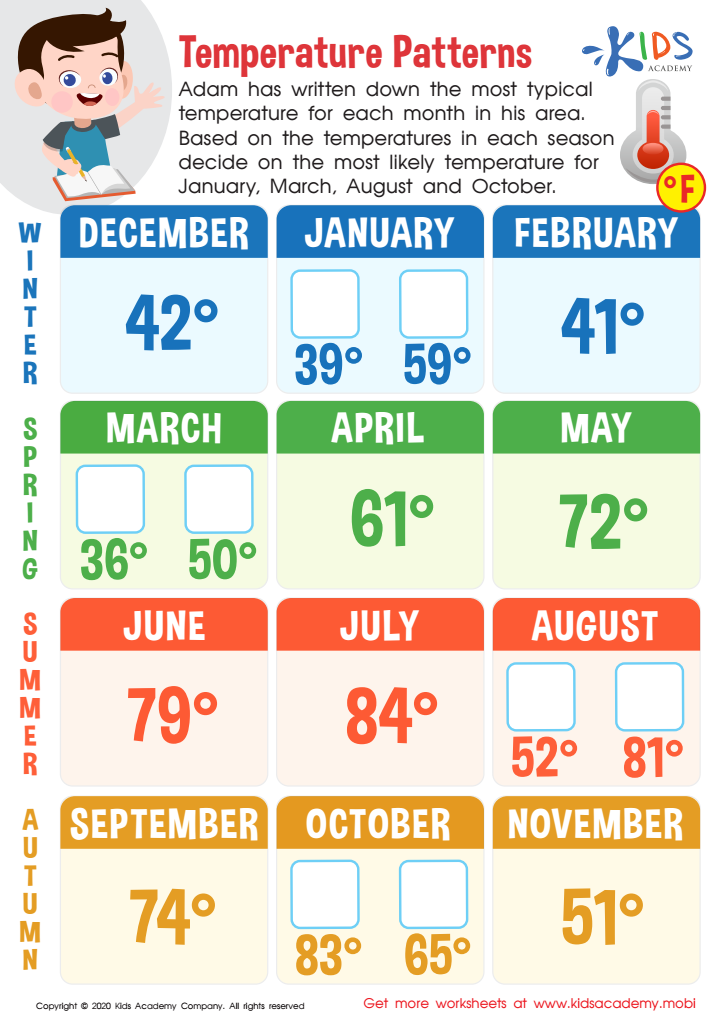
Temperature Patterns Worksheet
 Assign to My Students
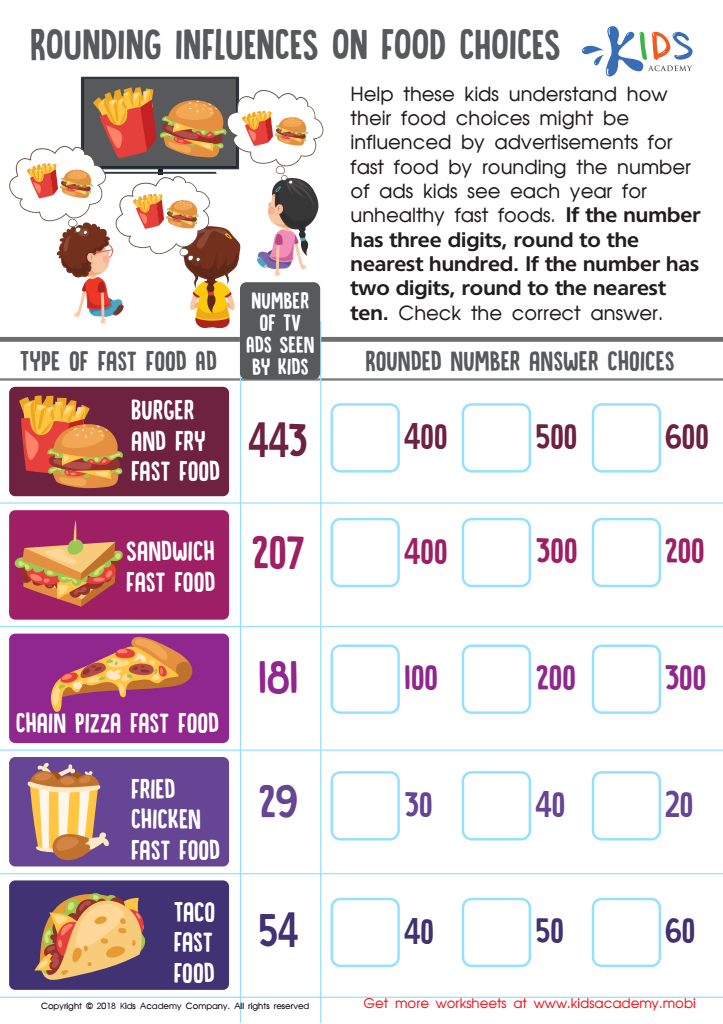
Rounding Influences Food Choices Worksheet
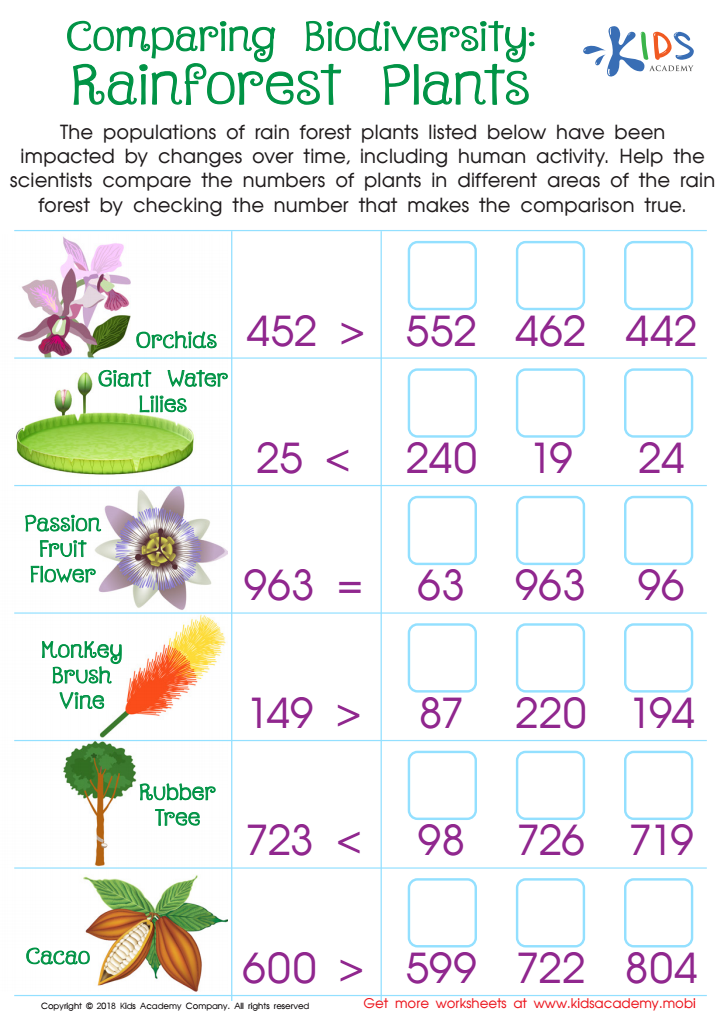
Comparing Biodiversity: Rainforest Plants Worksheet
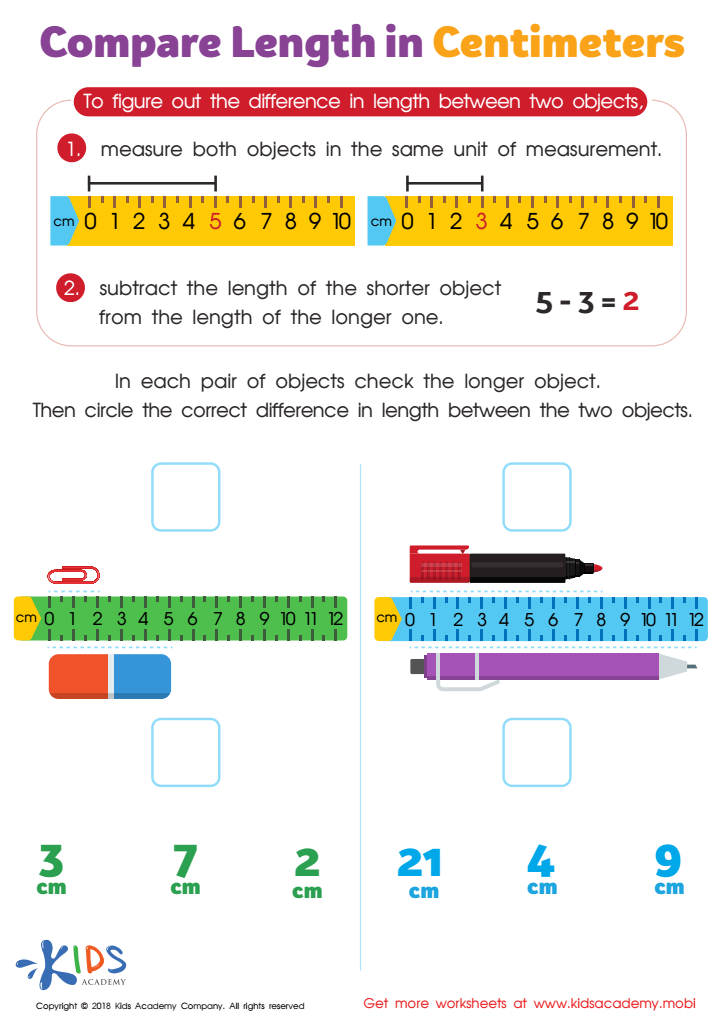
Compare Length in Centimeters Worksheet








Interpreting data is a fundamental skill that supports critical thinking and problem-solving, which are essential abilities for children ages 7-9. At this stage, kids are beginning to grasp the basics of numeracy and literacy, making it the perfect time to introduce data interpretation. By engaging with simple graphs, charts, and tables, children develop the ability to organize information, identify patterns, and make informed decisions. This early exposure helps build a strong foundation for more complex mathematical and statistical concepts they will encounter in later grades.
Parents and teachers should care because these skills are transferable to various aspects of everyday life and future careers. For instance, understanding data helps children make sense of the world around them, from tracking their own progress in various subjects to understanding weather patterns or even managing an allowance. Moreover, the early acquisition of data literacy promotes confidence in engaging with technological tools, fostering digital literacy in an increasingly data-driven world.
Additionally, interpreting data nurtures curiosity and encourages scientific thinking. It involves hypothesizing, testing, and concluding, which are core components of the scientific method. By prioritizing these skills, parents and teachers not only enhance children's academic growth but also equip them with essential life skills, ultimately setting the stage for lifelong learning and informed citizenship.








