Syllable identification Normal Worksheets for Ages 7-9
5 filtered results
-
From - To
Introduce your young learners to the fundamentals of syllable identification with our engaging and educational "Syllable Identification Normal Worksheets for Ages 7-9." Designed to enhance phonological awareness, these worksheets are perfect for children in grades 2-4. Each worksheet offers fun and interactive activities, helping kids to confidently break down words into syllables, improving their reading and spelling skills. With a variety of exercises including counting syllables, matching, and more, children will stay motivated and enjoy the learning process. Foster a solid foundation in literacy with our expertly crafted syllable worksheets.
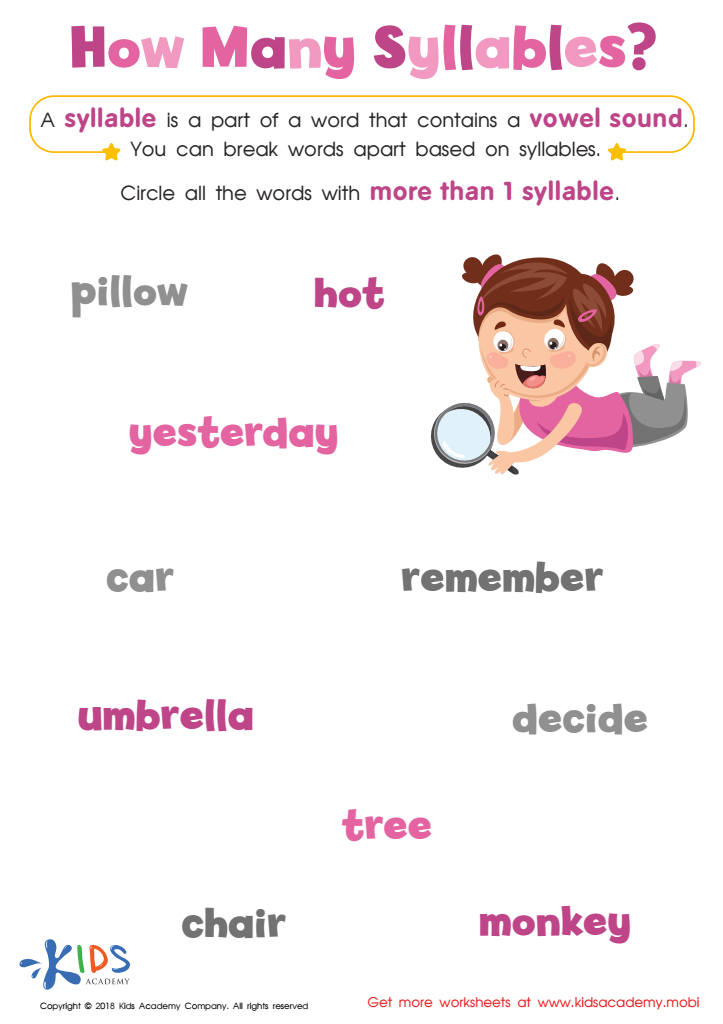
Reading: How Many Syllables Worksheet
 Assign to My Students
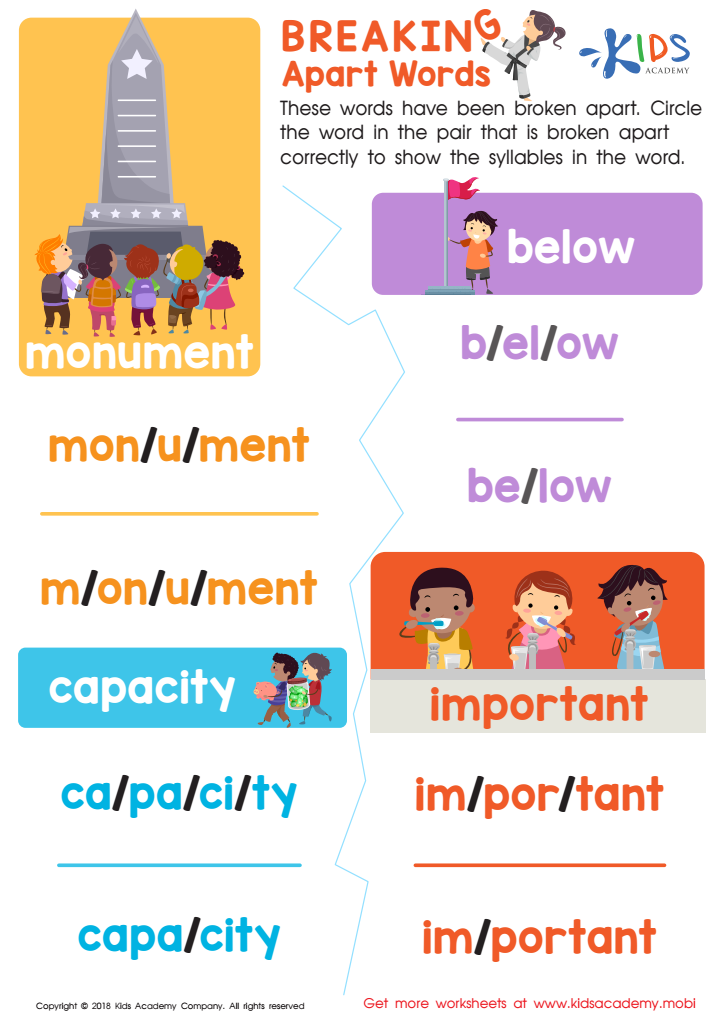
Breaking Apart Words Worksheet
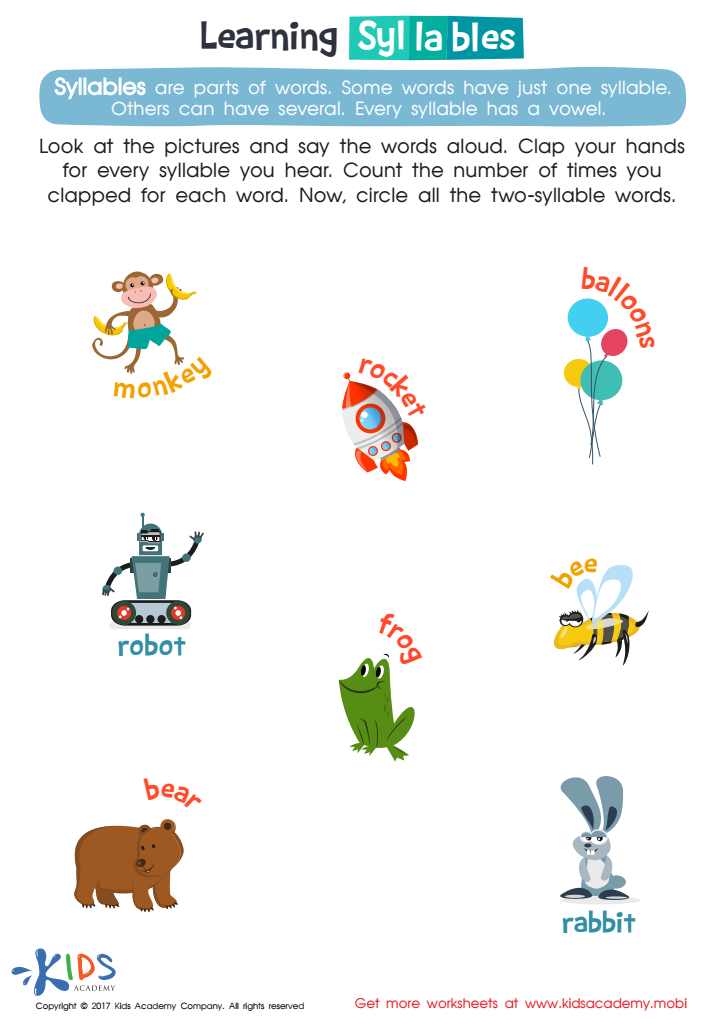
Learning Syllables Word Structure Worksheet
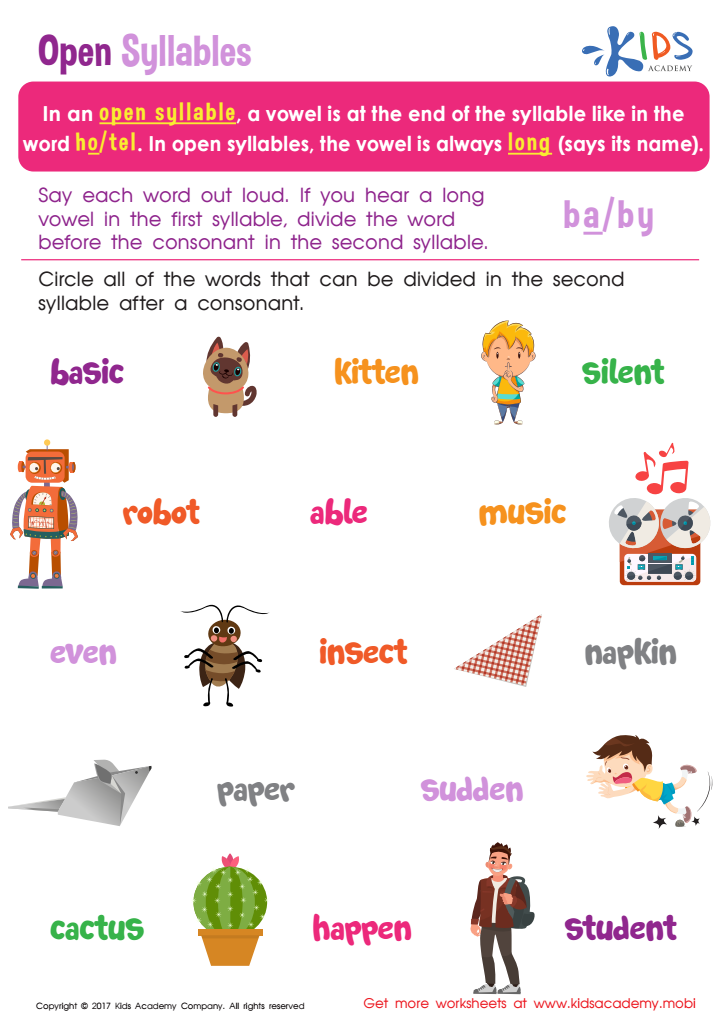
Open Syllable Printable Worksheet
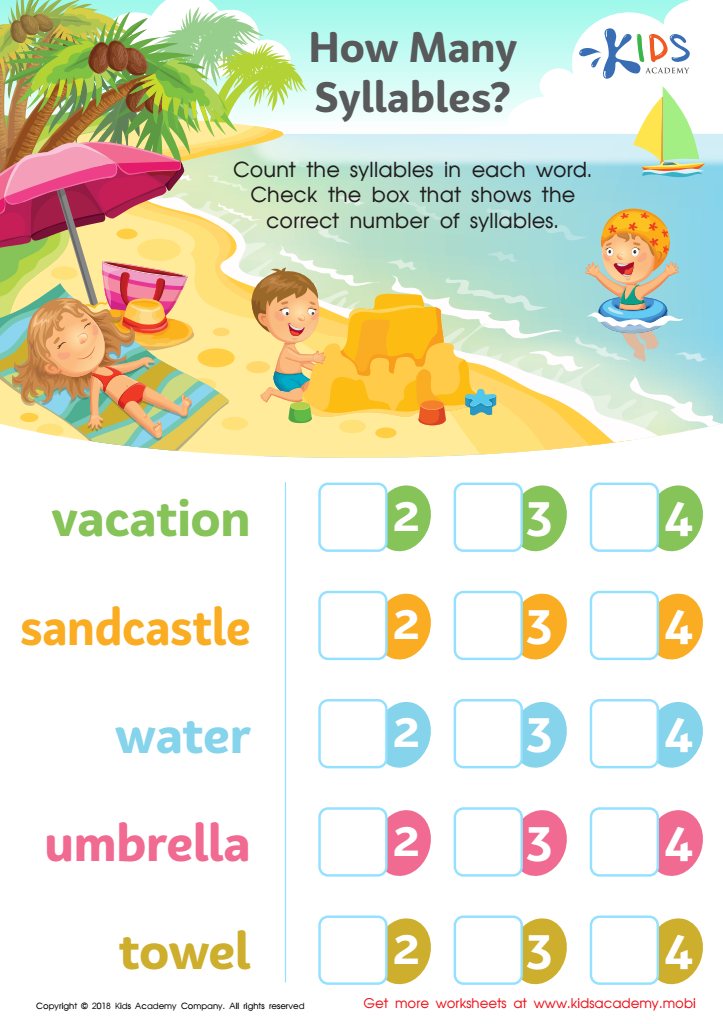
How Many Syllables Worksheet








Syllable identification is a fundamental skill that significantly impacts literacy development for children between the ages of 7-9, commonly in grades 2 and 3. It is crucial for parents and teachers to pay attention to this aspect of learning because it lays the foundation for successful reading and writing.
Firstly, understanding syllables aids in word recognition. Children who can break down words into syllables find it easier to decode complex words, improving their reading fluency. This ability also supports their spelling skills since they learn to construct words by recognizing syllable patterns.
Secondly, syllable identification is linked to phonemic awareness—recognizing and manipulating sounds in spoken language. This awareness is a key predictor of reading success. Children who excel in these early phonetic skills tend to develop stronger reading and comprehension abilities.
Moreover, syllable practice builds confidence. When children can segment words effortlessly, they experience less frustration while reading, leading to a more positive attitude towards learning. This engagement is vital because a child's attitude towards reading in these early years can influence their long-term academic success.
In sum, focusing on syllable identification can provide children with critical tools for literacy, phonemic awareness, and self-confidence. Parents and teachers who emphasize this skill are supporting their children's journey as proficient readers and enthusiastic learners.








