Time reading skills Normal Worksheets for Ages 7-9
3 filtered results
-
From - To
Enhance your child’s understanding of time with our Time Reading Skills worksheets tailored for ages 7-9. These engaging resources focus on teaching clock reading, incrementing time, and solving real-life time-related problems, providing kids with a solid foundation in time management. With a variety of activities including matching, fill-in-the-blank, and hands-on exercises, students will enjoy learning in a fun and interactive way. Ideal for classroom or home use, these worksheets foster independent learning and boost confidence in time concepts. Download them for free today and watch your child develop essential life skills while enjoying the learning process!
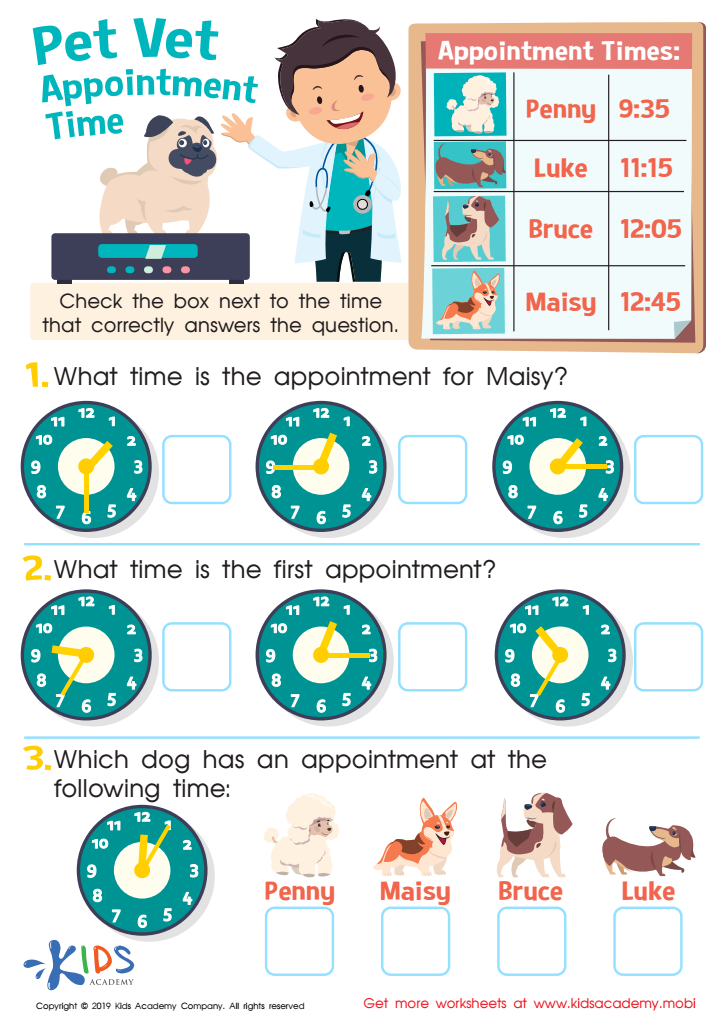
Pet Vet Appointment Time Worksheet
 Assign to My Students
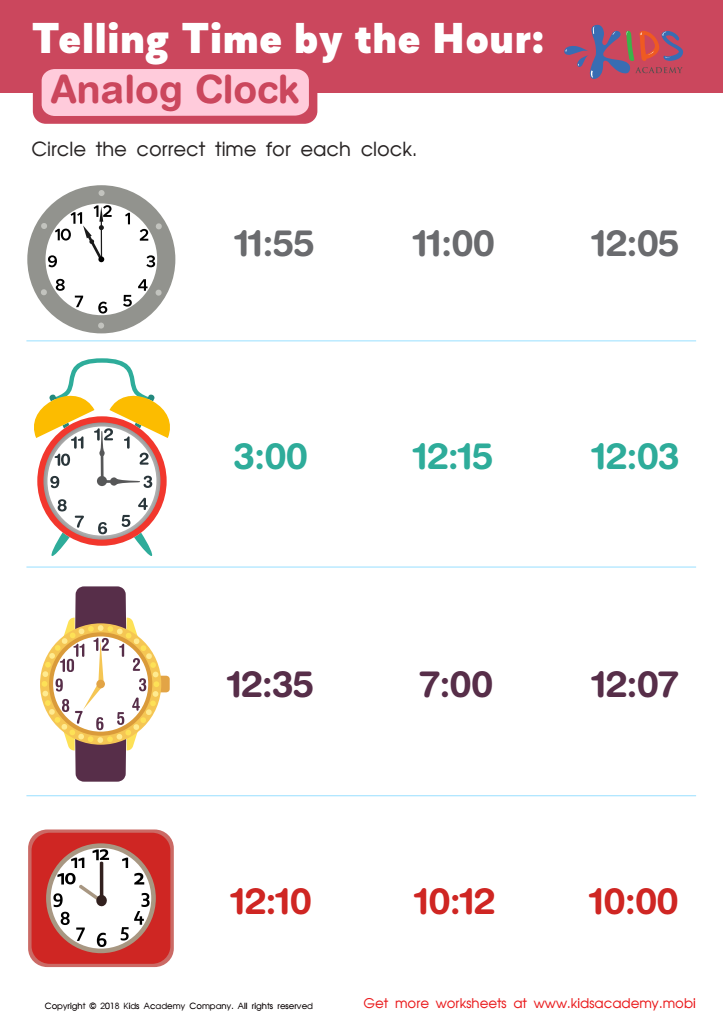
Telling Time by the Hour: Analog Clock Worksheet
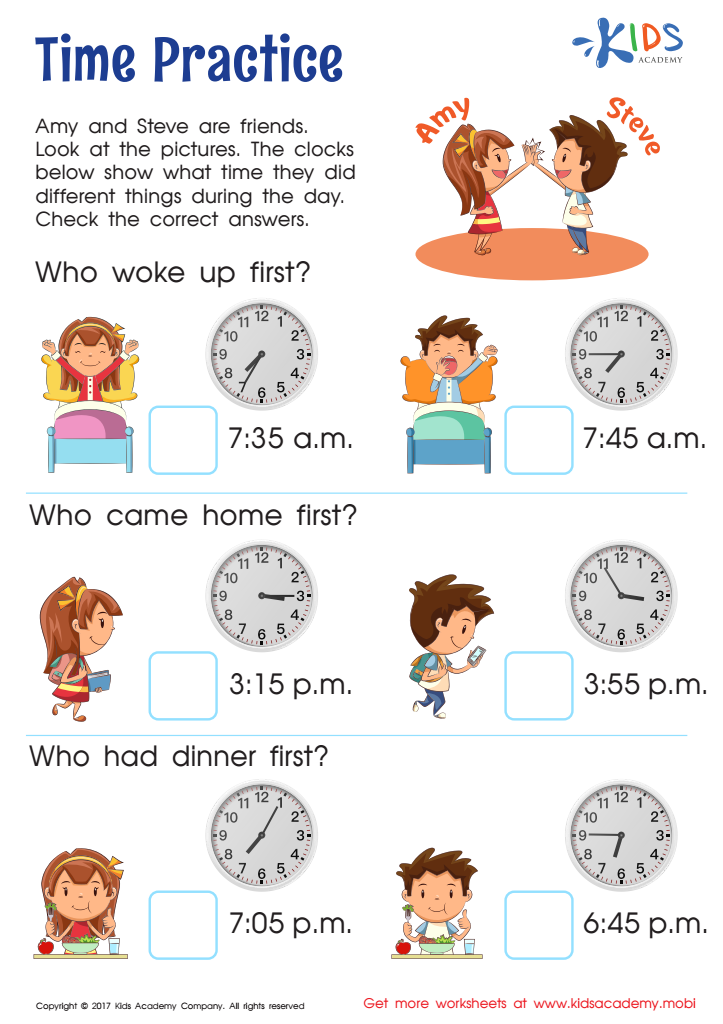
Time Practice Worksheet








Time reading skills are crucial for children aged 7-9 as they lay the foundation for effective time management and understanding the world around them. At this stage, children transition from learning to read to reading to learn, making comprehension of time essential. Being able to read clocks and understand schedules enables children to manage their daily routines, tasks, and responsibilities, fostering independence.
Parents and teachers should emphasize time reading as it enhances critical thinking and problem-solving skills. When children learn to tell time, they also develop mathematical concepts such as understanding fractions (e.g., half past, quarter past) and estimation. Moreover, mastering these skills can enhance their confidence, leading to a positive attitude toward learning.
Furthermore, time management is vital in today’s fast-paced world where activities, appointments, and deadlines are part of life. By nurturing these skills, parents and teachers equip children to cope with and navigate various social, academic, and extracurricular demands successfully.
Ultimately, fostering strong time-reading skills promotes not only individual growth but also cultivates responsibility, discipline, and effective interpersonal skills that benefit children as they transition into adolescence and adulthood. Therefore, it’s essential for caregivers to prioritize this vital aspect of education.








