Understanding biodiversity Normal Worksheets for Ages 7-9
4 filtered results
-
From - To
Explore the fascinating world of biodiversity with our "Understanding Biodiversity Normal Worksheets" designed for children ages 7-9! These engaging worksheets help young learners grasp essential concepts of ecosystem diversity and the vital roles that plants, animals, and microorganisms play in our environment. Through interactive activities, fun illustrations, and questions tailored to their age group, kids will develop a deeper appreciation for nature and its interconnectedness. Perfect for classroom use or homeschooling, these worksheets encourage critical thinking skills and nurture a sense of environmental stewardship. Embark on an exciting adventure in understanding biodiversity and inspire the next generation of nature enthusiasts!
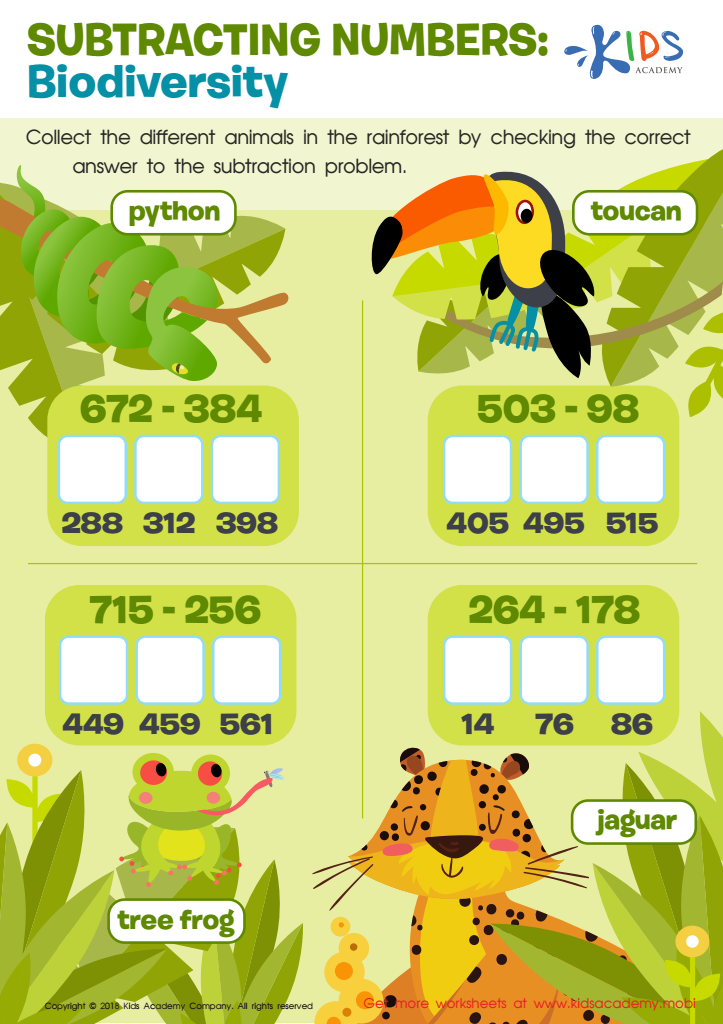
Subtracting Numbers: Biodiversity Worksheet
 Assign to My Students
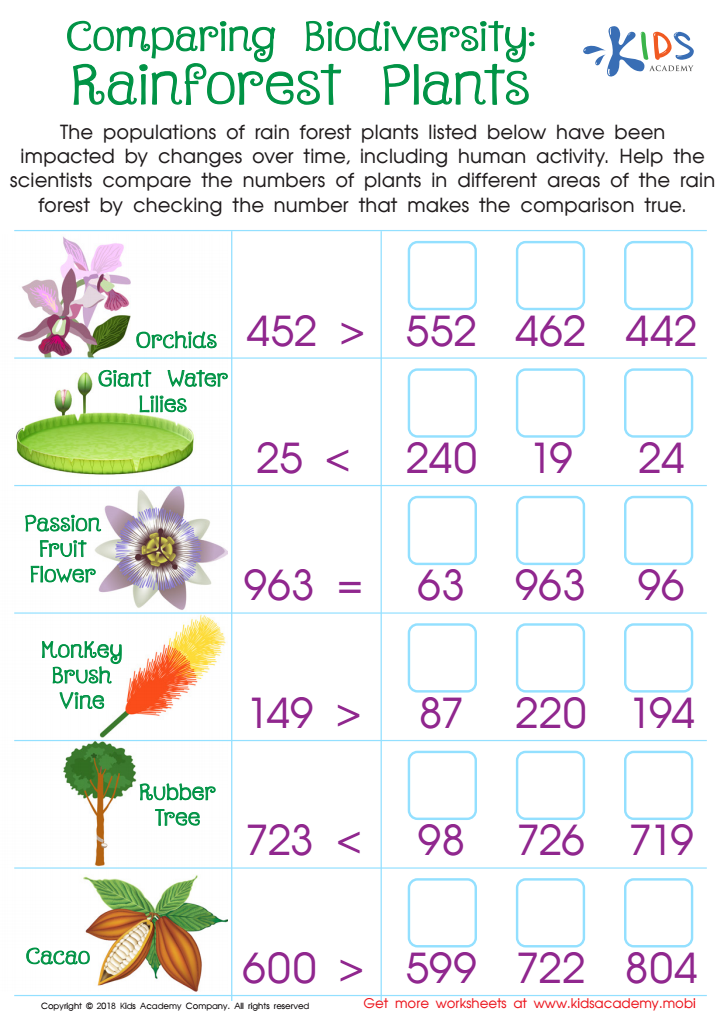
Comparing Biodiversity: Rainforest Plants Worksheet
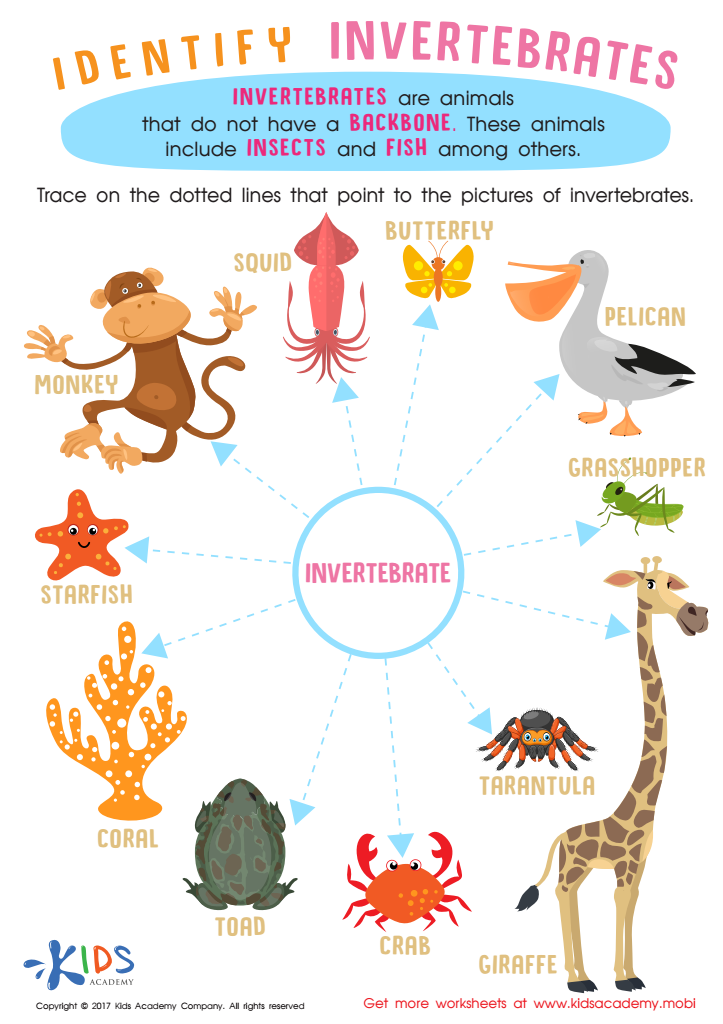
Invertebrates Worksheet for Grade 3
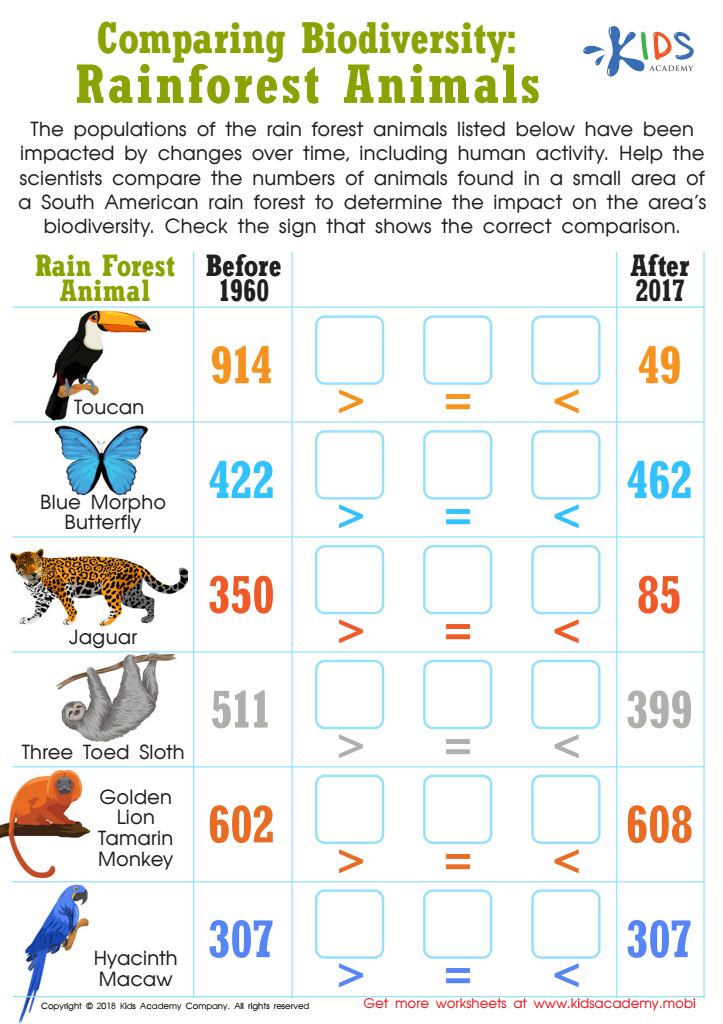
Comparing Biodiversity: Rainforest Animals Worksheet






.jpg)

Understanding biodiversity is essential for parents and teachers because it helps children appreciate the variety of life on Earth. By learning about different plants, animals, and ecosystems, children develop a sense of wonder and respect for nature. This knowledge fosters a sense of responsibility towards the environment, encouraging children to care for the world around them.
When children understand biodiversity, they also grasp how everything in nature is connected. For instance, they learn how bees help flowers grow by spreading pollen or how trees provide shelter for birds. Such lessons promote critical thinking and awareness of ecological relationships, crucial skills in today’s world, where environmental issues are pressing.
Moreover, learning about biodiversity ties into various subjects, including science, geography, and art, making it an engaging way for children to see connections across their curriculum. It sparks curiosity and inspires them to ask questions, leading to a lifelong love for learning.
Lastly, fostering an early appreciation for biodiversity helps nurture future stewards of the planet. When children understand the importance of protecting various species and habitats, they are more likely to become responsible adults who advocate for sustainable practices. By instilling this understanding, we lay the groundwork for a healthier planet for generations to come.








