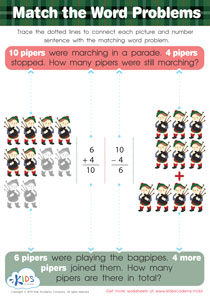
Counting skills Normal Addition Worksheets for Ages 7-9
5 filtered results
-
From - To
Enhance your child's counting skills with our Normal Addition Worksheets designed specifically for ages 7-9. These worksheets provide engaging activities that help children practice fundamental addition concepts while reinforcing their number sense. With a variety of fun exercises, children will learn to count and add numbers seamlessly, making math enjoyable and approachable. Our carefully crafted resources promote confidence in mathematical skills and encourage independent learning. Perfect for home or classroom use, these worksheets are an essential tool for young learners to master addition through counting. Explore and download our collection to support your child's mathematical journey today!
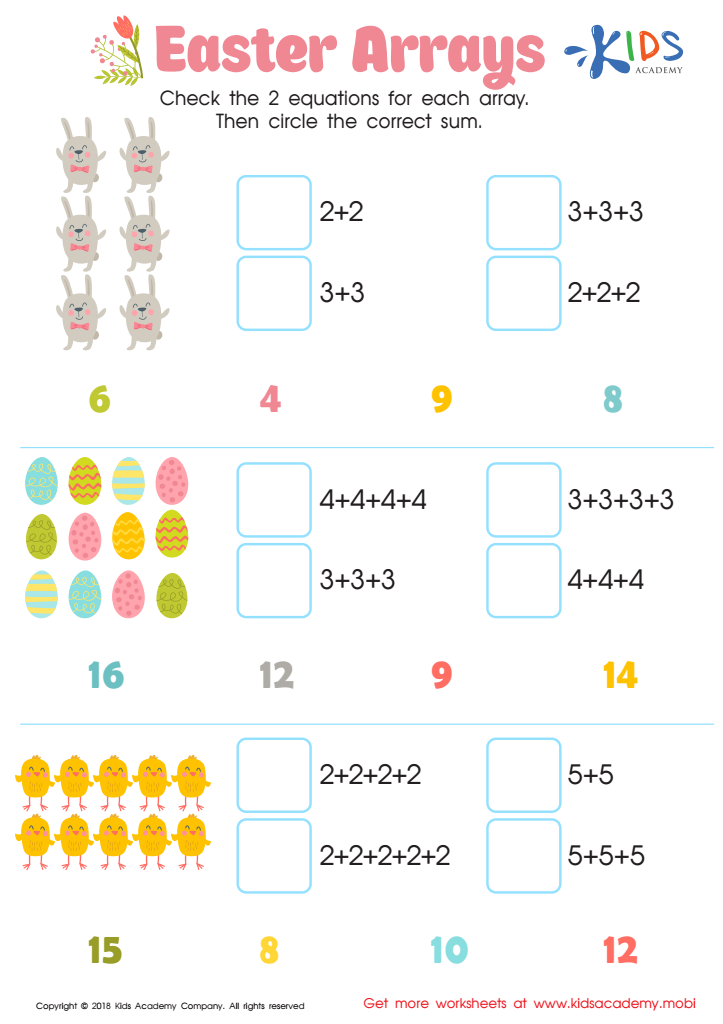
Easter Arrays Worksheet
 Assign to My Students
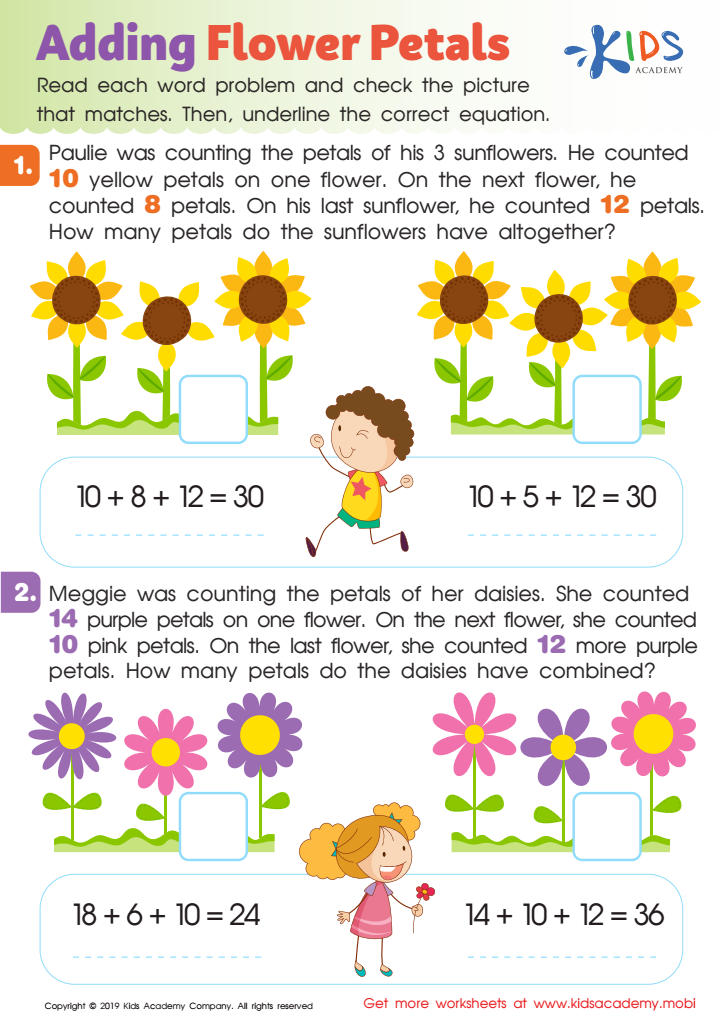
Adding Flower Petals Worksheet
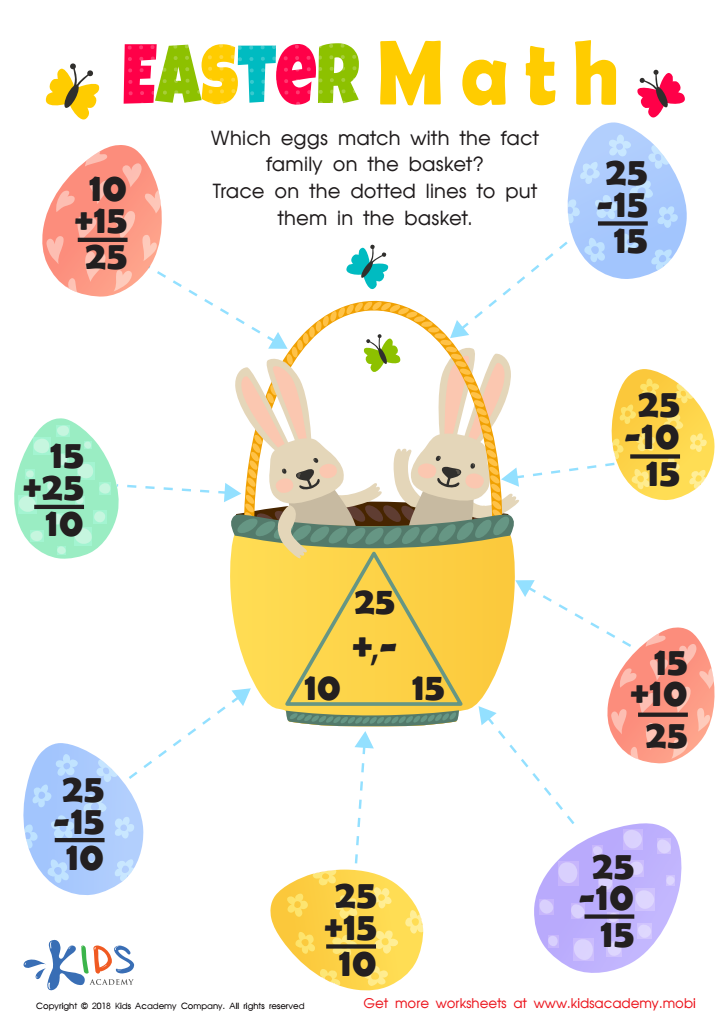
Fact Families: Easter Math Worksheet
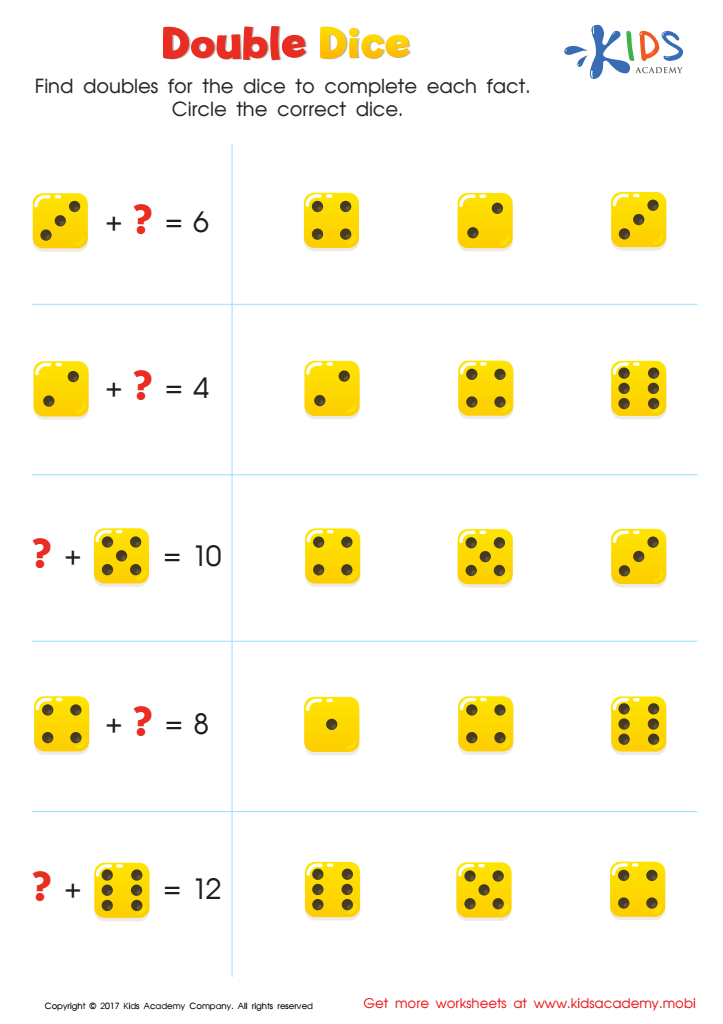
Addition Facts: Double Dice Worksheet
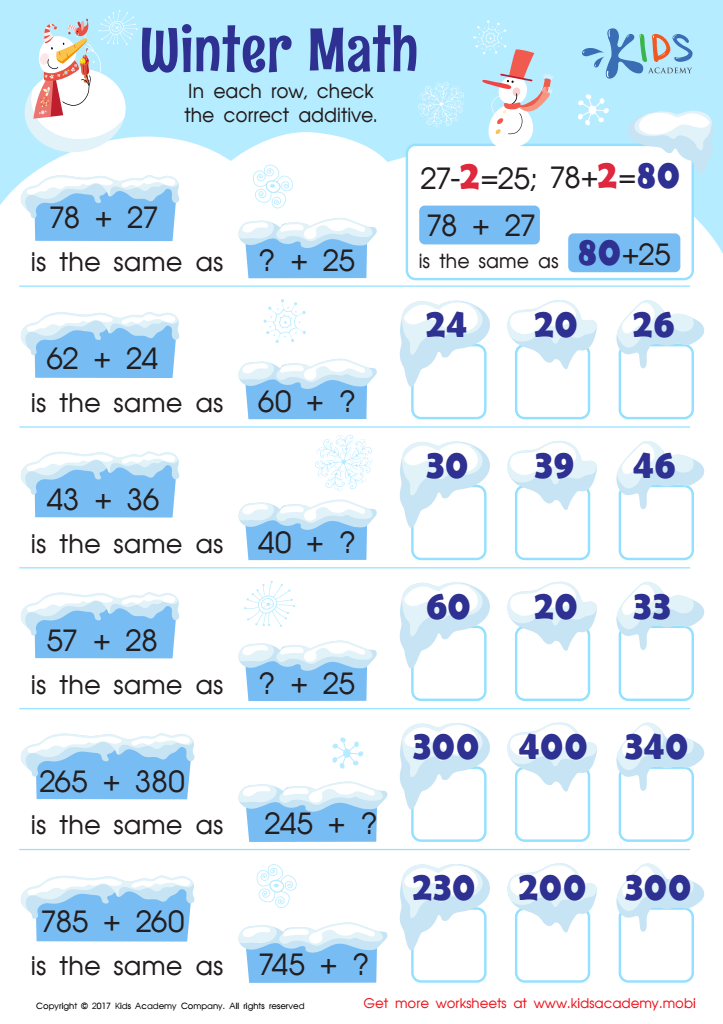
Free Addition Worksheet








Counting skills and normal addition are foundational to a child’s mathematical development, making it crucial for parents and teachers to prioritize these skills for ages 7-9. At this stage, children are transitioning from basic number recognition to more complex mathematical concepts. Mastering counting helps them understand number sequences, place value, and basic operations, forming the basis for future topics such as subtraction, multiplication, and even division.
Moreover, strong counting and addition skills are linked to improved problem-solving abilities, critical thinking, and increased confidence in math. When children succeed in these areas, they are more likely to engage with mathematics positively, enhancing their overall educational experience. Additionally, proficiency in basic operations supports daily life skills, such as budgeting, measuring, and time management, which children will encounter regularly.
Involving parents in this process can further reinforce learning at home, making math a fun and integral part of their daily routines. Teachers play a key role by providing engaging, hands-on activities that promote practice in these areas. Ultimately, fostering solid counting and addition skills in ages 7-9 not only aids academic success but also lays the groundwork for lifelong mathematical competency and an appreciation for the subject.