Understanding fractions Normal Fractions Worksheets for Ages 7-9
8 filtered results
-
From - To
Mastering fractions is essential for young learners, and Kids Academy offers targeted Normal Fractions Worksheets designed for children ages 7-9. Our engaging worksheets simplify complex fraction concepts through interactive exercises, visual aids, and practical examples. Each sheet supports the development of crucial skills, such as identifying, comparing, and understanding fractions in day-to-day contexts. With step-by-step instructions and vibrant illustrations, kids can build a solid mathematical foundation in a fun and motivating environment. Whether used in classrooms or at home, these worksheets are an ideal resource for fostering confident and competent math learners. Explore and enhance your child's fraction skills now!
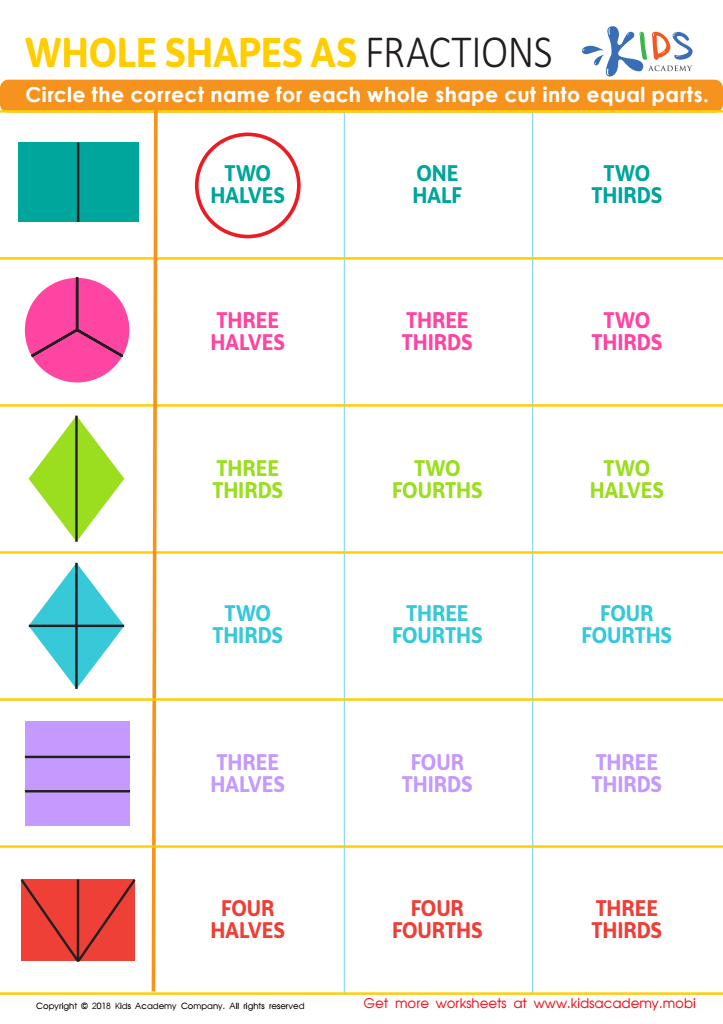
Whole Shapes as Fractions Worksheet
 Assign to My Students
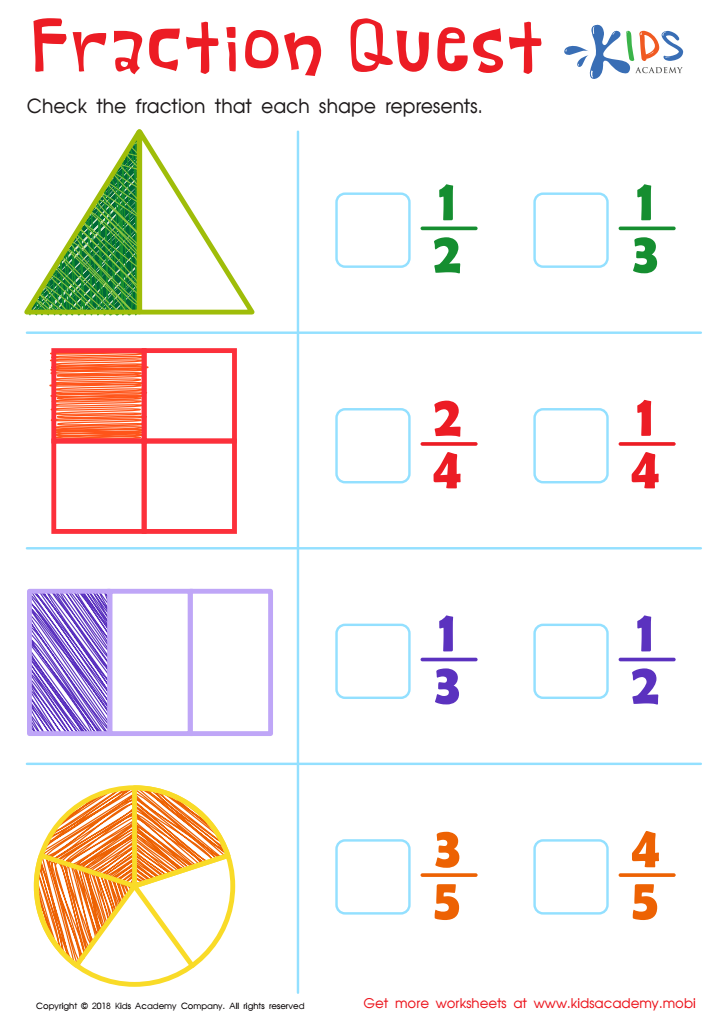
Fraction Quest Worksheet
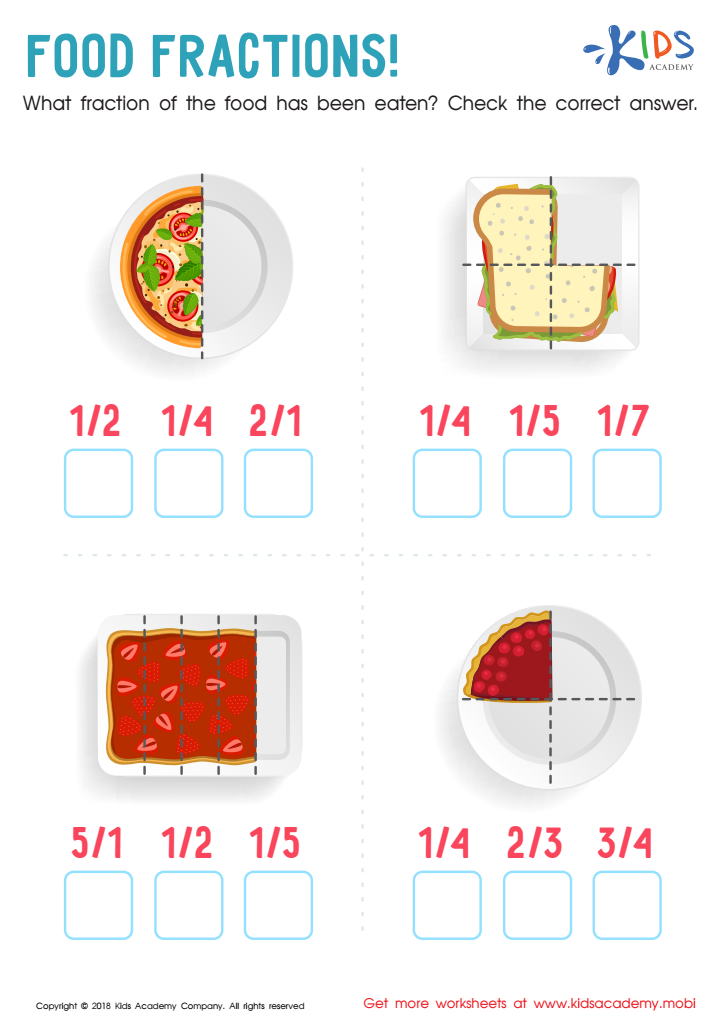
Food Fractions Worksheet
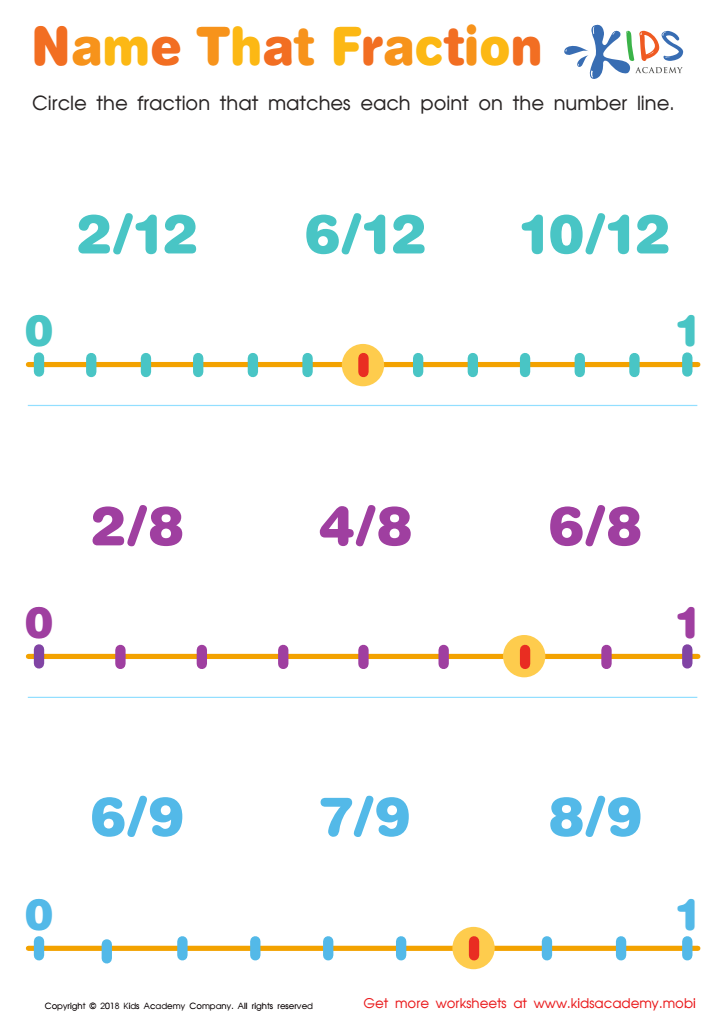
Name That Fraction Worksheet
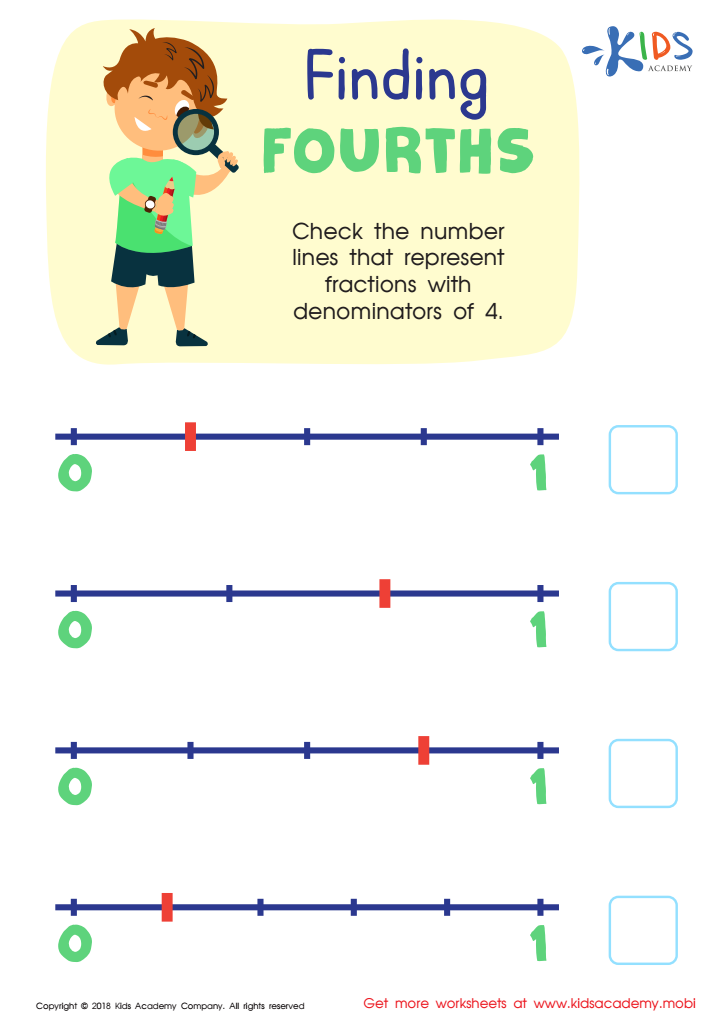
Finding Fourths Worksheet
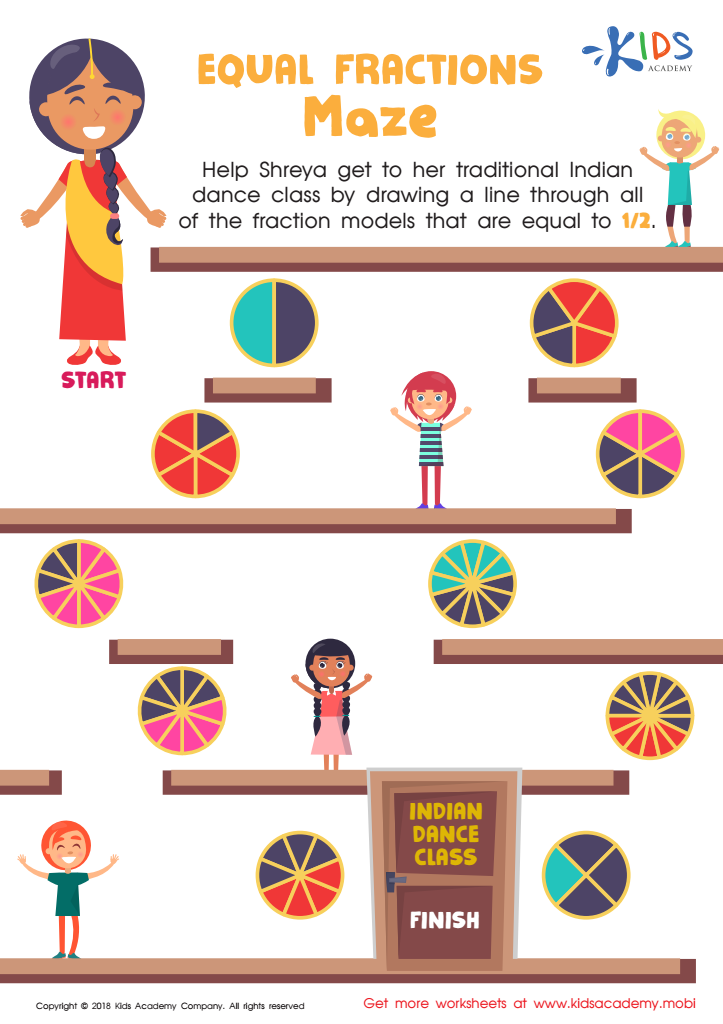
Equal Fractions Maze Worksheet
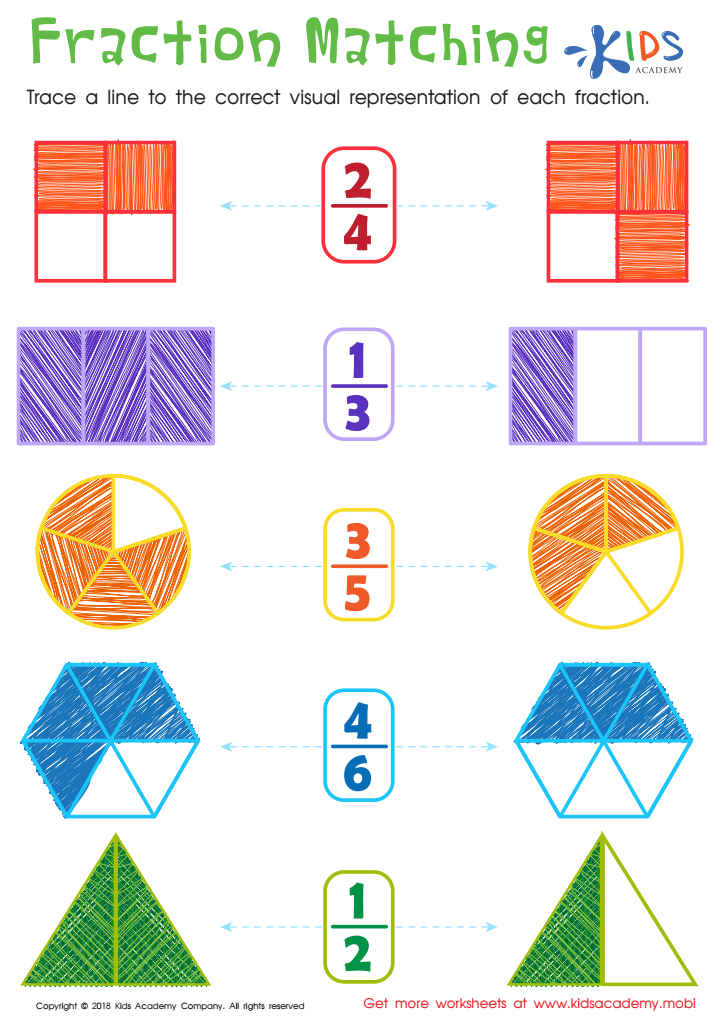
Fraction Matching Worksheet
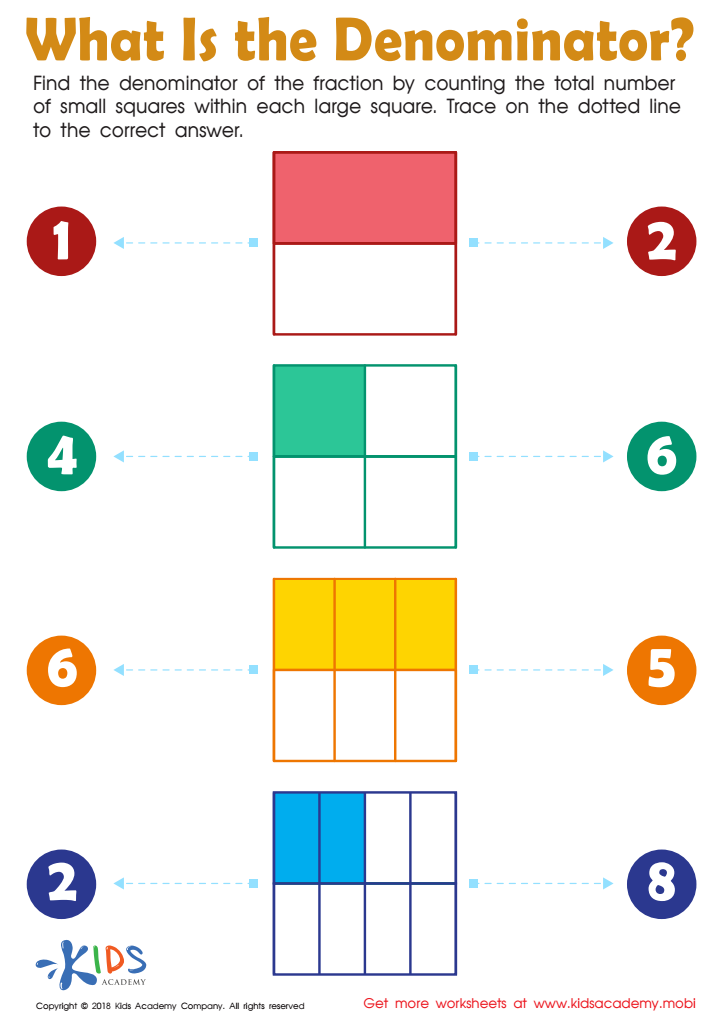
What Is the Denominator? Worksheet




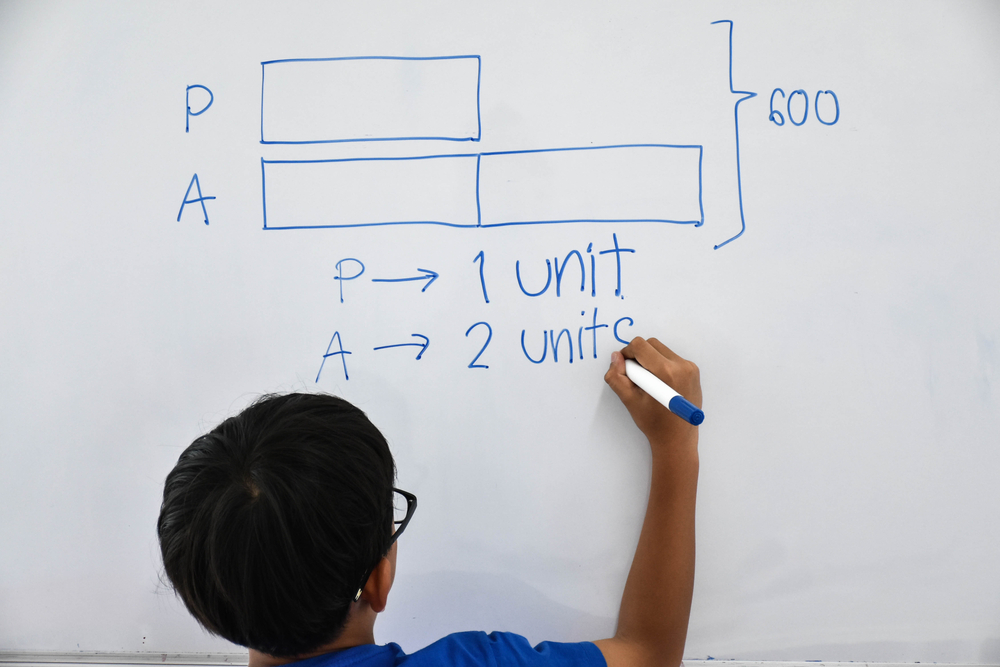



Understanding fractions, even at a basic level, is crucial for children aged 7-9 because it lays the foundation for many essential math skills and real-life applications. Fractions teach kids about the concept of division in a tangible way; they learn how objects or sets can be divided into equal parts, fostering an early understanding of ratios and proportions. This not only helps in math but also in other subjects like science, cooking, and even time management where fractions are pervasive.
Moreover, comprehending fractions enriches problem-solving abilities by encouraging logical thinking and real-life problem-solving skills. For instance, understanding halves, thirds, and quarters aids children in following recipes, sharing equally with friends, and even telling the time (quarter past, half past).
Additionally, it boosts confidence: mastering fractions can fortify a child's mathematical self-esteem, making future challenges in algebra and geometry less intimidating. Without grasping these foundational concepts early on, students may struggle in higher grades, leading to math anxiety and a potential aversion to STEM subjects.
Parents and teachers alike should care because guiding children through the understanding of fractions ensures they develop a comprehensive mathematical toolkit. This facilitates smoother educational progress and equips them for practical, everyday situations involving measurement, budgeting, and decision-making.








