Animal identification Normal Math Worksheets for Ages 7-9
3 filtered results
-
From - To
Enhance your child's learning experience with our Animal Identification Normal Math Worksheets designed specifically for ages 7-9! These engaging worksheets combine essential math skills with fun animal-themed activities, making learning enjoyable and interactive. Kids will practice addition, subtraction, and basic problem-solving while identifying various animals, honing their observation skills alongside math concepts. Perfect for homeschooling or classroom use, these worksheets promote critical thinking and reinforce knowledge in a creative way. Boost your child's confidence in math while deepening their fascination with the animal world. Download now and watch your child thrive in both math and animal recognition!
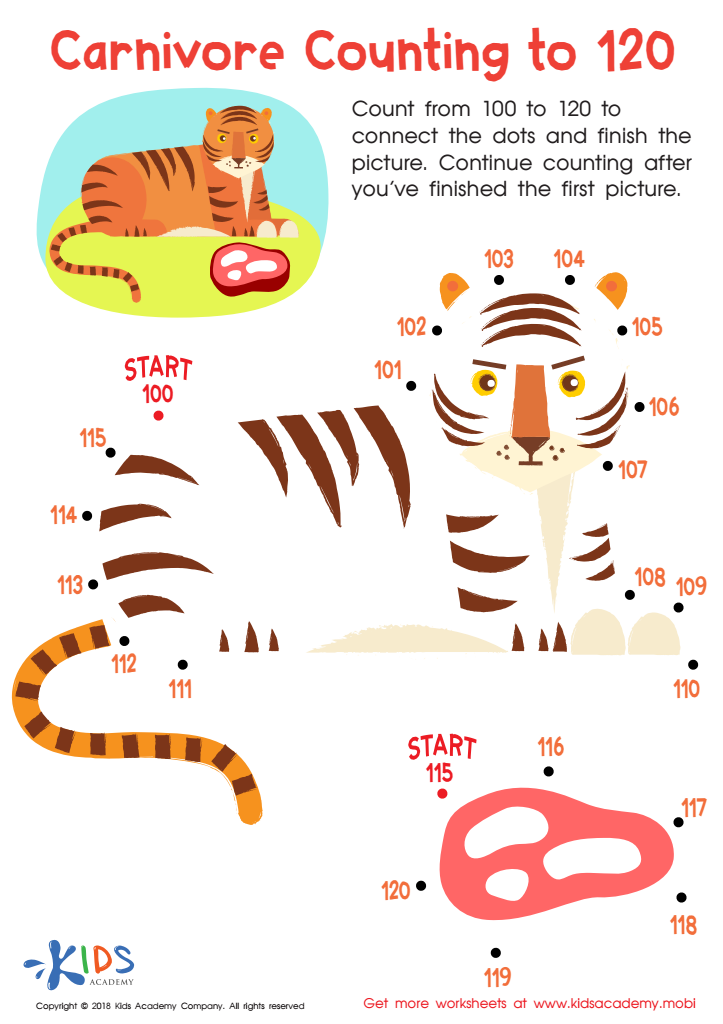
Carnivore Counting to 120 Worksheet
 Assign to My Students
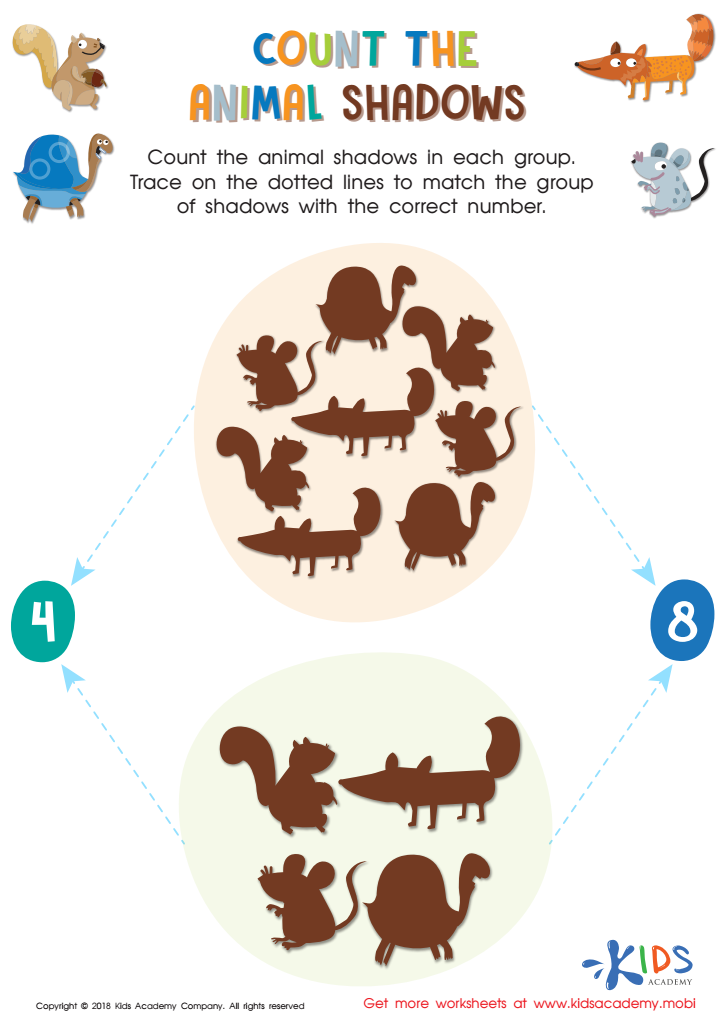
Count the Animal Shadows Worksheet
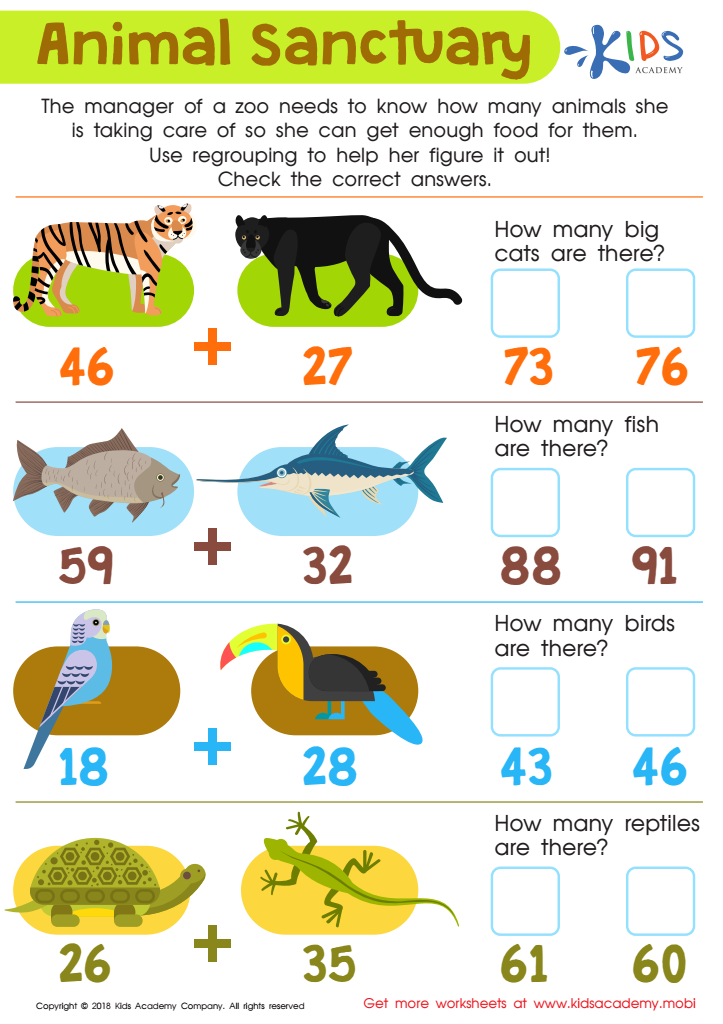
Animal Sanctuary Worksheet



.jpg)


Parents and teachers should care about animal identification normal math for ages 7-9 because this foundational skill helps children develop critical thinking, problem-solving, and analytical skills. At this age, children are naturally curious about the world around them, and incorporating animal identification into math lessons taps into that curiosity while enhancing their learning experience.
Understanding animal characteristics, such as size, habitat, and diet, can involve measuring, counting, and categorizing, which connects math to real-life scenarios. For instance, by counting different types of animals or calculating their average weight, students learn to apply mathematical concepts in tangible ways. This helps solidify basic math skills like addition, subtraction, and estimation, making lessons more engaging.
Moreover, animal identification normal math encourages children to explore classification systems and patterns, fostering a deeper understanding of both mathematics and biology. It promotes responsibility and compassion toward living creatures, highlighting the importance of conservation and environmental awareness.
Finally, linking math education to animals can create a positive learning environment and stimulate discussions among peers, boosting social interaction. This integrated approach not only fosters a love for learning but also prepares students for more advanced concepts in both math and science.








