Understanding biodiversity Normal Math Worksheets for Ages 7-9
3 filtered results
-
From - To
Explore the magic of nature with our "Understanding Biodiversity" math worksheets designed for ages 7-9. These engaging materials seamlessly blend math skills with ecological knowledge. Young learners will gain a strong grasp of biodiversity through interactive activities that emphasize patterns, counting, and basic arithmetic. Each worksheet encourages curiosity and critical thinking, making math fun and relevant in understanding our world's rich variety. Boost your child’s math proficiency while fostering an appreciation for the environment. Ideal for classrooms and homeschooling, our worksheets provide the perfect educational adventure for budding scientists and mathematicians. Start your child's learning journey today!
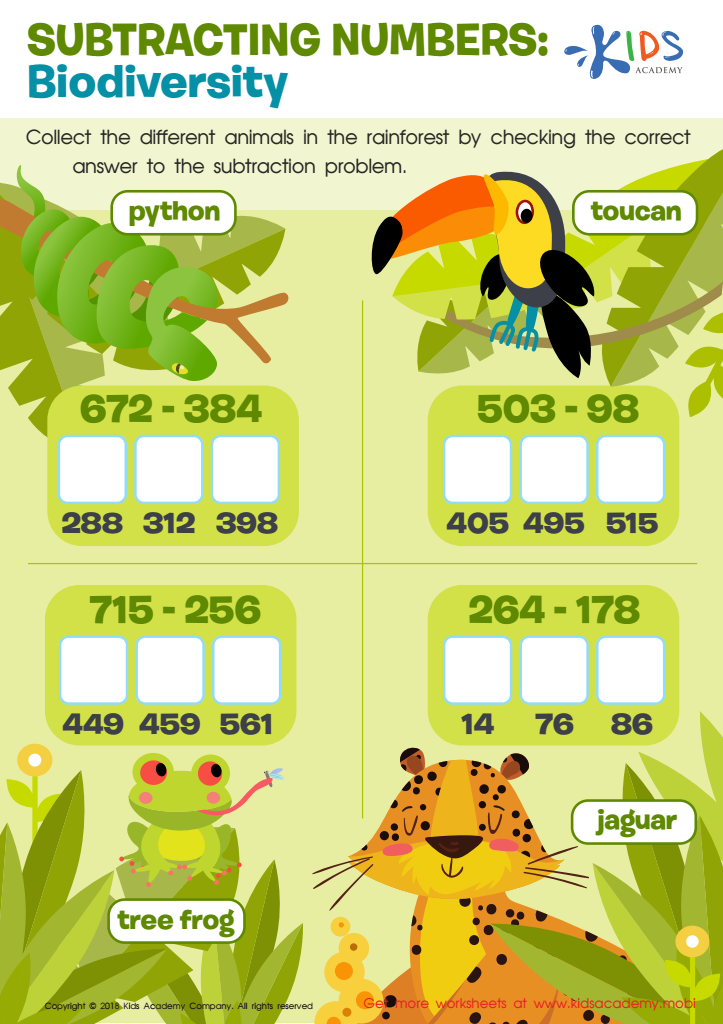
Subtracting Numbers: Biodiversity Worksheet
 Assign to My Students
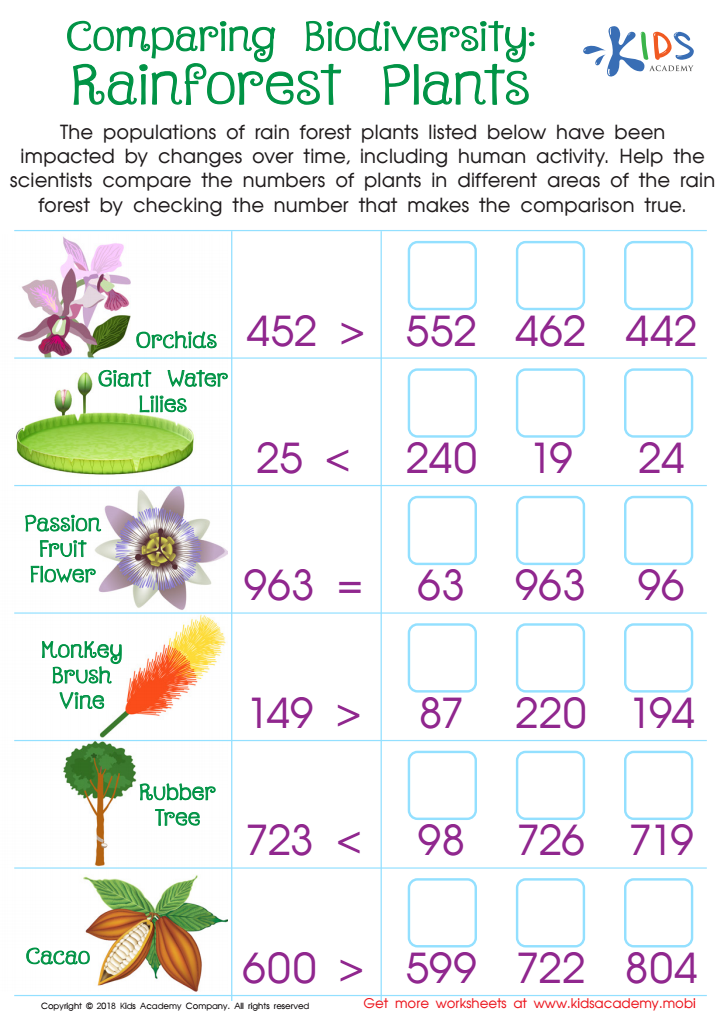
Comparing Biodiversity: Rainforest Plants Worksheet
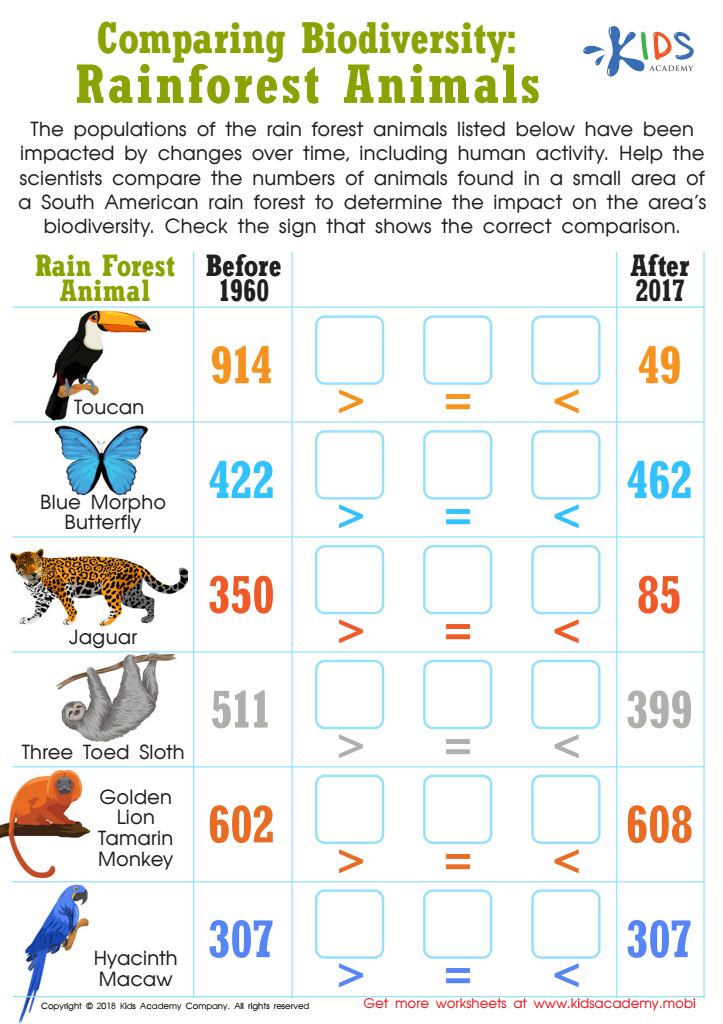
Comparing Biodiversity: Rainforest Animals Worksheet




%20(1).jpg)

Understanding biodiversity is crucial for young children because it fosters a sense of wonder and respect for the natural world. For parents and teachers, introducing the concept to kids aged 7-9 helps instill values of environmental stewardship early on. Biodiversity refers to the variety of life on Earth, encompassing different species of plants, animals, fungi, and microorganisms. When children learn about biodiversity, they begin to appreciate how interconnected and interdependent all living things are.
For young learners, the topic can be made accessible through fun activities such as nature walks, observing insects, or growing a small garden. Connecting these experiences to simple math concepts—like counting species, measuring plant growth, or tracking weather changes—enhances both their mathematic and scientific skills. For example, children can learn to graph the number of different plants in a garden or the types of birds seen in a park.
As kids become aware of how biodiversity impacts areas like food supply, medicine, and climate regulation, they develop an understanding of why preserving nature is important. Equipping children with this knowledge not only supports their intellectual growth but also encourages responsible behaviors that can lead to a more sustainable future. Therefore, teachers and parents should prioritize teaching biodiversity, linking it to everyday life and basic math skills, to cultivate informed, conscious individuals.








