
Normal Times Tables Worksheets for Ages 7-9
12 filtered results
Difficulty Level
Grade
Age
-
From - To
Subject
Activity
Standards
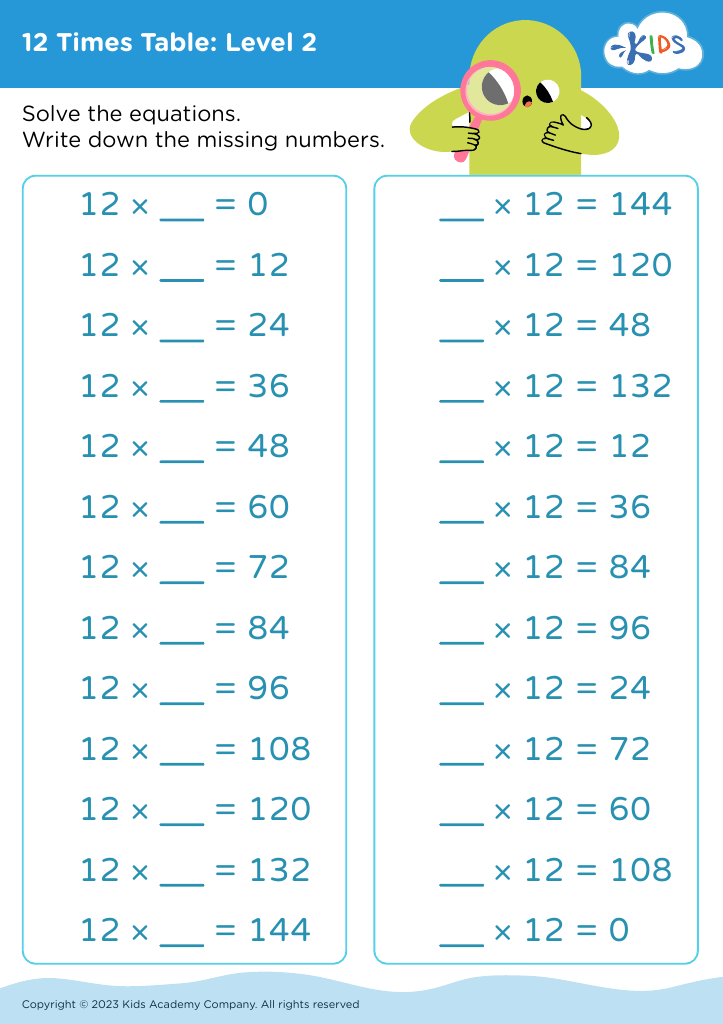
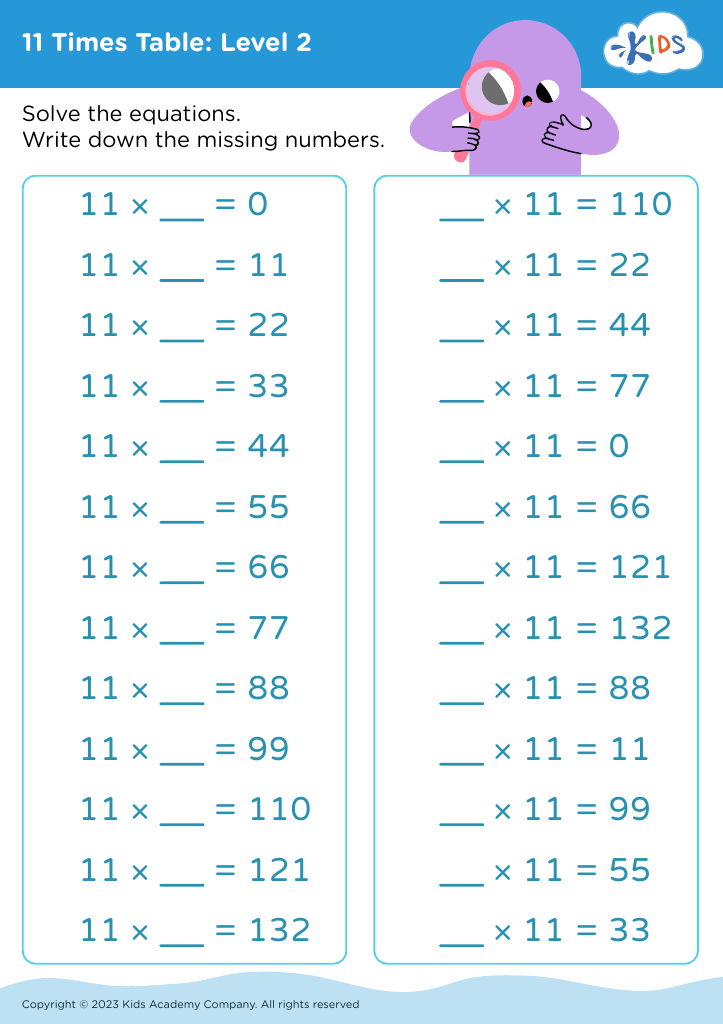
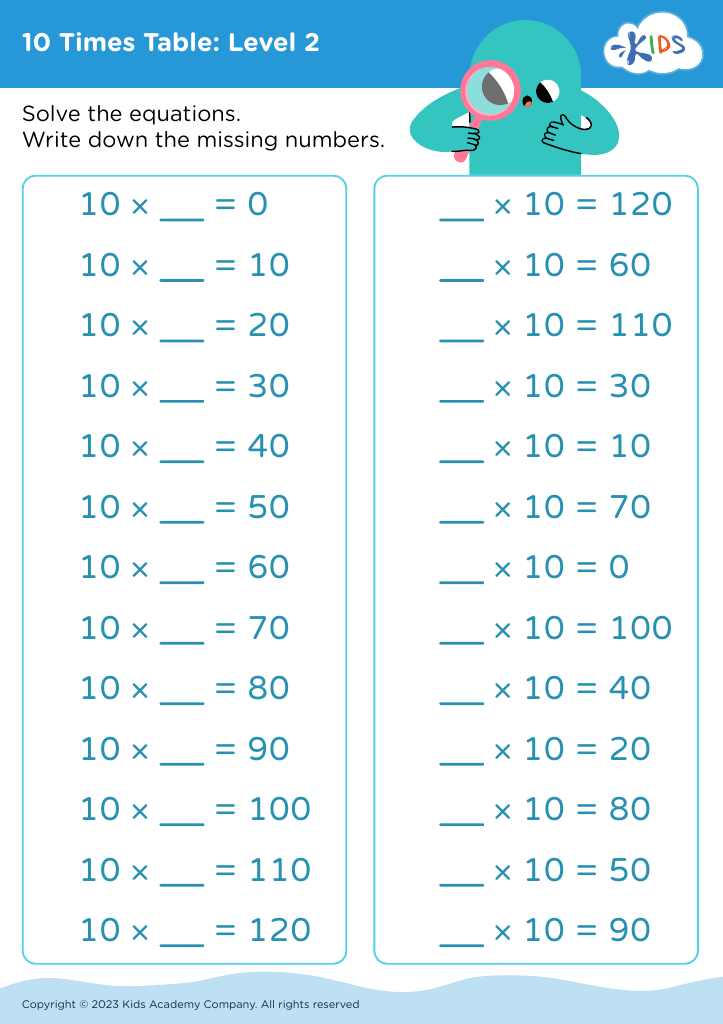
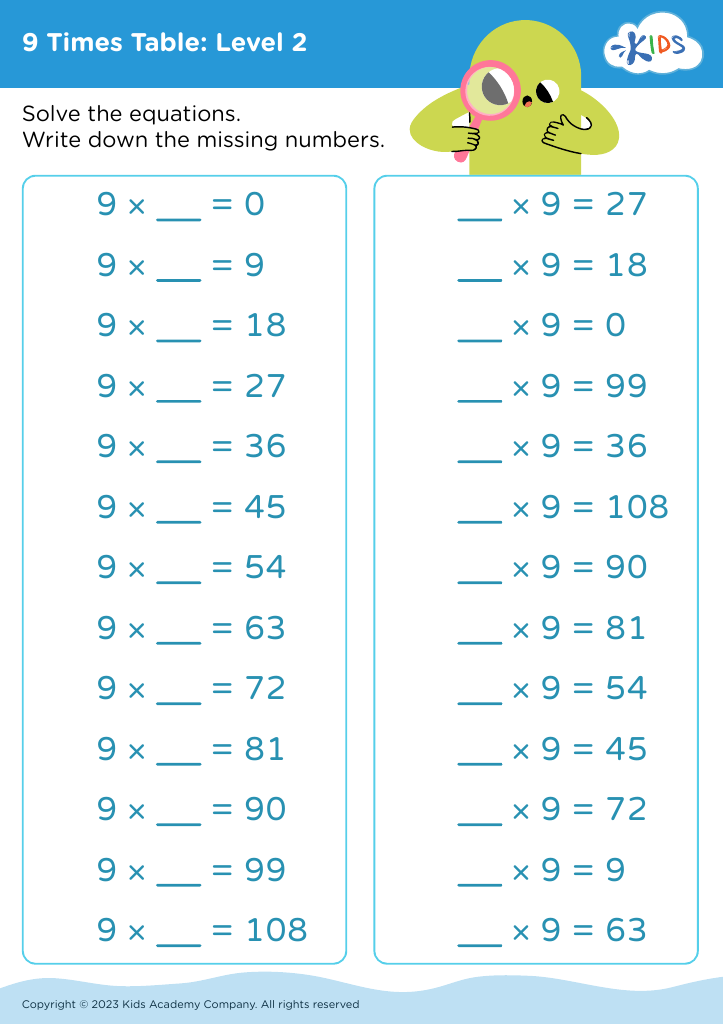
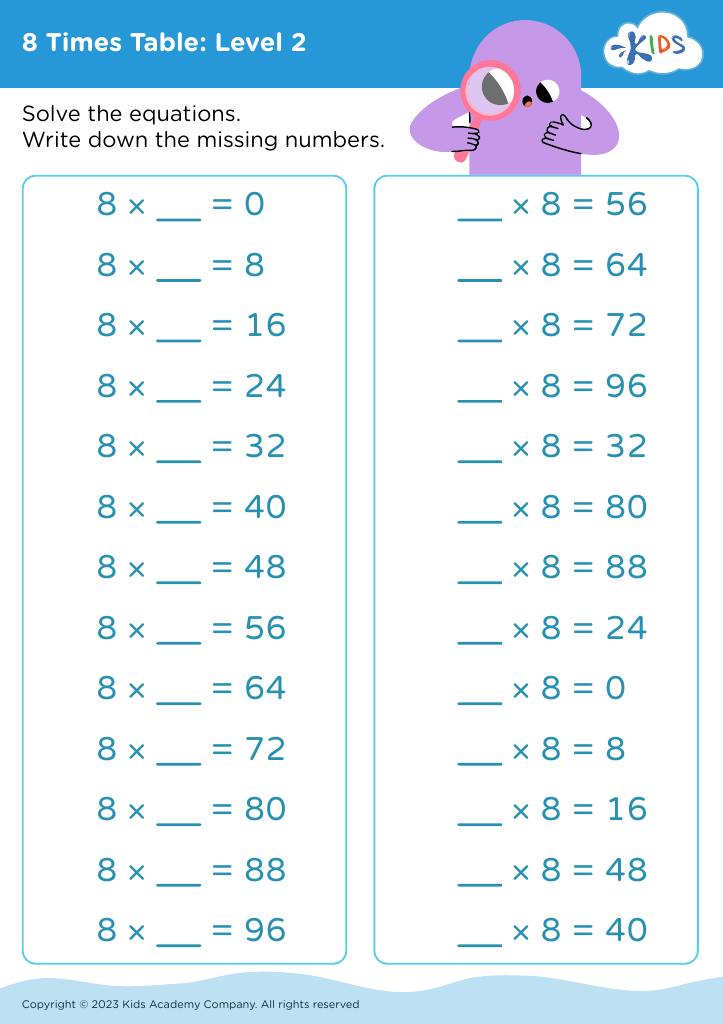
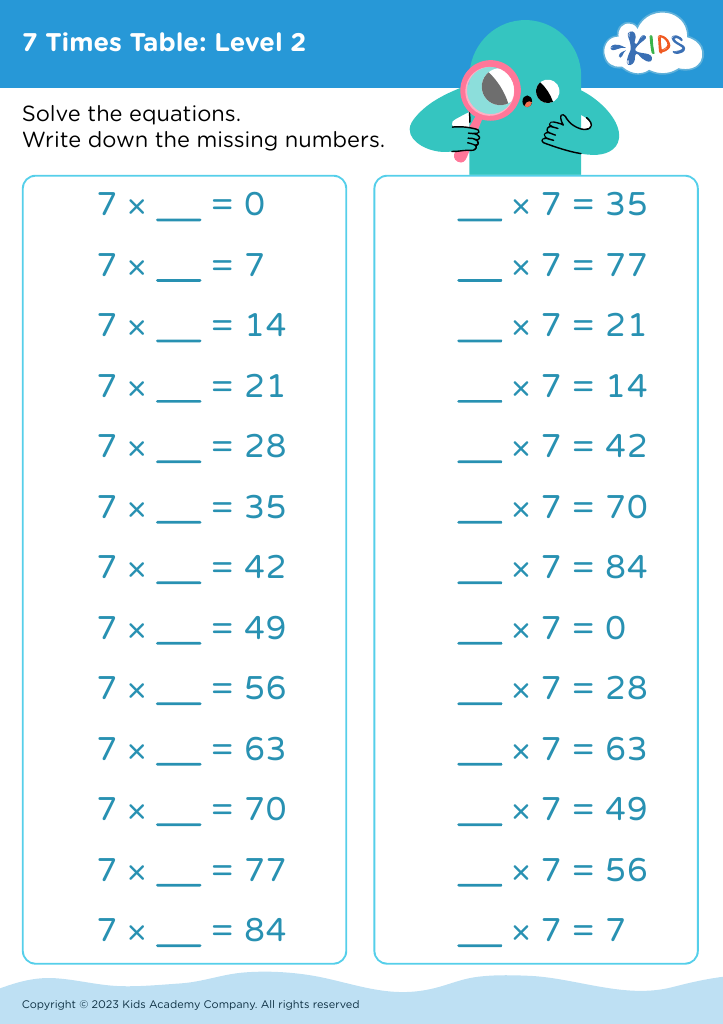
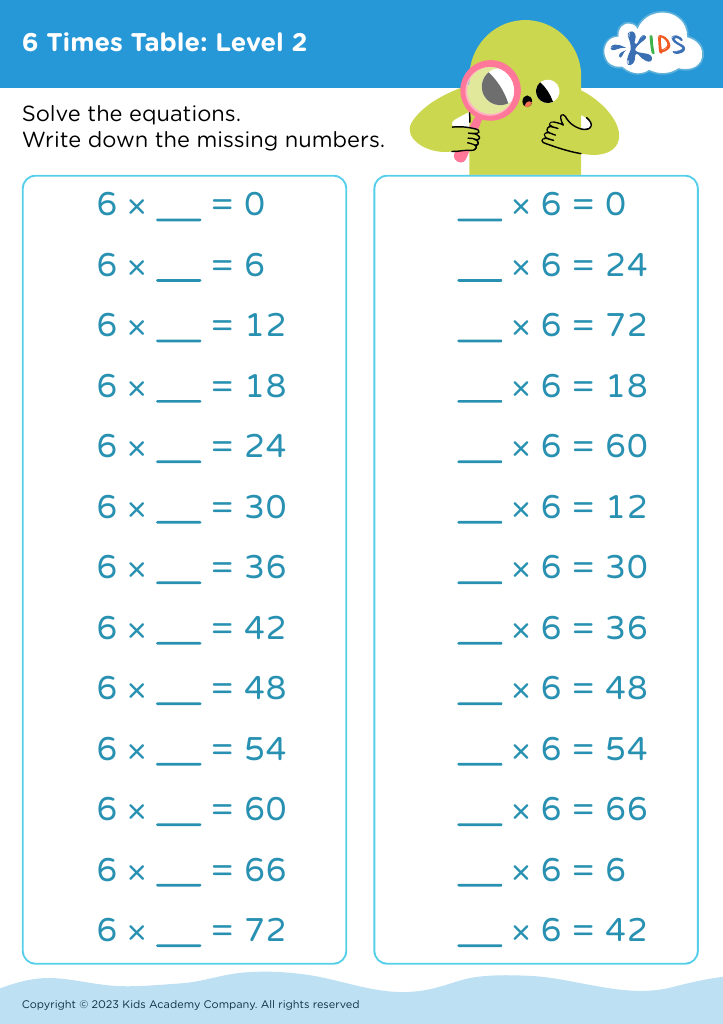
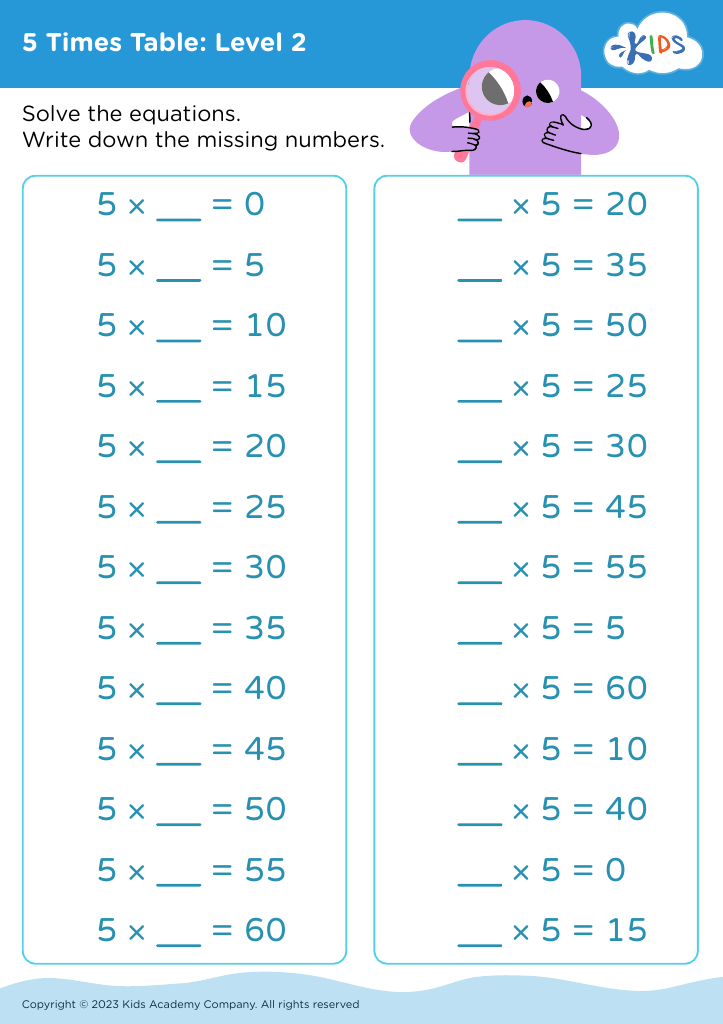
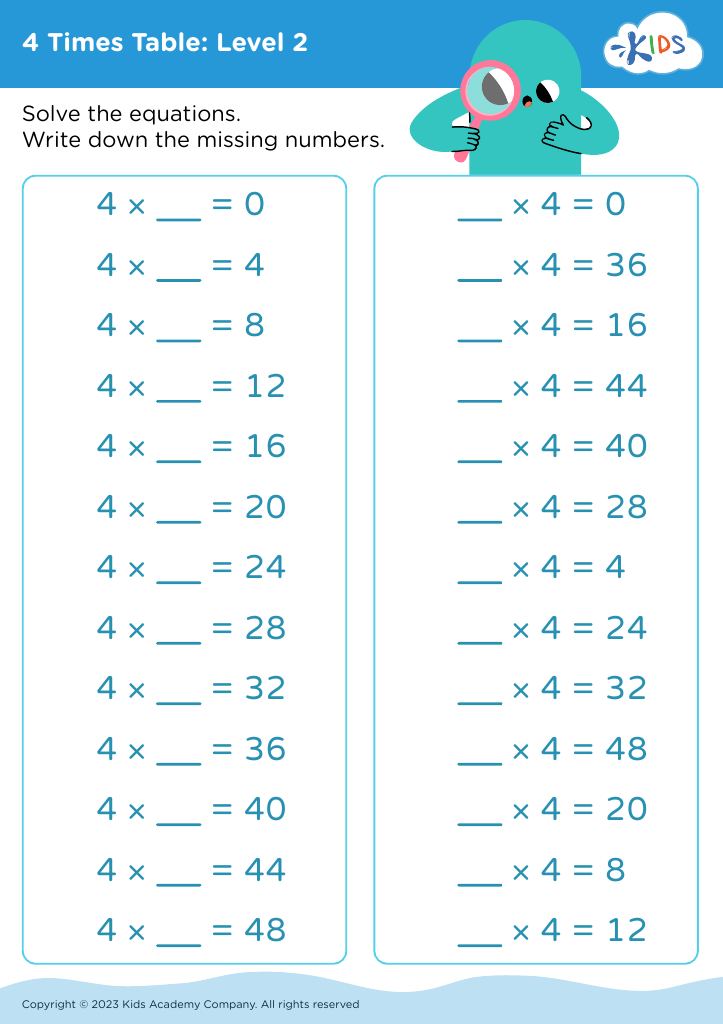
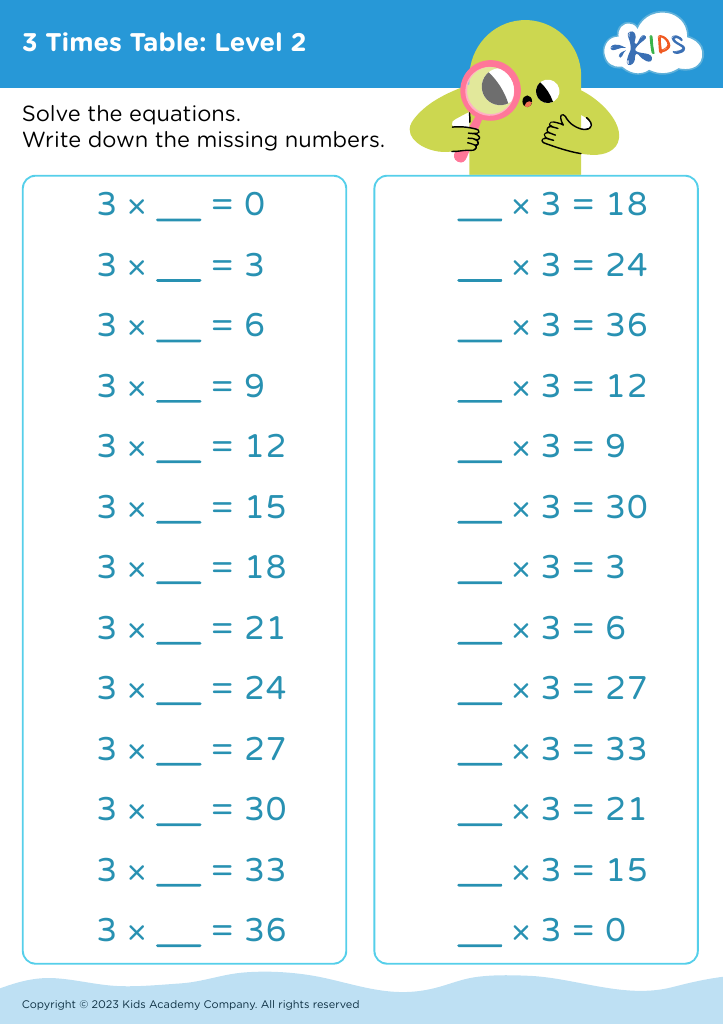
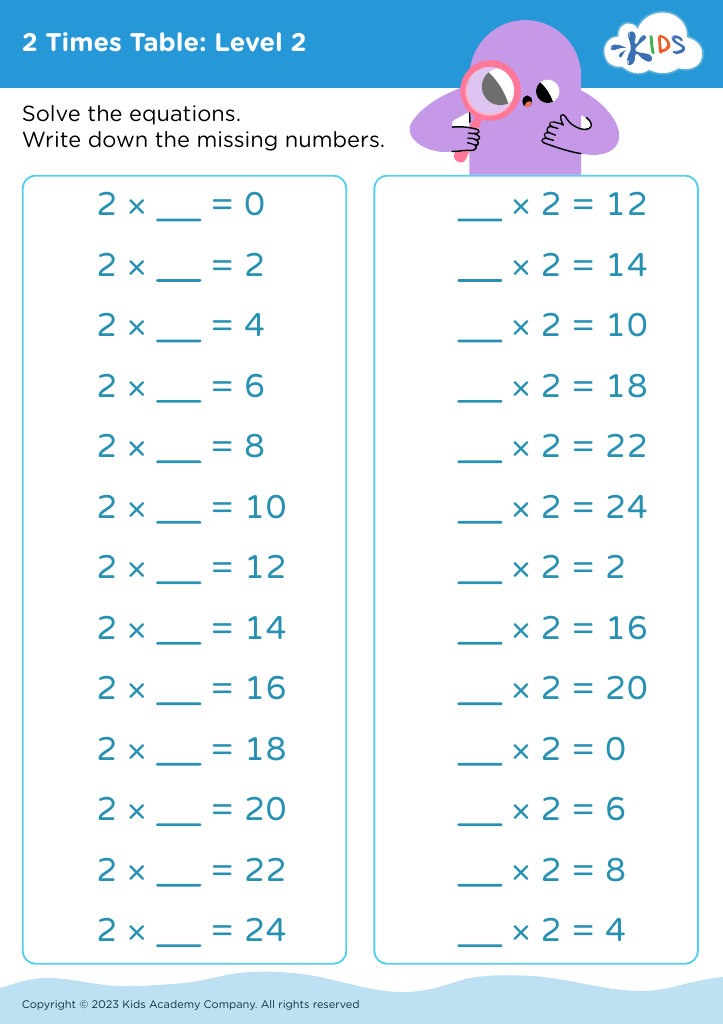
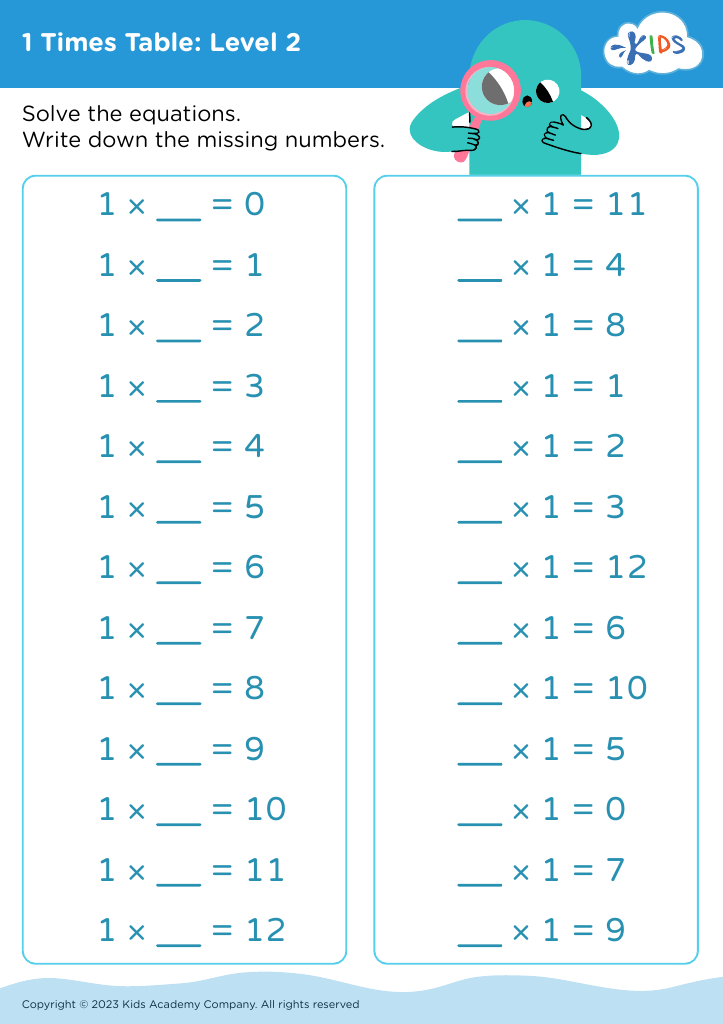
Looking for effective resources to help children master their multiplication skills? Our normal times tables worksheets for ages 7-9 offer a comprehensive range of activities tailored to assist young learners. Designed to gradually increase difficulty and reinforce learning through practice, these engaging worksheets make mastering times tables fun and achievable. Whether it’s the 2s, 5s, 10s, or beyond, each exercise is crafted to build confidence and proficiency. Perfect for both classroom and at-home practice, they are an essential tool for enhancing mathematical foundations. Download now from Kids Academy and support your child’s learning journey.
Favorites
With answer key
Interactive
Join Kids Academy for Free
Who is primarily going to use this learning content?





Normal times tables, often taught to children aged 7-9, form a cornerstone of their mathematical education. Mastery of times tables is crucial not only for basic arithmetic but also for more complex mathematical concepts that children will encounter in later years. Parents and teachers should care deeply about ensuring children grasp these fundamental multiplication facts for several reasons.
Firstly, knowing times tables aids in developing quick and accurate calculation skills. This not only boosts efficiency but also builds a child's confidence in solving math problems. With a solid understanding, children are more likely to approach math with a positive and proactive attitude, reducing math-related anxiety.
Secondly, times tables are integral in understanding and performing division, fractions, and ratios. These foundational concepts recur in many areas of math and are vital for real-life applications, such as measuring and financial literacy.
Finally, the ability to recall multiplication facts swiftly frees up cognitive resources. This cognitive load reduction allows children to focus on problem-solving strategies and higher-order thinking skills. Reinforcing the memorization of these tables at an early age sets children on a path of academic success and fosters a lifelong appreciation for mathematics.
In summary, times tables are an educational bedrock that supports more complex learning, enhances problem-solving skills, and builds confidence and efficiency in math. This trio of benefits ultimately contributes to a happier, more competent math learner.








