
Phonics Skills Normal Reading Worksheets for Ages 7-9
7 filtered results
Difficulty Level
Grade
Age
-
From - To
Subject
Activity
Standards
Enhance your child’s reading abilities with our Phonics Skills Normal Reading Worksheets for Ages 7-9. These expertly designed worksheets offer fun and effective ways to boost phonics awareness, ensuring your child masters essential reading skills. Ideal for students in 2nd to 3rd grade, these activities cover key areas such as vowel sounds, consonant blends, and word patterns. Our colorful and engaging exercises make learning enjoyable, encouraging kids to practice their phonics skills regularly. Perfect for homeschooling or extra practice, these worksheets provide a solid foundation for reading success. Help your child excel in reading with our comprehensive phonics resources!
Favorites
With answer key
Interactive
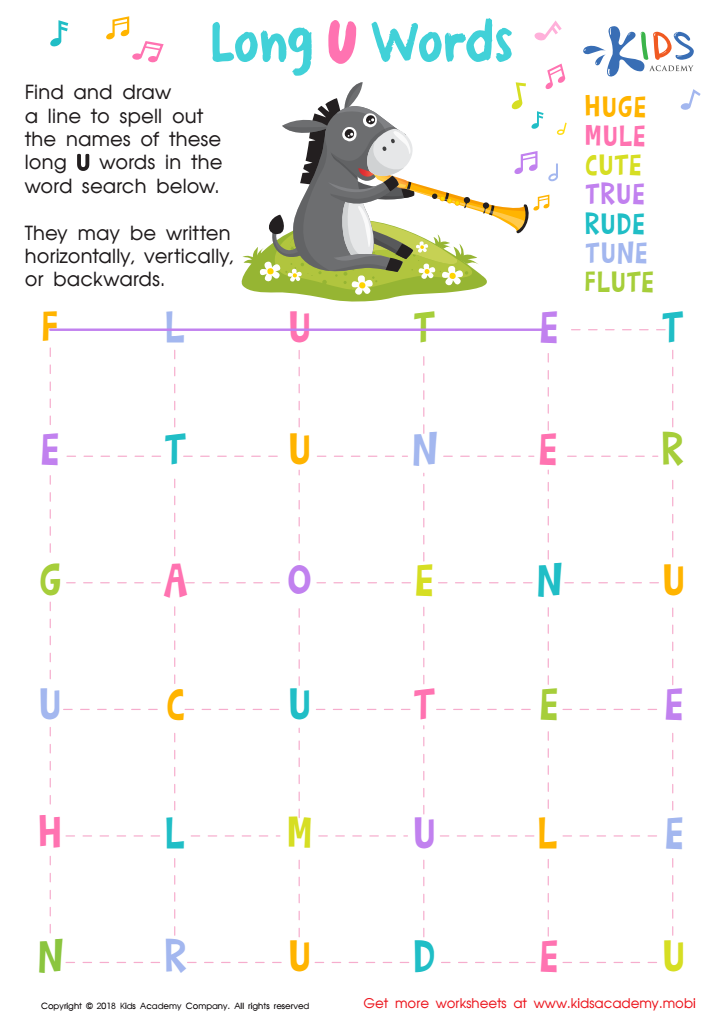
Long /u/ Words Worksheet
Your child needs to learn phonetics to enunciate and differentiate words. This fun worksheet encourages them to find and draw lines connecting the long 'U' words in the word search. Help them read the words on the right side of the picture, then look for them in the word search (horizontally, backwards or vertically).
Long /u/ Words Worksheet
Worksheet
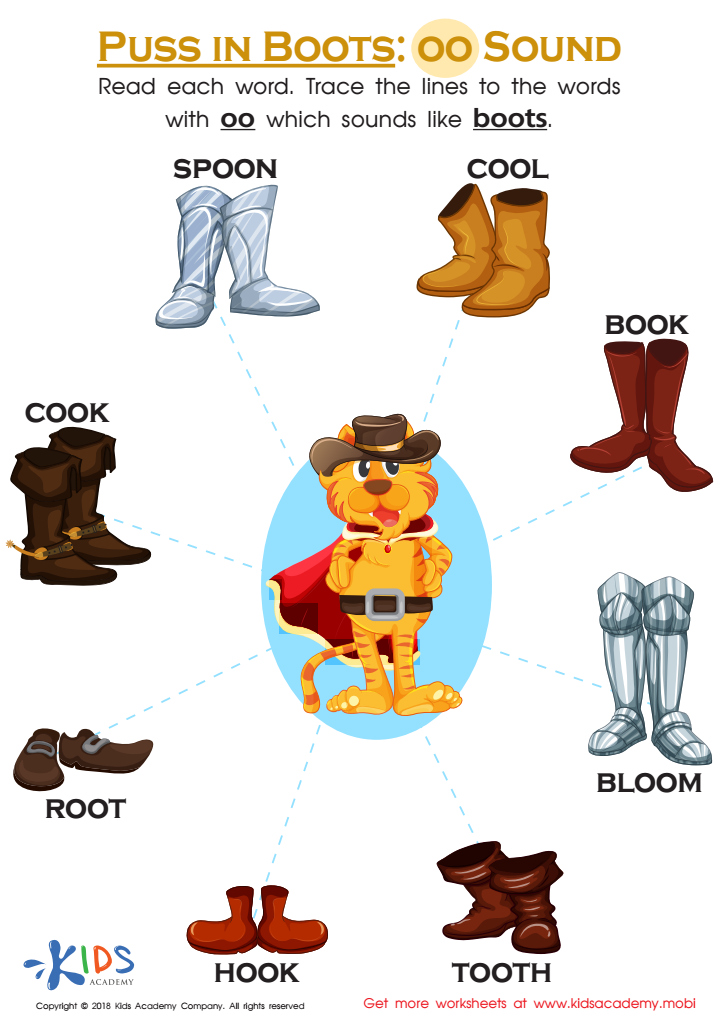
Puss in Boots: OO Sound Worksheet
Read out the words in this printout with the correct pronunciation. Have your child repeat each word after you. Then have them read the words and identify the ones with the "oo" sound. Guide their hands as they trace the lines to the right words.
Puss in Boots: OO Sound Worksheet
Worksheet
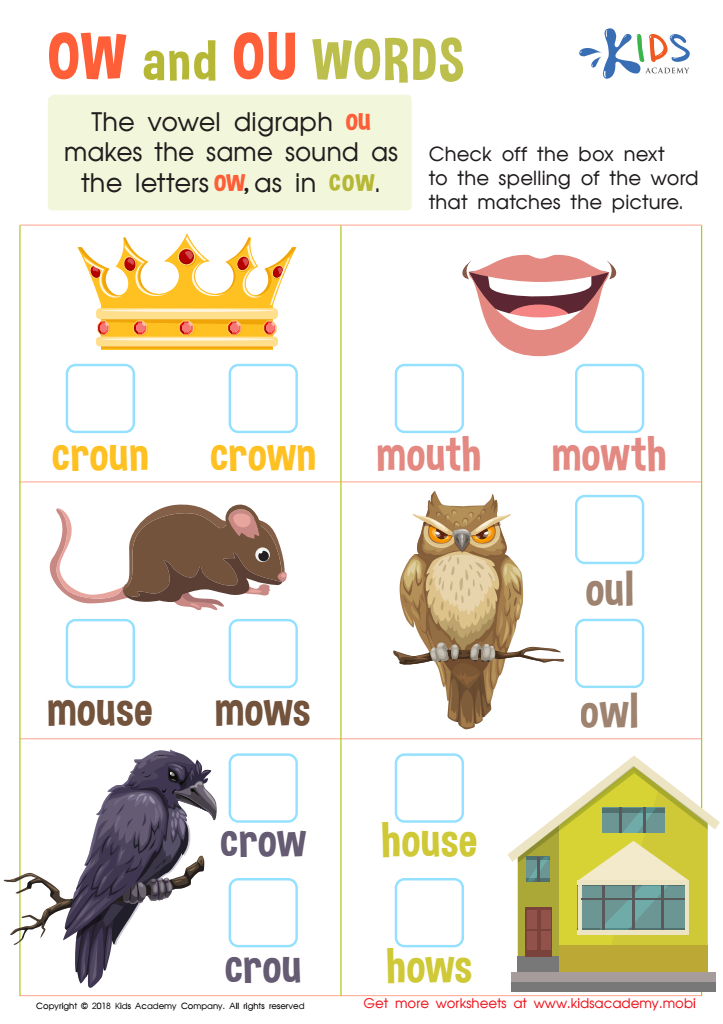
Reading: OW and OU Words Worksheet
Help your kids learn phonetics! Explain the different sounds and long/short variations. Emphasize that some vowel sounds are the same, e.g. ou = ow in cow. For practice, have them read aloud the words in the worksheet and check the box next to the spelling that matches the picture.
Reading: OW and OU Words Worksheet
Worksheet
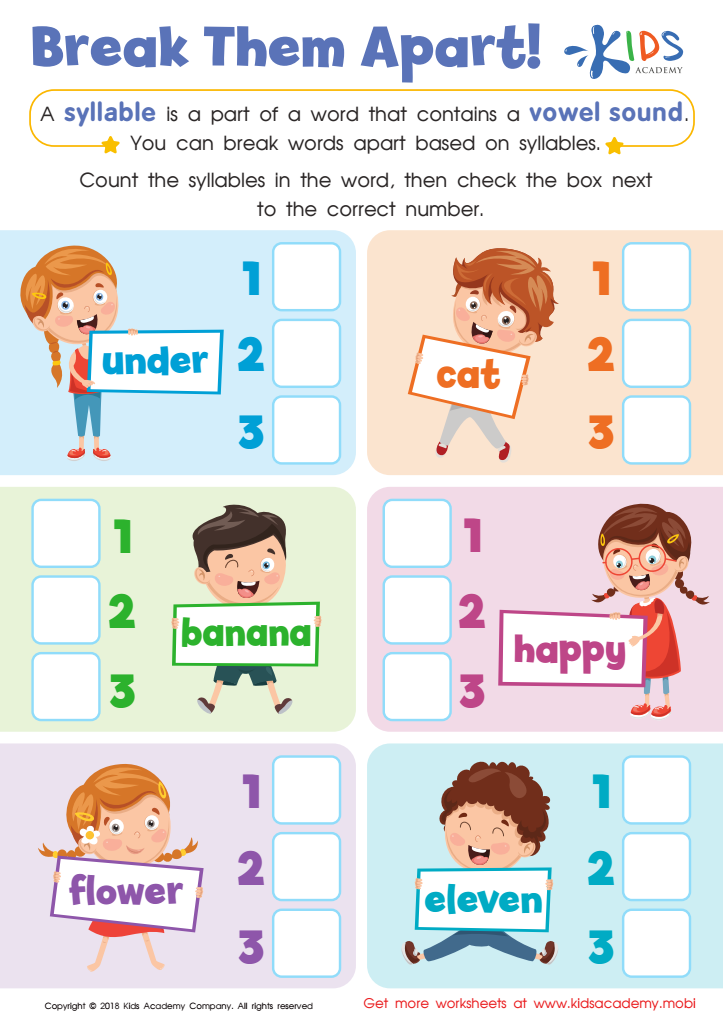
Reading: Break Them Apart Worksheet
See if students understand syllables with this fun worksheet. It teaches them that a syllable is a word part with a vowel sound. Kids read each word and choose how many parts it has. Doing this often helps them decode new words and gain confidence.
Reading: Break Them Apart Worksheet
Worksheet
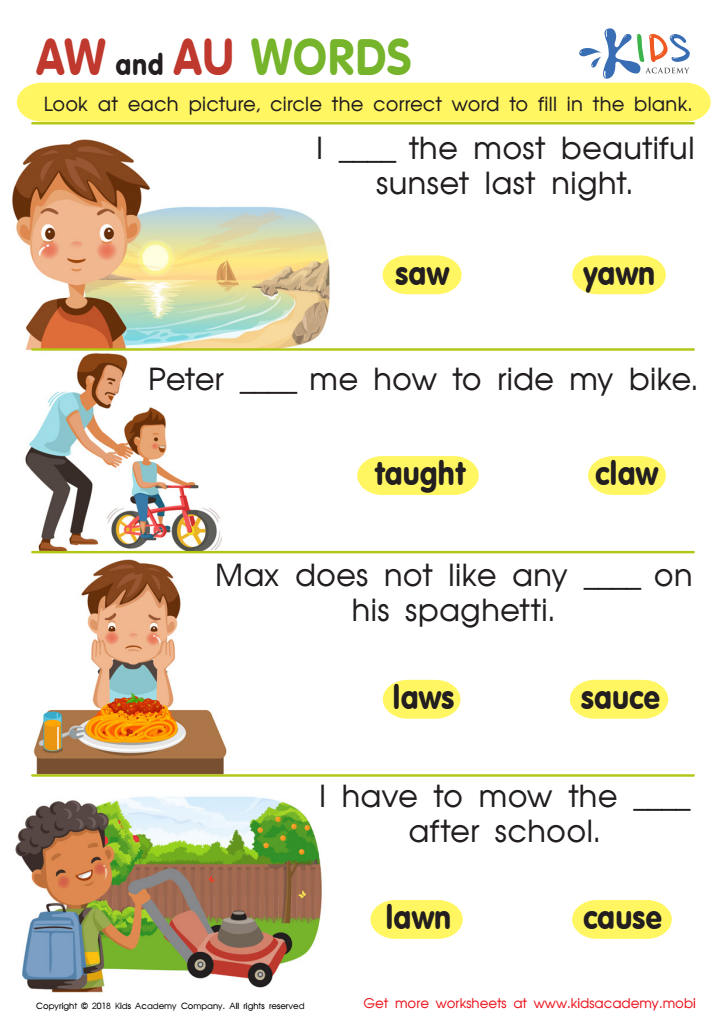
Reading: AW and AU Words Worksheet
This worksheet helps kids recognize that /au/ and /aw/ can make the same sound. Students read sentences and pick the correct word with one of the digraphs. Understanding digraphs improves decoding and reading fluency. Perfect for reading and phonics classes.
Reading: AW and AU Words Worksheet
Worksheet
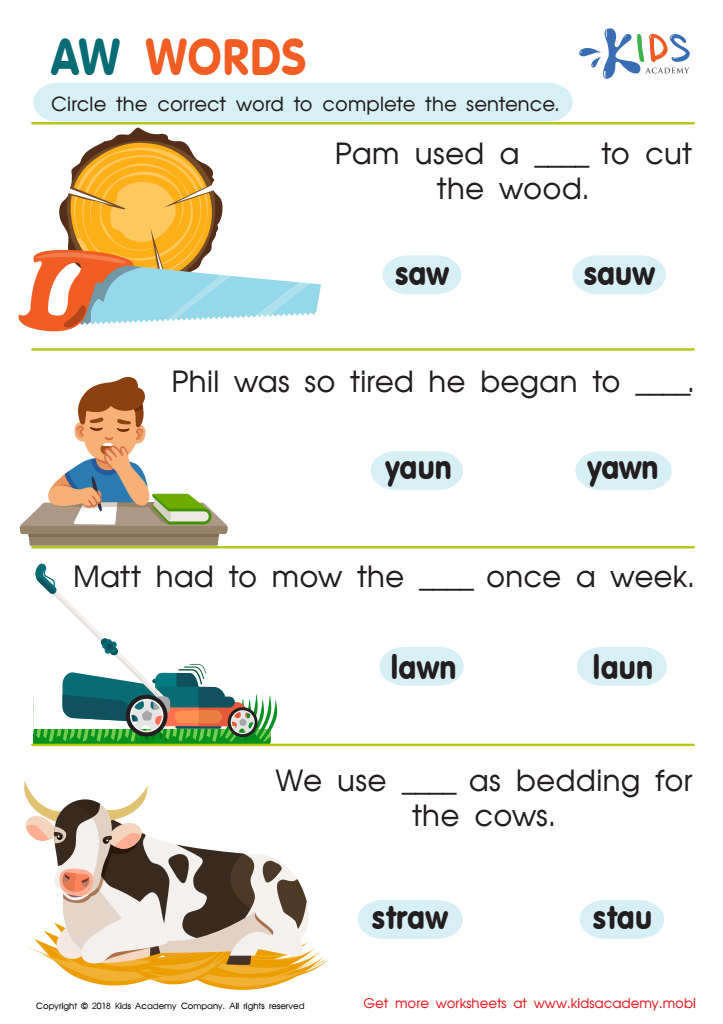
Reading: AW Words Worksheet
Practice decoding the /aw/ digraph with this printable. Students read sentences and select the word with the correct spelling to complete each one. Note, /aw/ is sometimes spelled /au/, so this worksheet helps prevent confusion. Have fun, and practice hard!
Reading: AW Words Worksheet
Worksheet
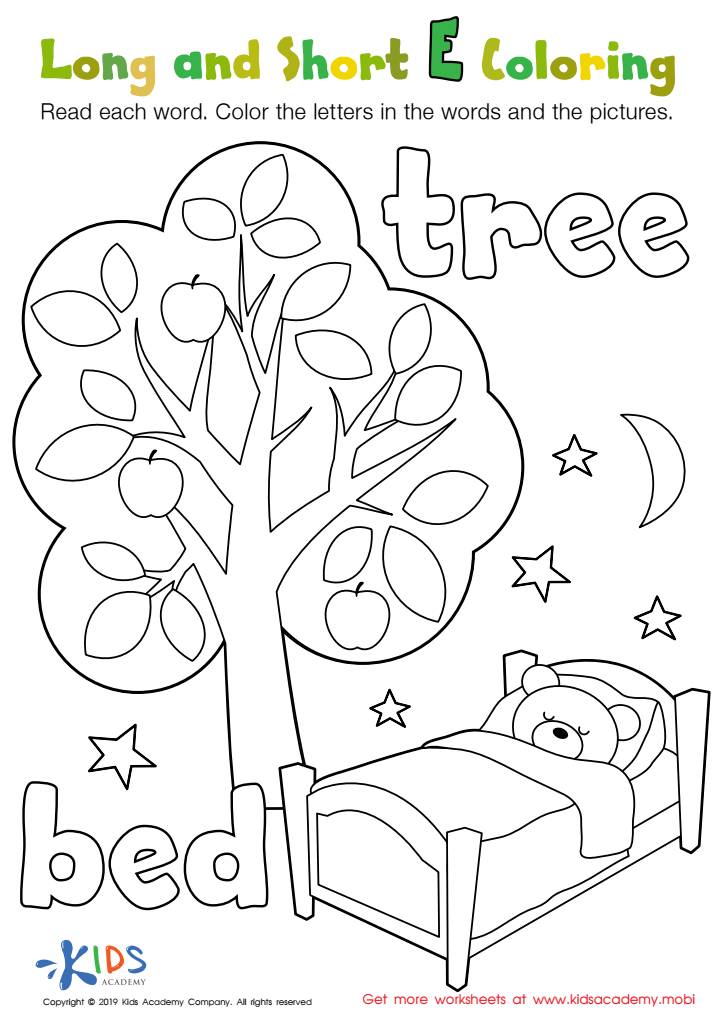
Long and Short E Worksheet
This fun printout makes learning phonics enjoyable for Grade 3 students. Get them to read the words “tree” and “bed” to recognize the different sounds of the letter “E”. After hearing the words they can color the words and the pictures to understand differences between long and short vowels.
Download (PDF)
 Assign to My Students
Assign to My Students
Long and Short E Worksheet
Worksheet
Join Kids Academy for Free
Who is primarily going to use this learning content?








Phonics skills are fundamental building blocks for developing strong reading abilities in children aged 7-9, a critical stage for academic and cognitive development. Phonics focuses on the relationship between sounds and their corresponding letters or groups of letters, enabling children to decode new words efficiently. When parents and teachers emphasize phonics, they equip children with essential tools to read unfamiliar words independently, fostering self-confidence and promoting a love of reading.
For ages 7-9, honing phonics skills contributes significantly to improving reading fluency and comprehension. Fluency means not just reading quickly, but also with accuracy and proper expression, which helps children understand the text better. Strong phonics skills support spelling and writing development, essential aspects of broader literacy. Children who struggle with phonics may lag in their overall academic performance, finding it hard to keep up with the increasingly complex texts in their curriculum.
Furthermore, early reading success has a positive correlation with future educational achievements and lifelong learning. Engaging with children in phonics-related activities at home or in the classroom builds a collaborative environment between educators and parents, ensuring children receive consistent support. Therefore, focusing on phonics skills from an early age establishes a robust foundation for successful, confident learners who enjoy reading and excel in their academic endeavors.








