Basic Addition Skills Normal Addition & Subtraction Worksheets for 7-Year-Olds
6 filtered results
-
From - To
Boost your child’s math confidence with our "Basic Addition Skills: Normal Addition & Subtraction Worksheets for 7-Year-Olds." Perfectly crafted for young learners, these engaging worksheets help children master essential addition and subtraction skills necessary for their academic growth. Designed to align with educational standards, each worksheet offers fun and challenging activities to promote problem-solving abilities and numerical fluency. By practicing these math exercises, your child will develop a strong foundation in basic arithmetic, encouraging a love for learning and success in school. Perfect for parents and teachers seeking quality resources for their 7-year-olds! Join now for unlimited access.
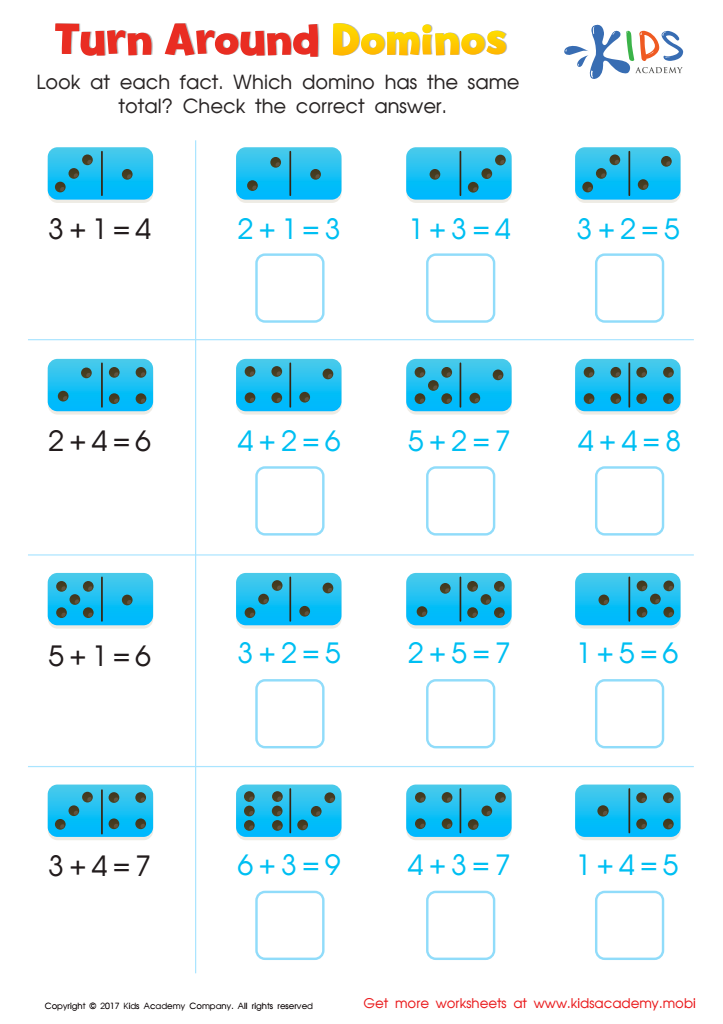
Turn Around Dominos Worksheet
 Assign to My Students
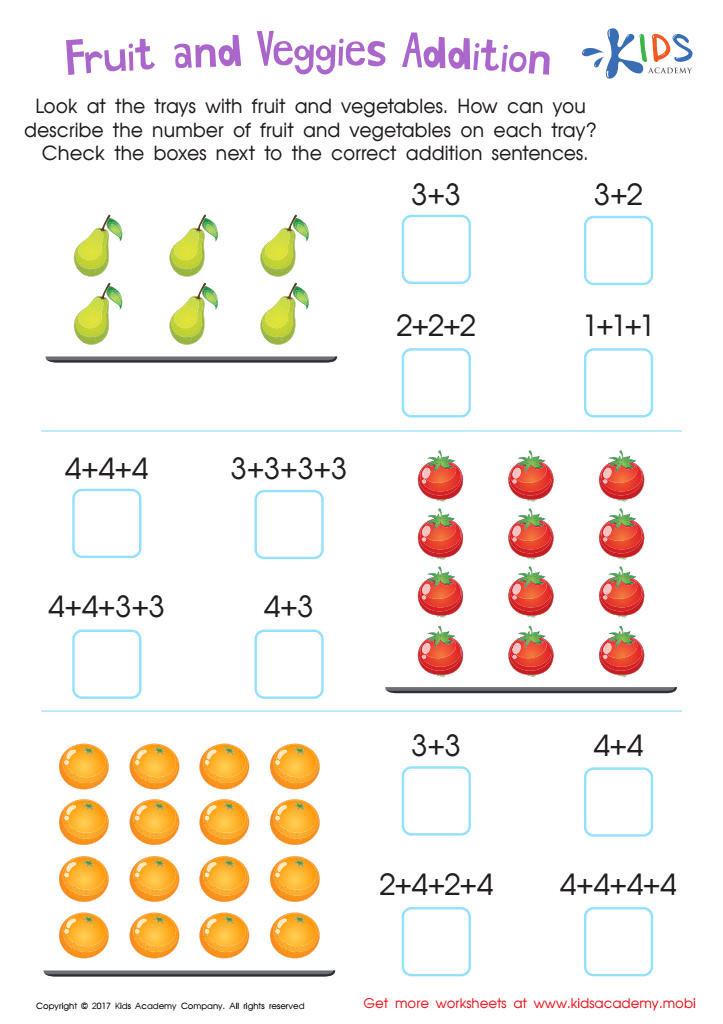
Fruit and Veggies Worksheet
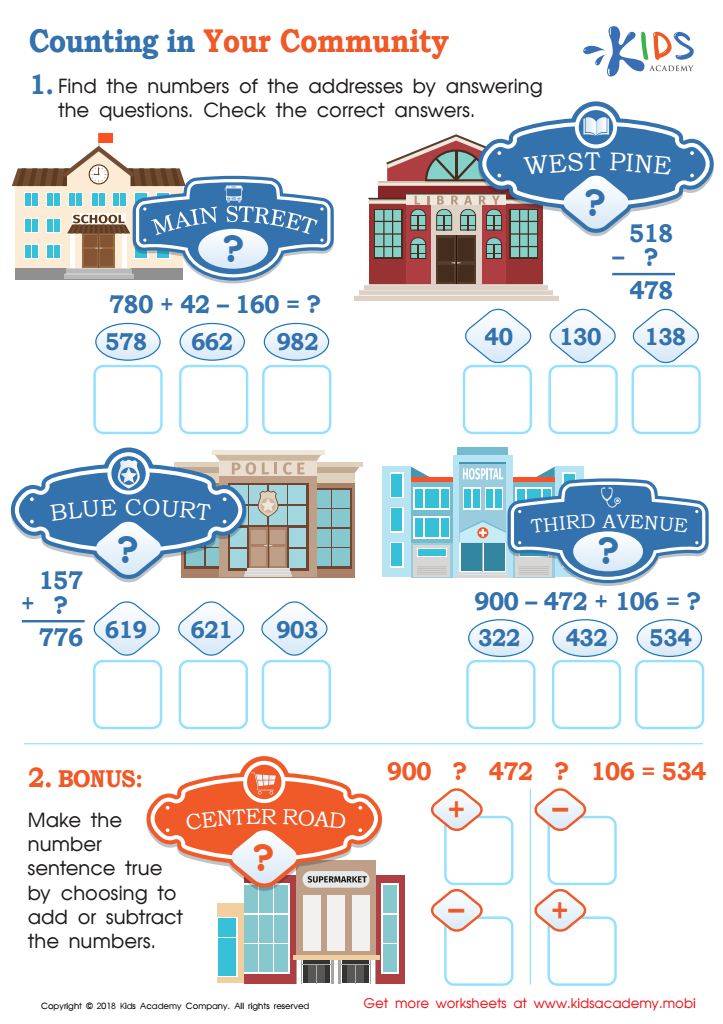
Counting in Your Community Worksheet
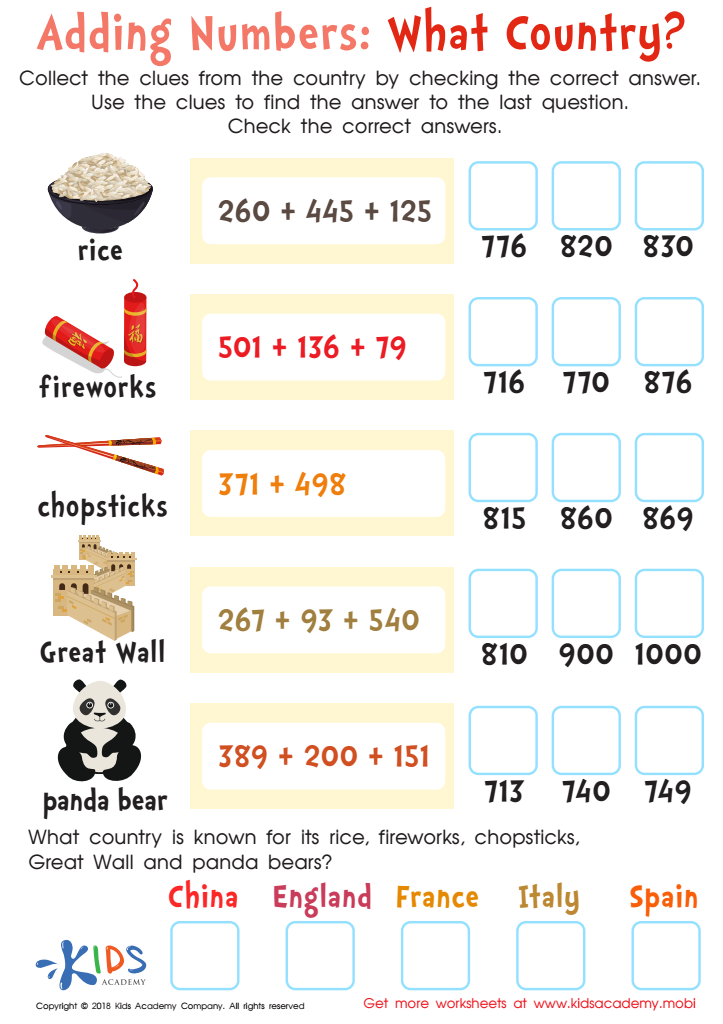
Adding Numbers: What Country Worksheet
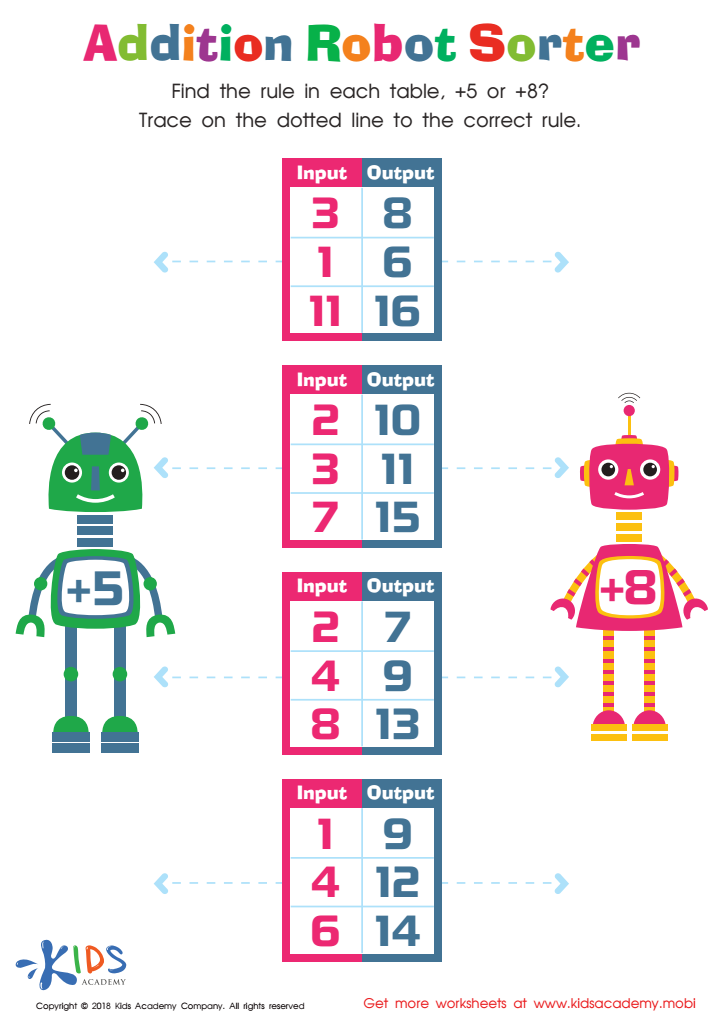
Addition Robot Sorter Worksheet
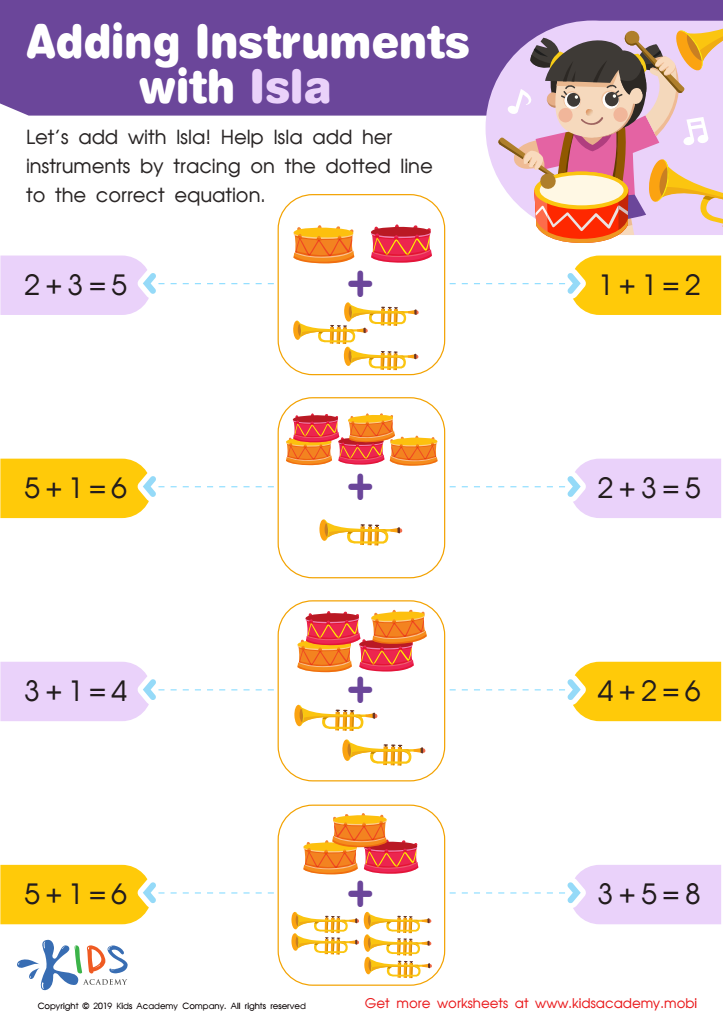
Adding Instruments with Isla Worksheet








Parents and teachers should prioritize developing basic addition and subtraction skills for 7-year-olds because these foundational math concepts are critical for future academic success and daily life skills. Mastery of basic addition and subtraction at an early age cultivates a strong numerical understanding, allowing children to comprehend more complex mathematical concepts as they progress through school, including multiplication, division, and fractions.
These skills also enhance problem-solving abilities and logical thinking, which are applicable beyond mathematics and useful in everyday decision-making and analytical tasks. Proficiency in basic math builds a child’s confidence in their abilities, promoting a positive attitude towards learning and education overall.
Additionally, early math success is closely linked to improved performance in other subjects. For example, a child who readily understands math principles is likely to find it easier to grasp scientific concepts and engage in practical experiments.
In the real world, basic arithmetic is used in managing money, cooking, telling time, and many other daily activities. Introducing and reinforcing these skills at age 7 ensures that children not only meet the expected educational milestones but also become capable and self-sufficient individuals who can navigate life’s numerical demands with ease and confidence.








