
Phonics Skills Normal Worksheets for Ages 8-9
19 filtered results
Difficulty Level
Grade
Age
-
From - To
Subject
Activity
Standards
Welcome to our Phonics Skills Worksheets for Ages 8-9! Designed to enhance phonetic understanding, these engaging worksheets provide engaging and age-appropriate exercises that help children refine their reading and writing skills. Our collection focuses on key concepts such as sound-letter correspondences, vowel blends, and digraphs, making phonics enjoyable and accessible. Each worksheet encourages independent learning through interactive activities, ensuring students strengthen their phonics abilities while fostering a love for reading. Perfect for classroom use or at-home learning, these resources are ideal for teachers and parents looking to support their child's literacy development. Explore our worksheets today and empower your young learner!
Favorites
With answer key
Interactive
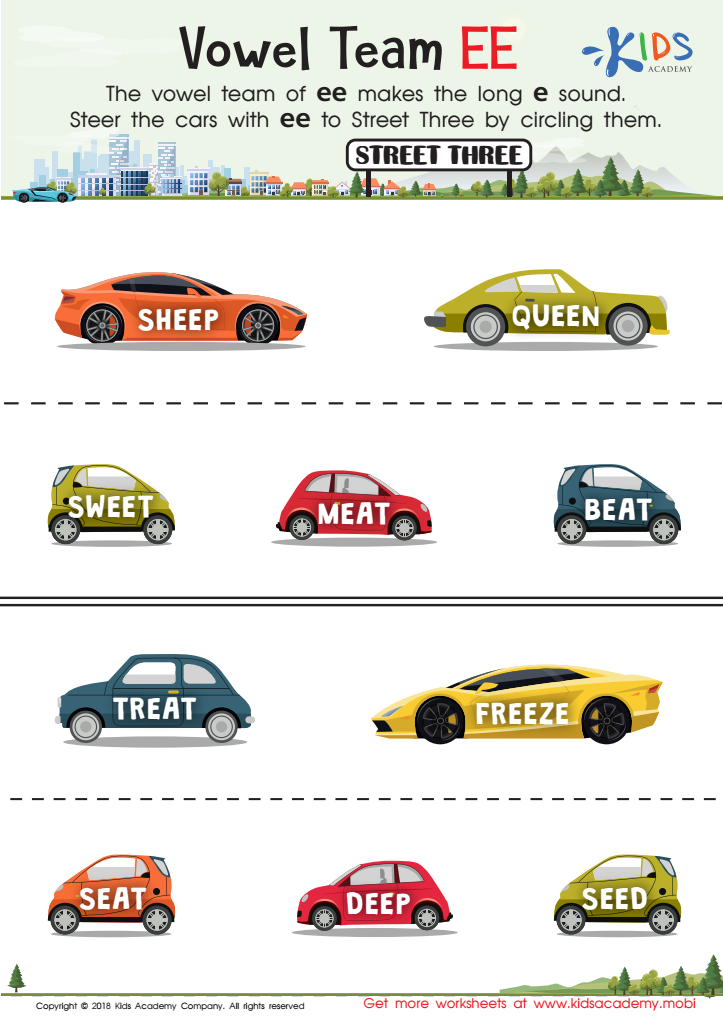
Vowel team ee Worksheet
Revised:
Kids will have a blast steering cars with the -ee digraph towards Street Three! This fast-paced worksheet reinforces that -ee makes the long -e sound while boosting fine motor skills. Kids will love the bright colors and stay engaged with this fun printable. Get ready for hours of off-road excitement!
Vowel team ee Worksheet
Worksheet
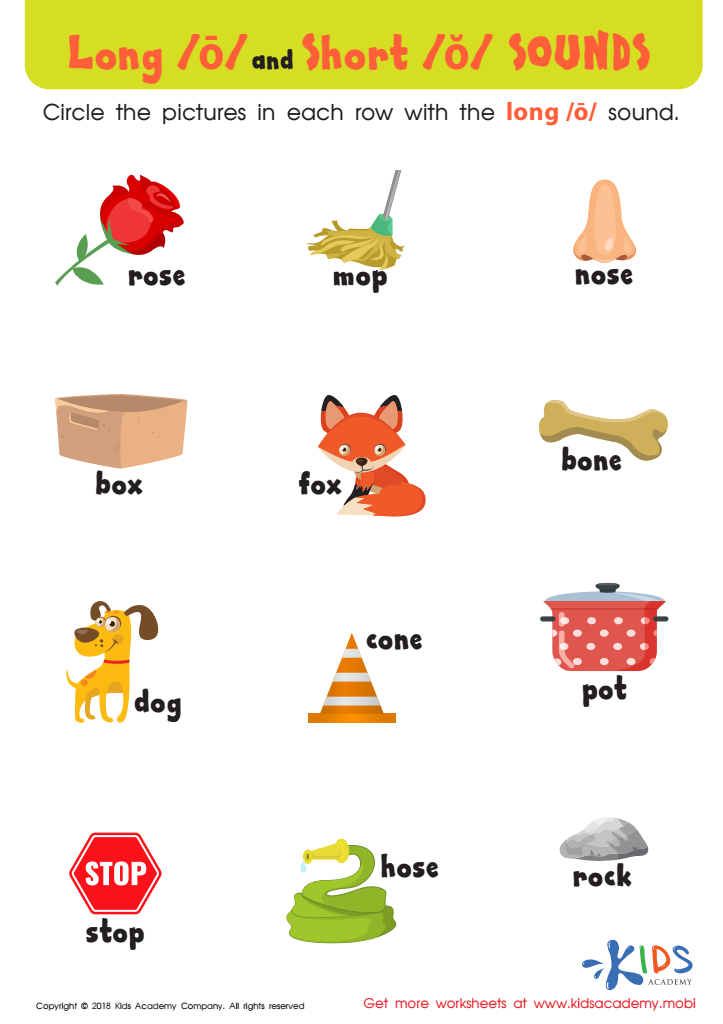
Reading: Long O and Short O Sounds Worksheet
Students practice distinguishing between short and long O sounds with this reading worksheet. They sound out each word, then circle the pictures with the long O sound. Perfect for individual practice or to work with peers! Improves understanding of this skill and helps avoid confusion.
Reading: Long O and Short O Sounds Worksheet
Worksheet
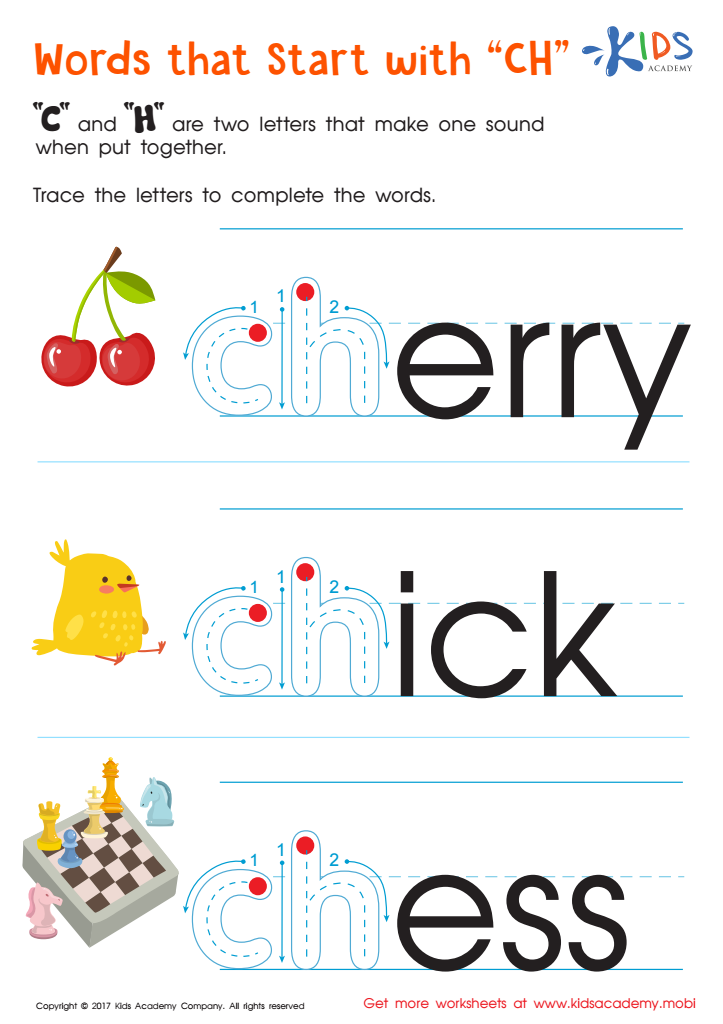
Words That Start with "ch" Spelling Worksheet
With Kids Academy, learning phonics and spelling has never been easier.
Kids Academy's "ch" tracing worksheet makes it easy for your little one to learn phonics and spelling. It features cute, brightly colored images to help them trace familiar words, making learning fun and enjoyable.
Words That Start with "ch" Spelling Worksheet
Worksheet
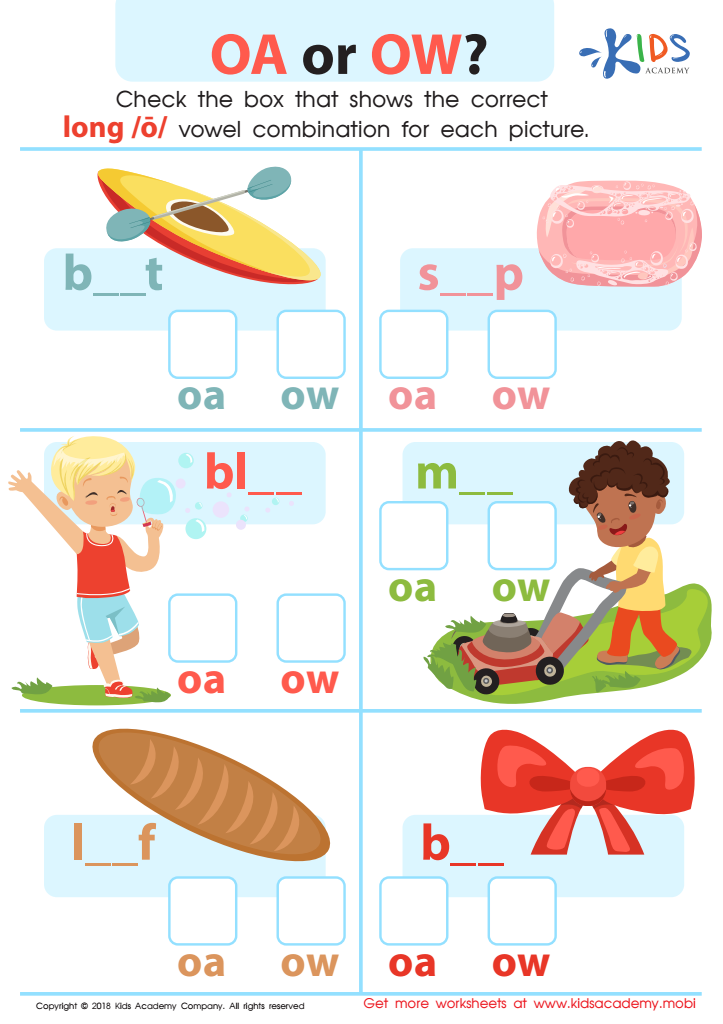
Reading: OA or OW Worksheet
This printable worksheet helps young and emergent readers with decoding words and understanding digraphs (two letters with one sound). It requires students to complete the spelling for each word based on the picture, focusing on /oa/ and /ow/ spellings. It's ideal for a reading classroom and for spelling practice.
Reading: OA or OW Worksheet
Worksheet
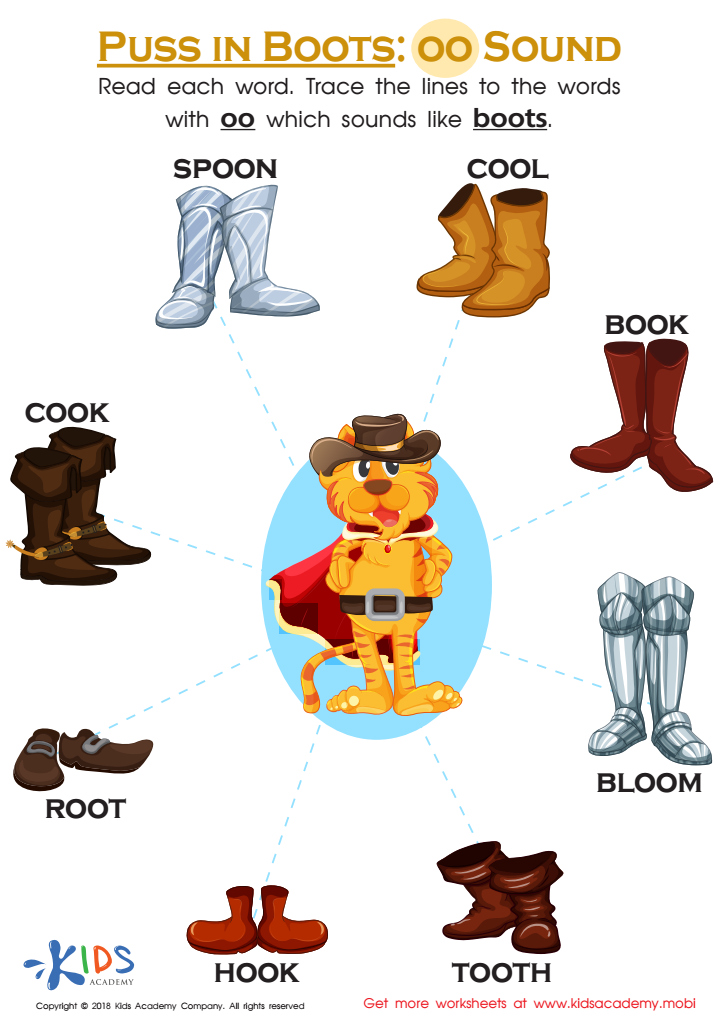
Puss in Boots: OO Sound Worksheet
Read out the words in this printout with the correct pronunciation. Have your child repeat each word after you. Then have them read the words and identify the ones with the "oo" sound. Guide their hands as they trace the lines to the right words.
Puss in Boots: OO Sound Worksheet
Worksheet
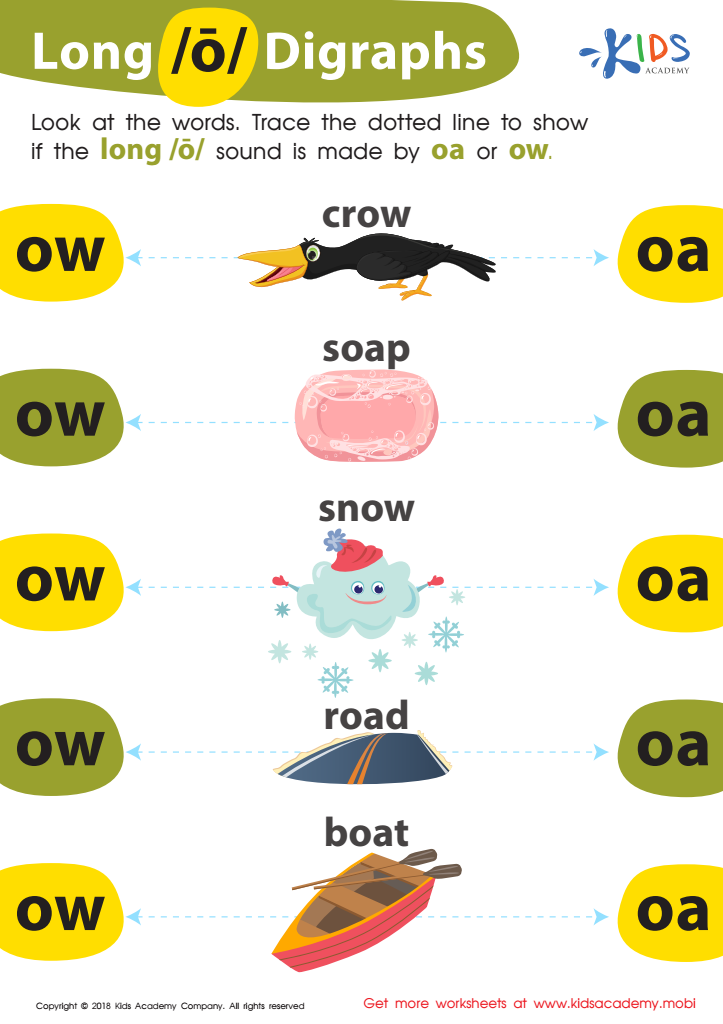
Reading: Long O Digraphs Worksheet
Reading and decoding words can be complex for learners when they start studying digraphs, two letters that make one sound. This worksheet focuses on the long O sound, /oa/ and /ow/. With the understanding of digraphs, students can decode more words and build their reading confidence.
Reading: Long O Digraphs Worksheet
Worksheet
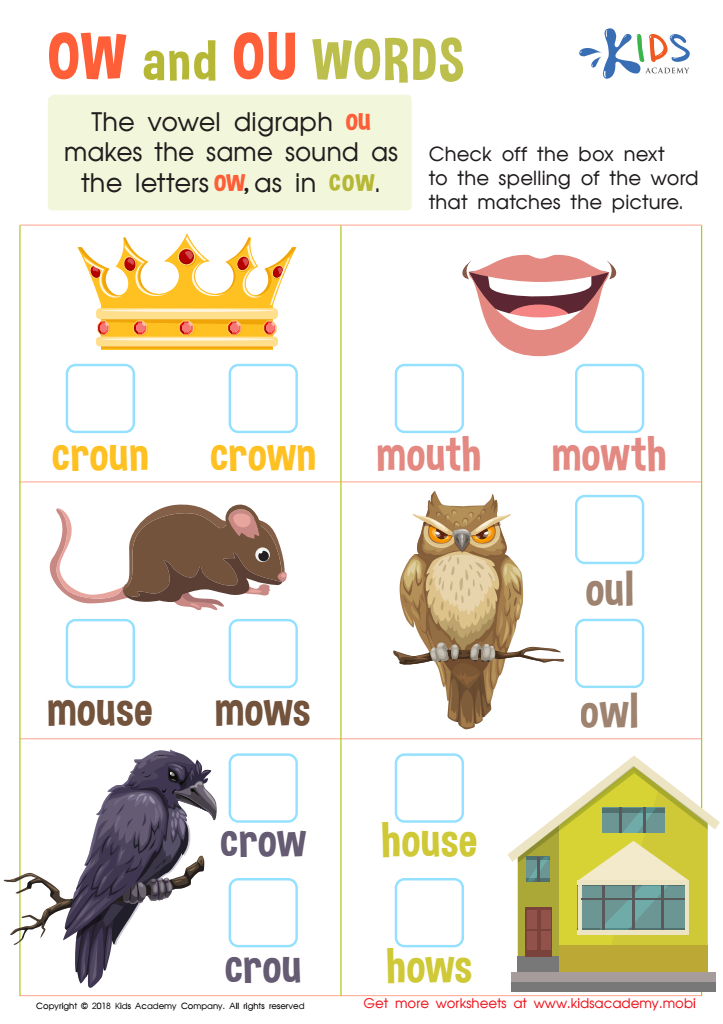
Reading: OW and OU Words Worksheet
Help your kids learn phonetics! Explain the different sounds and long/short variations. Emphasize that some vowel sounds are the same, e.g. ou = ow in cow. For practice, have them read aloud the words in the worksheet and check the box next to the spelling that matches the picture.
Reading: OW and OU Words Worksheet
Worksheet
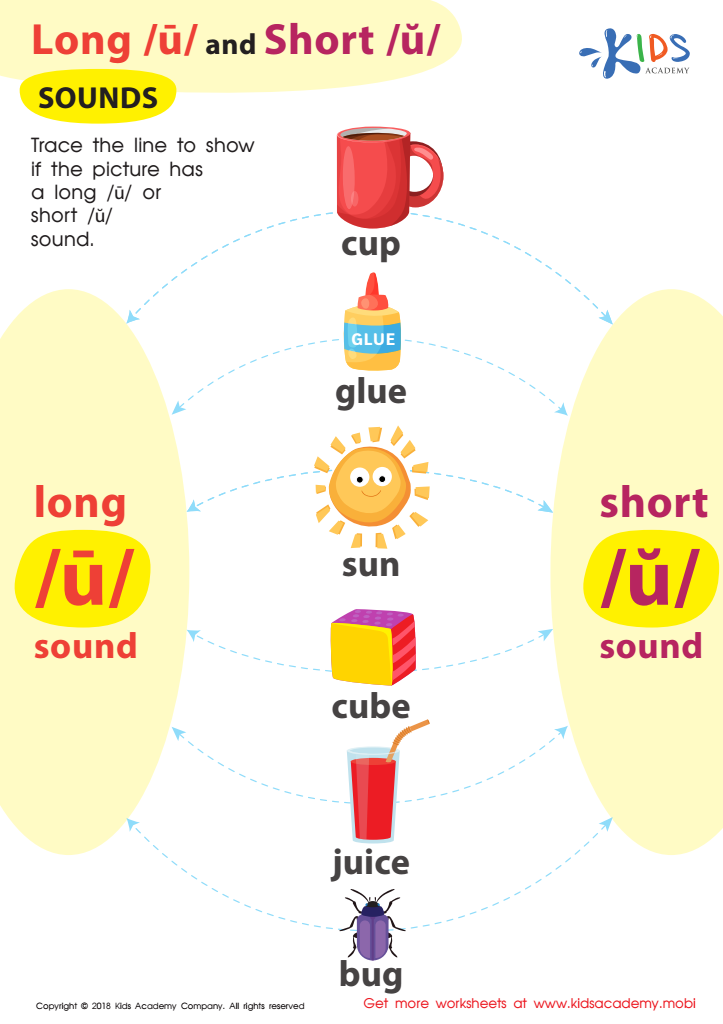
Reading: Long U and Short U Sounds Worksheet
Learning about long and short vowel sounds can be tricky, especially with the letter U. Extra practice with this worksheet is recommended for mastering this sound. Children read words with the different vowel sounds and categorize them. Great for instruction, practice and reteaching in reading classes.
Reading: Long U and Short U Sounds Worksheet
Worksheet
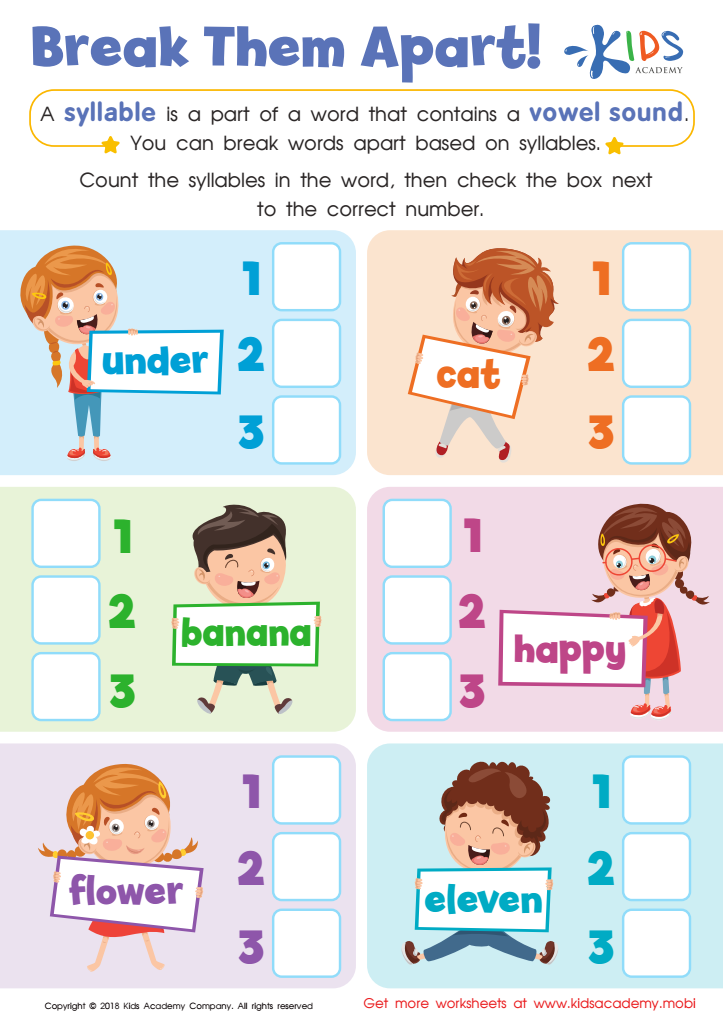
Reading: Break Them Apart Worksheet
See if students understand syllables with this fun worksheet. It teaches them that a syllable is a word part with a vowel sound. Kids read each word and choose how many parts it has. Doing this often helps them decode new words and gain confidence.
Reading: Break Them Apart Worksheet
Worksheet
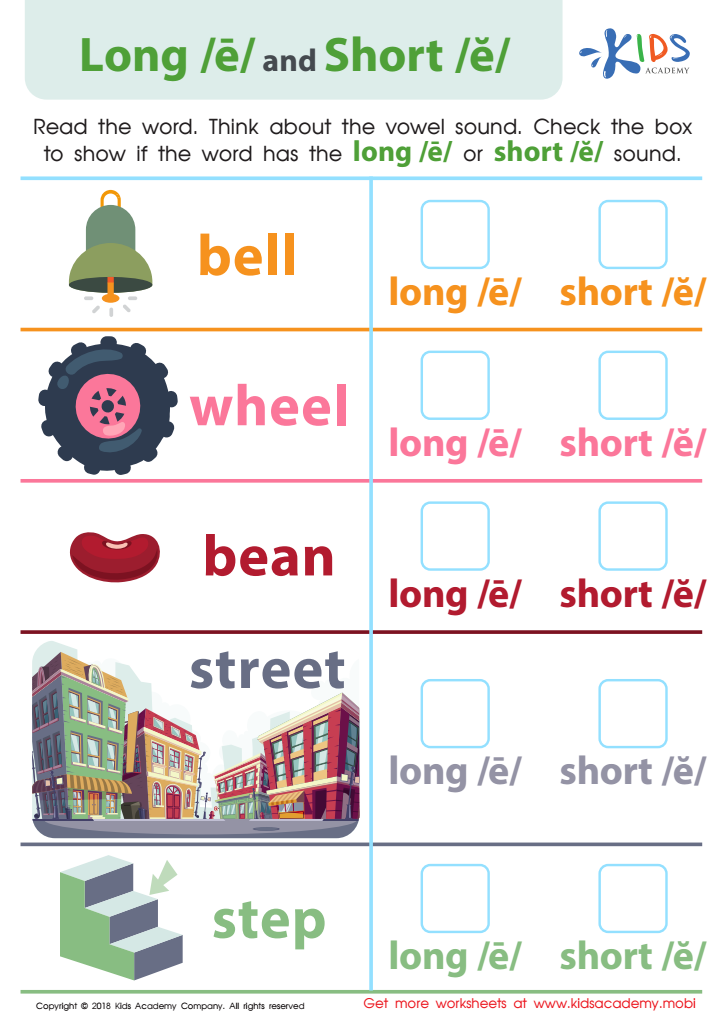
Reading: Long E and Short E Worksheet
Provide your students with valuable practice in distinguishing long and short E sounds with this worksheet. They'll look at pictures and read the words, then decide which sound is being used. It's an effective tool to help them master a difficult concept.
Reading: Long E and Short E Worksheet
Worksheet
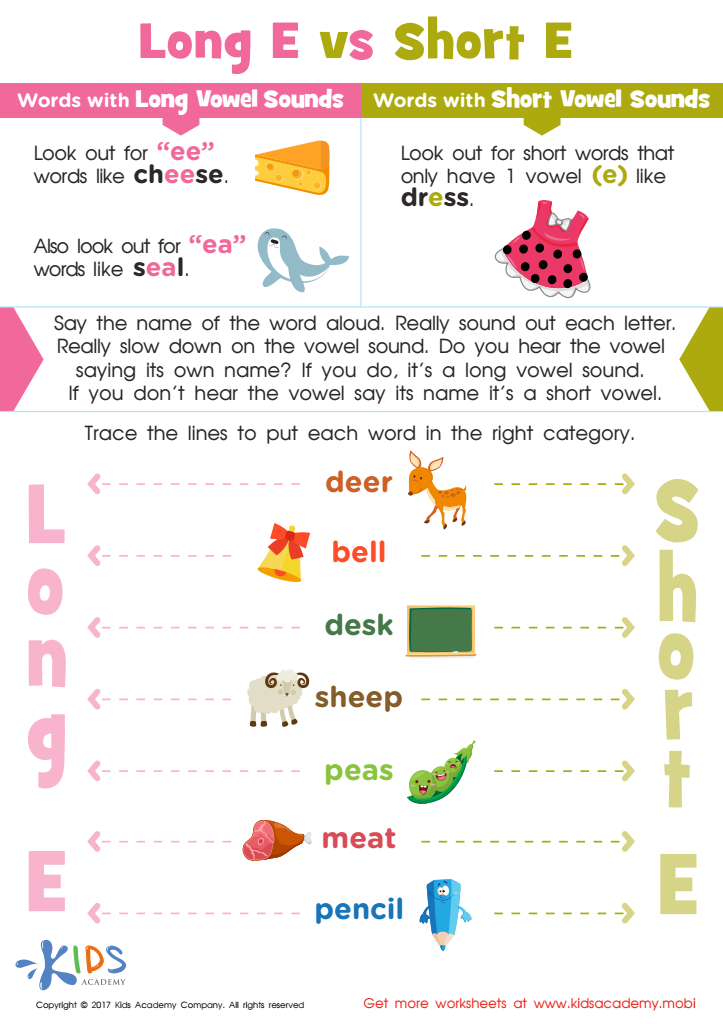
Long and Short Vowel E Spelling Worksheet
This worksheet helps kids master spelling with the letter "E". They read about long and short vowel sounds, view examples and sound out words to complete it. Two vowels distinguish long "E" sounds from its short vowel counterparts with just one.
Long and Short Vowel E Spelling Worksheet
Worksheet
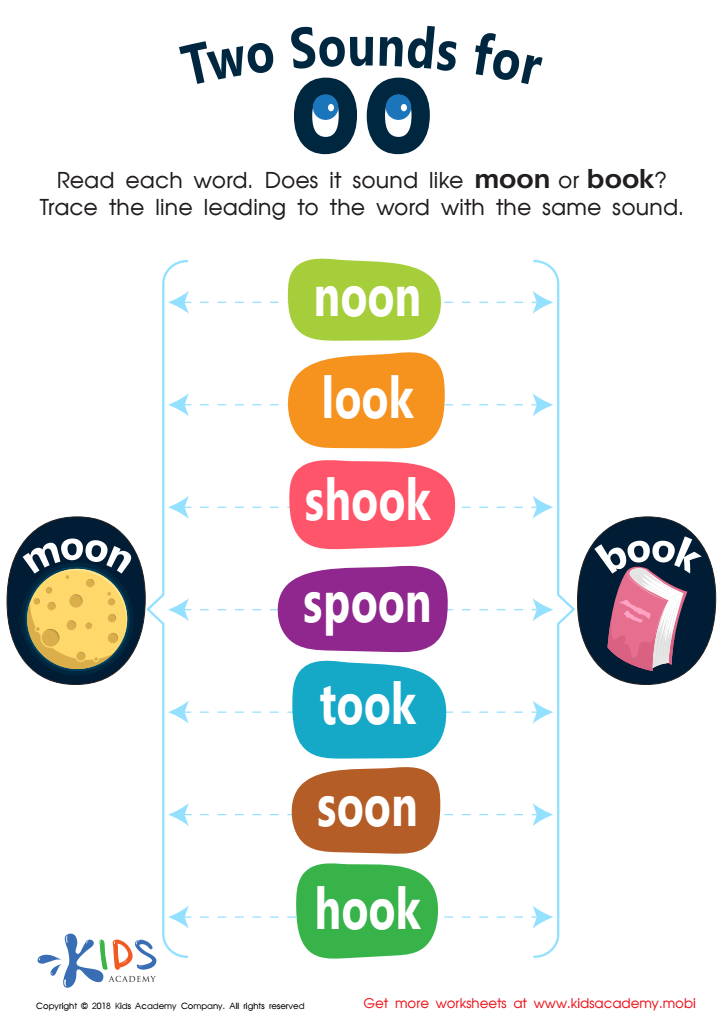
Two Sounds for OO Worksheet
This worksheet helps kids learn the different sounds of the -oo digraph. They match words based on whether they sound like moon or book, plus practice fine motor skills tracing lines. Fun and educational!
Two Sounds for OO Worksheet
Worksheet
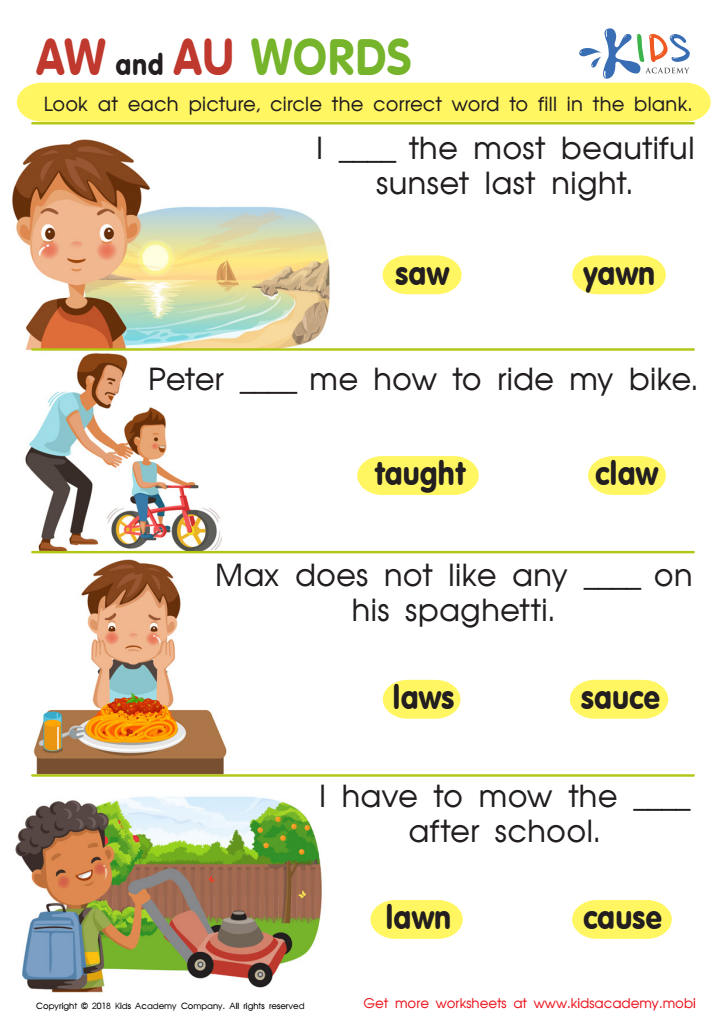
Reading: AW and AU Words Worksheet
This worksheet helps kids recognize that /au/ and /aw/ can make the same sound. Students read sentences and pick the correct word with one of the digraphs. Understanding digraphs improves decoding and reading fluency. Perfect for reading and phonics classes.
Reading: AW and AU Words Worksheet
Worksheet
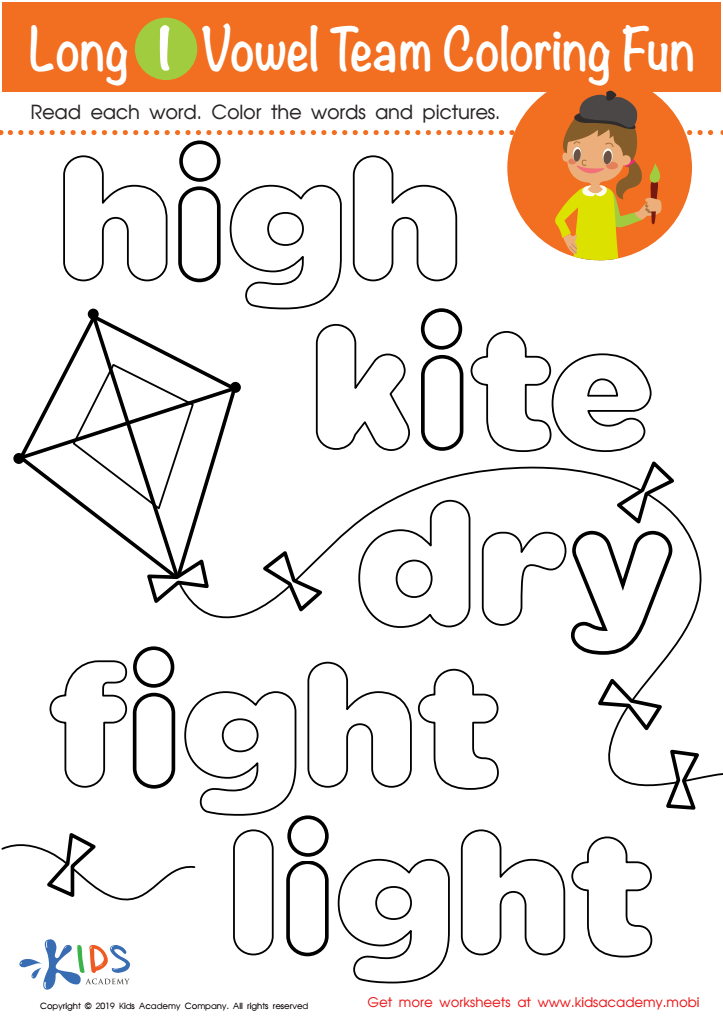
Long I Vowel Team Coloring Worksheet
This worksheet provides practice with letter combinations that make the long "i" sound while enhancing creativity and motor skills with a fun coloring activity. Unknowingly, new readers learn key phonics skills while having fun!
Download (PDF)
 Assign to My Students
Assign to My Students
Long I Vowel Team Coloring Worksheet
Worksheet
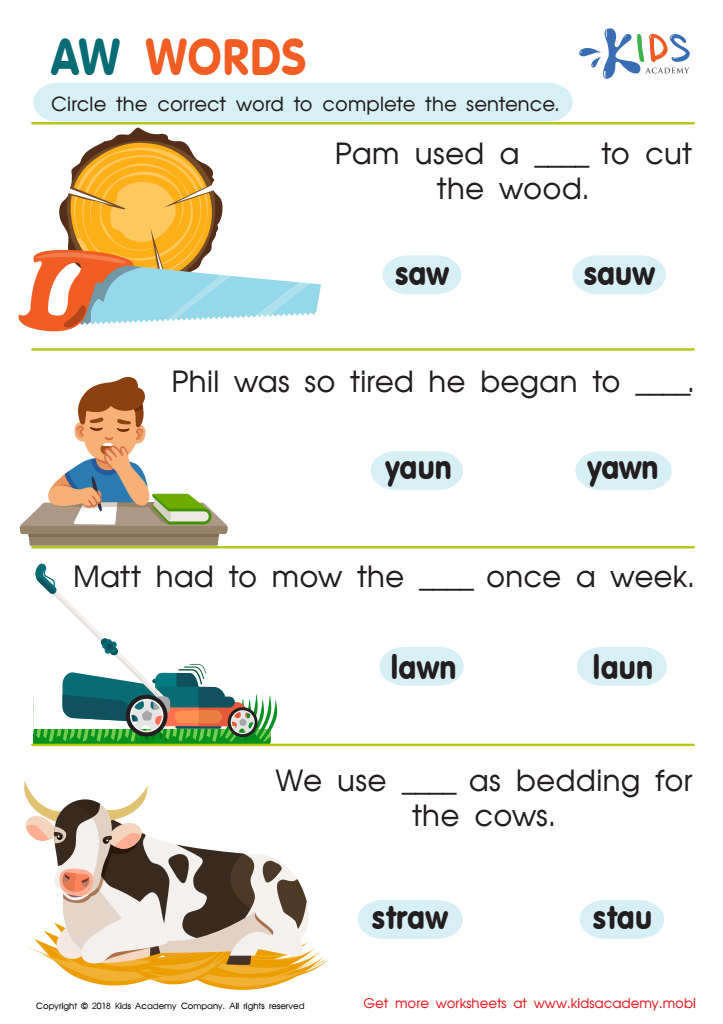
Reading: AW Words Worksheet
Practice decoding the /aw/ digraph with this printable. Students read sentences and select the word with the correct spelling to complete each one. Note, /aw/ is sometimes spelled /au/, so this worksheet helps prevent confusion. Have fun, and practice hard!
Reading: AW Words Worksheet
Worksheet
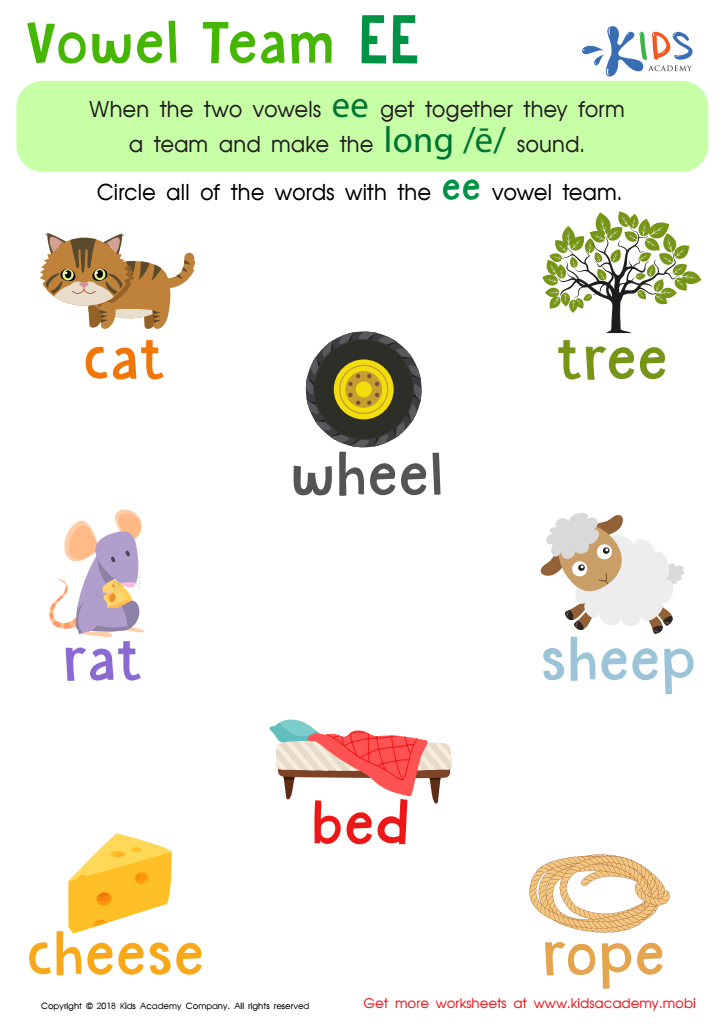
Reading: Vowel Team EE Worksheet
This worksheet is perfect for helping young learners master the /ee/ vowel team. It shows the first vowel with a long sound and the second vowel silent. It also provides pictures for unfamiliar words for readers of all levels. It's an ideal resource for teaching phonics skills.
Reading: Vowel Team EE Worksheet
Worksheet
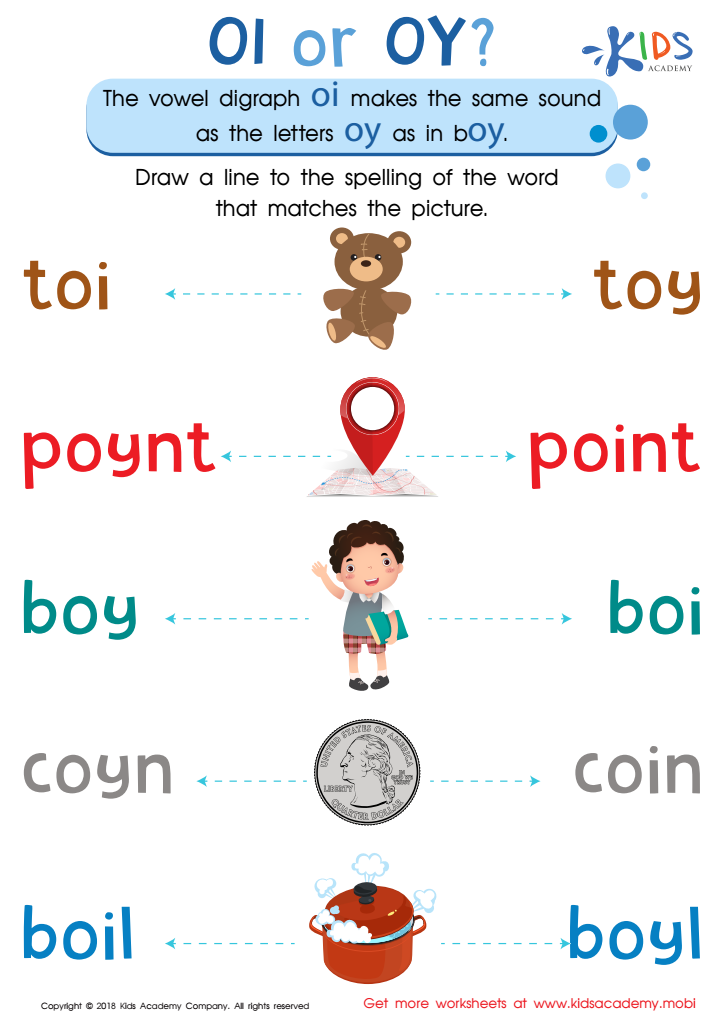
Reading: OI and OY Worksheet
Ask your students if they know the rule for words with /oi/ or /oy/ sound. If not, it's easy to learn! Rule: If /oy/ at end of word, spell with 'oy'; if /oi/ in middle of word, spell with 'oi'. Use this worksheet to help them master these digraphs and improve their ability to decode.
Reading: OI and OY Worksheet
Worksheet
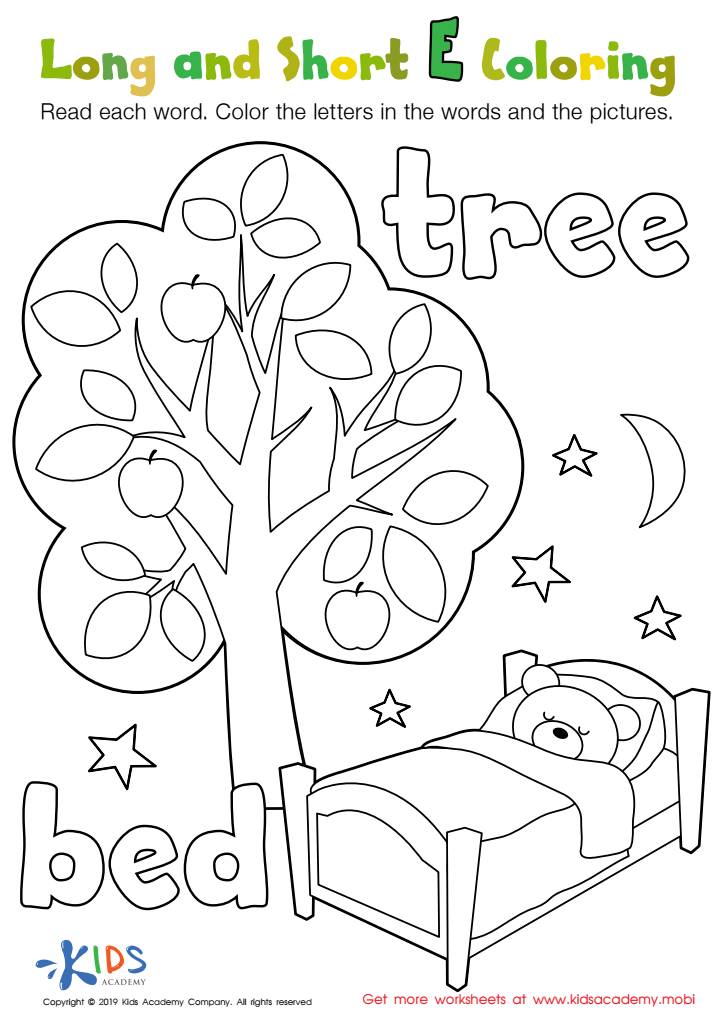
Long and Short E Worksheet
This fun printout makes learning phonics enjoyable for Grade 3 students. Get them to read the words “tree” and “bed” to recognize the different sounds of the letter “E”. After hearing the words they can color the words and the pictures to understand differences between long and short vowels.
Download (PDF)
Assign to My Students
Assign to My Students
Long and Short E Worksheet
Worksheet
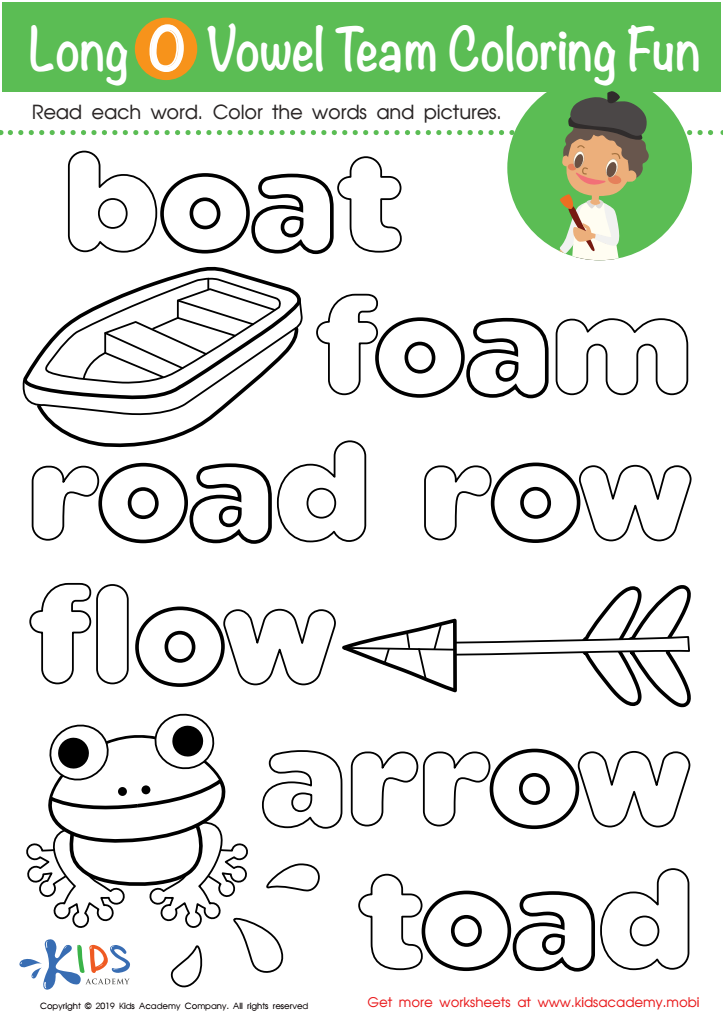
Long O Vowel Team Coloring Worksheet
Divide your class into teams and have them work together to identify and pronounce the long O sound in words like "boat" and "flow". As they read aloud, have the rest of the class listen attentively. Then let teams color in the words and matching pictures, reinforcing the lesson. This simple printout is perfect for phonics lessons and a fun way to energize your class.
Download (PDF)
Assign to My Students
Assign to My Students
Long O Vowel Team Coloring Worksheet
Worksheet
Join Kids Academy for Free
Who is primarily going to use this learning content?








Phonics skills are crucial for children aged 8-9 as they serve as the foundation for effective reading and writing. At this age, children transition from learning to read to reading to learn. A solid grasp of phonics enables them to decode unfamiliar words, enhancing their comprehension and vocabulary. As they encounter more complex texts in various subjects, strong phonics skills are essential for understanding.
Parents and teachers should care about phonics skills because they directly impact a child’s academic success. Children with proficient phonics skills are more likely to engage actively in discussions, complete assignments with confidence, and perform well on standardized assessments. Additionally, phonics fundamentally supports spelling, allowing children to construct words more effectively and articulate their thoughts clearly.
Moreover, strong phonics skills can boost a child's self-esteem and motivation, fostering a love for reading and learning. Parents and educators can play a vital role by reinforcing these skills through engaging activities, games, and targeted instruction, making learning enjoyable. Overall, prioritizing phonics skills for children aged 8-9 is essential for their ongoing educational journey and personal development. It sets the stage for lifelong literacy, which is a critical skill in an increasingly complex world.








