Filters

79 filtered results

Clear all filters
Favorites
With answer key
Interactive

79 filtered results

Difficulty Level

Grade


Check out this FREE "Vocabulary expansion" Trial Lesson for age 8-9!

Spell High Frequency Words

Favorites
With answer key
Interactive
  • 8-9
  • Vocabulary expansion
  • Normal
Double Consonant Worksheet 3rd Grade

Double Consonant Spelling Worksheet

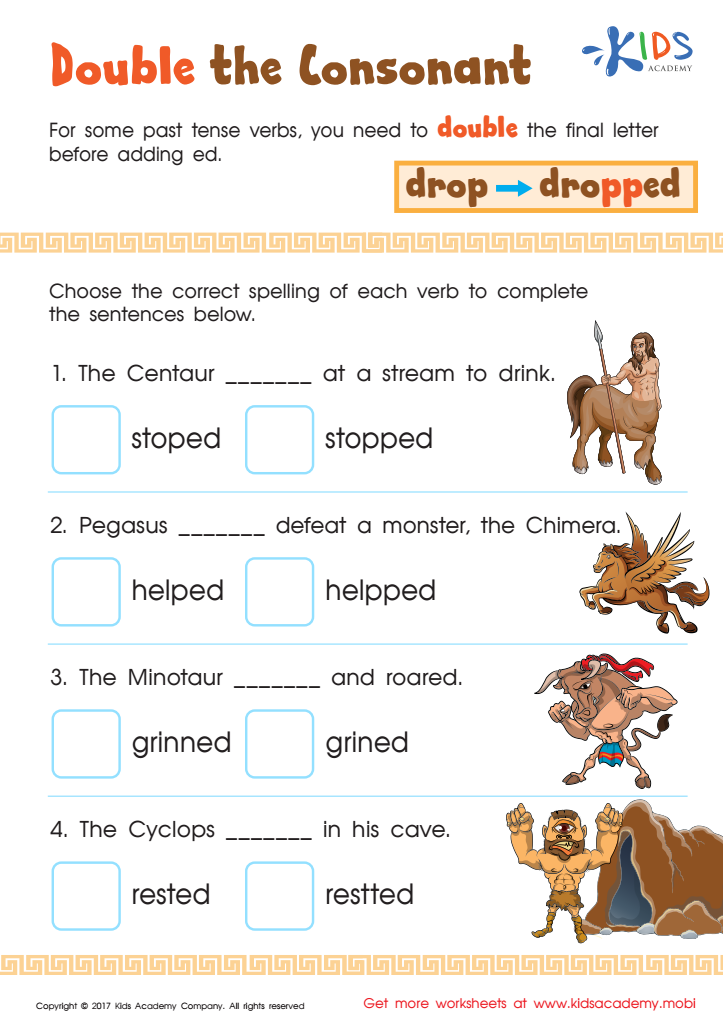
Rewrite: This double consonant worksheet is perfect for 3rd graders to practice recognizing words with doubled letters in the past tense! With a mythology theme, your child can look through the answer choices to find the correct words.
Double Consonant Spelling Worksheet
Worksheet
Reading: EA as in Bread Worksheet

Reading: EA as in Bread Worksheet

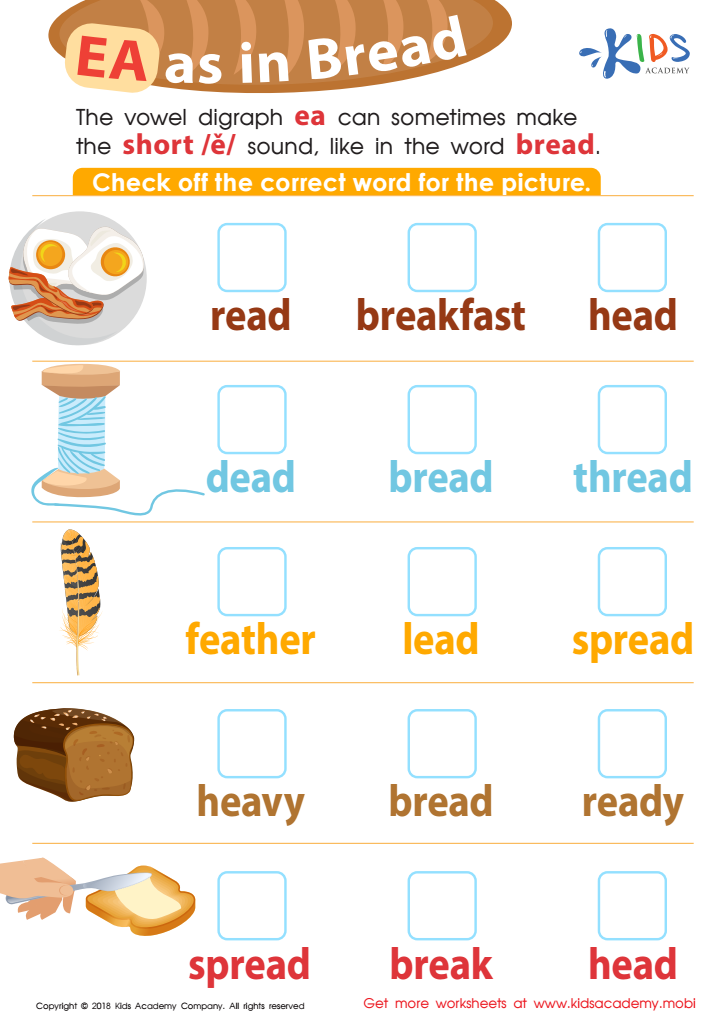
The vowel digraph ea can be read in two ways. Examples of the long sound are "read" and "lead"; examples of the short sound are "bread" and "head". Ask your kids to give you more examples and then have them check off the correct word for the pictures on this worksheet. This will help them understand the ea sound.
Reading: EA as in Bread Worksheet
Worksheet
The Boy Who Cried Wolf Part 1 Worksheet

The Boy Who Cried Wolf Part 1 Worksheet

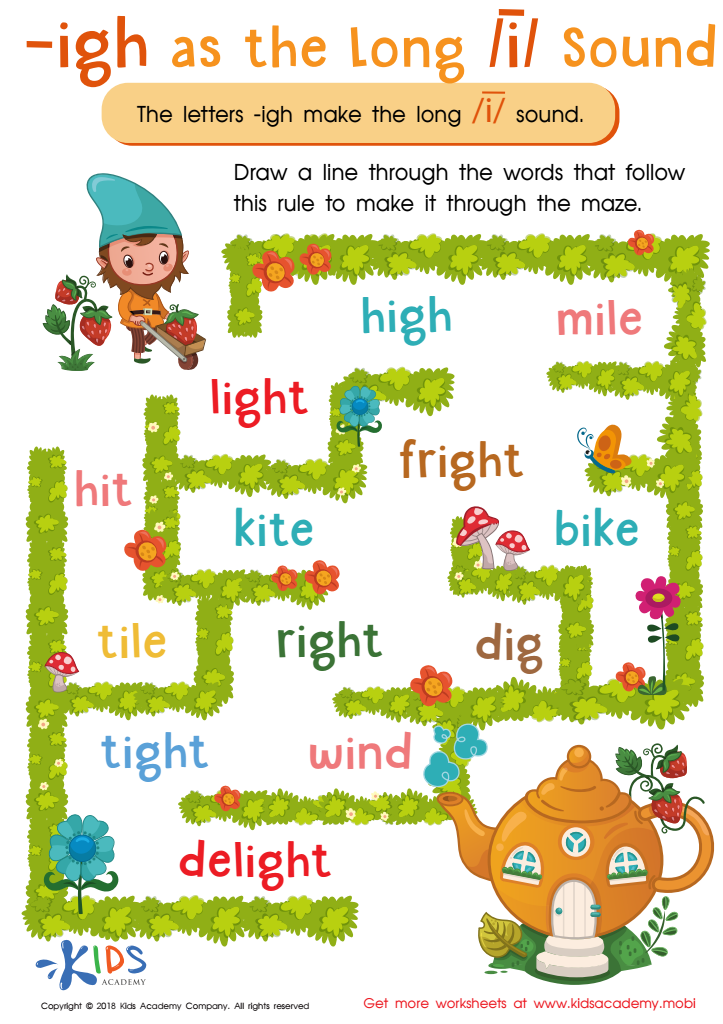
Storytime can be your kid's favorite part of the day. Ask them what their favorite stories are, then read the text in the printout. Read along with them, making sure they understand each word. At the end, go over the questions and have them check the correct answers.
The Boy Who Cried Wolf Part 1 Worksheet
Worksheet
Reading: IGH as Long I Worksheet

Reading: IGH as Long I Worksheet

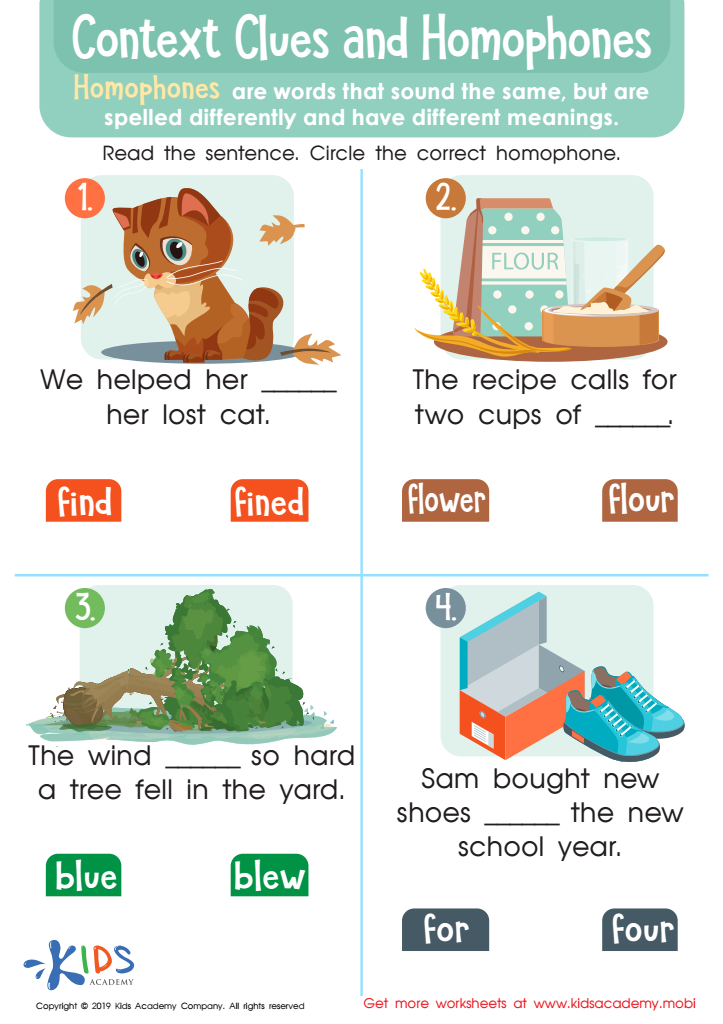
Kids can have fun and learn with this maze! They'll look for and read words with the 'long I' sound spelled 'igh'. Most words ending with 'T' have this spelling. Decode words while learning about long vowel sounds and their spellings.
Reading: IGH as Long I Worksheet
Worksheet
Context Clues and Homophones Worksheet

Context Clues and Homophones Worksheet

Make sure kids understand what homophones are (words that sound the same, different spellings, meanings). Give examples and look at the printout. Read each sentence and sound out words. Help them pick the right one and circle it.
Context Clues and Homophones Worksheet
Worksheet
Finding Syllables in Long Vowel Words Worksheet

Finding Syllables in Long Vowel Words Worksheet

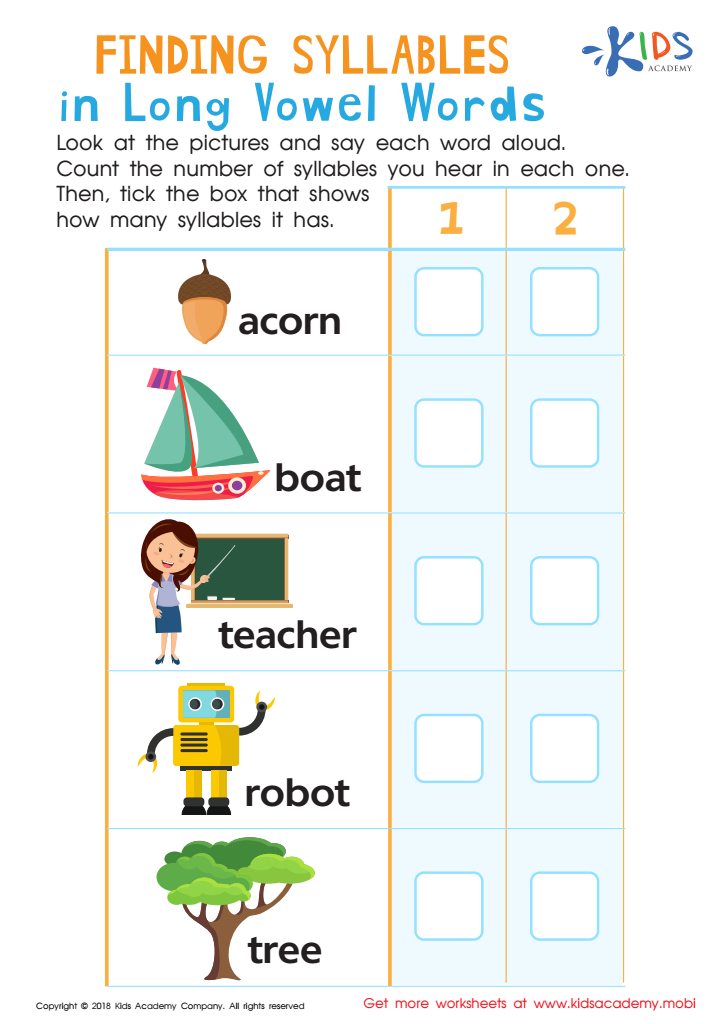
Help your kids identify objects and better count syllables in words. Look at the printout images with them and have them say each word out loud. Ask them to count syllables and tick the box with the correct number. With this worksheet, your kids will become more skilled.
Finding Syllables in Long Vowel Words Worksheet
Worksheet
Animal Sanctuary Worksheet


Animal Sanctuary Worksheet

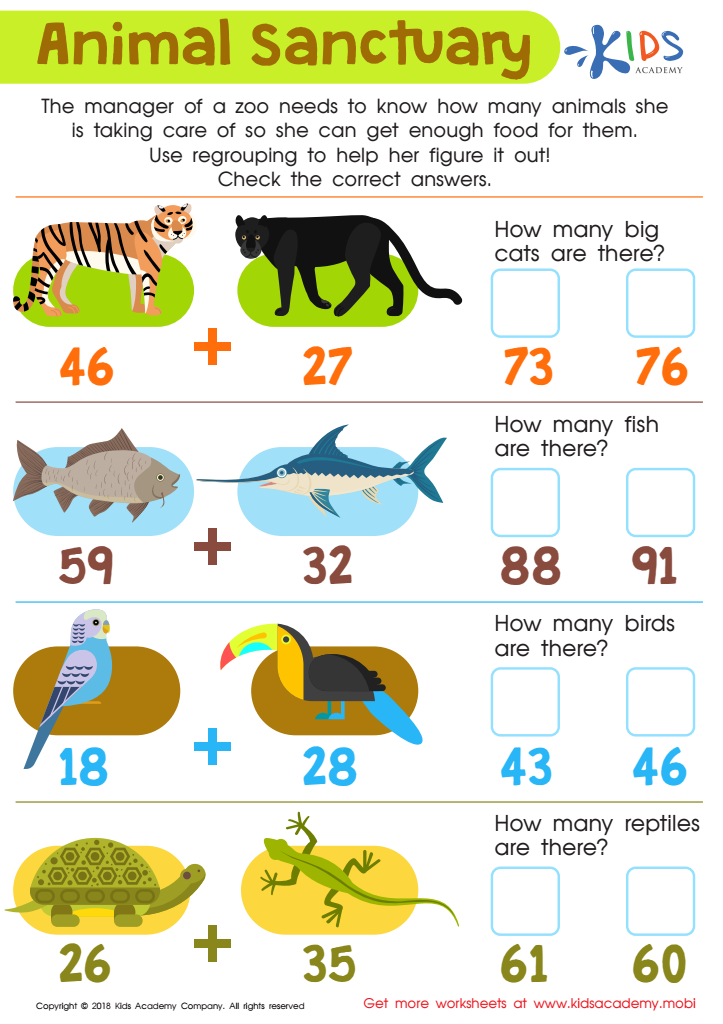
Do your kids love visiting the zoo? Ask which animals they remember & which ones they liked the most. The manager needs help to get enough food for all the animals. Help your child use regrouping to figure out how many animals there are. And ask them to check the answers.
Animal Sanctuary Worksheet
Worksheet


... 3 4

Vocabulary expansion for children aged 8-9 is crucial for several reasons. At this developmental stage, children are experiencing significant growth in their language skills, which directly impacts their academic performance and communication abilities. A rich vocabulary enhances reading comprehension, allowing children to understand and engage with more complex texts. This is vital as they transition from learning to read to reading to learn.

Moreover, vocabulary development is linked to improved writing skills. Children with expansive vocabularies can express their thoughts and ideas more clearly and creatively. This not only boosts their performance in school but also fosters self-confidence in their communication.

Additionally, vocabulary expansion aids cognitive development. As children learn new words, they learn about concepts and ideas, enhancing their critical thinking and problem-solving skills. It also prepares them for social interactions, as a robust vocabulary enables better expression of emotions and understanding of others.

Teachers and parents should actively engage in vocabulary-building activities, such as reading together, playing word games, and encouraging discussions around new words. By prioritizing vocabulary expansion, they can help children thrive academically and socially, setting a solid foundation for lifelong learning.