Problem-Solving Skills Normal Division Worksheets for Ages 8-9
7 filtered results
-
From - To
Equip young learners with essential problem-solving skills through our Normal Division Worksheets designed for ages 8-9. Our engaging and interactive worksheets help children develop a solid understanding of division concepts, boosting their confidence and math proficiency. Each carefully crafted worksheet promotes critical thinking by presenting real-world scenarios where students apply division skills to solve problems. By incorporating various difficulty levels and fun themes, our resources cater to individual learning paces and styles, ensuring a fulfilling educational experience. Ideal for both classroom and at-home learning, these worksheets support students in mastering division while nurturing a love for mathematics.
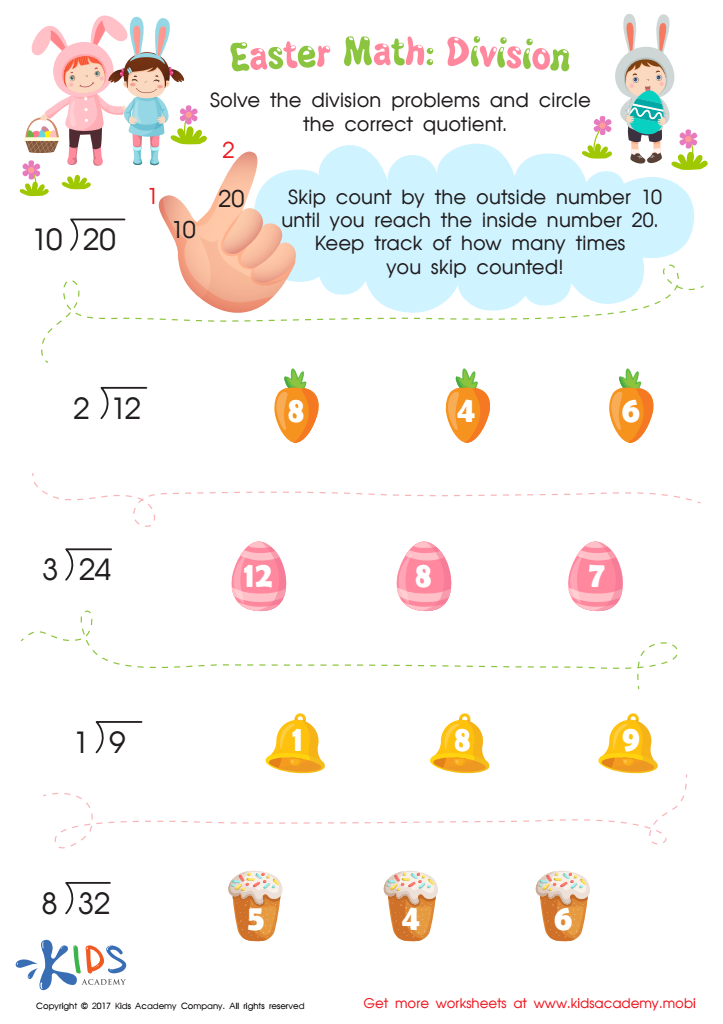
Division Worksheet
 Assign to My Students
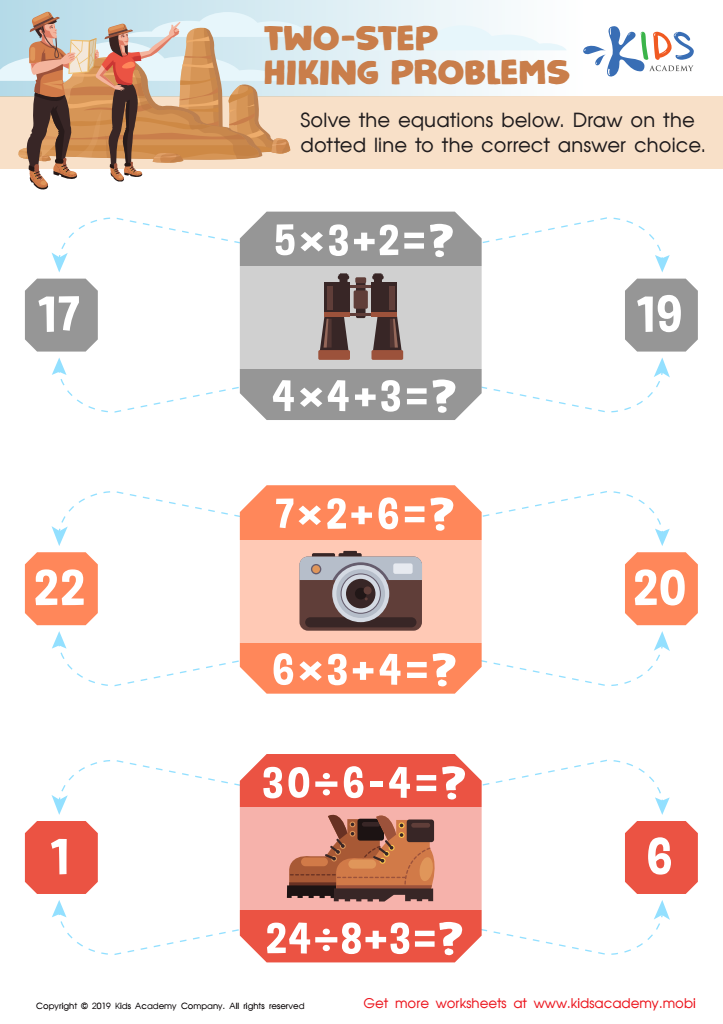
Two-Step Hiking Problems Worksheet
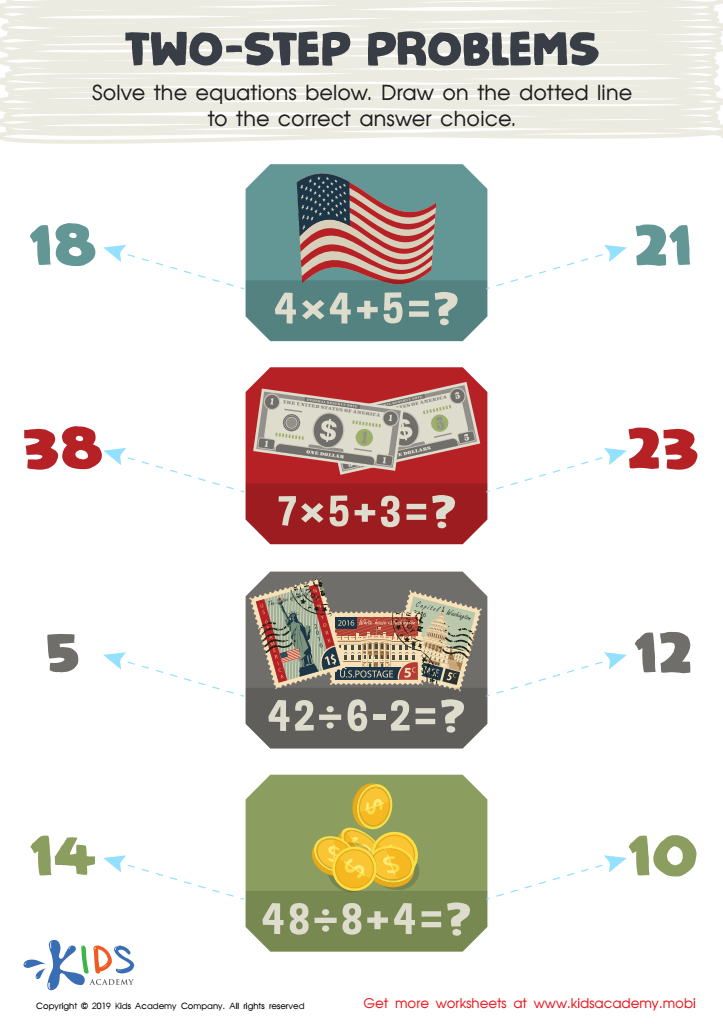
Two-Step Problems Worksheet
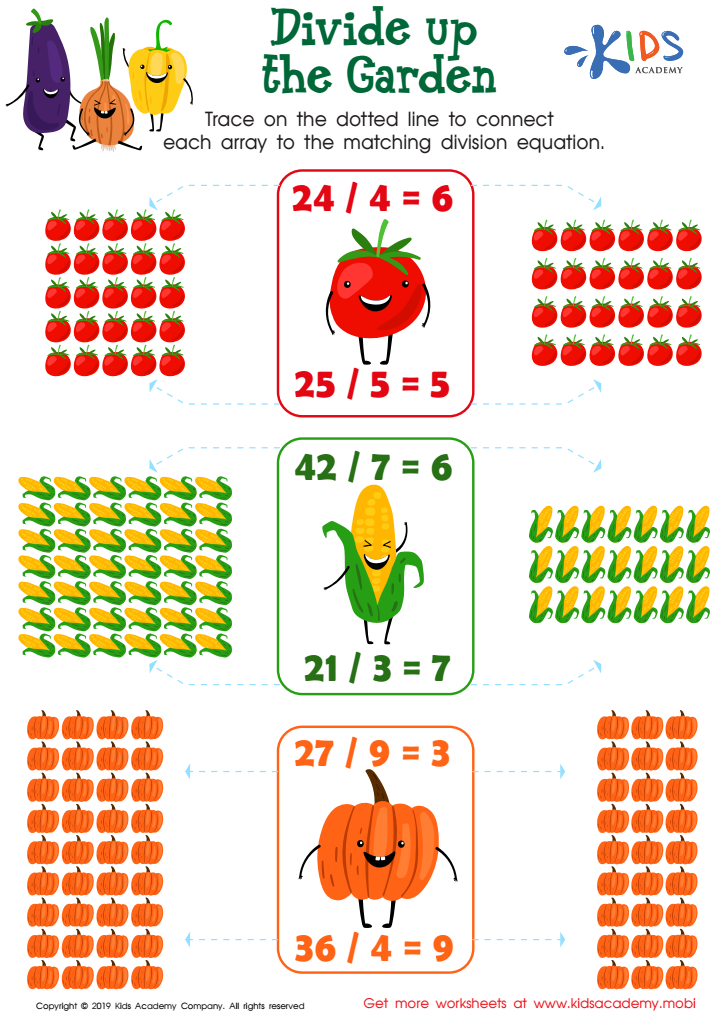
Divide up the Garden Worksheet
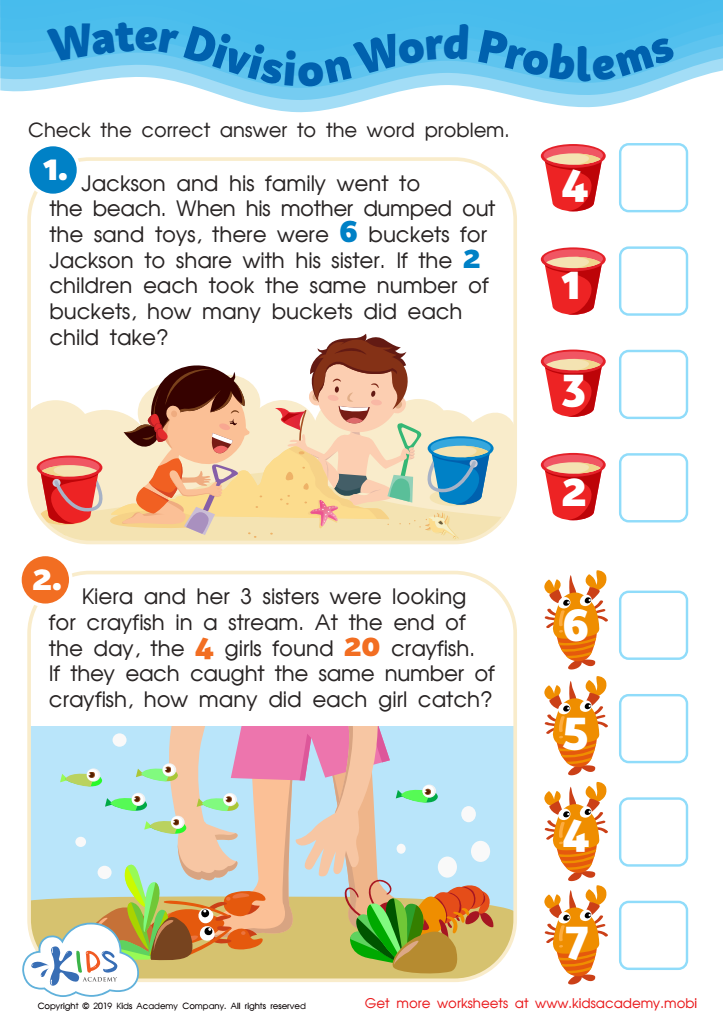
Water Division Word Problems Worksheet
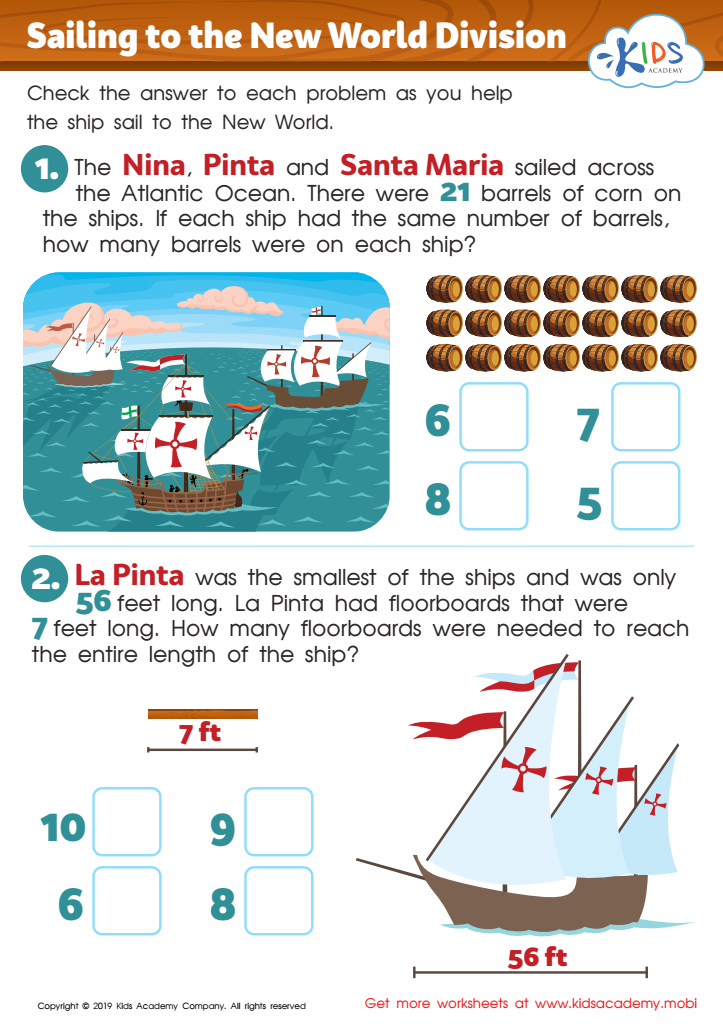
Sailing to the New World Division Worksheet
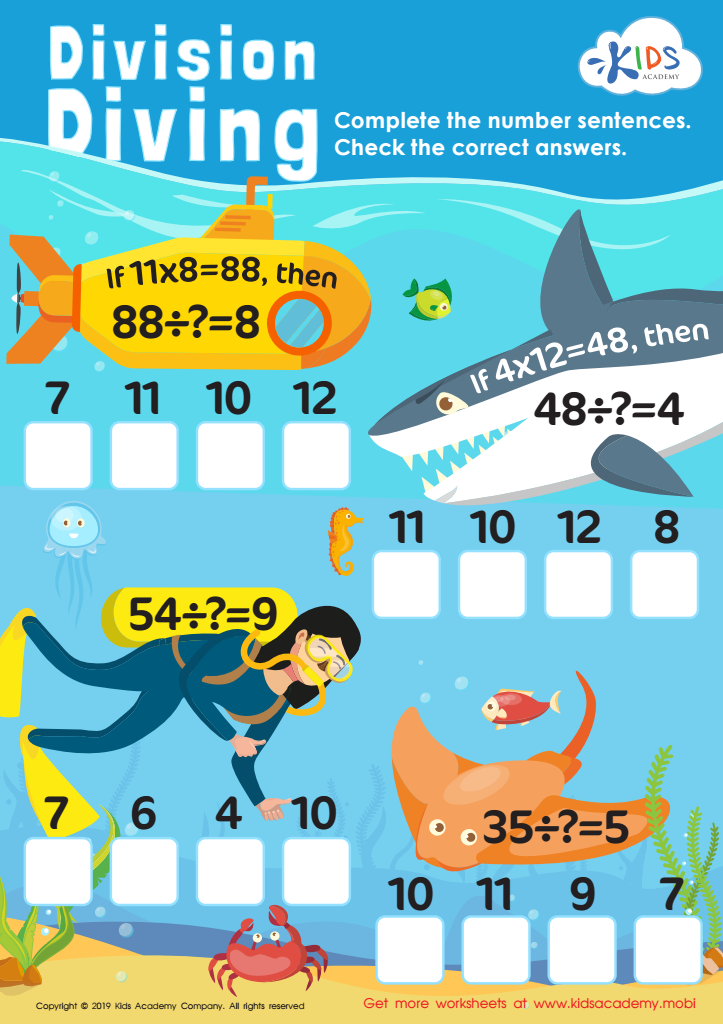
Division Diving Worksheet








Problem-solving skills, including proficiency in normal division, are crucial for children aged 8-9 as they form the foundation for critical thinking and future academic success. Both parents and teachers play pivotal roles in fostering these skills. Normal division, introduced at this age, enhances a child’s mathematical understanding and promotes logical reasoning. As students learn to divide numbers, they build a strong grasp of equating and partitioning, key concepts that are fundamental across various math domains.
Beyond mathematics, division and problem-solving skills translate to everyday life challenges. They encourage children to approach situations methodically, navigating complex scenarios with confidence. This analytical mindset is essential not only for academic pursuits but also for making informed decisions in daily life.
Moreover, fostering these skills at an early age builds self-esteem and reduces math anxiety. Success in problem-solving activities enables children to experience a sense of accomplishment, motivating them to tackle more challenging tasks. This encouragement from parents and teachers solidifies a growth mindset, where children understand that effort leads to improvement.
In essence, nurturing problem-solving skills, including normal division, equips children with essential life tools. Parents and teachers’ engagement is indispensable in creating a robust educational environment that prioritizes critical thinking, self-efficacy, and lifelong learning.








