Understanding fractions Normal Geometry Worksheets for Ages 8-9
4 filtered results
-
From - To
Welcome to our Understanding Fractions Normal Geometry Worksheets for Ages 8-9! Designed to help young learners grasp the concept of fractions through engaging and interactive activities, these worksheets provide a solid foundation in geometry and mathematical reasoning. Kids will explore various fraction topics, including identifying parts of a whole, comparing fractions, and recognizing fractional relationships in geometric shapes. Our printable resources foster critical thinking and problem-solving skills in a fun, age-appropriate manner. Ideal for classroom use or at-home learning, these worksheets encourage students to apply their knowledge while building confidence in their mathematical abilities. Start your child’s journey in understanding fractions today!
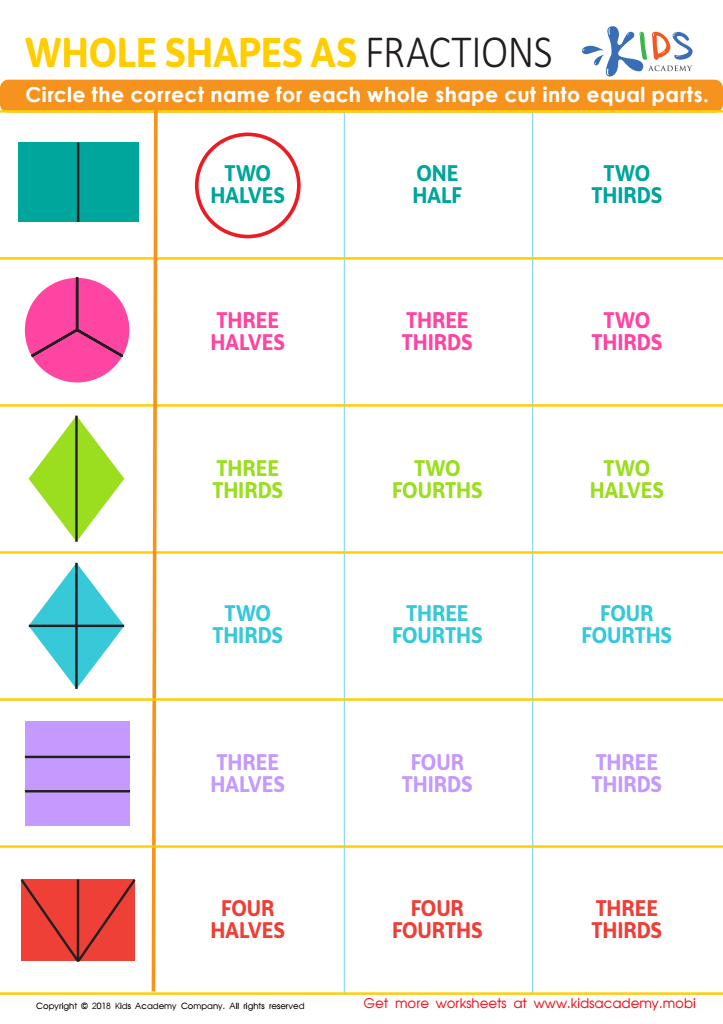
Whole Shapes as Fractions Worksheet
 Assign to My Students











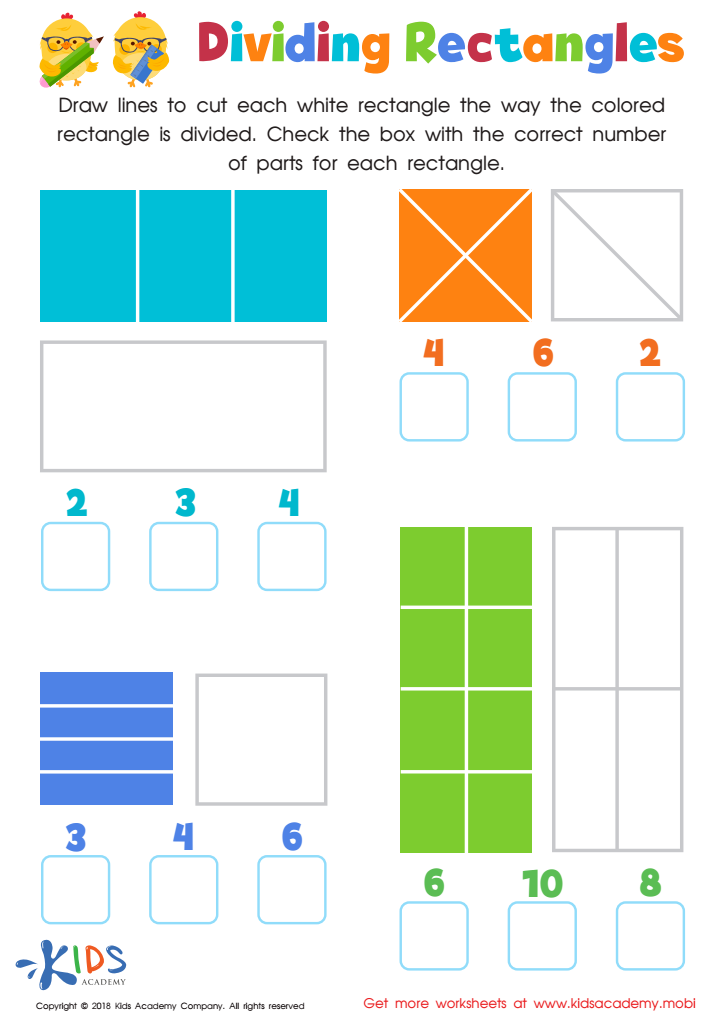
Dividing Rectangles Worksheet
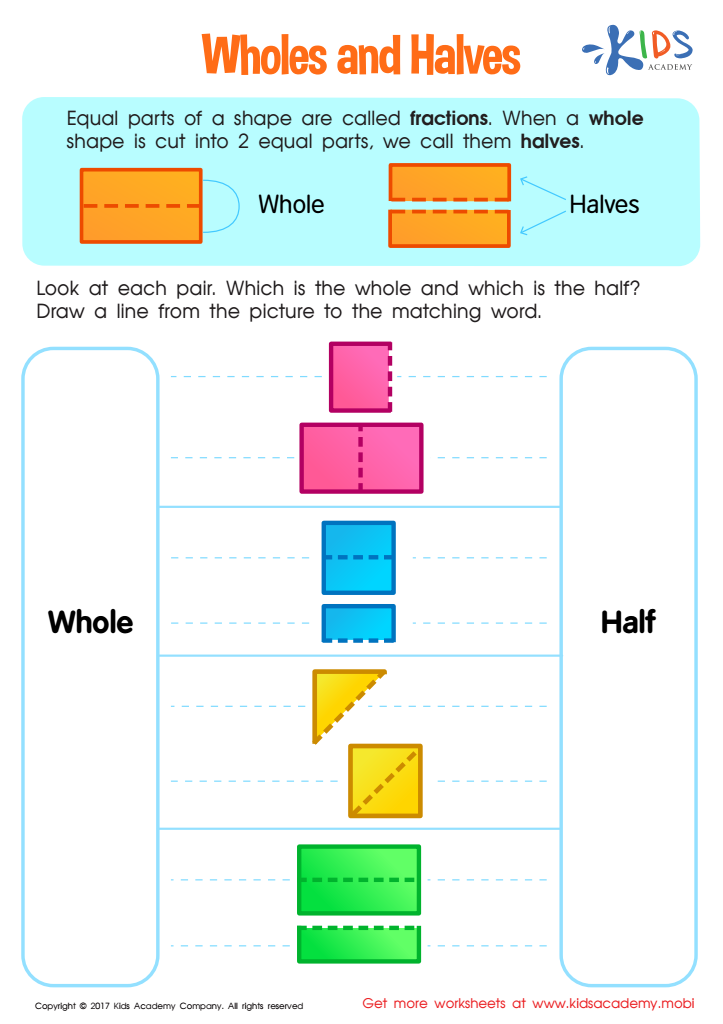
Wholes and Halves Worksheet
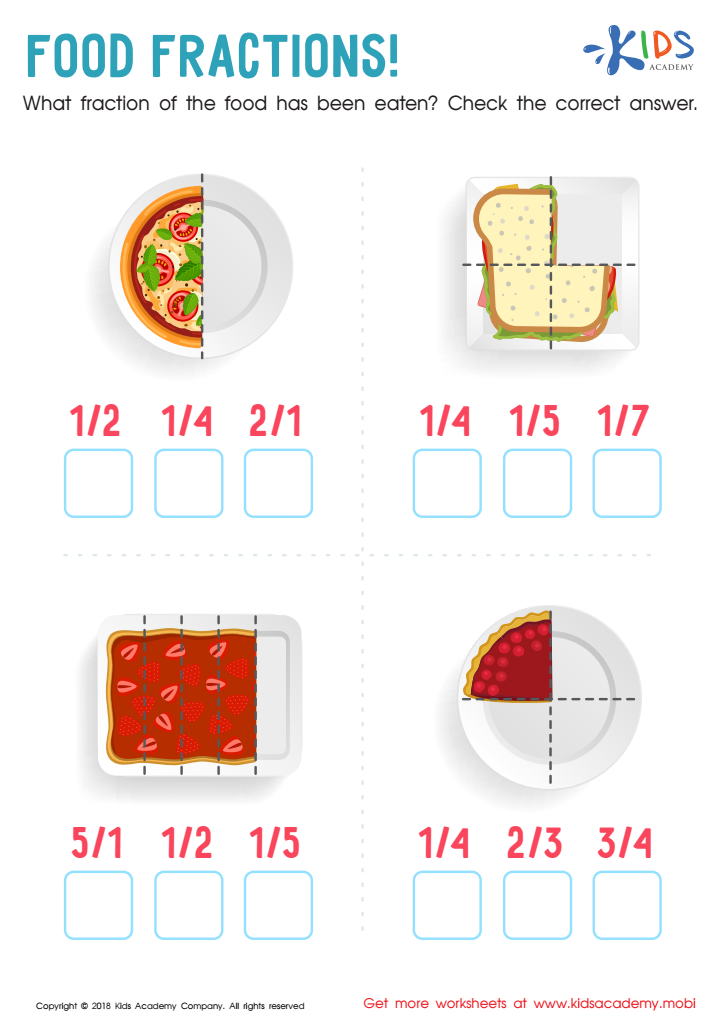
Food Fractions Worksheet








Understanding fractions and basic geometry is crucial for children aged 8-9, as these concepts form the foundation for many life skills and advanced mathematical knowledge. At this stage, children are introduced to more complex ideas, and mastering fractions helps them grasp essential daily tasks, such as cooking or managing time. Recognizing fractions also develops critical problem-solving and analytical thinking skills that are transferable across subjects.
Geometry, on the other hand, introduces students to shapes, sizes, and spatial relationships. These concepts are not only vital for mathematics but also help in understanding the physical world around us. A solid grasp of geometry enhances visualization skills and can inspire creativity in art and design.
Furthermore, these mathematical concepts encourage collaboration and communication among peers, fostering interpersonal skills. Educators and parents should prioritize these fundamentals to promote a love for mathematics and build confidence. When children feel proficient in these areas, they are more likely to approach higher-level math with enthusiasm and assurance. By supporting their understanding of fractions and geometry, parents and teachers empower children to succeed academically and develop critical life skills they will use in the future.








