Understanding measurements Normal Math Worksheets for Ages 8-9
6 filtered results
-
From - To
Explore our engaging Normal Math Worksheets designed specifically for children aged 8-9, focusing on the essential skill of understanding measurements. These worksheets enhance students' ability to comprehend different units of measurement, such as length, weight, and capacity, through fun exercises and real-world applications. Ideal for reinforcing classroom learning or providing additional practice at home, our resources encourage critical thinking and problem-solving skills. With visually appealing designs and age-appropriate questions, these worksheets make mastering measurements enjoyable and accessible for young learners. Help your child build a solid foundation in math with our comprehensive and interactive understanding measurements worksheets!
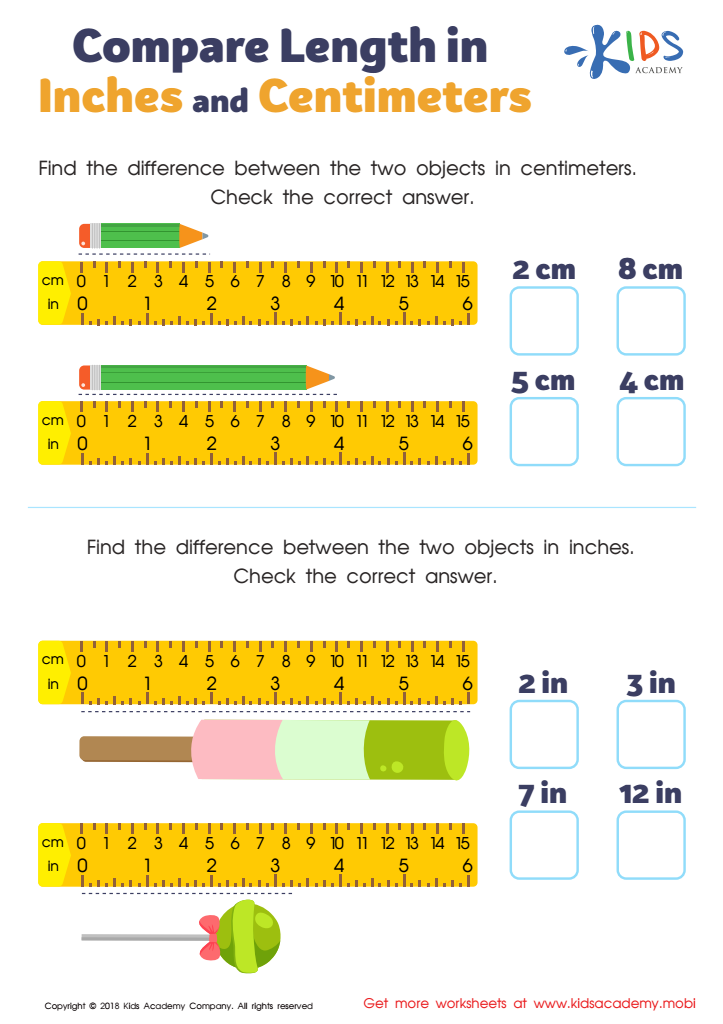
Compare Length in Inches and Centimeters Worksheet
 Assign to My Students
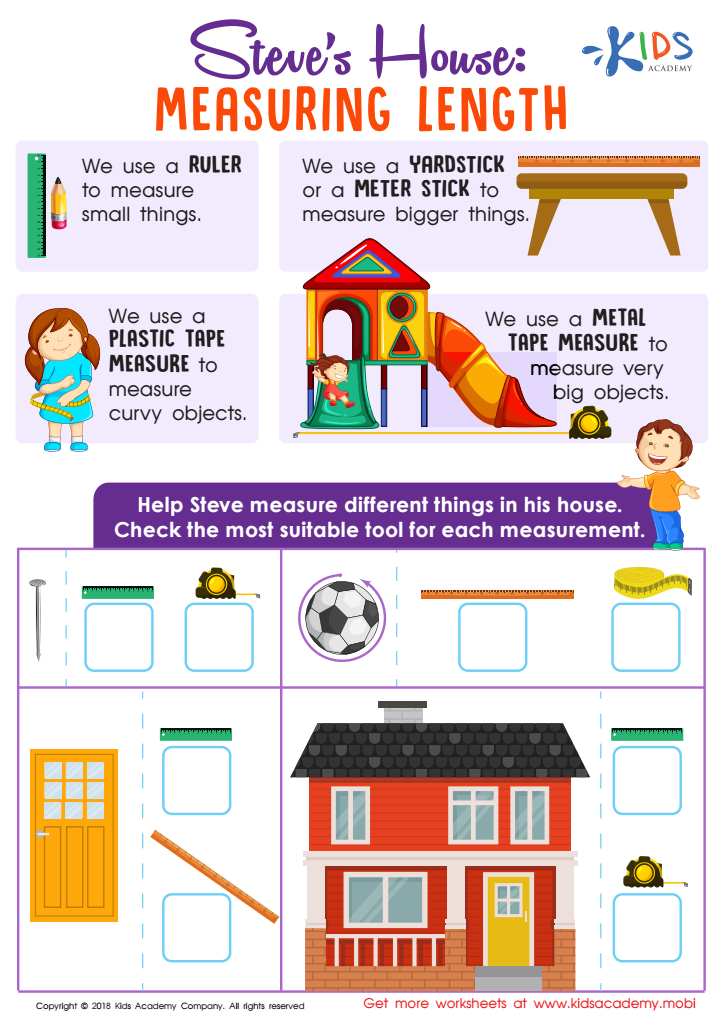
Steve's House: Measuring Length Worksheet
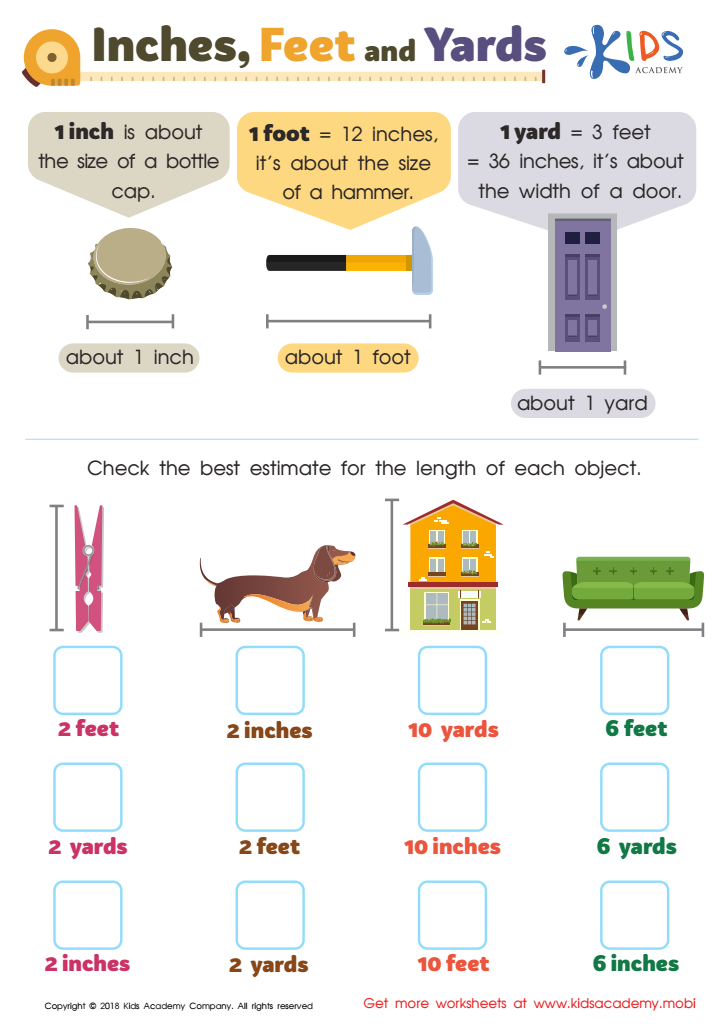
Inches, Feet and Yards Worksheet
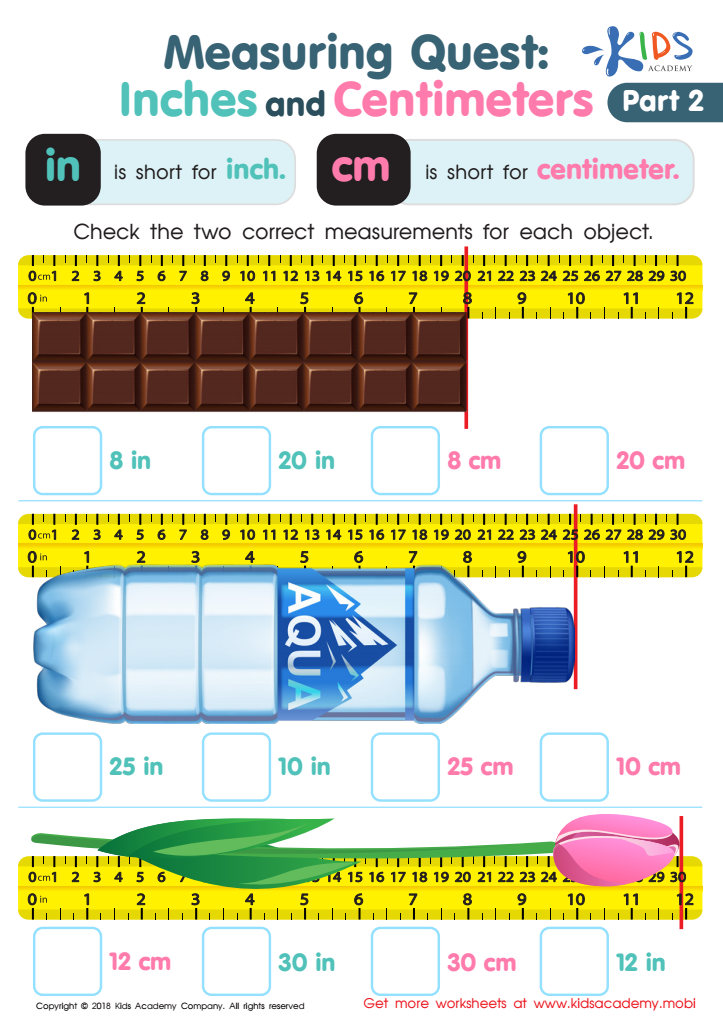
Measuring Quest: Inches and Centimeters - Part 2 Worksheet
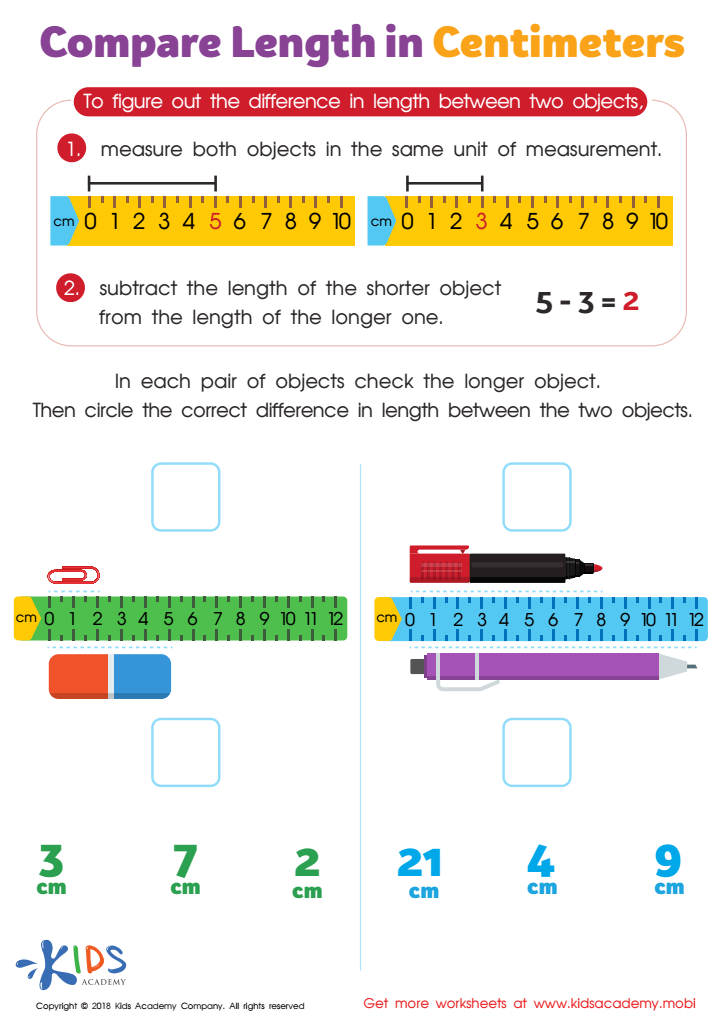
Compare Length in Centimeters Worksheet
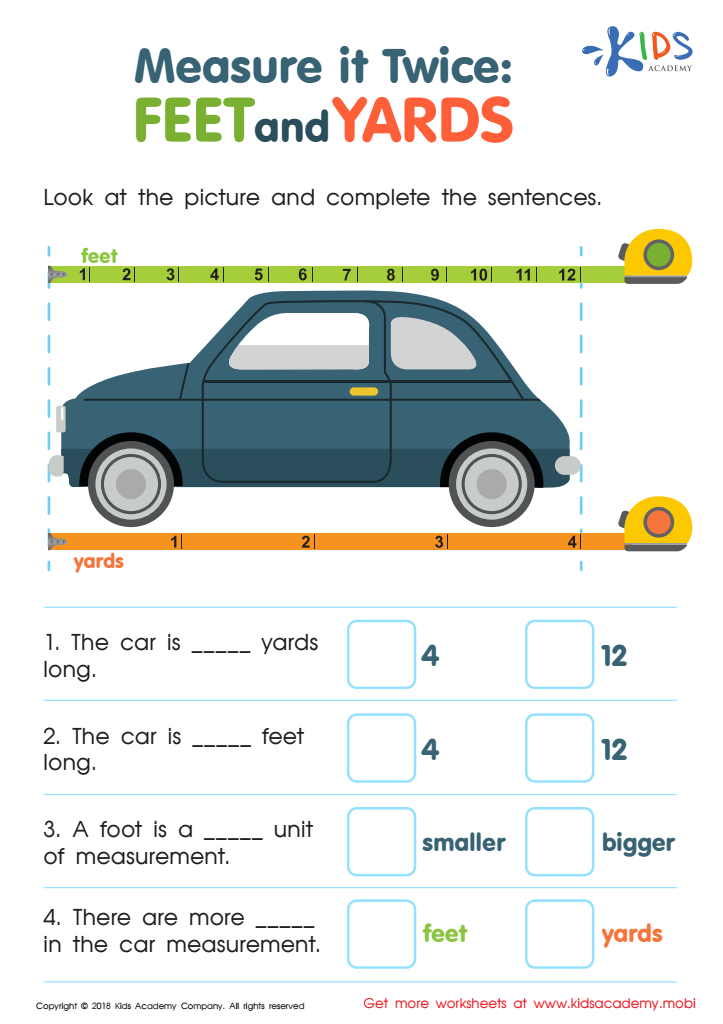
Measure It Twice: Feet and Yards Worksheet







Understanding measurements is crucial for children aged 8-9 because it lays the foundation for essential life skills and future academic success. At this stage, children begin to grasp concepts such as length, weight, volume, and time, which are vital for practical applications in daily life—like cooking, building projects, or understanding temperature. Teachers and parents play a pivotal role in helping children relate these measurements to real-world scenarios, such as measuring ingredients for recipes or determining distances during outings.
Furthermore, mastering measurement principles cultivates problem-solving skills and critical thinking. . These skills not only bolster mathematical proficiency but also influence scientific inquiry, laying groundwork for STEAM (Science, Technology, Engineering, Arts, Mathematics) education.
Engagement in measurement activities can enhance spatial awareness and improve confidence in mathematics, creating a positive attitude towards the subject, which is crucial for lifelong learning. Encouraging curiosity about measurements also fosters discussions about metrics versus imperial systems, promoting cultural awareness and adaptability.
In a world driven by data and technology, understanding measurements empowers children to make informed decisions, interact meaningfully with their environment, and prepares them for advanced concepts in mathematics and science, ultimately enriching their academic journey.








