Counting skills Normal Tracing Numbers Worksheets for Ages 8-9
5 filtered results
-
From - To
Enhance your child's counting skills with our engaging Normal Tracing Numbers Worksheets, designed specifically for ages 8-9. These worksheets offer a fun and interactive way for young learners to practice number formation while reinforcing their understanding of counting. Each sheet features clear, bold numbers for tracing, accompanied by colorful illustrations to captivate children’s attention. As they engage with the worksheets, students improve fine motor skills and develop their confidence in writing numbers correctly. Perfect for at-home learning or classroom activities, these resources make mastering counting both enjoyable and effective. Empower your child to excel in math through playful learning!
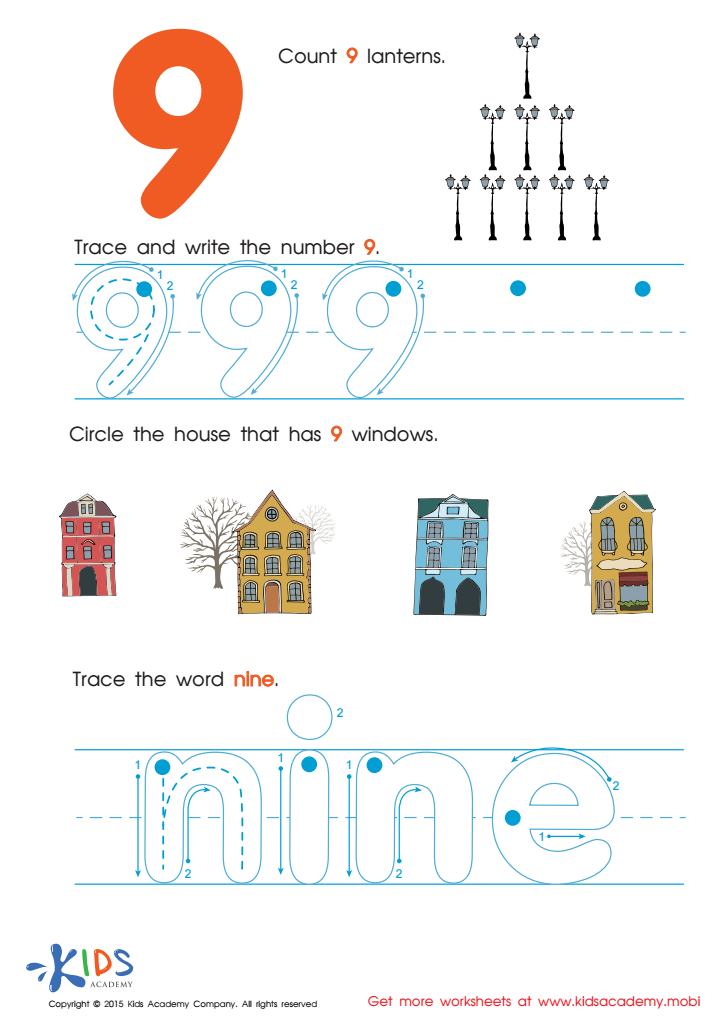
Tracing And Learning to Write Number 9 Worksheet
 Assign to My Students
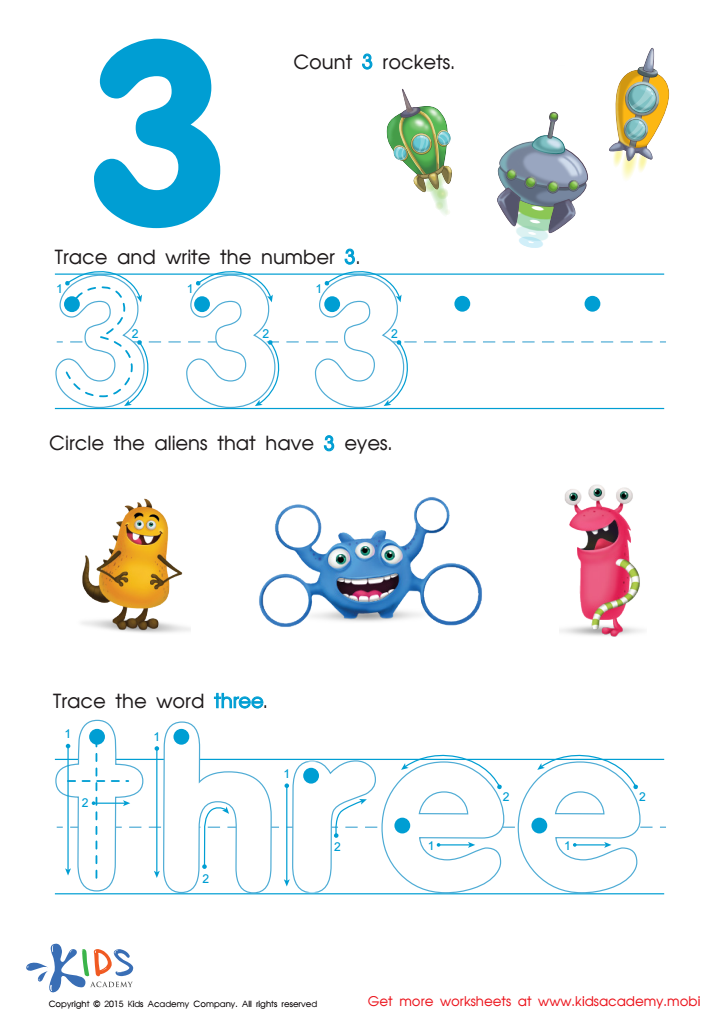
Learning Number Three Worksheet
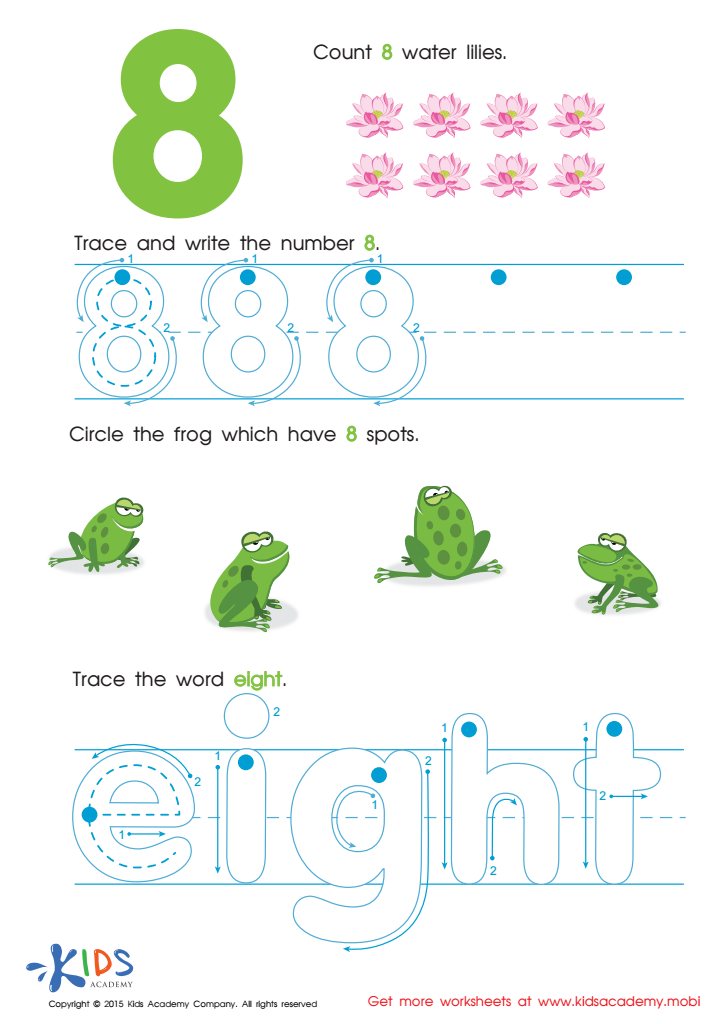
Learn Number 8 Easily Worksheet
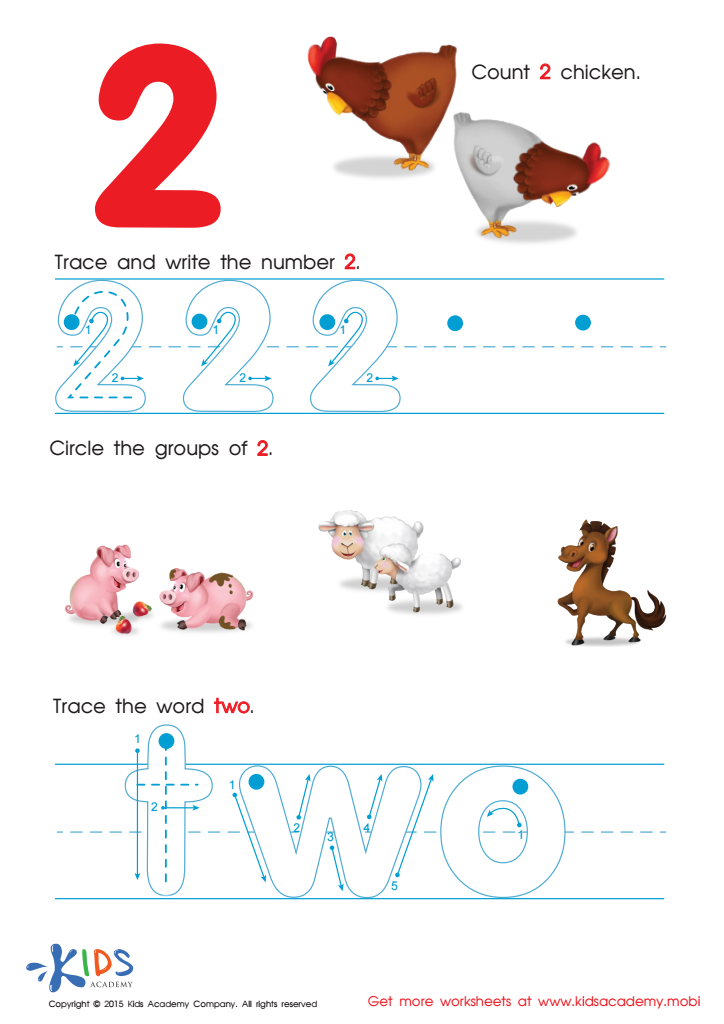
Learn to Write the Number 2 Worksheet
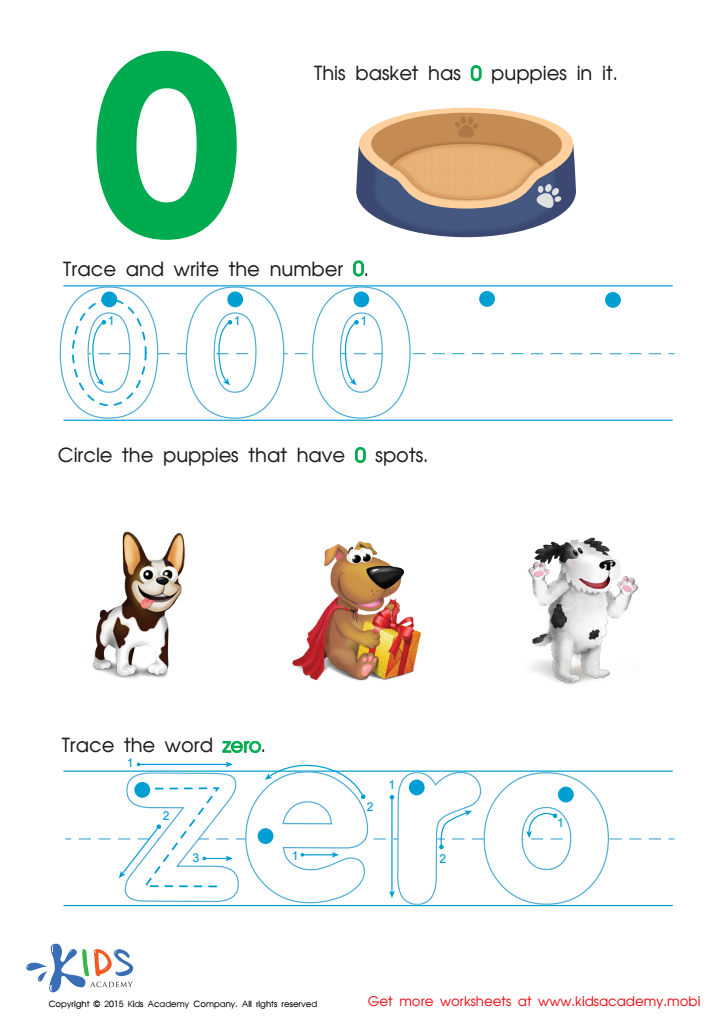
Trace And Write Number 0 Worksheet








For children aged 8-9, counting skills and normal tracing of numbers play a pivotal role in their overall mathematical development. During this age, children's cognitive abilities are rapidly advancing, and refining these foundational skills is essential for their academic success. Counting serves as the basis for understanding more complex mathematical concepts like addition, subtraction, and even future lessons in multiplication and division. If children struggle with counting, it can lead to challenges in higher-level mathematics, potentially impacting their confidence and engagement with the subject.
Moreover, tracing numbers enhances fine motor skills, which are crucial for writing and other handwriting tasks. Good penmanship fosters a sense of pride and can influence a child’s self-esteem. Additionally, practicing tracing promotes number recognition, helping children to identify and differentiate between numbers quickly, an essential skill in everyday life.
As children engage with counting and tracing, it also sets the stage for developing problem-solving skills. Parents and teachers invested in nurturing these skills will provide children a solid mathematical foundation, paving the way for academic advancement and future learning success. Thus, fostering counting skills and number tracing is not only important for mathematics but also for developing well-rounded, confident learners.