
Analytical skills Normal Worksheets for 8-Year-Olds
4 filtered results
Difficulty Level
Grade
Age
-
From - To
Subject
Activity
Standards
Boost your 8-year-old's analytical skills with our engaging Normal Worksheets! Designed to refine critical thinking, these worksheets challenge young learners to analyze information, identify patterns, and solve problems creatively. Each activity is tailored to enhance their ability to assess situations, draw conclusions, and make informed decisions, all while ensuring learning remains fun and interactive. Our user-friendly printable resources cater to varied learning styles, encouraging exploration and independent thinking. Ideal for both classroom settings and home practice, these worksheets lay a strong foundation for future academic success. Start nurturing your child's analytical abilities today!
Favorites
With answer key
Interactive
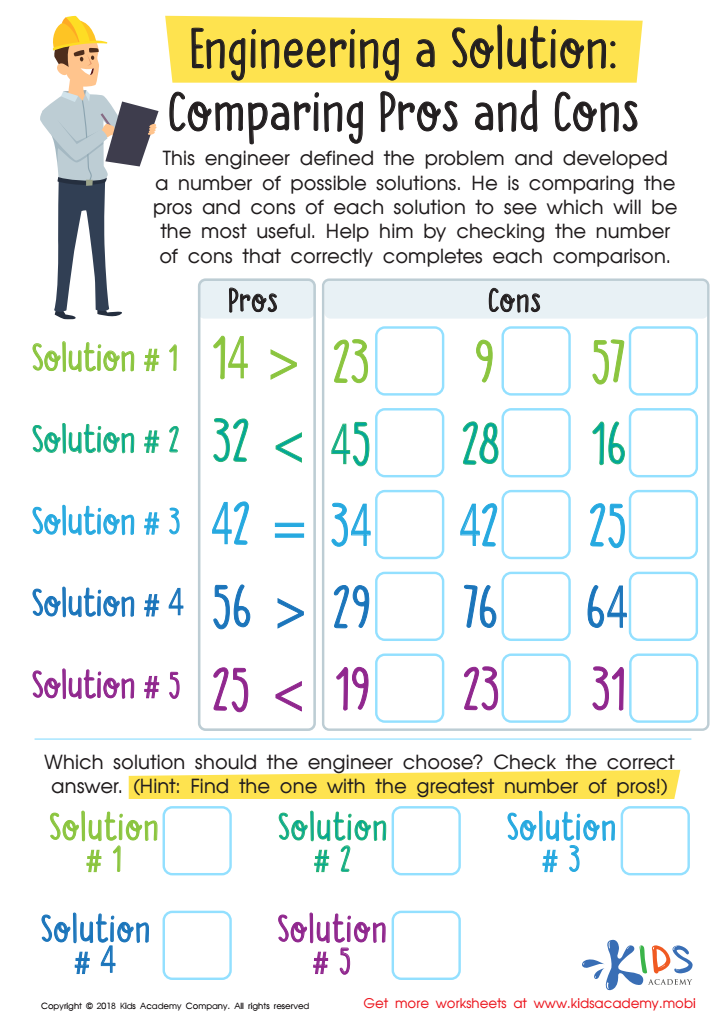
Engineering a Solution: Comparing Pros and Cons Worksheet
Help our little engineers assist the engineer in making a decision! They will solve the equations using greater than, less than, and equal to, and then decide the best solution for the problem using the pros and cons of each.
 Assign to My Students
Engineering a Solution: Comparing Pros and Cons Worksheet
Worksheet
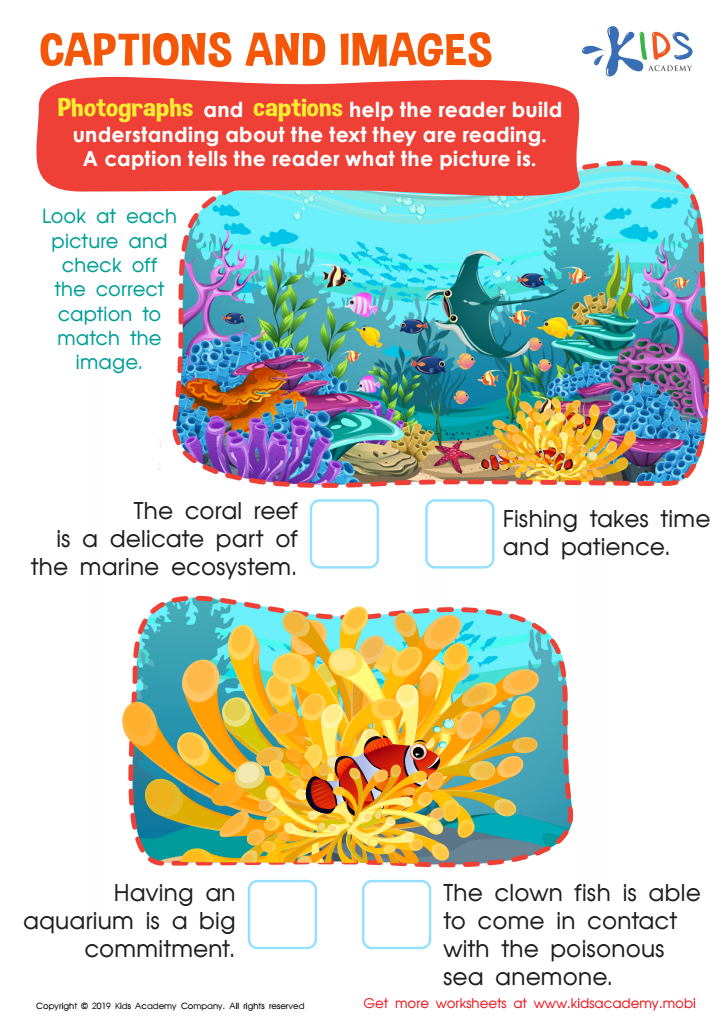
Captions and Images Worksheet
Pictures and captions can aid understanding. That's why many children's books have them. Have your kids look at the pictures in the worksheet, then help them match the right caption to each image. This will help them understand the story.
Captions and Images Worksheet
Worksheet
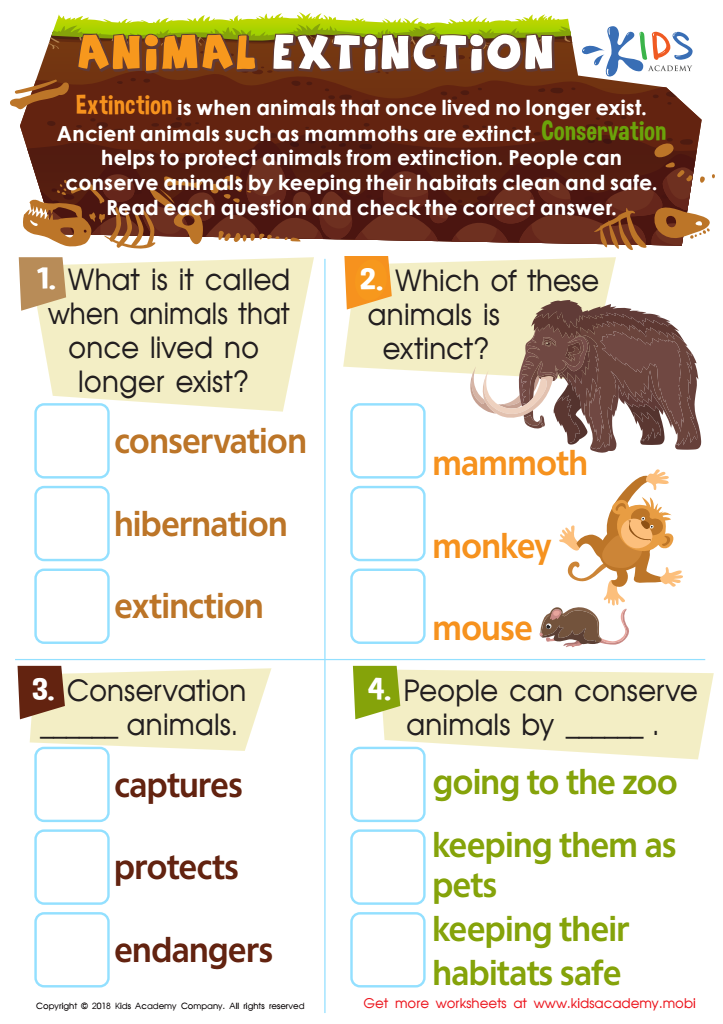
Animal Extinction Worksheet
Children can learn how their actions can help endangered animals with this free PDF worksheet. It explains extinction, looks at the mammoth as an example, and poses questions about conservation. Keeping habitats clean and safe is key to protecting animals and keeping them abundant. Learning about this now can make a huge difference for future generations.
Animal Extinction Worksheet
Worksheet
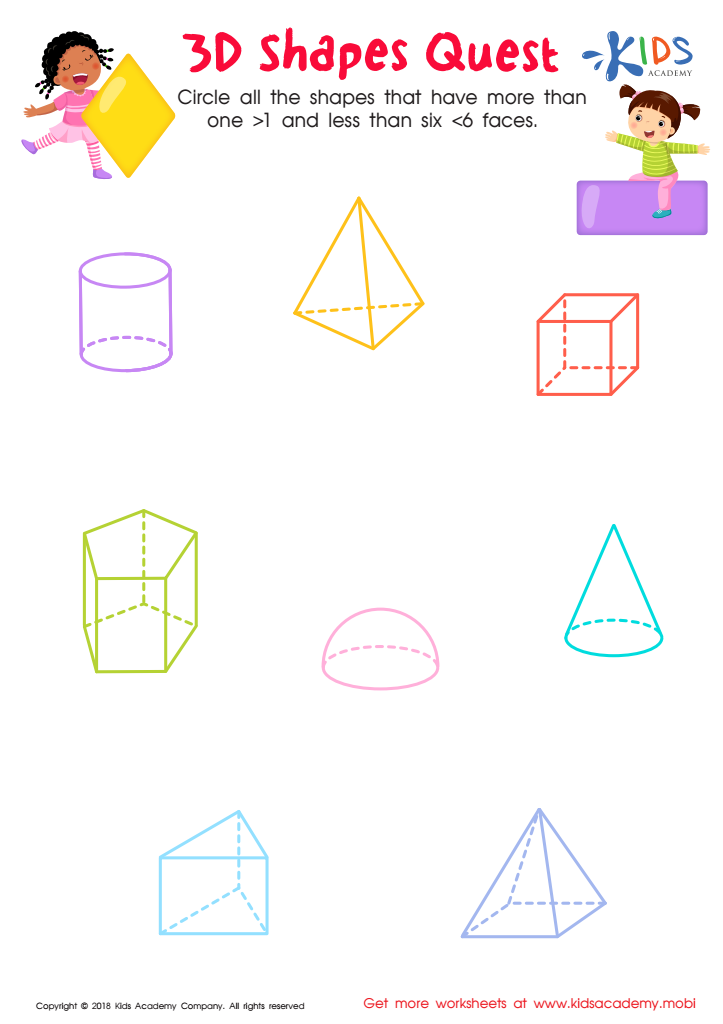
3D Shapes Quest Worksheet
Ask your child if they know what faces of shapes are. If not, explain that faces are flat surfaces on shapes. Ask what a square and rectangle have in common - both have four faces. Your child's task is to circle shapes with more than 1 and less than 6 faces in this exercise.
3D Shapes Quest Worksheet
Worksheet
Join Kids Academy for Free
Who is primarily going to use this learning content?








Parents and teachers should care about developing analytical skills in 8-year-olds because these skills are foundational for academic success and everyday problem-solving. At this age, children are increasingly encouraged to think critically, draw conclusions, and make informed decisions. By nurturing their analytical skills, educators and parents empower children to evaluate information, identify patterns, and solve puzzles, which enhances their learning across subjects such as math, science, and reading.
Furthermore, strong analytical skills foster creativity by enabling young learners to approach problems from multiple perspectives. This not only improves their reasoning abilities but also cultivates independent thinking. In our rapidly changing world, these skills will help children navigate future technological advancements and social complexities.
Moreover, strong analytical abilities contribute to effective communication. Children learn to articulate their thoughts and rationale, skills crucial for successful interactions in both academic and social settings. By prioritizing analytical skill development, parents and teachers equip children with essential tools that extend beyond the classroom, encouraging lifelong learning and adaptability. Overall, investing in these skills today prepares children not just for future education, but for an increasingly complex world.








