
Logical thinking development Normal Worksheets for 8-Year-Olds
6 filtered results
Difficulty Level
Grade
Age
-
From - To
Subject
Activity
Standards
Nurture your child's logical thinking skills with our custom-designed worksheets tailored for 8-year-olds. These engaging activities focus on enhancing critical reasoning, problem-solving, and decision-making skills, fostering a solid foundation for future academic success. Each worksheet presents captivating puzzles, patterns, and scenarios that stimulate young minds, making learning both fun and effective. Ideal for classroom use or at-home practice, our logical thinking development worksheets inspire curiosity and persistence. Help your child unlock their potential and navigate challenges with confidence and creativity. Explore our extensive collection today and watch your child grow into a logical thinker!
Favorites
With answer key
Interactive
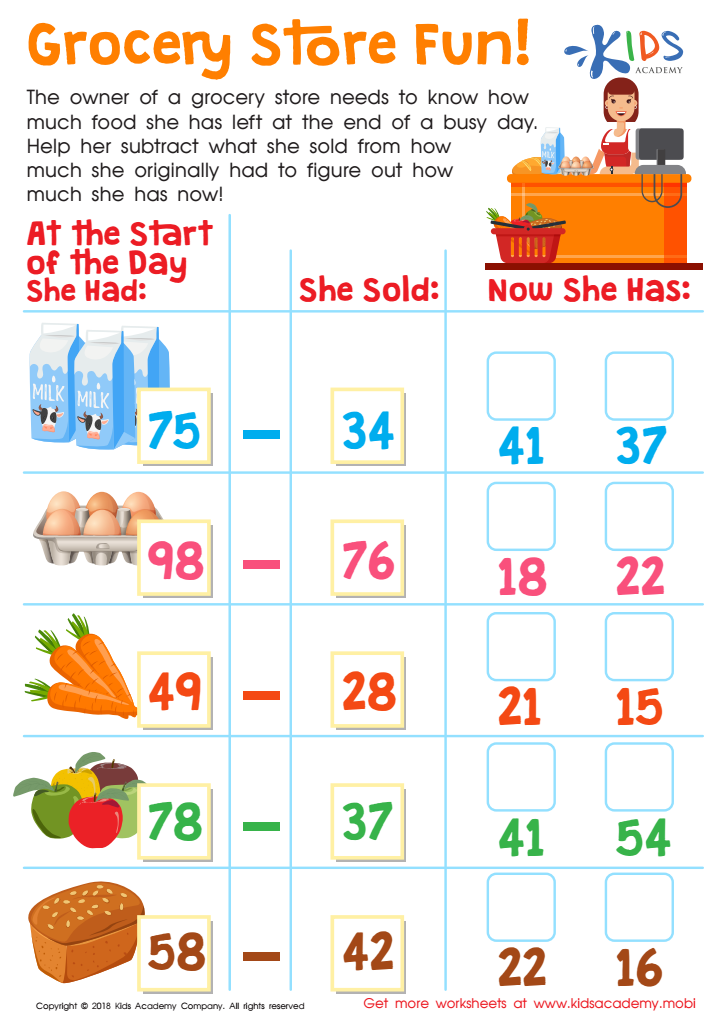
Grocery Store Fun! Worksheet
Let your kids have fun with this store worksheet. It requires them to help the owner by subtracting what she has sold from the original amount to figure out how much is left. Have them read and solve the equations in the printout to give the store owner the answer.
 Assign to My Students
Grocery Store Fun! Worksheet
Worksheet
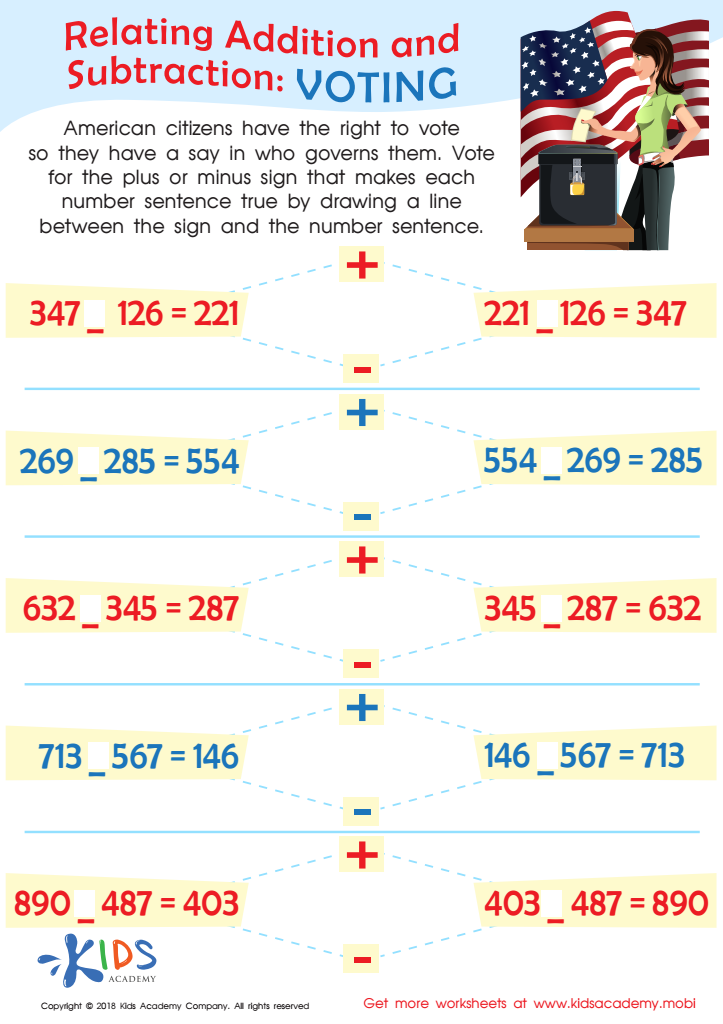
Voting Worksheet
This worksheet combines Social Studies and Math, teaching kids the democratic concept of voting. Guide learners to observe the problem, and decide if it needs a plus or minus. They "vote" for the correct answer by drawing a line from the problem to the correct operation symbol. Tally up the votes to check the answers!
Voting Worksheet
Worksheet
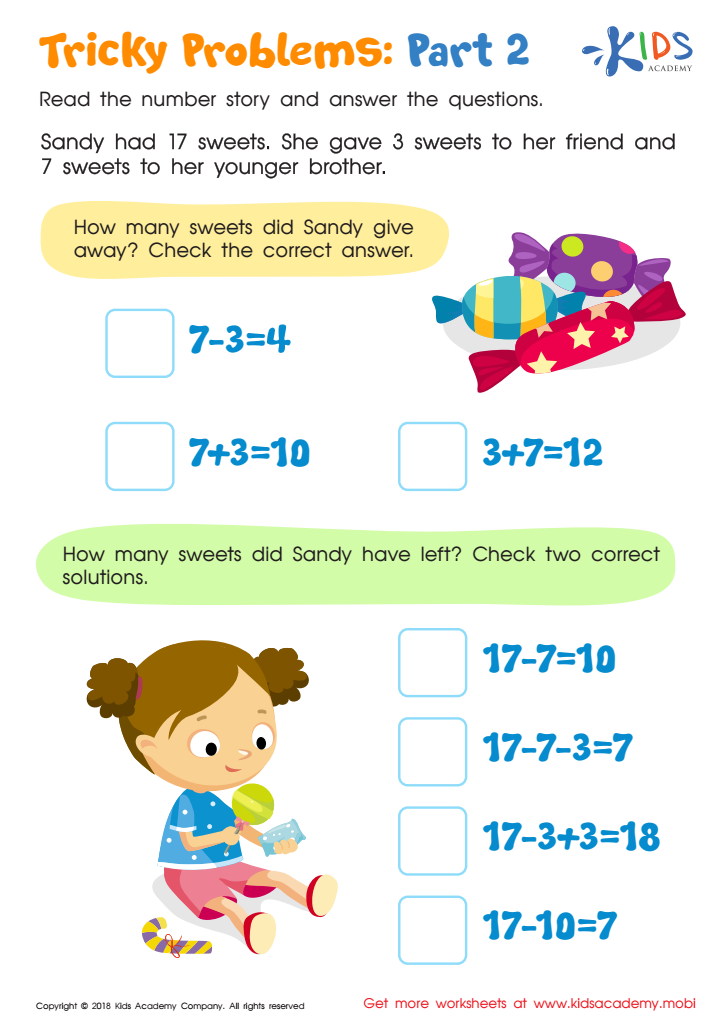
Tricky Problems Worksheet: Part 2
Help your little math learner visualize number stories with this engaging worksheet. They'll connect pictures to the story and use math facts to find the sums. After that, they'll be able to identify the correct number sentences to match. Let them practice and get better at problem solving!
Tricky Problems Worksheet: Part 2
Worksheet
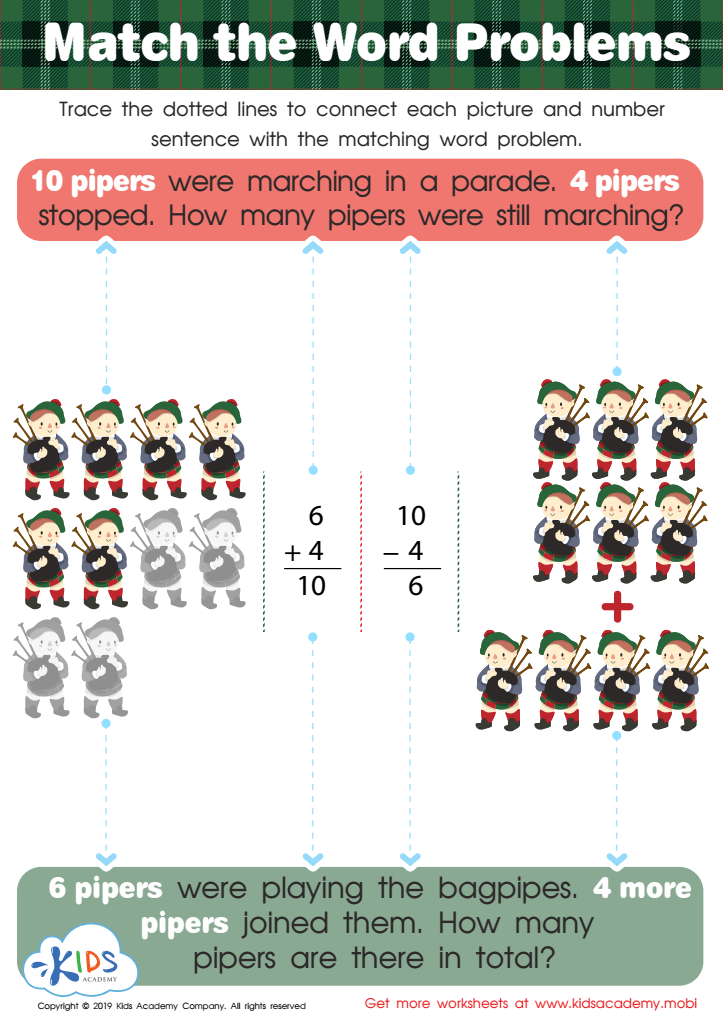
Match the Word Problems Worksheet
Read this word problem to your kids: Help them understand how it can be translated into a number problem. Trace the dotted lines to see how each picture and number sentence match the problem. With this worksheet, you can show your kids how easy it is to transform a word problem into a number problem.
Match the Word Problems Worksheet
Worksheet
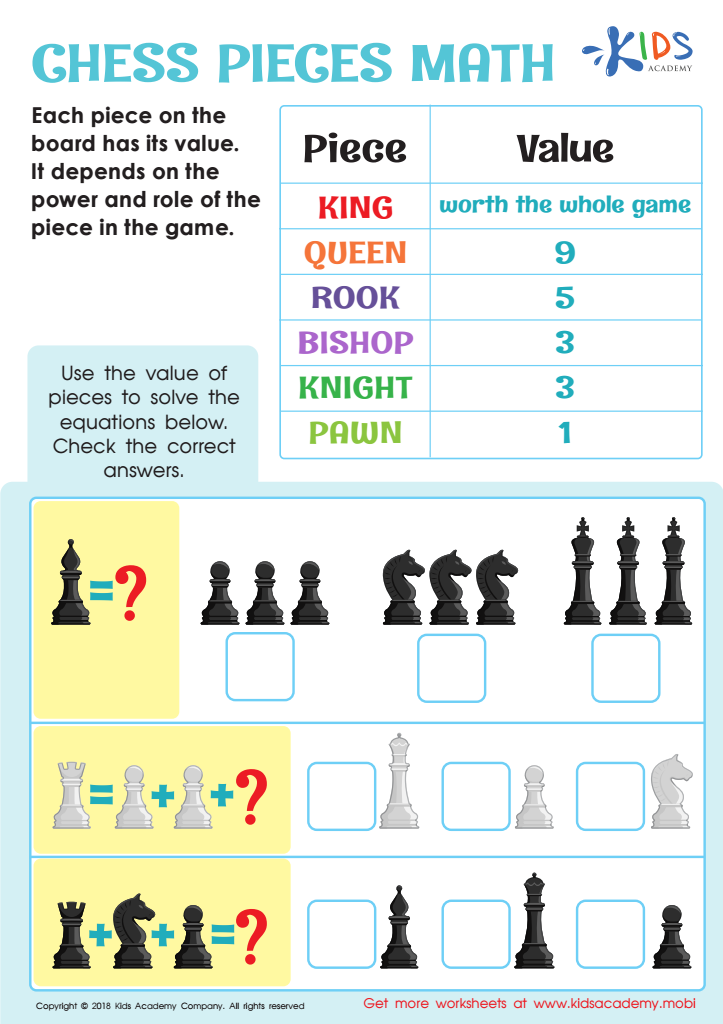
Chess Pieces Math Worksheet
Chess involves math! Each piece has its own value, from the king (worth the entire game) to the queen (9 points), varying according to their power and role. In the worksheet, your child must use these values to solve the equations at the bottom.
Chess Pieces Math Worksheet
Worksheet
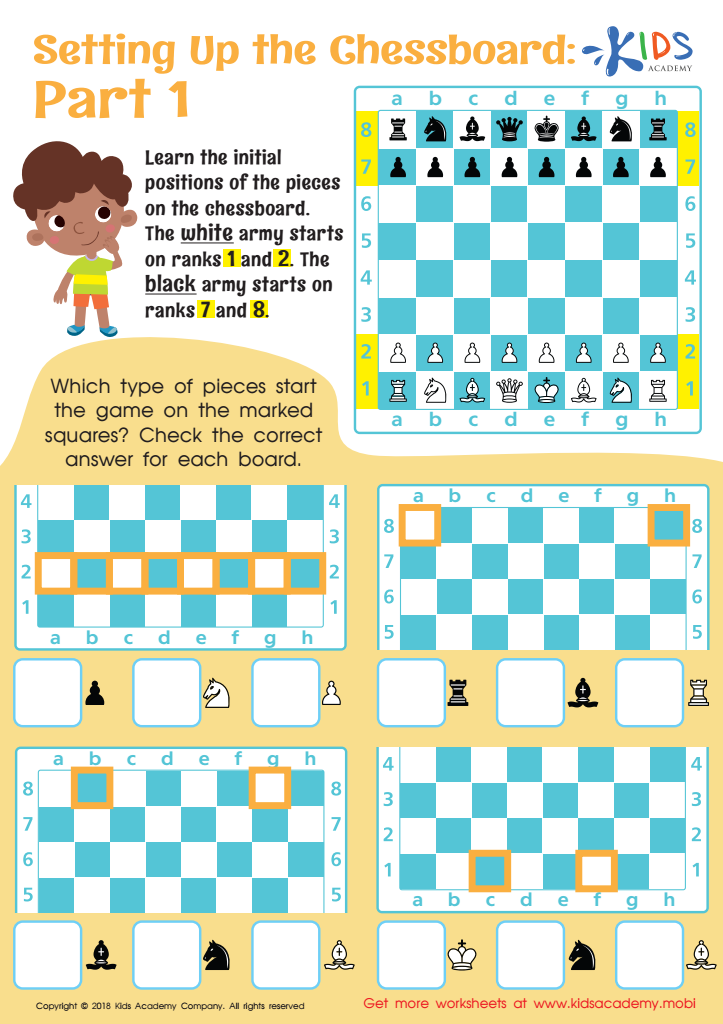
Setting up the Chessboard: Part 1 Worksheet
Teach your child the starting positions of the black and white armies on the chessboard. Black pieces are placed on ranks 7 and 8, and white pieces on ranks 1 and 2. Have them check the highlighted boxes on the chessboard to make sure they know the correct pieces to start with.
Setting up the Chessboard: Part 1 Worksheet
Worksheet
Join Kids Academy for Free
Who is primarily going to use this learning content?







Logical thinking development is crucial for 8-year-olds as it forms the foundation of their problem-solving abilities and academic success. Parents and teachers should care about fostering this skill because it enables children to think critically and independently. At this age, children who develop logical reasoning can analyze situations, understand cause and effect, and draw connections between ideas. This not only enhances their understanding of subjects like math and science but also improves their reading comprehension and writing skills, as they can better organize their thoughts.
Moreover, strong logical thinking helps children navigate social situations. They learn to resolve conflicts, negotiate with peers, and understand others' perspectives. This emotional intelligence is vital for building healthy relationships and self-confidence. Encouraging activities that require logical reasoning, such as puzzles, strategy games, and problem-solving tasks, can significantly benefit their overall development.
In today's rapidly changing world, the ability to think logically is more important than ever. It equips children with the tools they need to face challenges, adapt to new situations, and make informed decisions. Caring about and supporting logical thinking development ensures children are prepared for future academic pursuits and everyday life challenges.








