Understanding economics Normal Worksheets for 8-Year-Olds
3 filtered results
-
From - To
Boost your child's financial literacy with our "Understanding Economics" Normal Worksheets designed for 8-year-olds! These engaging activities introduce key economic concepts in a fun and accessible way. Children will learn about the basics of supply and demand, money management, and the importance of saving. Each worksheet is crafted to encourage critical thinking and practical application, sparking discussions about everyday financial decisions. Ideal for classroom use or home learning, our resources promote essential skills that foster a solid foundation for future economic understanding. Equip your child with the knowledge to navigate the world of economics confidently and creatively. Explore our worksheet collection today!
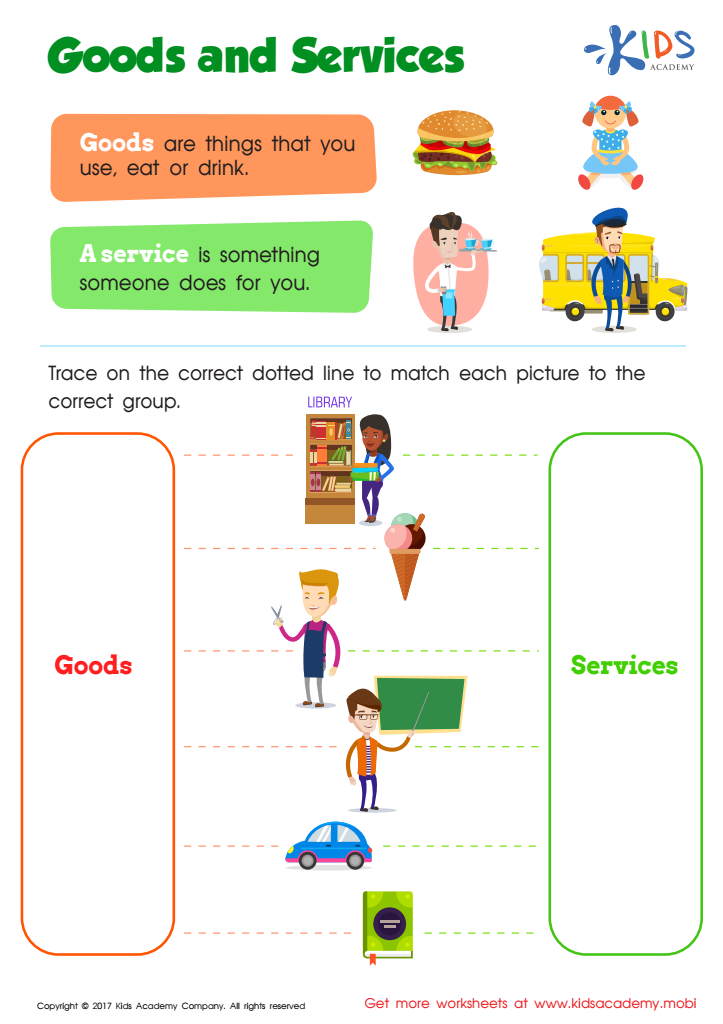
 Assign to My Students
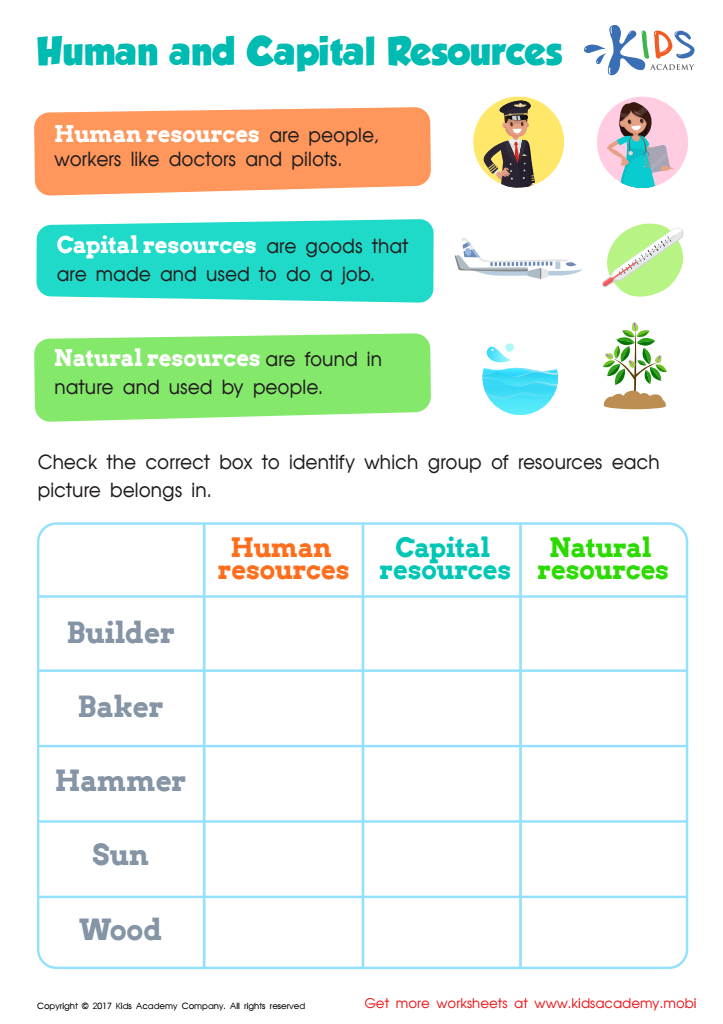
Human and Capital Resources Worksheet
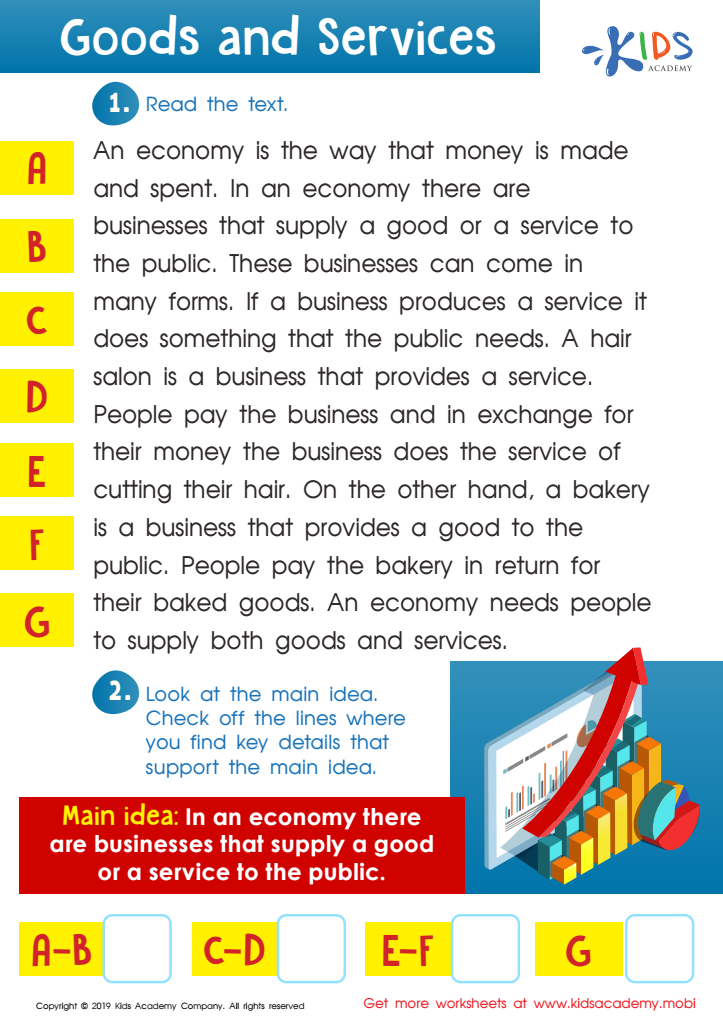
Goods and Services Worksheet








Understanding economics is essential for 8-year-olds as it equips them with vital life skills and knowledge. At this age, children are beginning to grasp concepts like money, trade, and value. By introducing basic economic principles, parents and teachers can help them understand how their choices affect their daily lives and the world around them.
Economics teaches children about resources, needs versus wants, supply and demand, and making informed decisions. For example, when an 8-year-old wants a toy, discussing the cost, saving money, and budgeting can impart an early sense of financial literacy. This foundational understanding fosters critical thinking and problem-solving skills as they learn to evaluate options and understand the consequences of their choices.
Additionally, economic awareness promotes responsible citizenship. As they grow, children with a grasp of economic concepts are better equipped to engage in discussions about fairness, community welfare, and financial responsibility, nurturing informed and engaged citizens.
Ultimately, teaching economics to young children empowers them to become savvy consumers and thoughtful decision-makers, setting the stage for a brighter financial future and a better understanding of the interconnected world. Investing in this knowledge now lays the groundwork for their success in adulthood.








