Understanding Sequences Normal Worksheets for 8-Year-Olds
4 filtered results
-
From - To
Discover our engaging and educational Understanding Sequences Normal Worksheets designed specifically for 8-year-olds. These fun and interactive worksheets help kids develop critical thinking and problem-solving skills by identifying and continuing sequences. With colorful illustrations and age-appropriate challenges, our worksheets make learning sequences enjoyable for young minds. Perfect for use at home or in the classroom, they support curriculum goals while encouraging independent learning. Kids will improve their logical reasoning, pattern recognition, and mathematical skills, all through play-based activities. Visit Kids Academy to give your child a head start in mastering sequences with our expertly crafted worksheets!
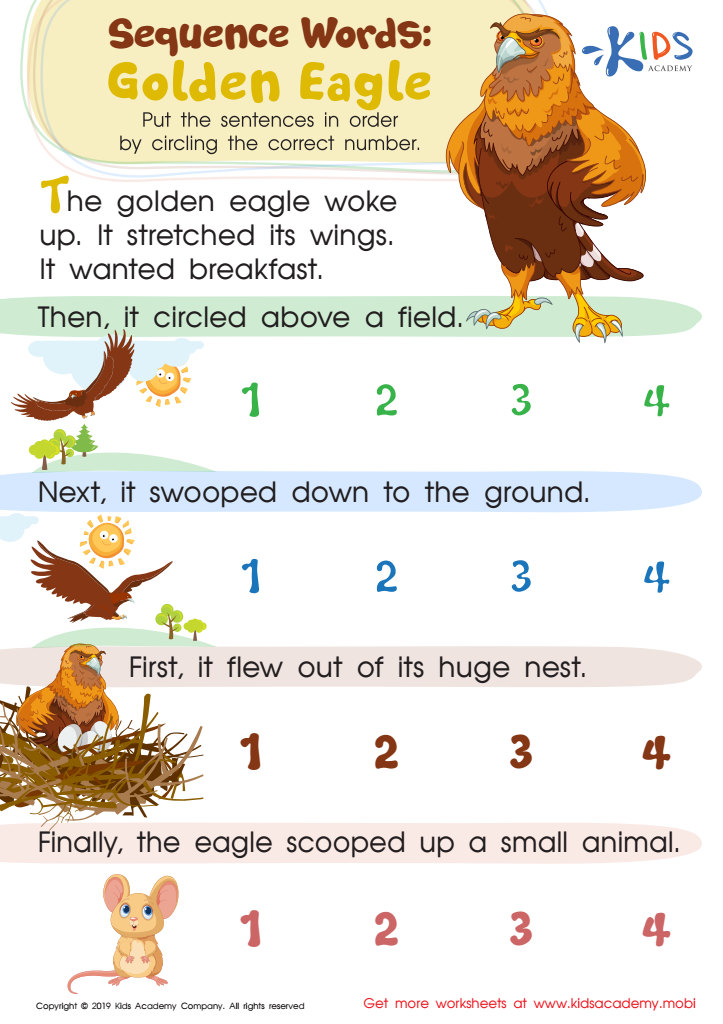
Sequence Word Eagle Worksheet
 Assign to My Students
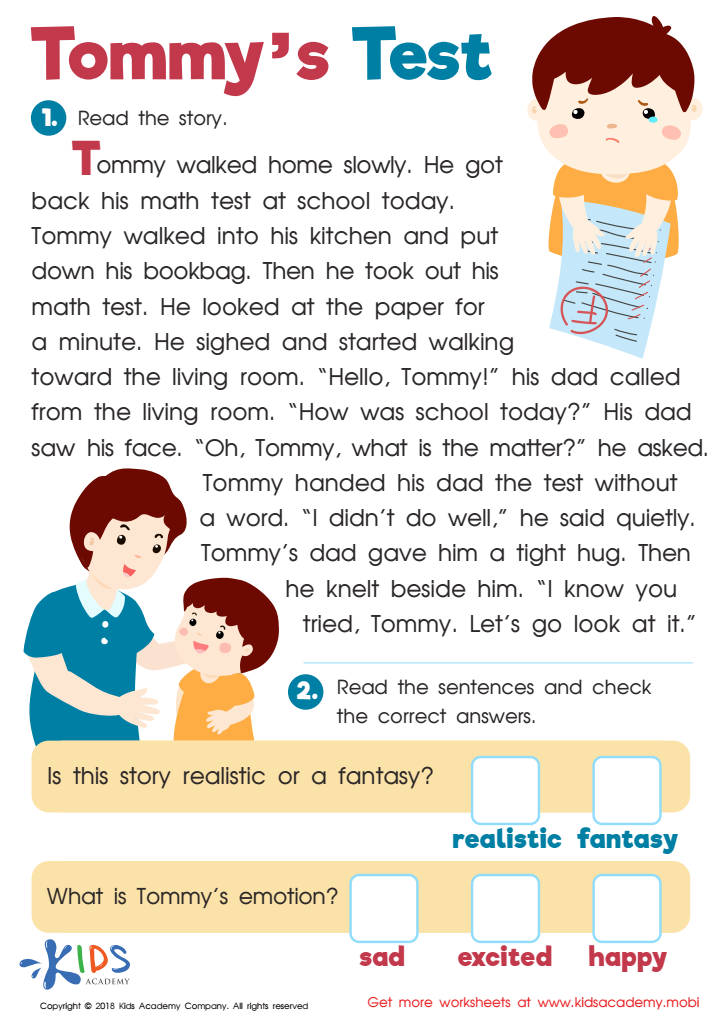
Tommys Test Worksheet
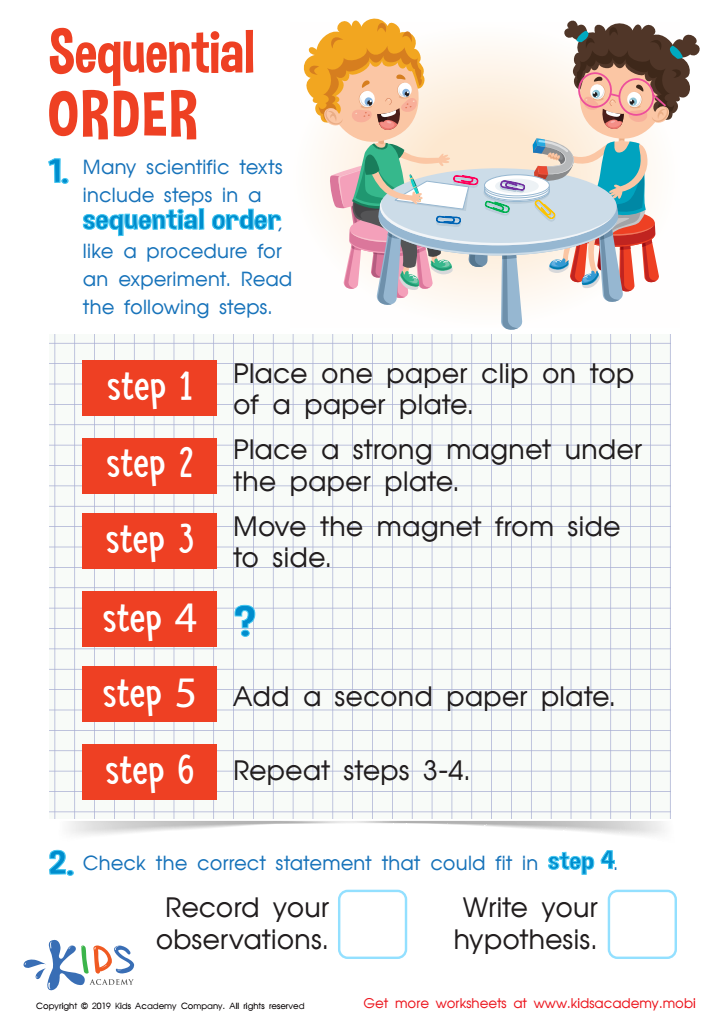
Sequencential Order Worksheet
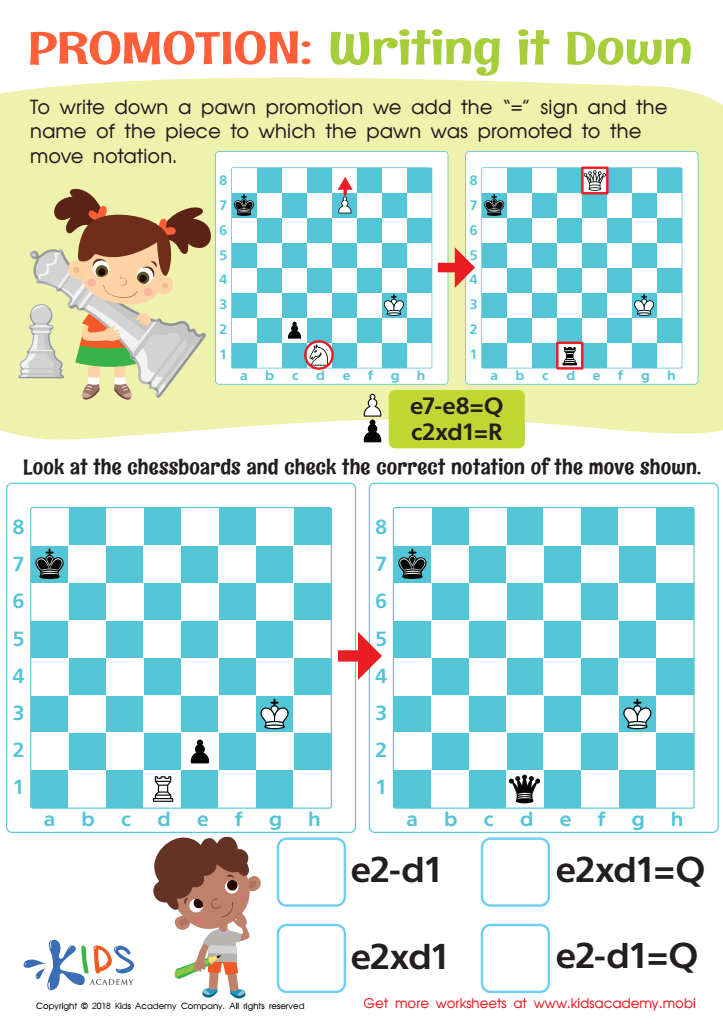
Writing it Down Worksheet






Understanding sequences is crucial for 8-year-olds as it forms the foundation for essential cognitive and problem-solving skills. Sequences help children recognize patterns, which are fundamental in mathematics and logical thinking. For example, understanding numerical sequences aids in grasping addition, subtraction, multiplication, and division. These skills are indispensable for their long-term academic success.
Moreover, sequences extend beyond mathematics. They apply to reading and comprehension, where recognizing the order of events in a story helps children understand and predict outcomes, thus enhancing their critical thinking. Sequencing also plays a role in daily life, from following routines to understanding time (days, months, seasons) and instructions.
For teachers and parents, fostering the ability to comprehend and create sequences helps children develop organization and planning skills. These skills translate into better study habits and time management, which are crucial as academic challenges increase.
Additionally, engaging with sequences can be enjoyable and stimulating for children. Activities like sorting objects, completing patterns, and sequencing stories promote active learning and curiosity. By caring about sequences, adults support comprehensive cognitive development, setting children on a path of lifelong learning and adaptation. Their enhanced problem-solving abilities and logical reasoning will benefit them in countless aspects of life.








