Understanding fractions Normal Geometry Worksheets for 8-Year-Olds
4 filtered results
-
From - To
Unlock your child's potential with our "Understanding Fractions Normal Geometry Worksheets" designed specifically for 8-year-olds. These engaging worksheets make learning fractions fun and accessible, using relatable geometry concepts. Young learners will explore the connection between fractions and shapes, reinforcing their understanding through visually stimulating exercises and practical examples. Our resources cater to diverse learning styles, promoting critical thinking and problem-solving skills. With step-by-step guidance and colorful illustrations, these worksheets foster a strong mathematical foundation while nurturing a love for learning. Perfect for home or classroom use, watch your child thrive as they master fractions and geometry effortlessly! Explore our worksheets today!
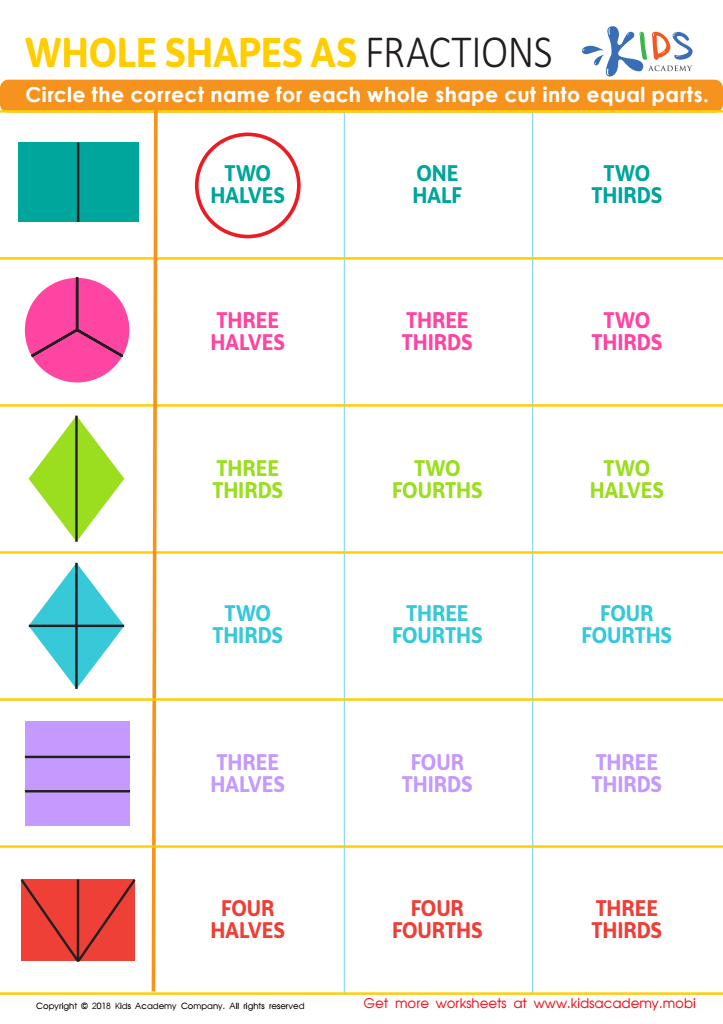
Whole Shapes as Fractions Worksheet
 Assign to My Students











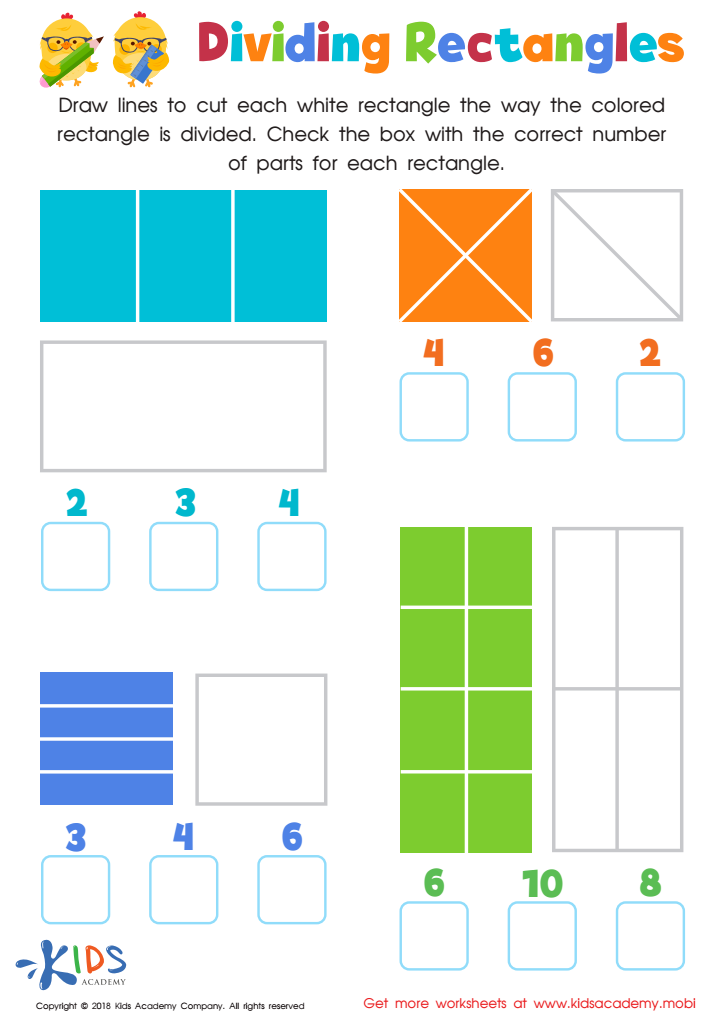
Dividing Rectangles Worksheet
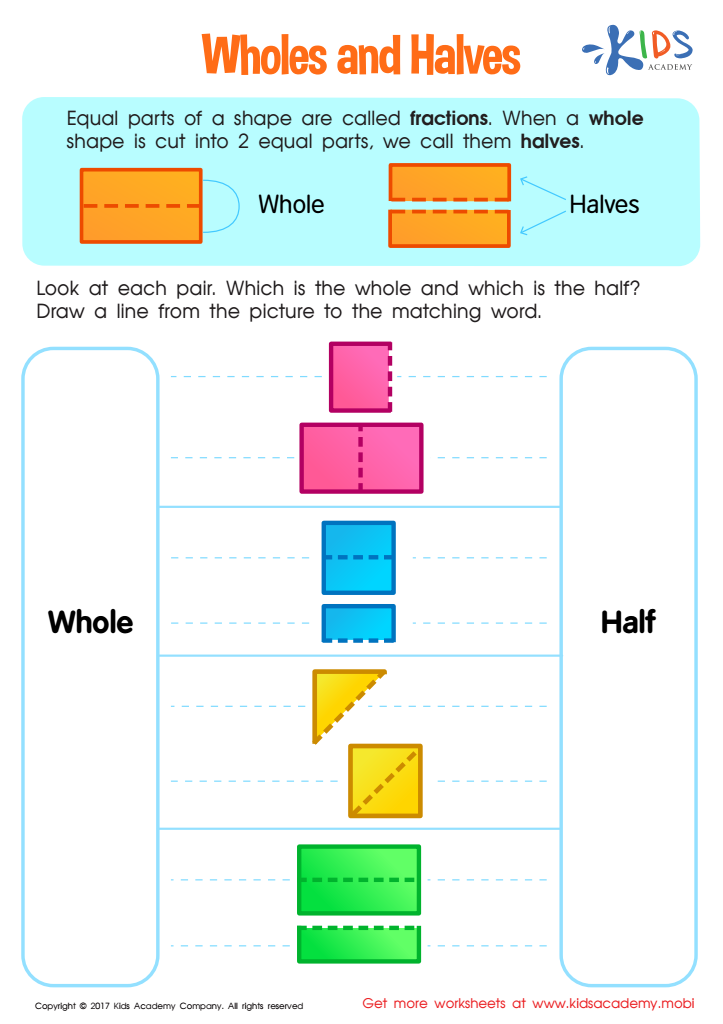
Wholes and Halves Worksheet
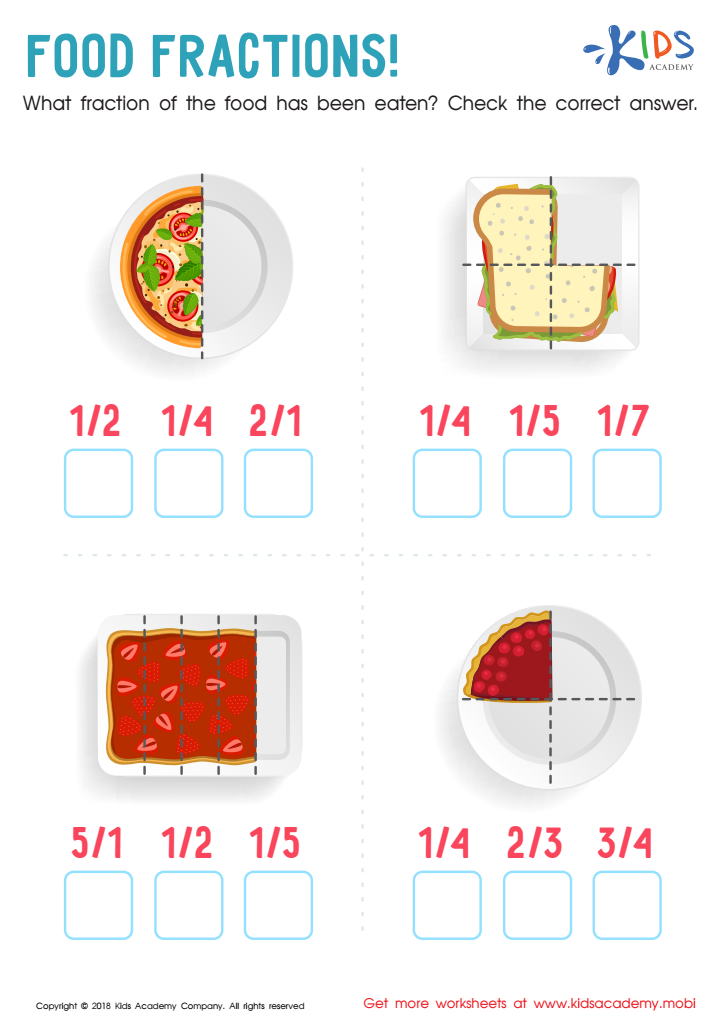
Food Fractions Worksheet








Understanding fractions and basic geometry is crucial for 8-year-olds as these concepts form the foundation of their mathematical reasoning and problem-solving skills. At this age, children are typically transitioning from concrete manipulation of objects to more abstract thinking, making this an ideal time to introduce these concepts.
Fractions teach children about parts of a whole, building their understanding of numbers and measurements, which is vital for everyday life, from cooking to budgeting. It also cultivates their ability to categorize information, fostering critical thinking skills. Moreover, recognizing fractions can enhance their capabilities in later math topics, such as ratios, percentages, and basic algebra.
Similarly, normal geometry introduces children to shapes, spatial relationships, and figures. This knowledge is not only fundamental for future math education but also aids in developing skills in visualization, design, and reasoning about physical space—skills that are applicable in various real-world situations.
When parents and teachers understand the importance of these concepts, they can create engaging learning environments that reinforce these ideas through practical applications and hands-on activities. This promotes a love for math and ensures children are well-equipped for future academic endeavors, making it crucial for their educational journey.








