Problem-Solving Skills Normal Math Worksheets for 8-Year-Olds - Page 3
49 filtered results
-
From - To
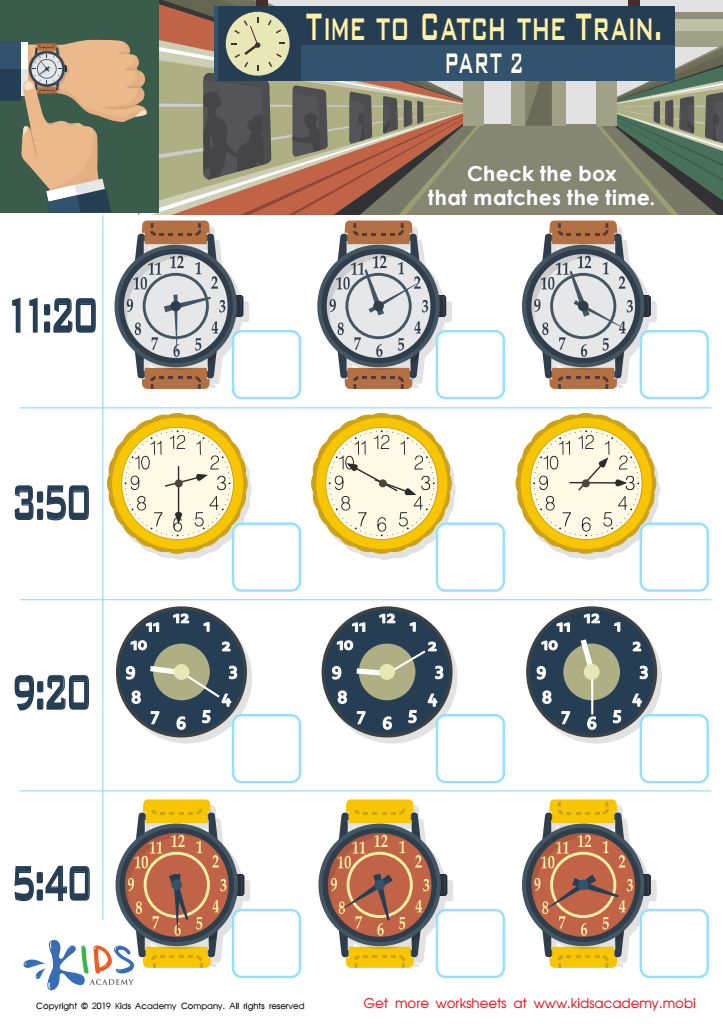
Time to Catch the Train Part 2 Worksheet
 Assign to My Students







Problem-solving skills in math are crucial for 8-year-olds as these abilities set the foundation for future academic success and everyday life. Developing strong problem-solving techniques at a young age encouragers critical thinking, reasoning, and the ability to approach challenges with confidence. When parents and teachers invest in nurturing these skills, they equip children with tools to tackle increasingly complex mathematical concepts and real-world issues as they progress in their education.
Additionally, problem-solving fosters resilience and persistence. Children learn that it’s okay to struggle with a problem and to seek solutions through trial and error. This skill translates beyond math—young learners become adept at navigating various challenges, which is invaluable in increasingly complex environments.
Moreover, building problem-solving skills early on helps promote engagement and enjoyment in math, encouraging a positive attitude toward the subject. This engagement can lead to a greater inclination to pursue STEM-related areas in the future.
Ultimately, by prioritizing problem-solving approaches in mathematics, parents and educators cultivate a generation of innovative thinkers, enhancing not only their academic trajectories but also their ability to contribute meaningfully to society. These foundational experiences significantly influence children's confidence and success in all endeavors.








