Shape Recognition Normal Math Worksheets for 8-Year-Olds
9 filtered results
-
From - To
Introduce your 8-year-old to the world of shapes with our Shape Recognition Math Worksheets! Specially designed for second graders, these engaging worksheets feature a variety of activities that help children identify, classify, and compare geometric shapes. From simple circles to complex polygons, your child will develop essential math skills while having fun. Our worksheets are visually appealing and easy to follow, making them perfect for both classroom use and home practice. Boost your child's confidence and understanding of shapes with exercises that encourage hands-on learning and critical thinking. Download today and make shape recognition enjoyable and educational!
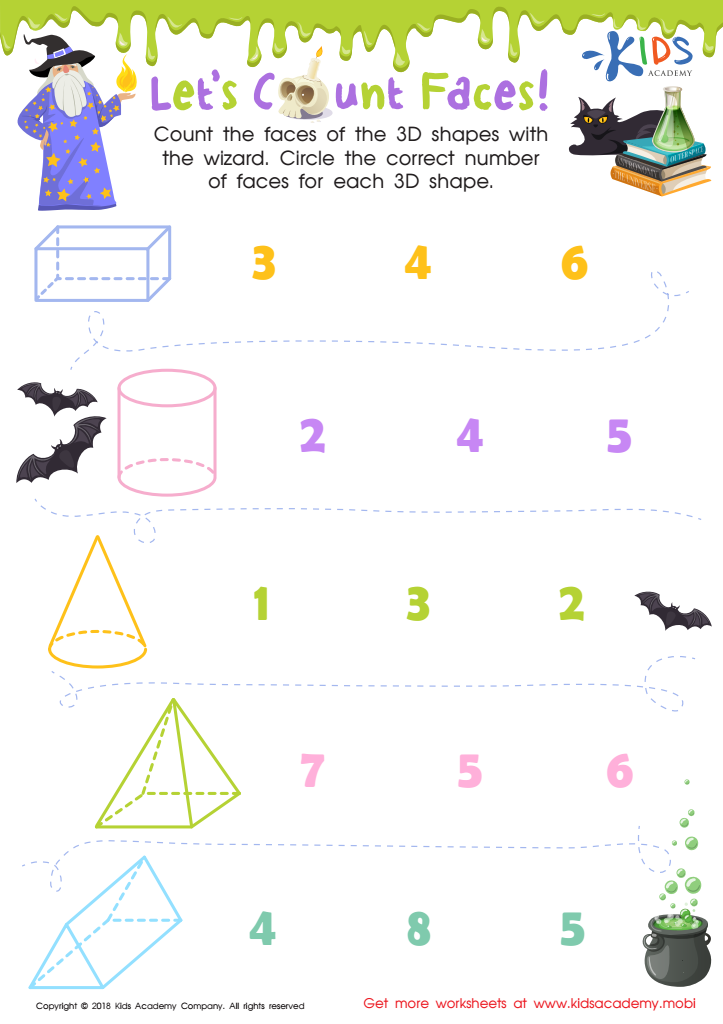
Let's Count Faces! Worksheet
 Assign to My Students
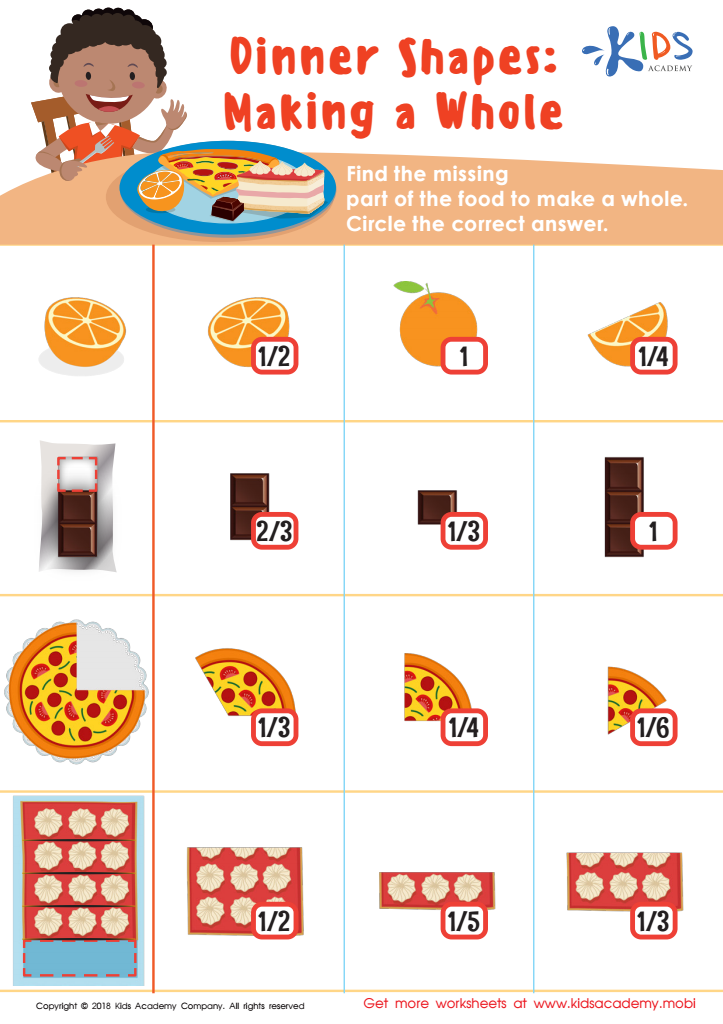
Dinner Shapes: Making a Whole Worksheet
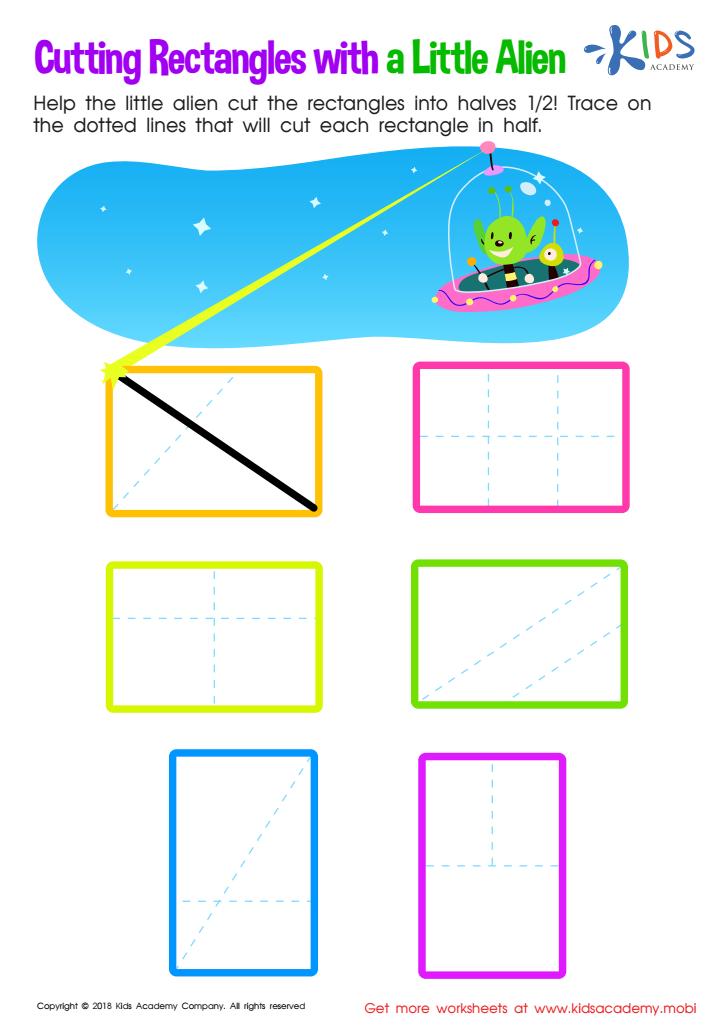
Cutting Rectangles with Alien Worksheet
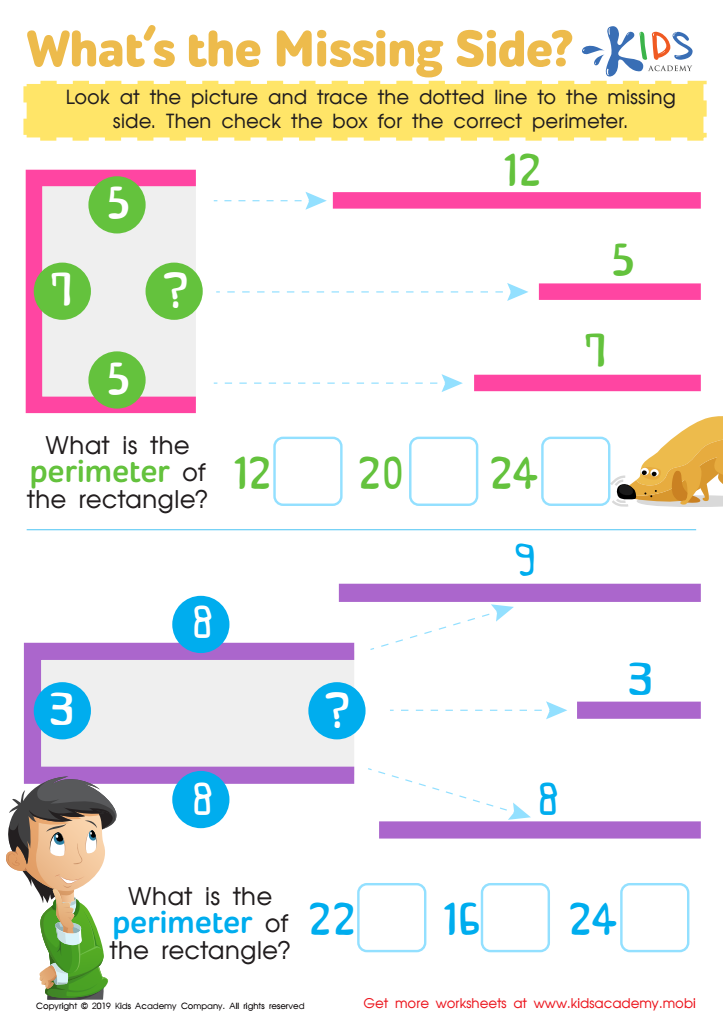
What's the Missing Side Worksheet
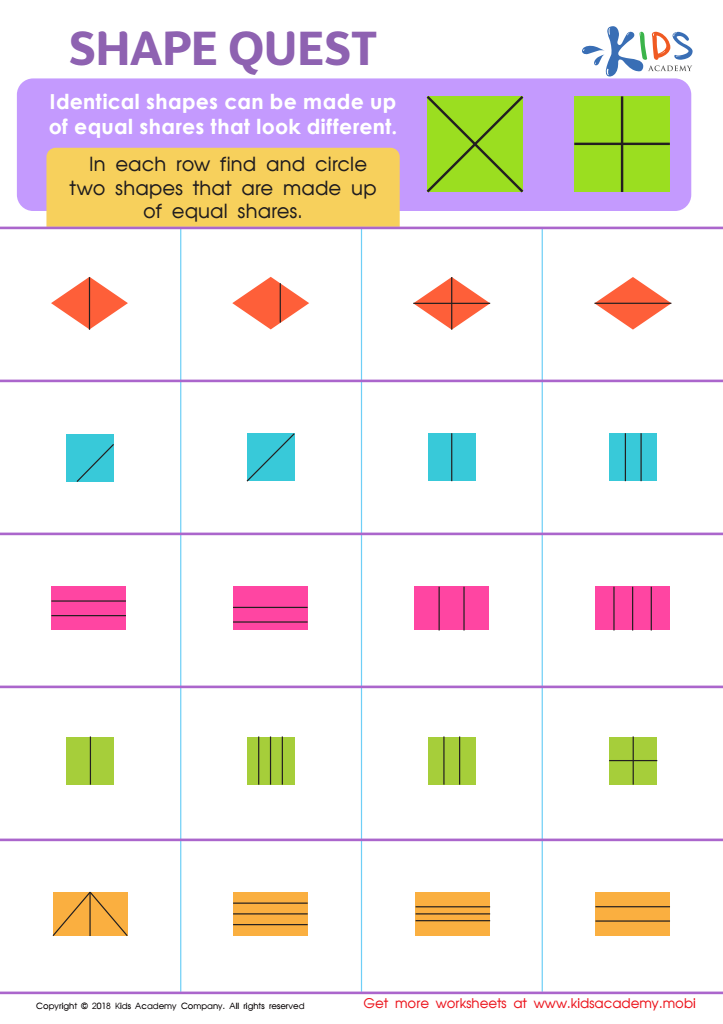
Shape Quest Worksheet
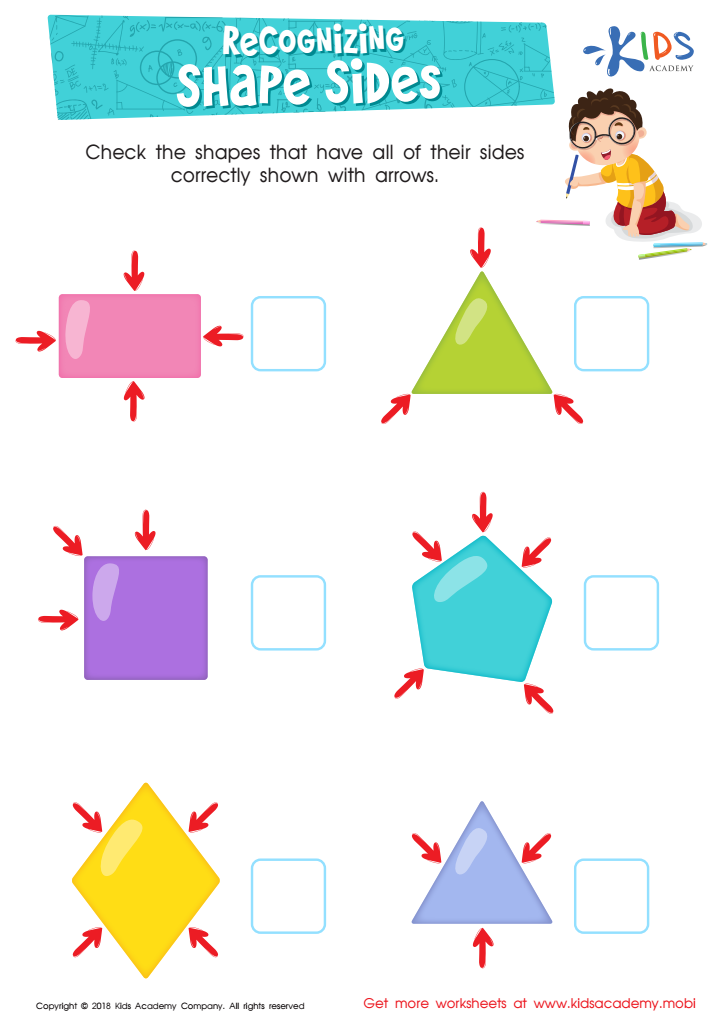
Recognizing Shape Sides Worksheet
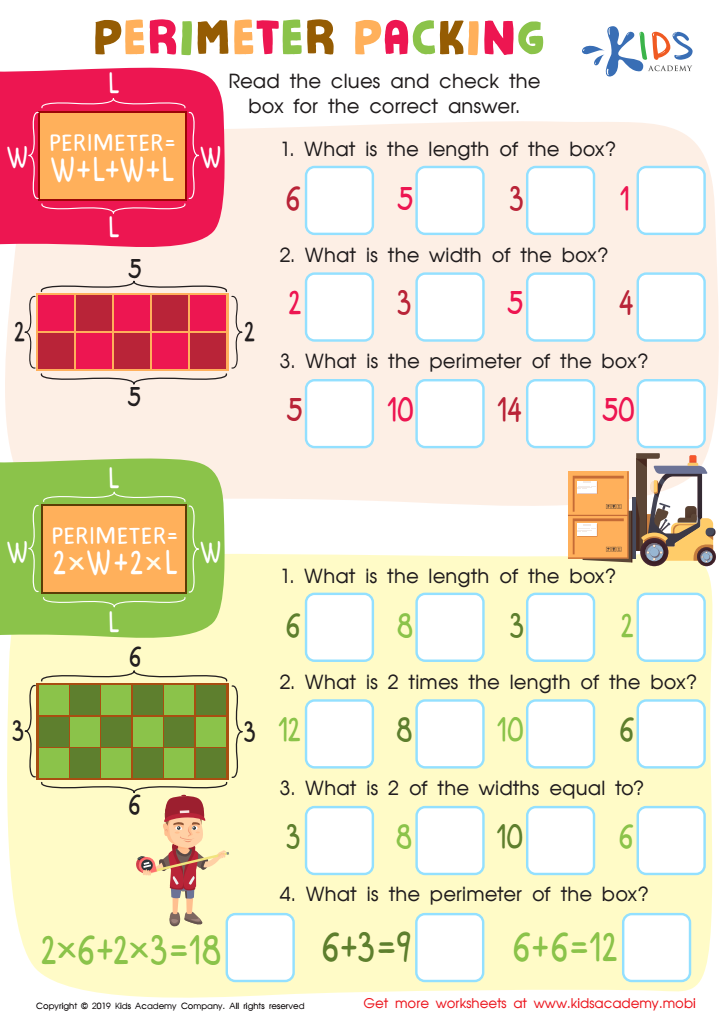
Perimeter Parking Worksheet
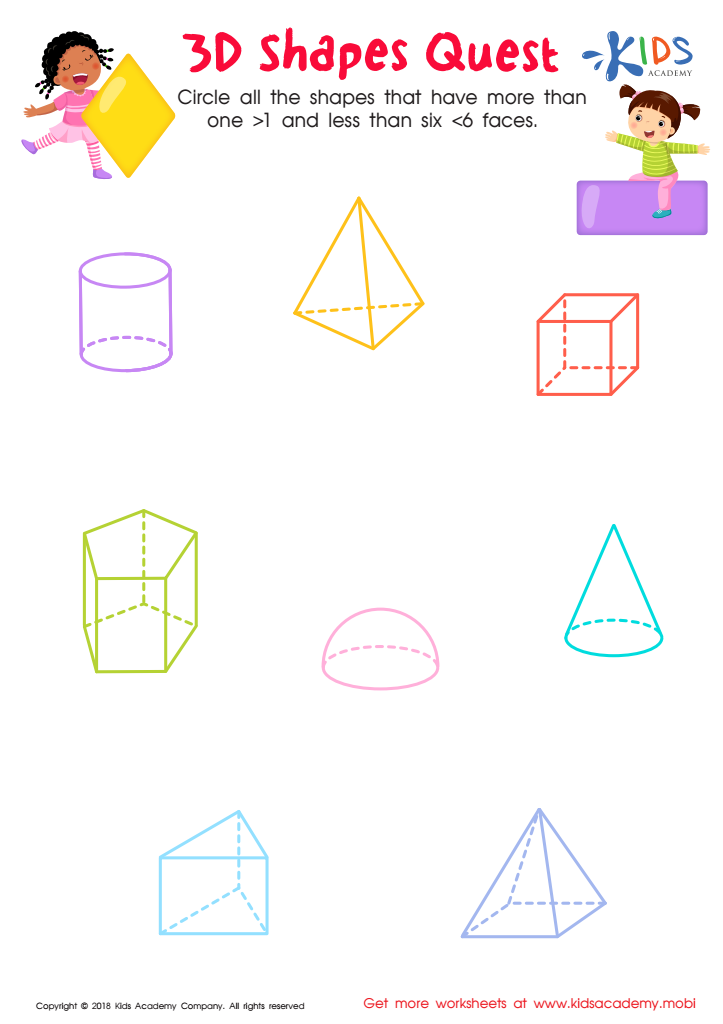
3D Shapes Quest Worksheet
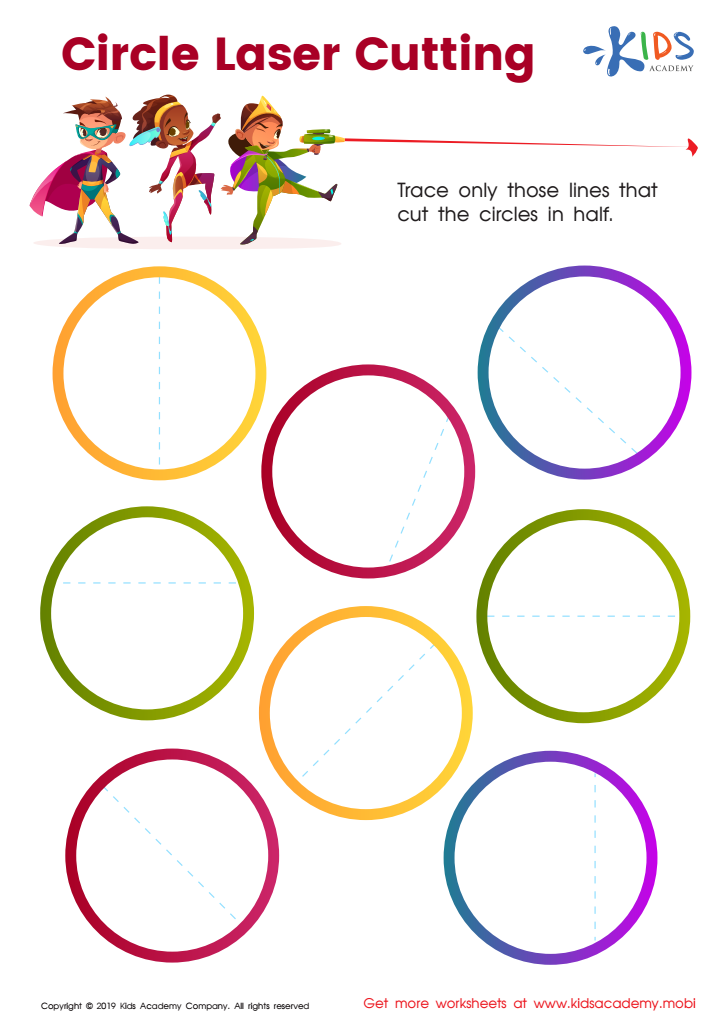
Circle Laser Cutting Worksheet







Shape recognition and basic math skills are fundamental building blocks in the cognitive development of 8-year-olds. These skills are crucial for several reasons. First, they lay the groundwork for understanding more complex mathematical concepts. Recognizing geometric shapes such as squares, triangles, and circles helps children grasp the attributes and properties of these shapes, which is essential for learning geometry in later years.
Additionally, shape recognition enhances spatial reasoning. Children who can identify and work with different shapes develop better problem-solving skills and are more adept at tasks that require visualizing and manipulating objects, such as puzzles or constructing items from blueprints. This spatial awareness is invaluable not only in mathematics but also in everyday activities and future careers that involve physical or visual-spatial tasks.
Furthermore, engaging with shapes and basic math fosters critical thinking and logical reasoning. It encourages children to observe, compare, and analyze their surroundings. For instance, when calculating the area's size inside a rectangle or the sides of a triangle, children sharpen their analytical skills, which are essential for academic success in all subjects.
Lastly, early success in these areas boosts confidence and contributes to a positive attitude toward learning. Children who master shape recognition and basic math are more likely to approach new challenges with enthusiasm and persistence. Therefore, parents and teachers should prioritize these foundational skills to support holistic educational development.








