Understanding measurements Normal Math Worksheets for 8-Year-Olds
6 filtered results
-
From - To
Introducing our "Understanding Measurements" math worksheets, designed specifically for 8-year-olds! These engaging, printable worksheets from Kids Academy help children grasp essential measurement concepts, including length, weight, volume, and time. Each activity is thoughtfully created to make learning fun and accessible, fostering critical thinking and problem-solving skills in young minds. Aligned with educational standards, our worksheets provide a solid foundation for understanding measurements. Perfect for home or classroom use, they ensure a balanced approach to learning math. Dive into the world of measurements and watch your child flourish in their mathematical journey! Get started today with Kids Academy worksheets.
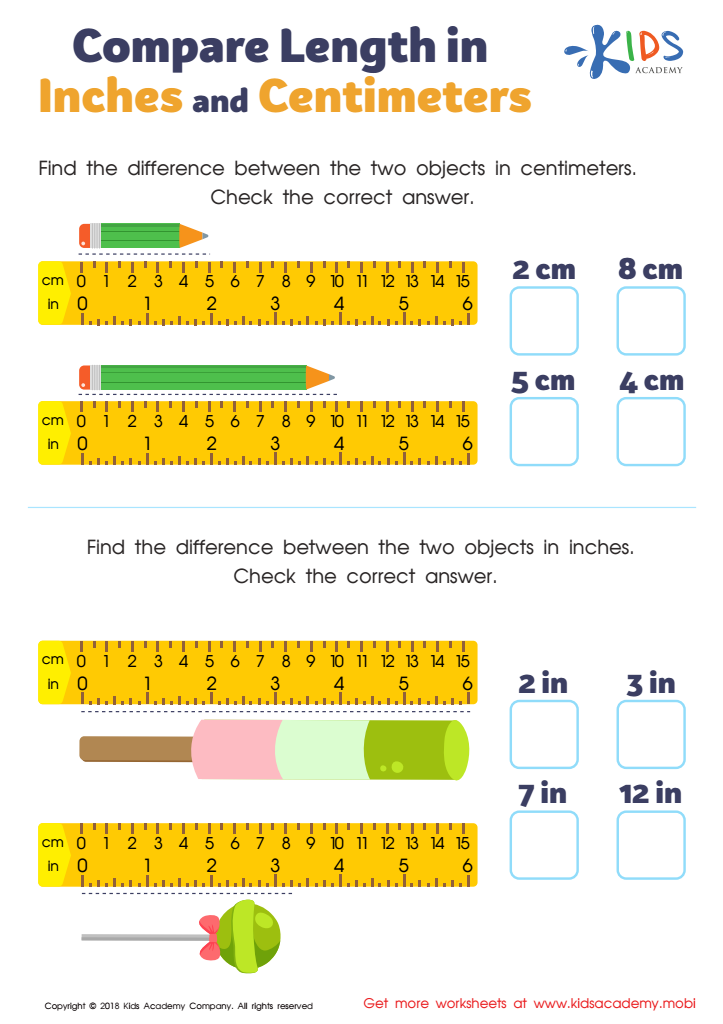
Compare Length in Inches and Centimeters Worksheet
 Assign to My Students
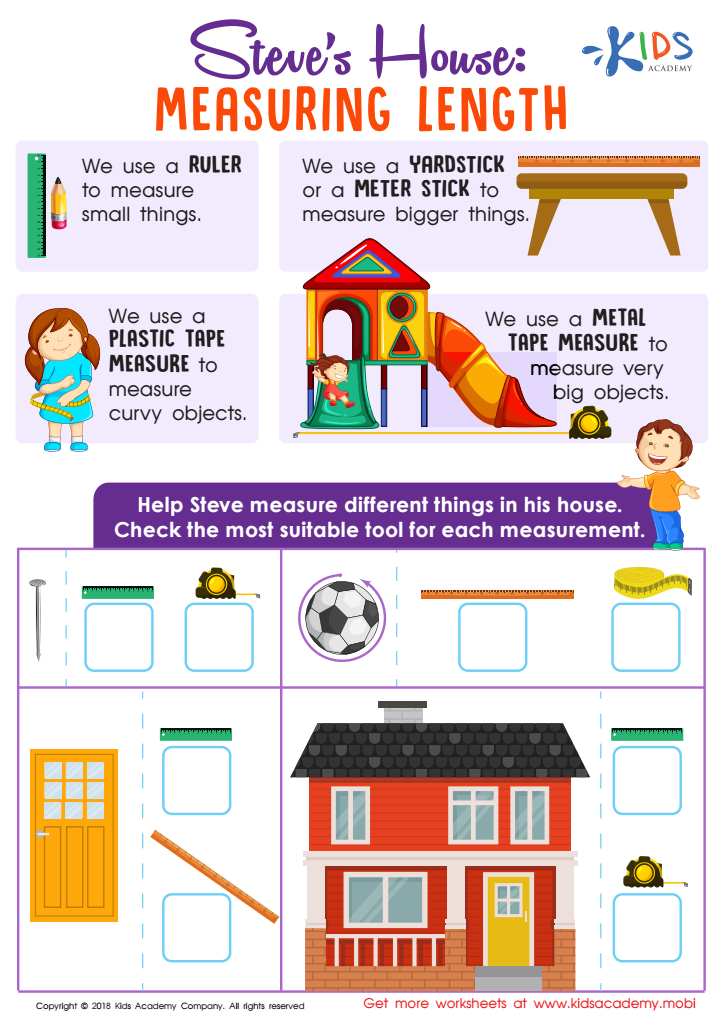
Steve's House: Measuring Length Worksheet
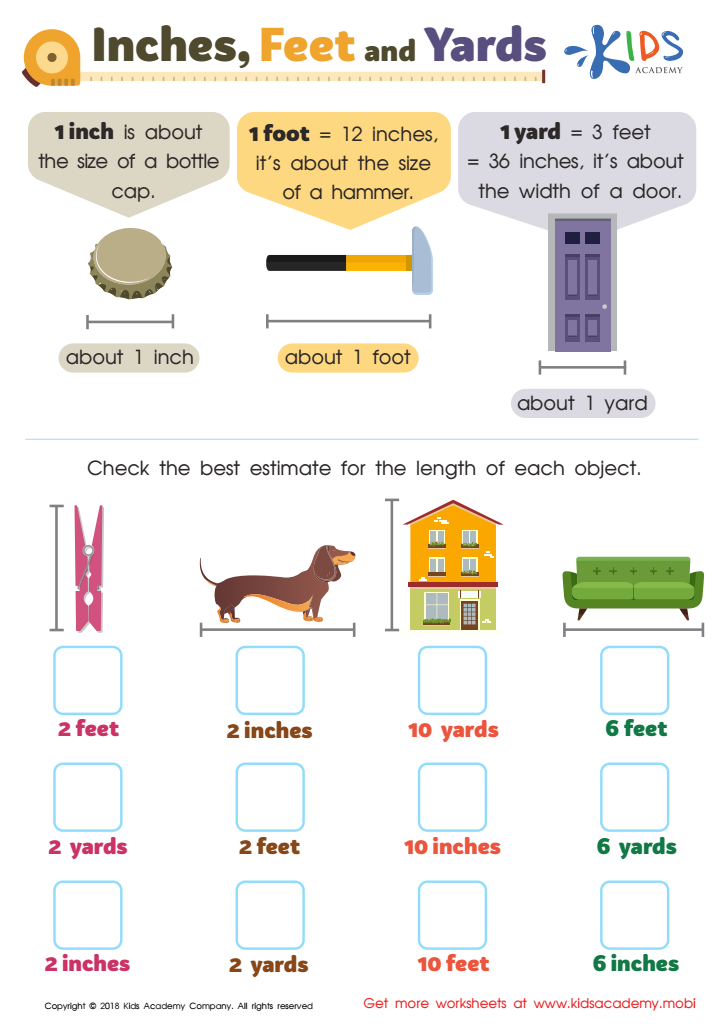
Inches, Feet and Yards Worksheet
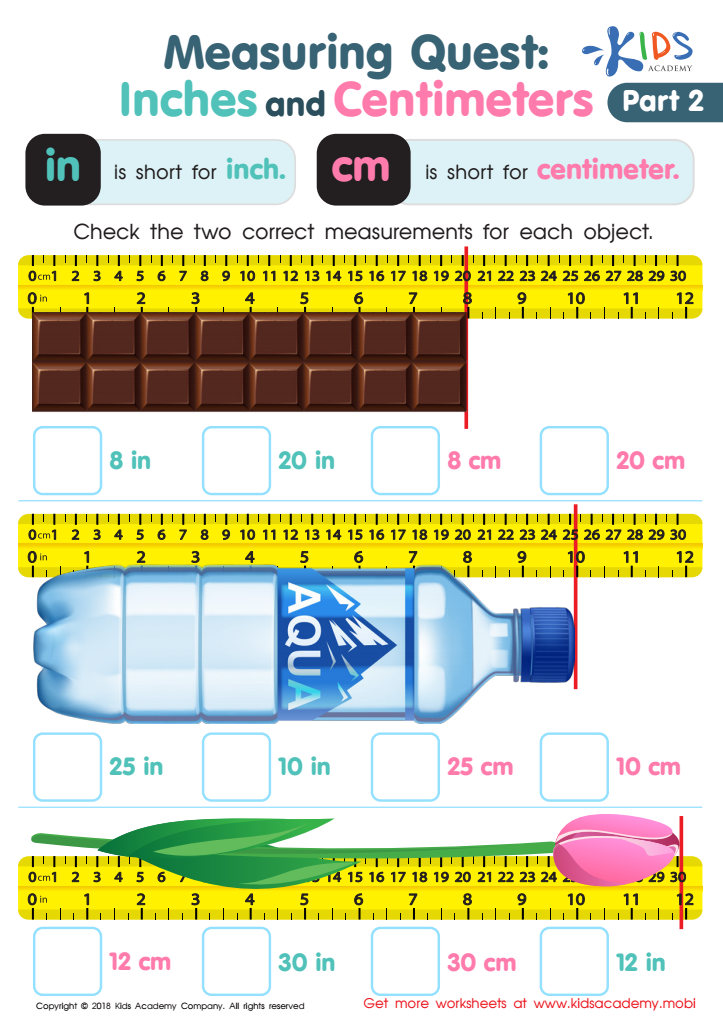
Measuring Quest: Inches and Centimeters - Part 2 Worksheet
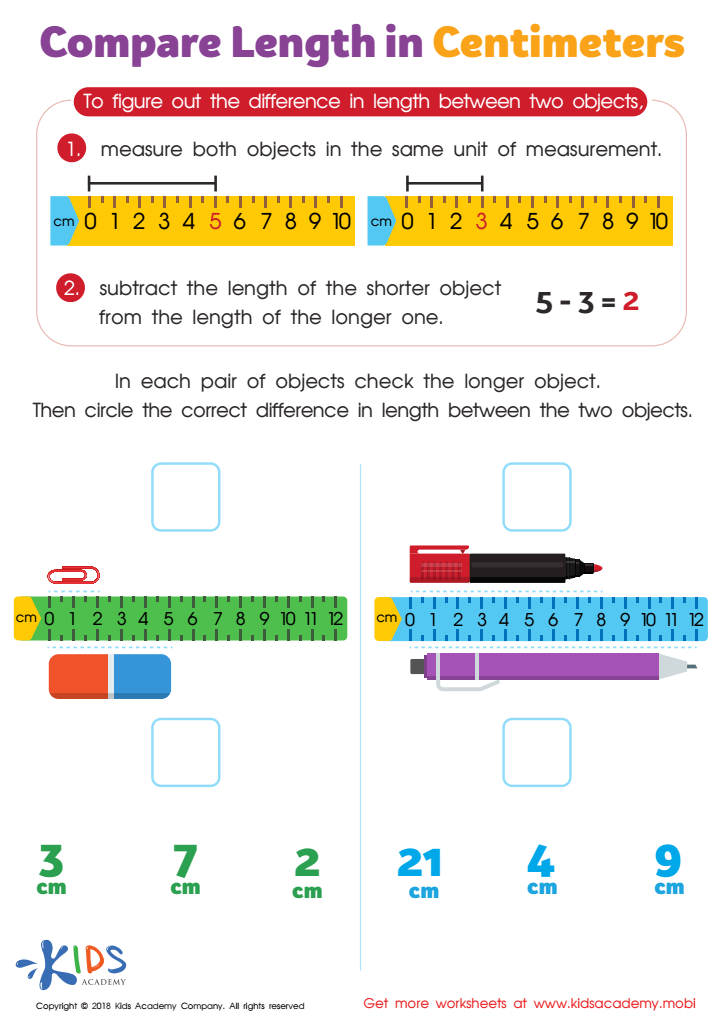
Compare Length in Centimeters Worksheet
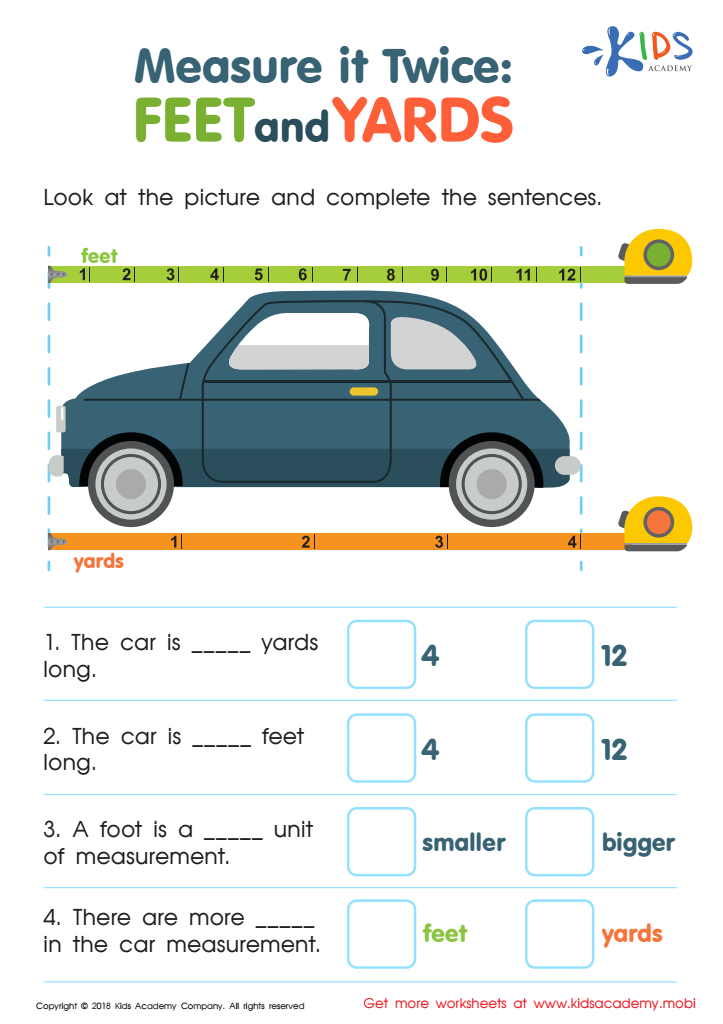
Measure It Twice: Feet and Yards Worksheet







Understanding measurements in math is fundamental for the development of 8-year-olds, as it builds critical life skills and enhances intellectual growth. For parents and teachers, ensuring children grasp these concepts brings multi-faceted benefits. Measurements are everywhere in daily life – from cooking ingredients to understanding distances, telling time, and estimating quantities. When kids learn about measurements, they can participate more fully and independently in daily activities.
In school, understanding measurements also underpin broader mathematical concepts. It lays the groundwork for geometry, fractions, and algebra. A strong foundation in appreciating size, volume, weight, and dimensions equips children with the analytical tools required to solve more complex problems later on. Furthermore, such practical math skills are tightly connected to scientific subjects, nurturing well-rounded academic abilities.
Teachers and parents who emphasize these skills contribute directly to a child’s cognitive and emotional development. Children experience actionable goals and success when their measurements are applied in real-world scenarios. This real ownership over their achievements builds self-esteem and cultivates a love for learning. Furthermore, early competency in measurements can unveil and nurture talents in fields like engineering, science, and technology, molding curious minds that are prepared to innovate and explore. Thus, caring about children's understanding of measurements isn't just about passing math – it's about building knowledgeable, confident, and capable future adults.








