Understanding patterns Normal Math Worksheets for 8-Year-Olds
5 filtered results
-
From - To
Discover a fun way to boost math skills with our Normal Math Worksheets designed for 8-year-olds. These engaging resources from Kids Academy help young learners master the concept of patterns through colorful, interactive activities. Perfect for developing critical thinking, problem-solving abilities, and mathematical proficiency, our worksheets cover a range of patterns including sequences, shapes, and numbers. Tailored to foundational math curricula, they are great for both classroom and home use. Encourage your child to explore and enjoy math with these practical, easy-to-follow, and educational printables designed specifically for their age group.
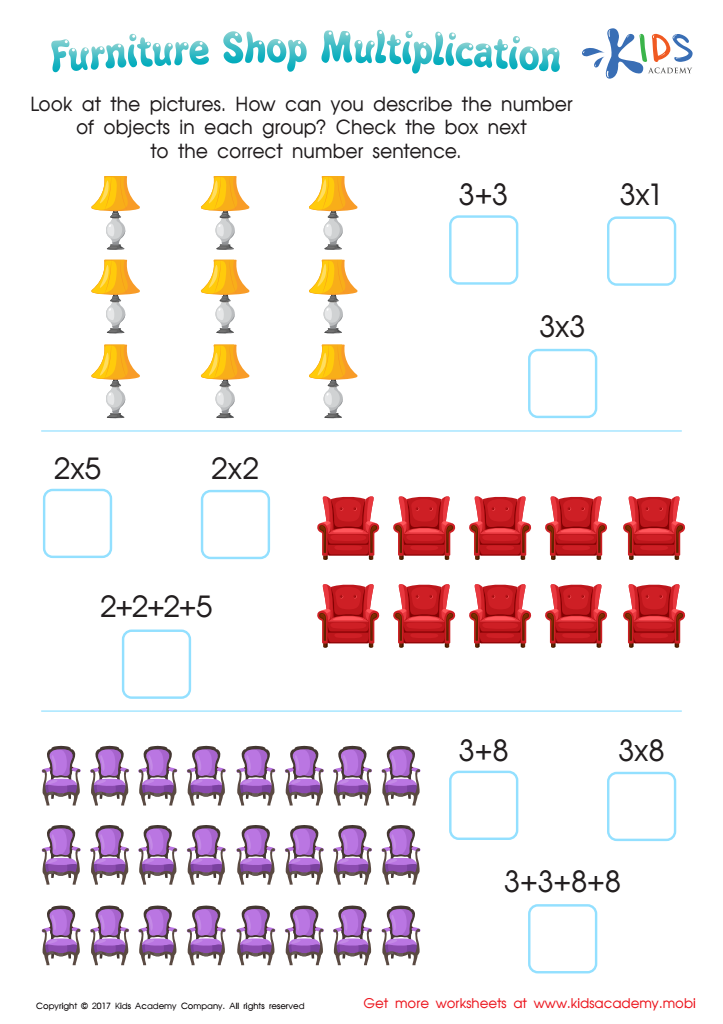
Furniture Shop Worksheet
 Assign to My Students
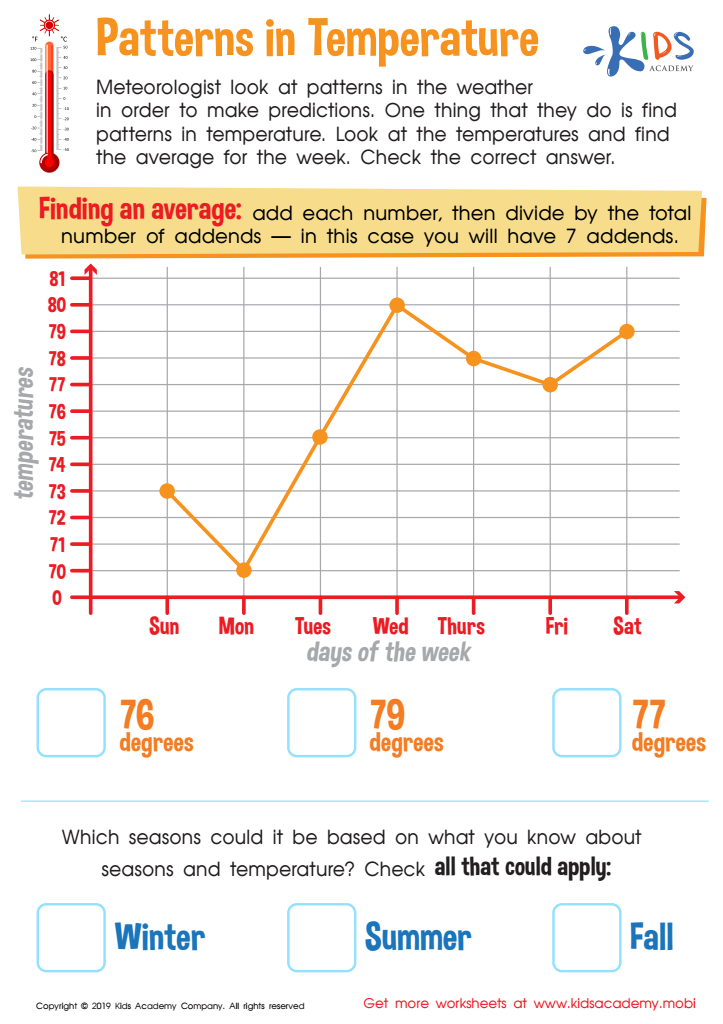
Patterns in Temperature Worksheet
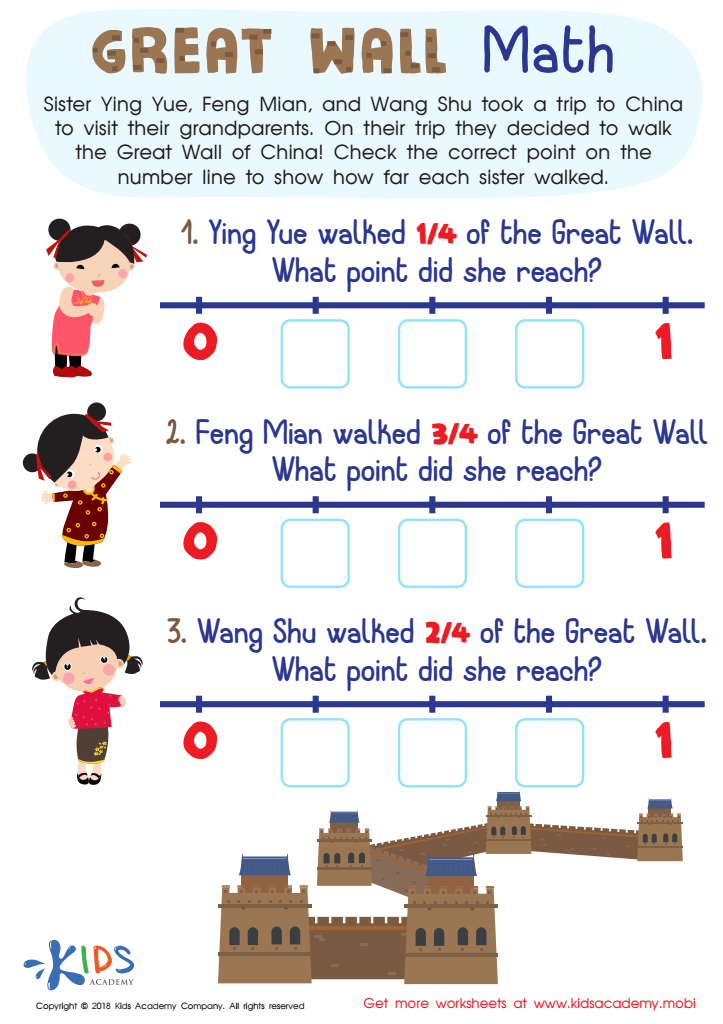
Great Wall Math Worksheet
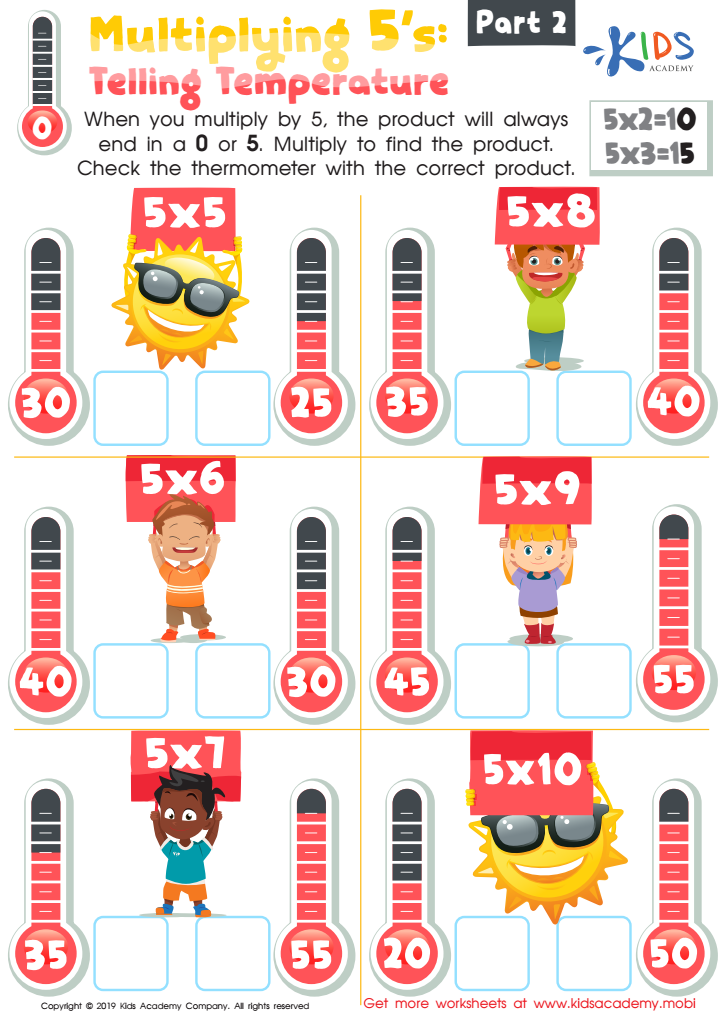
Multiplying 5’s: Telling Temperature Part 2 Worksheet
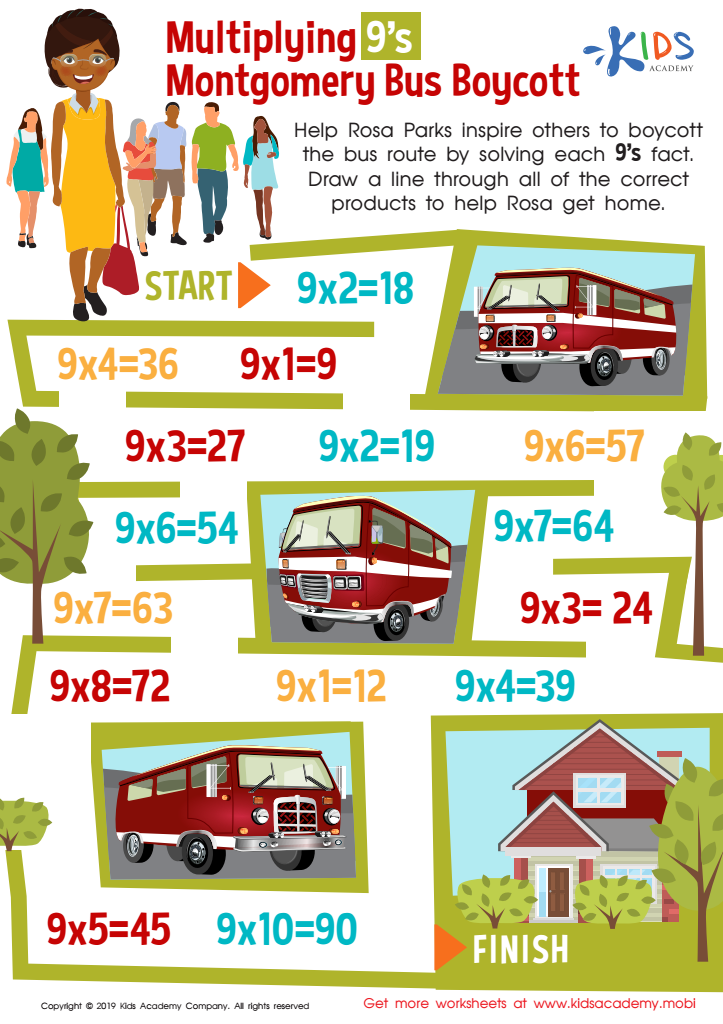
Multiplying 9’s Montgomery Bus Boycott Worksheet








Understanding patterns is a crucial aspect of early math education for 8-year-olds, and parents and teachers should prioritize it because it lays a solid foundation for future mathematical skills. Patterns help children recognize relationships and make predictions, which are important for problem-solving. By identifying and understanding patterns, children learn to think logically and critically, skills that are essential not only in math but also in real-life situations.
Patterns serve as an introduction to algebra, as they involve forming generalizations based on specific examples. This kind of abstract thinking is crucial as students progress to more complex mathematical concepts. For example, understanding number patterns helps in grasping addition, subtraction, multiplication, and division. Recognizing geometric patterns enhances spatial awareness and geometry skills.
Additionally, working with patterns can improve a child's cognitive abilities. It encourages memory development and aids in organizing information systematically. Patterns can also make learning math more fun and engaging, boosting a child's confidence and interest in the subject.
Moreover, early exposure to pattern recognition can improve a child's ability to follow instructions and sequence steps, skills that are valuable both academic and personal growth. Thus, an emphasis on understanding patterns prepares children for academic success and everyday problem-solving.








