
Historical Knowledge Normal Multiplication Worksheets for 8-Year-Olds
4 filtered results
Difficulty Level
Grade
Age
-
From - To
Subject
Activity
Standards
Enhance your child's multiplication skills with our engaging Historical Knowledge Normal Multiplication Worksheets designed specifically for 8-year-olds! These worksheets combine essential math practice with fascinating historical facts, making learning enjoyable and informative. As students tackle multiplication problems, they'll discover interesting tidbits about historical figures and events, fostering a deeper appreciation for both math and history. Our user-friendly format, including clear instructions and vibrant visuals, ensures that kids remain motivated and focused. Perfect for classroom use or at-home learning, these worksheets are an excellent resource for developing multiplication proficiency while exploring the wonders of history. Get started today and make learning fun!
Favorites
With answer key
Interactive
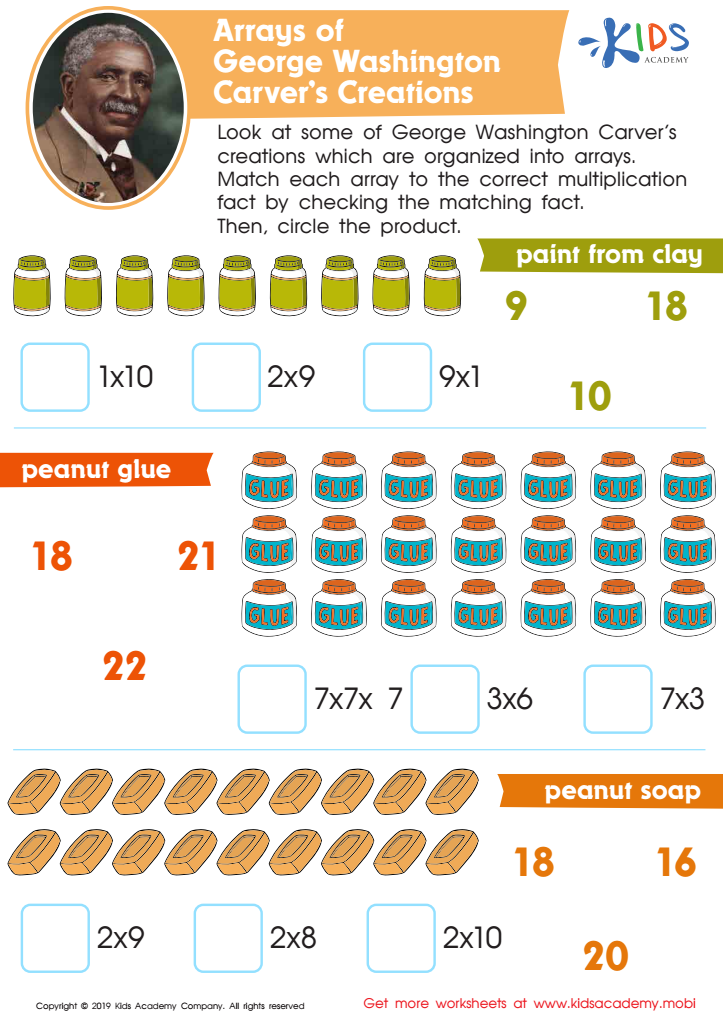
Arrays of George Washington Carver’s Creations Worksheet
Remind your child of what George Washington Carver created. Can they tell you? This worksheet has arrays with his creations. Match the array to the multiplication fact and help your child to circle the product.
 Assign to My Students
Arrays of George Washington Carver’s Creations Worksheet
Worksheet
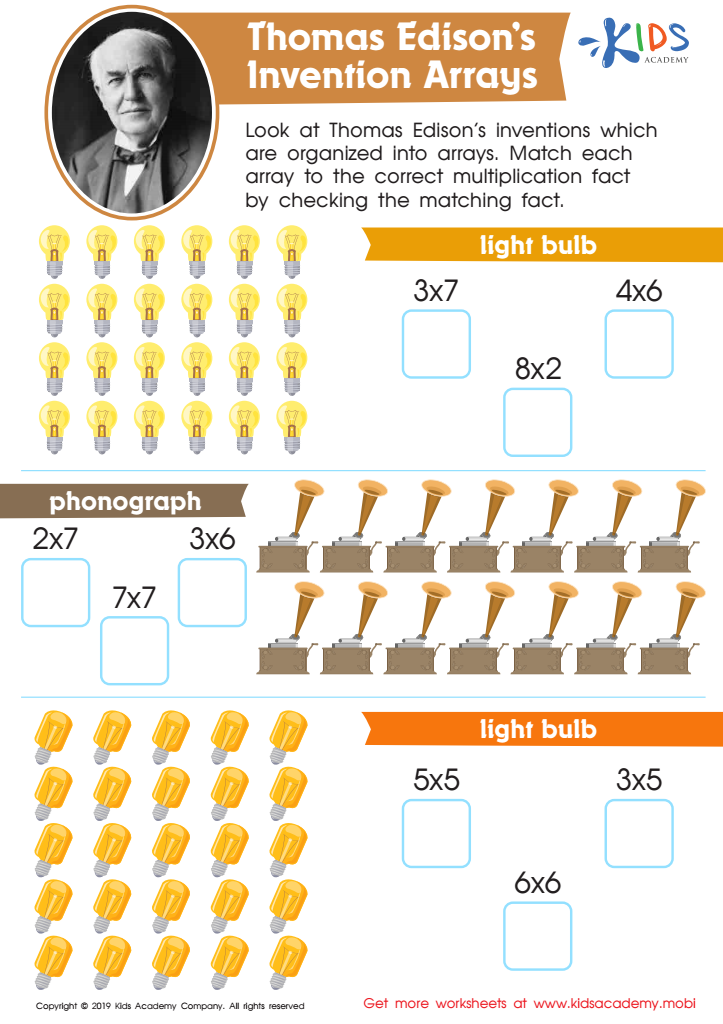
Thomas Edison’s Invention Arrays Worksheet
Test your students' knowledge on history by asking them what Thomas Edison invented. If they get the right answer, provide more information on other inventors. Check out this printout of Edison's light bulb inventions laid out in arrays. Get them to match each array to the correct multiplication fact.
Thomas Edison’s Invention Arrays Worksheet
Worksheet
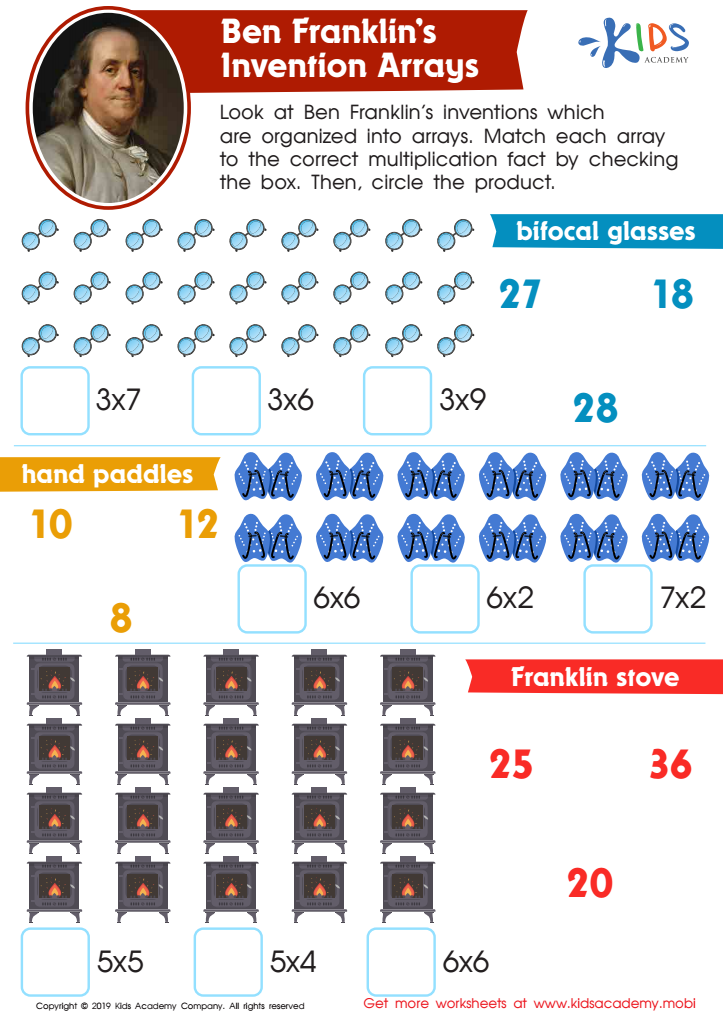
Ben Franklin’s Invention Arrays Worksheet
Have your child guess some of the inventors of the popular items we use today. For instance, the light bulb was invented by Thomas Edison. Look at Ben Franklin's inventions and help your kids match the arrays to the correct multiplication fact. Check the box and circle the product.
Ben Franklin’s Invention Arrays Worksheet
Worksheet
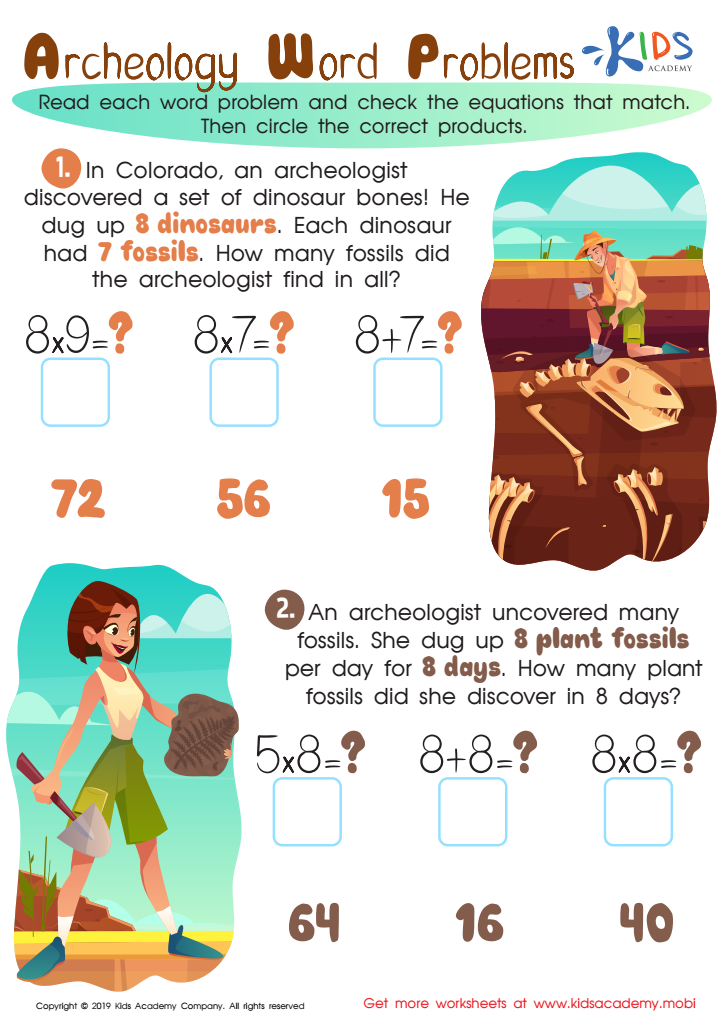
Archeology Word Problems Worksheet
Encourage your child to explore their career options! Show them an archeologist's job with this worksheet - featuring a picture of a dinosaur bone discovery. Read the accompanying text, then solve the word problems. Help your kids circle the correct answers to better understand this profession.
Archeology Word Problems Worksheet
Worksheet
Join Kids Academy for Free
Who is primarily going to use this learning content?








Understanding historical knowledge about normal multiplication is crucial for 8-year-olds as it lays the foundation for both mathematical skills and critical thinking. At this age, children typically transition from counting and basic arithmetic to more complex operations. By grasping the evolution and significance of multiplication, students can appreciate its practical applications in daily life, helping them make connections to real-world scenarios, such as budgeting, cooking, or shopping.
For parents and teachers, fostering an understanding of multiplication goes beyond mere memorization of times tables. It cultivates a deeper comprehension of concepts like grouping, repeated addition, and area, essential for tackling more advanced math later on. Furthermore, discussing the history of multiplication can engage students' curiosity, prompting them to ask questions and seek answers, thereby developing their research and analytical skills.
Additionally, a strong grounding in multiplication promotes confidence as children tackle word problems and mathematical reasoning. This confidence can translate into a positive attitude toward learning as a whole. Parents and teachers who prioritize historical knowledge in math not only empower children academically but also prepare them for future challenges, making this foundational skill all the more vital in today’s fast-paced world.








