Handwriting practice Normal Tracing Words Worksheets for 8-Year-Olds
7 filtered results
Difficulty Level
Grade
Age
-
From - To
Subject
Activity
Standards
Enhance your child’s handwriting with our "Handwriting Practice Normal Tracing Words Worksheets for 8-Year-Olds." Designed to improve fine motor skills and letter formation, these engaging printables offer themed tracing activities to make learning fun. Each worksheet provides clear guidelines and ample space for tracing, enabling kids to build confidence in their writing abilities. Perfect for daily practice, these resources support classroom learning and at-home education. Easy to download and print, our worksheets help master penmanship, ensuring your child develops smooth, legible writing. Choose the best tools to hone your child’s handwriting skills, only at Kids Academy.
Favorites
With answer key
Interactive
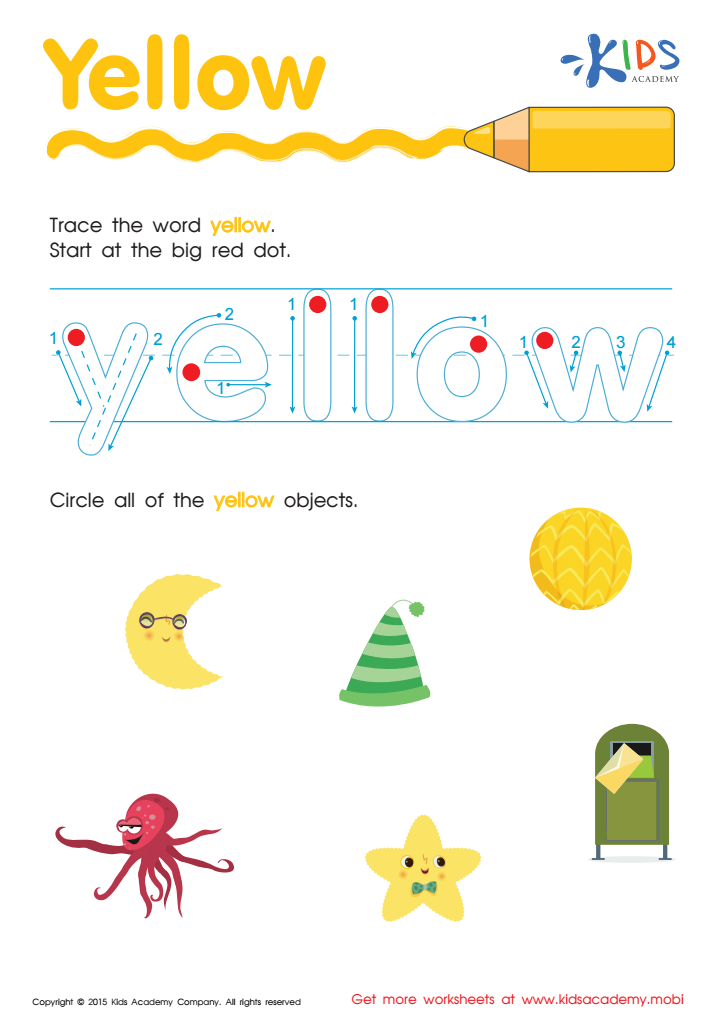
Yellow Tracing Color Words Worksheet
Tracing is a great way to start learning handwriting! Our printable worksheet helps your kindergartener practice and master the basics. They'll trace lines and fill in the word "yellow" with bright colors, sure to captivate and inspire them for more practice. Check out here for more tracing of color words.
 Assign to My Students
Yellow Tracing Color Words Worksheet
Worksheet
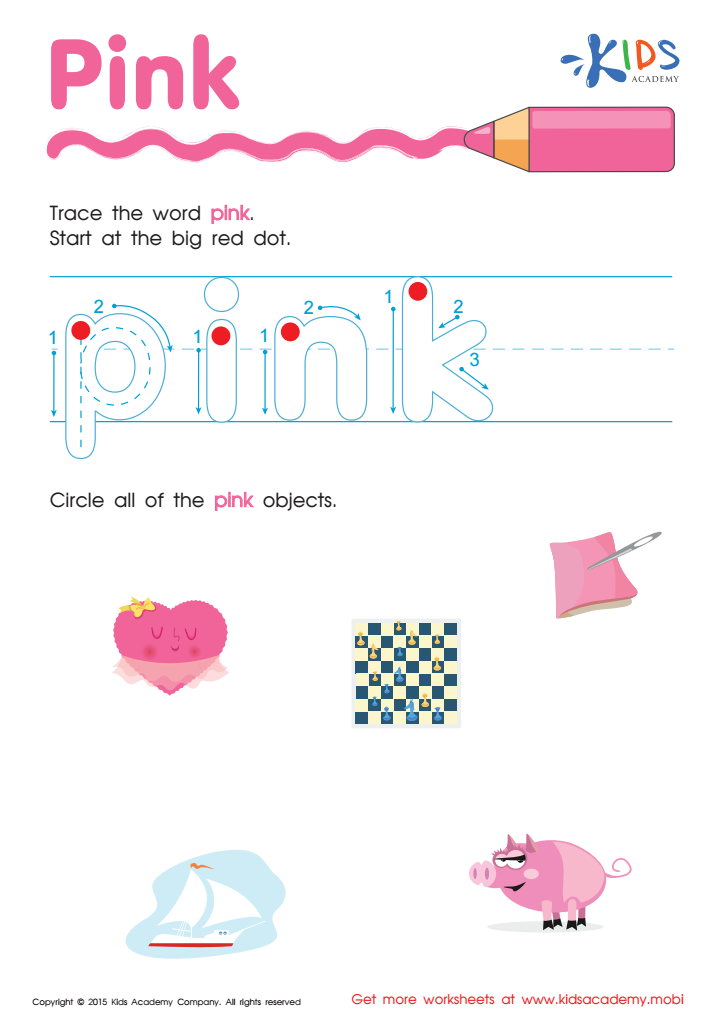
Pink Tracing Color Words Worksheet
Trace 'pink' with a pink crayon for an exciting handwriting lesson! Build fine motor skills and learn about sight words with this fun printable. Get creative and give it a splash of color for a colorful learning experience. For more tracing color words, explore here.
Pink Tracing Color Words Worksheet
Worksheet
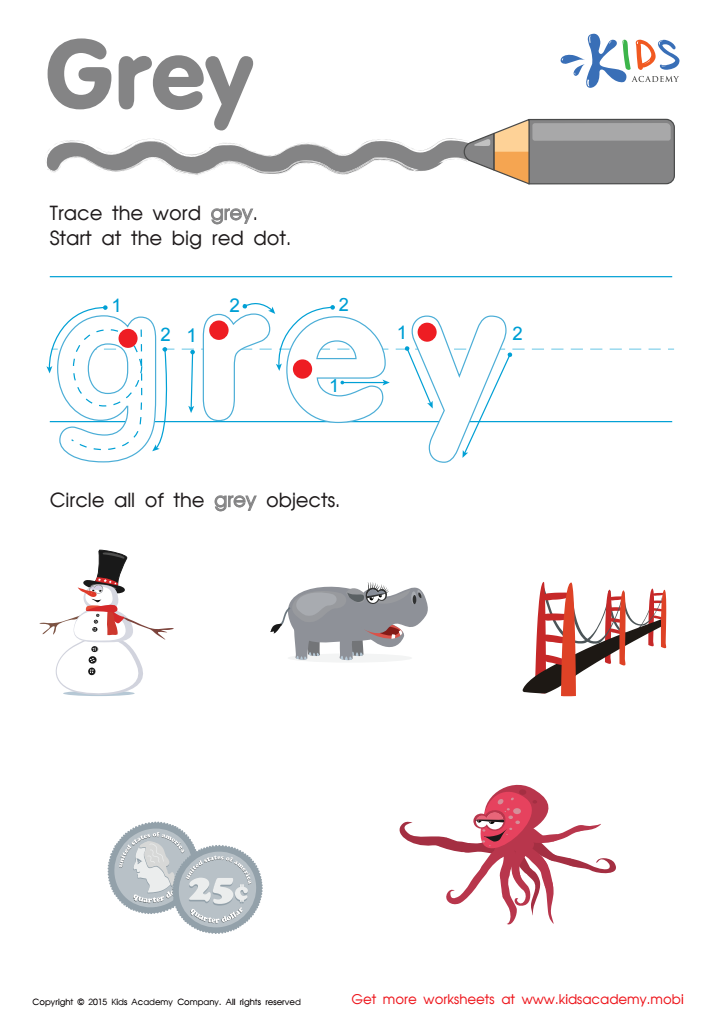
Grey Tracing Color Words Worksheet
Help your kindergartener boost their writing skills with this free printable handwriting worksheet! They can trace the sight word "grey" with a grey crayon, starting at the big red dots. Sounding out and tracing the letters can help strengthen their handwriting. Ask them to name and circle all the grey objects to give extra practice. Get more free worksheets here!
Grey Tracing Color Words Worksheet
Worksheet
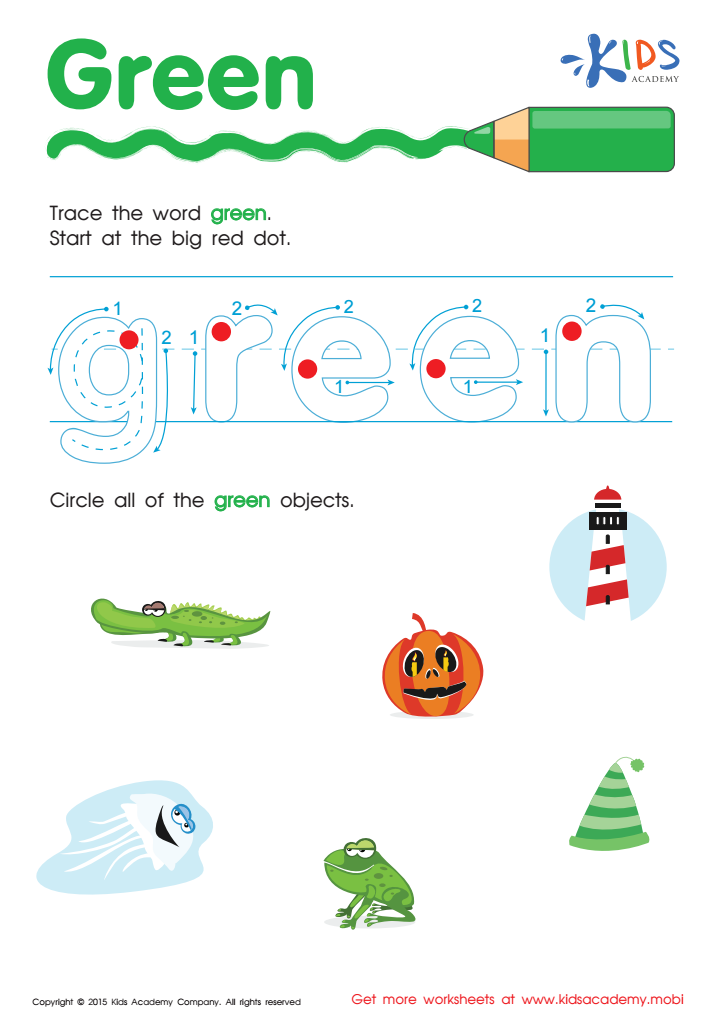
Green Tracing Color Words Worksheet
Encourage writing and spelling practice with this vibrant free handwriting worksheet. Have your child trace the new name of a primary color, "green," and circle green items in the picture. Ask them what else can be green for a challenging activity. Through this worksheet, your kindergartener can learn and play at the same time. For more free printables, look here.
Green Tracing Color Words Worksheet
Worksheet
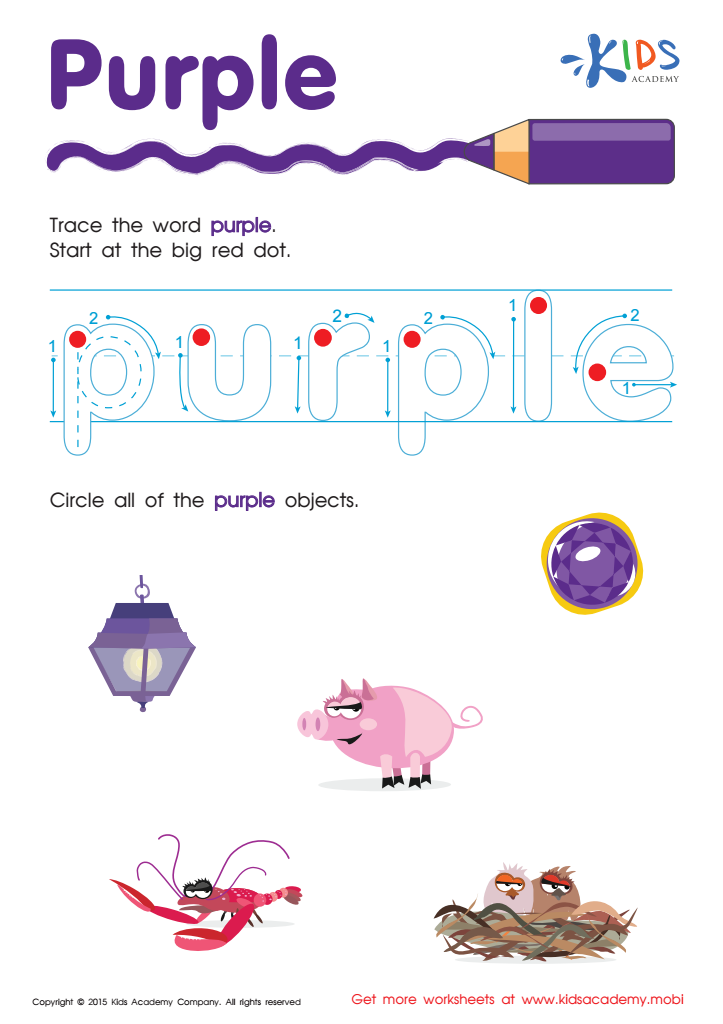
Purple Tracing Color Words Worksheet
Help your kindergartener practice their handwriting with this fun, free printable. They'll trace and color the word “purple”, starting at the big red dots, and pick out and circle all the purple objects they see. They'll get to train their fine motor muscles while having fun! Check out here for more handwriting practice.
Purple Tracing Color Words Worksheet
Worksheet
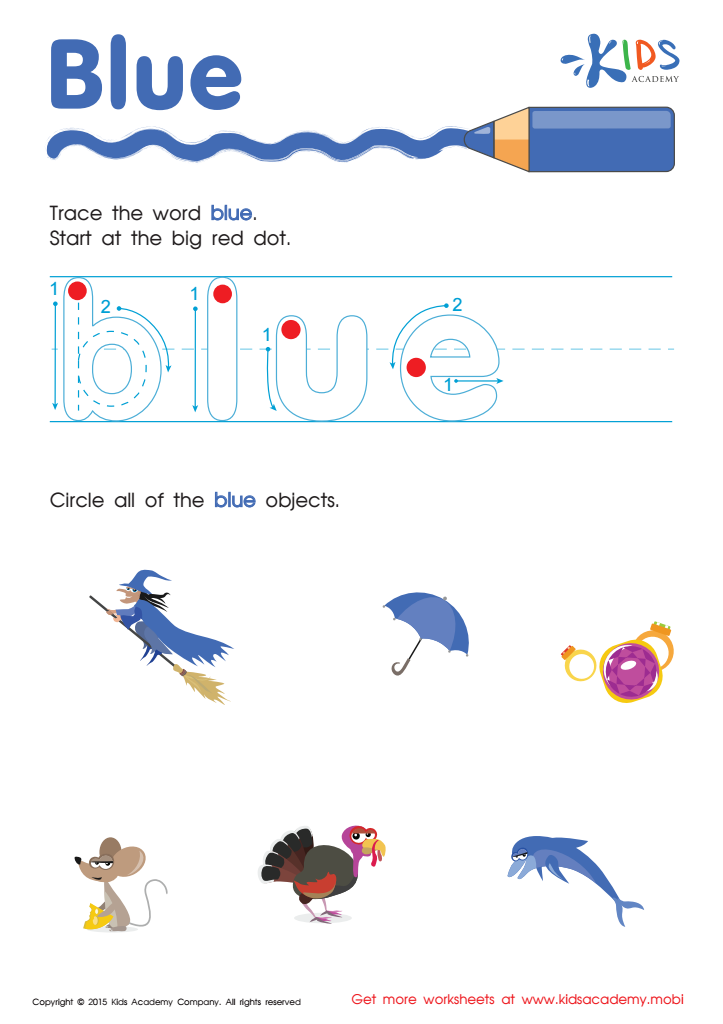
Blue Tracing Color Words Printable
Encourage your child's motor skills by having them trace the word "blue" with their blue crayon on this free printable handwriting worksheet, starting at the red dots. Ask them to circle all the blue objects they see. Check out here for more handwriting practice.
Blue Tracing Color Words Printable
Worksheet
Brown Tracing Color Words Worksheet
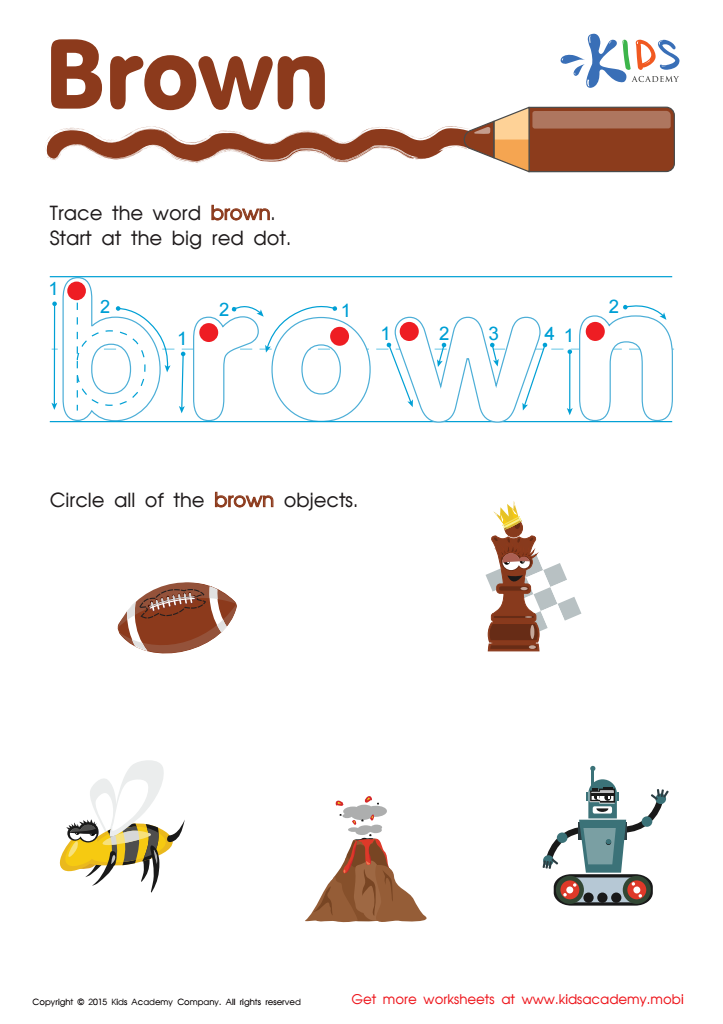
This worksheet helps kids develop fine motor muscles and practice writing. Have them trace the word "brown" with a crayon, then find the brown objects in the picture. Ask them to look around and say what's brown in their room to make it more fun. Writing basics and a bit of fun - check out this free printable handwriting worksheet! For more tracing color words, check out here.
Brown Tracing Color Words Worksheet
Worksheet
Join Kids Academy for Free
Who is primarily going to use this learning content?







Handwriting practice, particularly normal tracing words, is pivotal for 8-year-olds and should be a focal point for both parents and teachers. At this age, children's fine motor skills are still developing, and consistent practice aids in refining these crucial abilities. Tracing words helps students stabilize their hand movements, which leads to better control and clarity in their handwriting.
This foundational skill is essential not just for legibility, but also for boosting academic performance. Writing by hand has been linked to improved memory retention and cognitive development, as it encourages mental engagement in ways that typing does not. When kids practice tracing words, they also enhance their reading and spelling skills because they repeatedly see and form each letter, strengthening their phonemic awareness.
Additionally, neat handwriting instills a sense of accomplishment and pride, boosting a child's confidence. In classroom settings, legible writing ensures that students can review their notes efficiently and are better understood in written assessments. For parents, investing time in handwriting practice cultivates patience and attention to detail in their children. Overall, handwriting tracing is a comprehensive developmental tool that integrates fine motor skills, literacy, academic success, and personal growth. Prioritizing this practice sets a foundation for lifelong learning and communication skills.