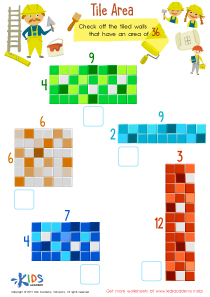
Understanding rounding Normal Numbers Worksheets for 9-Year-Olds
5 filtered results
-
From - To
Discover the key to mastering rounding with our "Understanding Rounding Normal Numbers Worksheets" specifically designed for 9-year-olds. These engaging worksheets help young learners grasp the concept of rounding through clear explanations and practical exercises. Students will learn to identify whether to round up or down based on place value and the rules of rounding. With a variety of interactive activities, our resources not only reinforce math skills but also boost confidence in number understanding. Perfect for classroom settings or at-home practice, these worksheets provide a fun approach to an essential math concept, setting a foundation for more advanced arithmetic skills. Start rounding today!
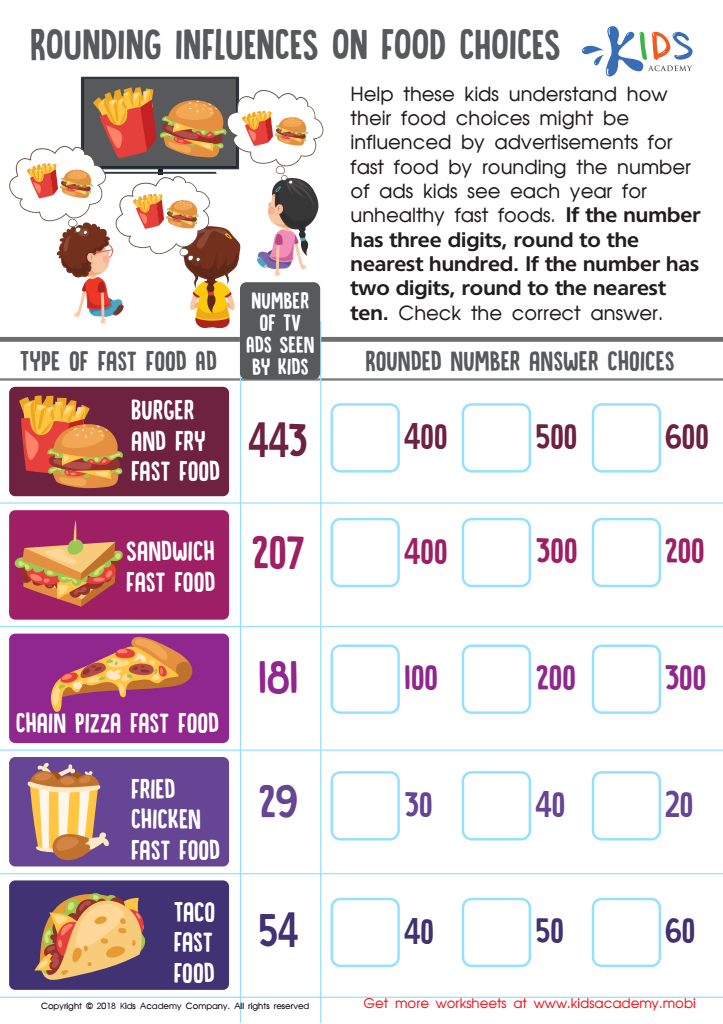
Rounding Influences Food Choices Worksheet
 Assign to My Students
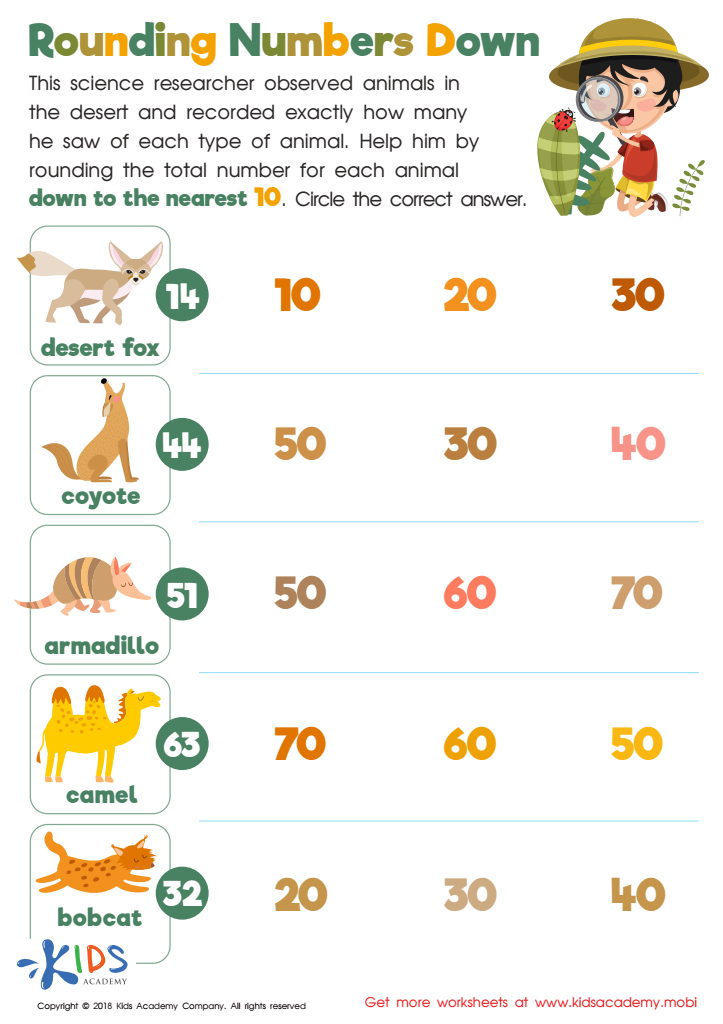
Rounding Numbers Down Worksheet
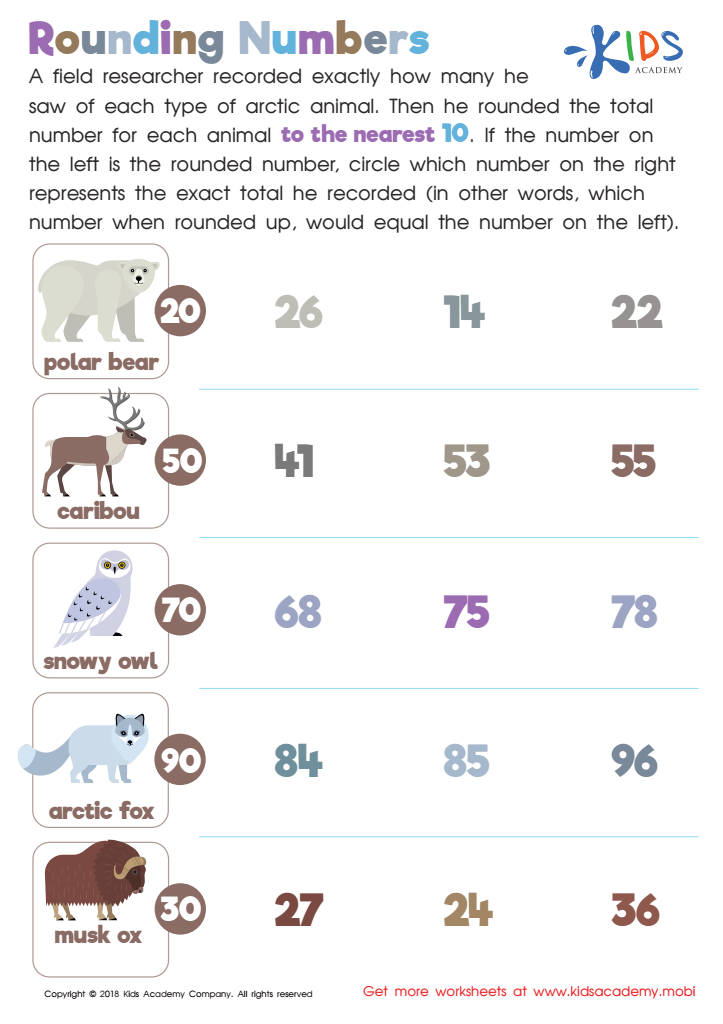
Rounding Numbers Worksheet
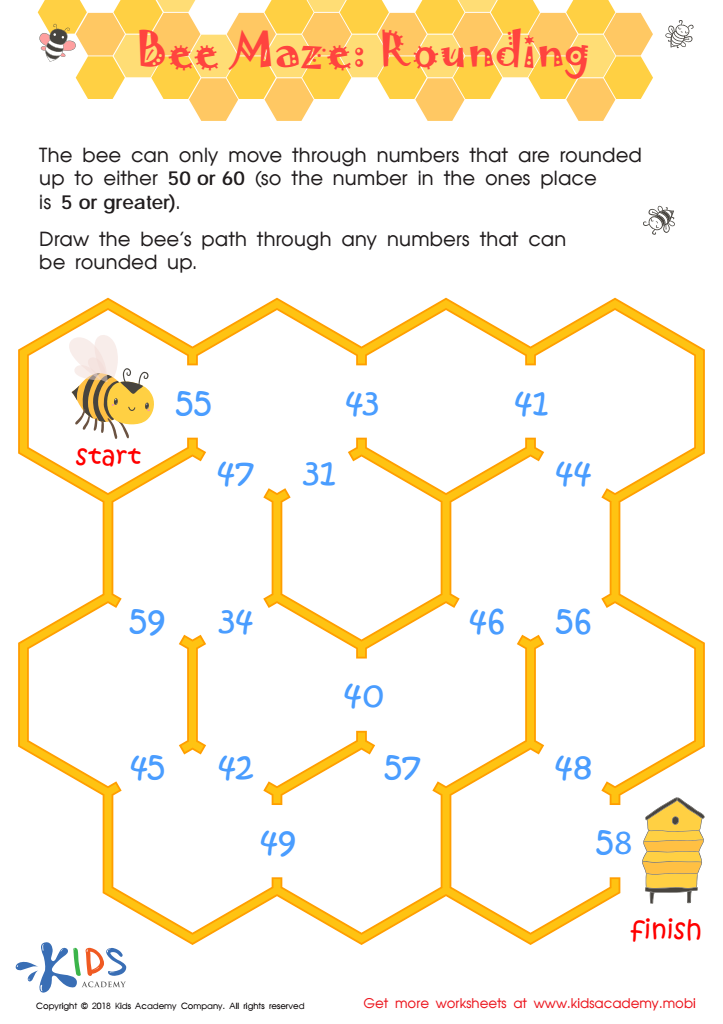
Bee Maze Rounding Worksheet
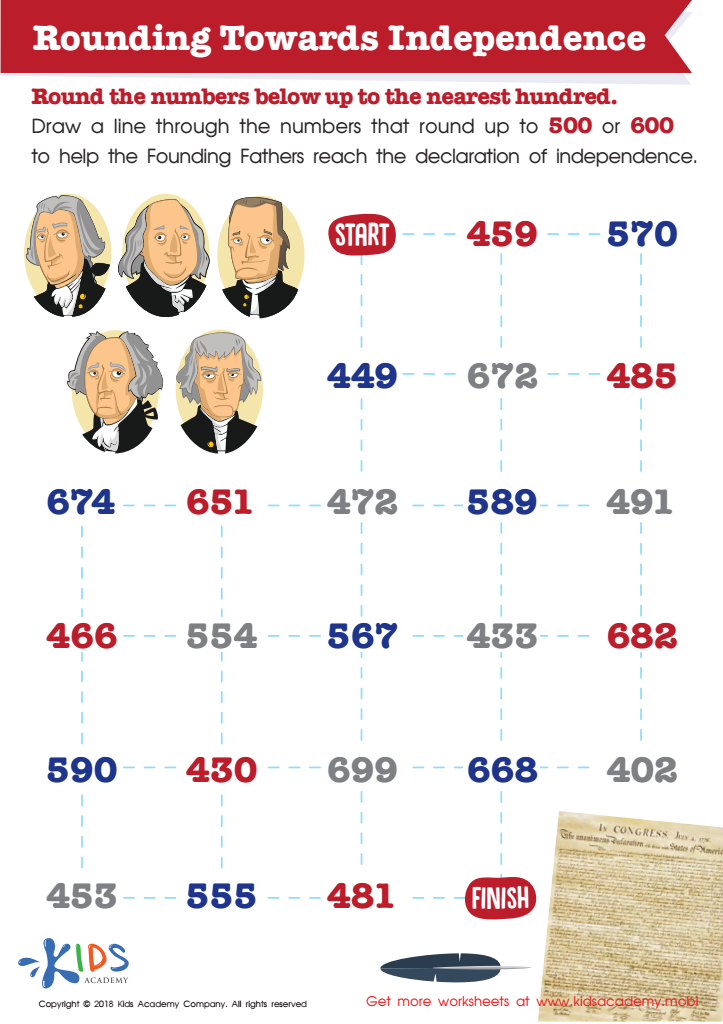
Rounding Towards Independence Worksheet








Understanding rounding normal numbers is essential for 9-year-olds, as it lays a fundamental foundation for their mathematical skills. At this age, children transition from basic arithmetic to more complex concepts, and rounding helps them develop number sense. It allows them to estimate rather than calculate precise answers all the time, which is a valuable skill in real-life scenarios, such as budgeting, shopping, or time management.
For parents and teachers, teaching rounding can instill confidence in children when they encounter larger numbers or when they're unable to perform exact calculations quickly. This foundational tool not only promotes mental math skills but also fosters critical thinking, as children learn to analyze which number to round up or down based on context.
Moreover, mastering rounding supports future mathematical concepts, including estimation, fractions, and measurement, making it a crucial topic in a child's education. Encouraging children to engage with rounding invites them to participate in discussions and practical exercises that bring math to life. By grasping this concept, children become more adept problem solvers, better prepared for their academic future, and more informed individuals in an increasingly numerical world. Thus, both parents and teachers should prioritize rounding in their teaching agendas.