
Fine Motor Skills Normal Math Worksheets for 9-Year-Olds
7 filtered results
Difficulty Level
Grade
Age
-
From - To
Subject
Activity
Standards
Enhance your child's fine motor skills with our specialized math worksheets designed for 9-year-olds. These engaging activities not only focus on essential math concepts but also encourage the development of dexterity and coordination. As children navigate through fun exercises, they refine their hand-eye coordination and boost their writing abilities. Our worksheets feature a variety of math problems that challenge young learners while promoting skill mastery. Perfect for home or classroom settings, these resources provide a stimulating learning experience that integrates cognitive and physical development. Access our collection today and help your child thrive in their math journey!
Favorites
With answer key
Interactive
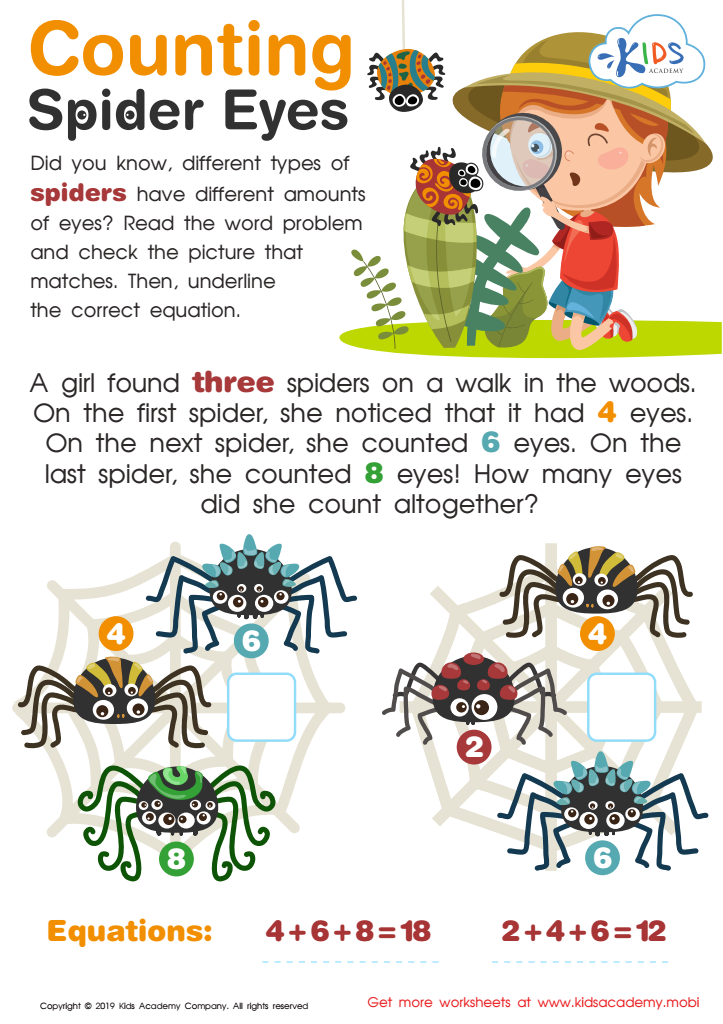
Counting Spider Eyes Worksheet
Did you know different spiders have different eye numbers? Kids will love learning this fact and solving the spider word problems on this free worksheet! Word problems promote a deeper understanding of the concept, plus they get to add up the spiders’ eyes while solving addition problems with more than one addend. Fun and math all in one!
 Assign to My Students
Counting Spider Eyes Worksheet
Worksheet
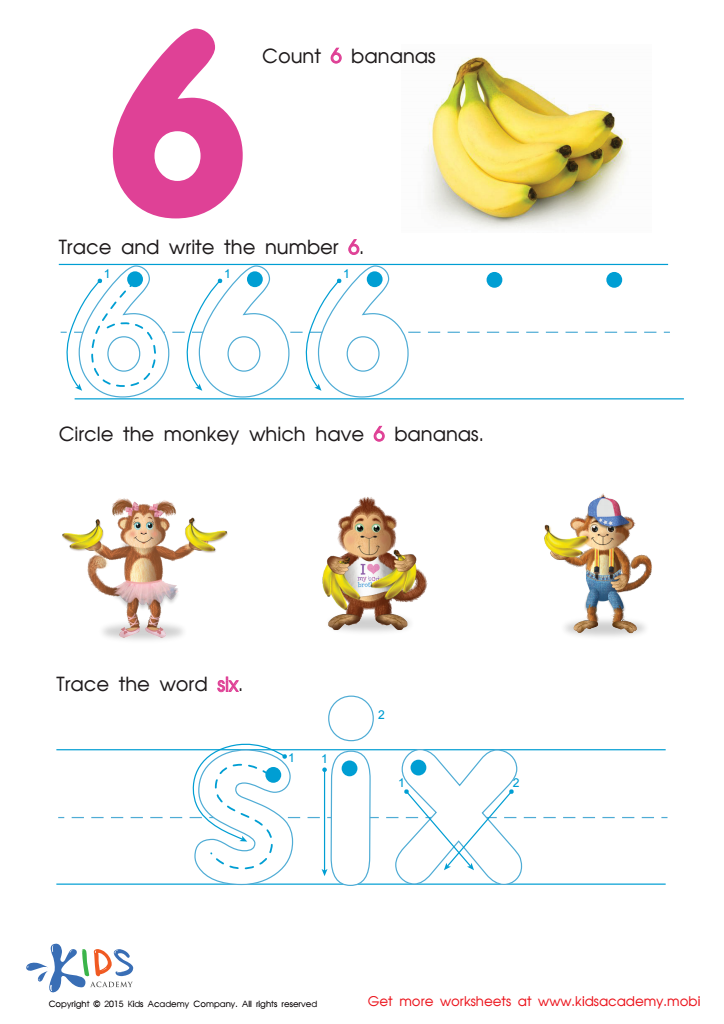
Tracing And Writing Number 6 Worksheet
Learn numbers in a fun way with our preschool number worksheets. Count six bananas, trace and write the number, find the monkey with six bananas, and trace the word "six." Explore more activities at Kids Academy.
Tracing And Writing Number 6 Worksheet
Worksheet
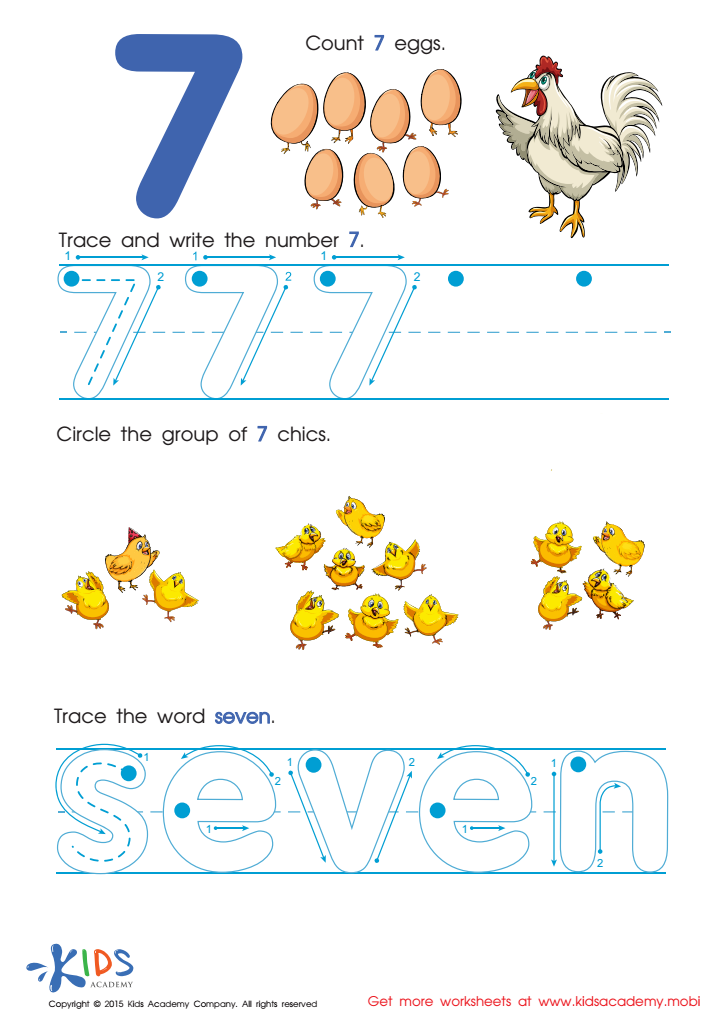
Trace And Write Number 7 with Fun Worksheet
Try one with a cute hen and its seven eggs! Trace and write the number 7, circle the group of seven chicks, and trace the word "seven". Fun and educational!
Trace And Write Number 7 with Fun Worksheet
Worksheet
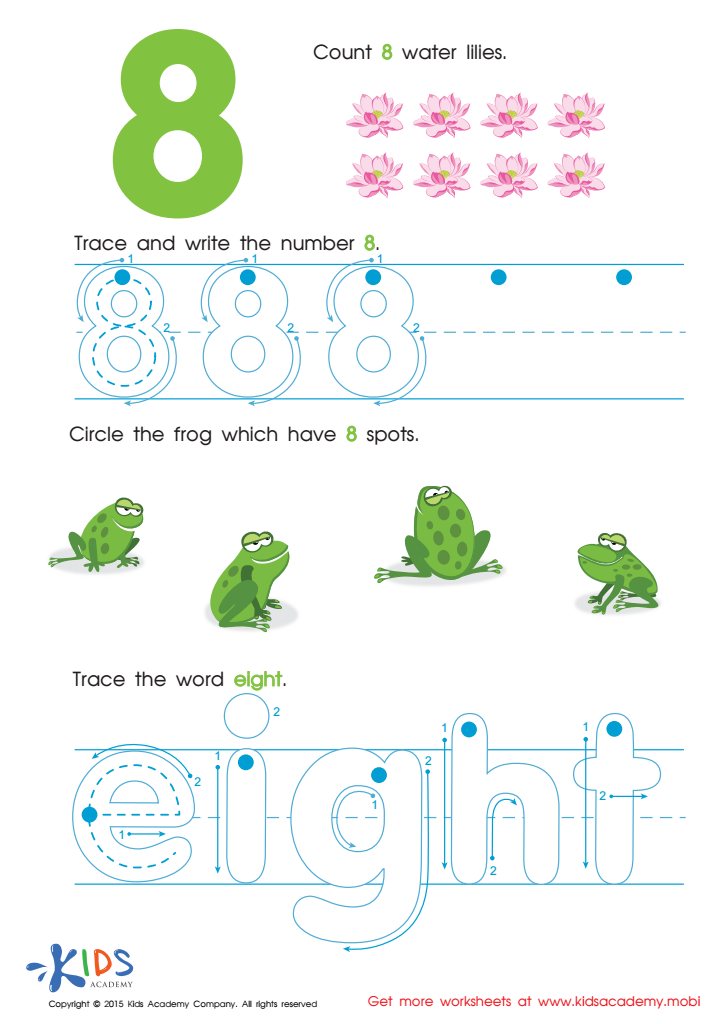
Learn Number 8 Easily Worksheet
Kids can trace, write numbers and learn to pronounce them through exciting activities and games. Try our number worksheets for preschoolers to make learning fun!
Learn Number 8 Easily Worksheet
Worksheet
Reading Liquid Measurement Worksheet
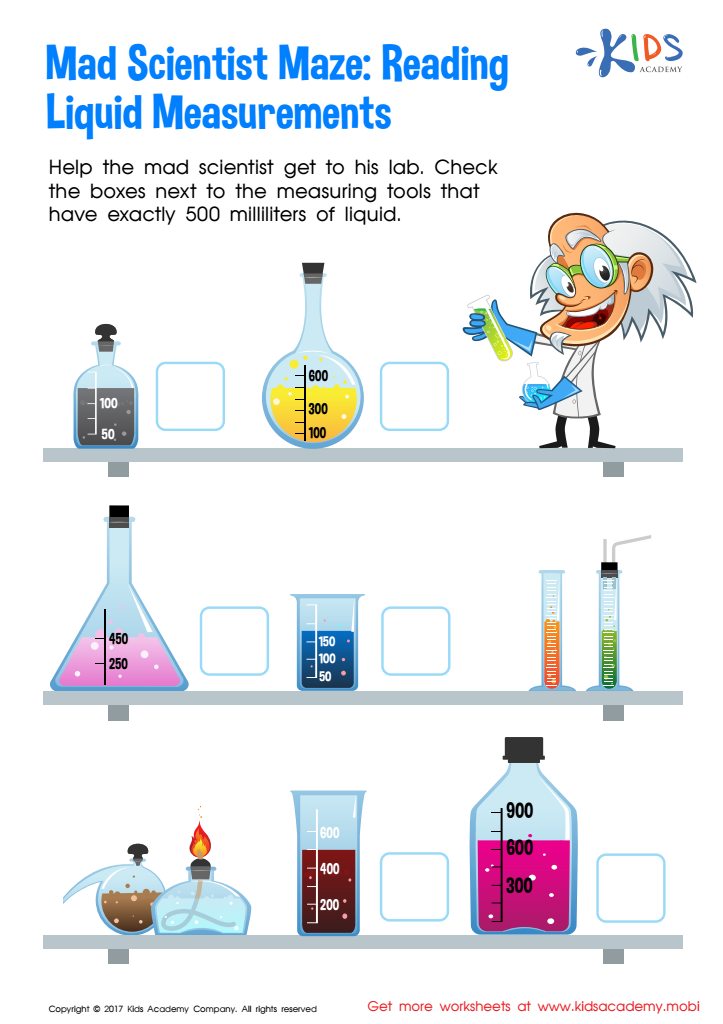
Help a mad scientist return to his lab by having your child measure the liquid in each flask. Their results will determine his fate!
Help a mad scientist return to his lab! Kids can practice reading liquid measurements to the millimeter on this worksheet. Determine the amount of liquid in each flask and let your child's results decide the scientist's fate!
Reading Liquid Measurement Worksheet
Worksheet
Learn to Write the Number 2 Worksheet
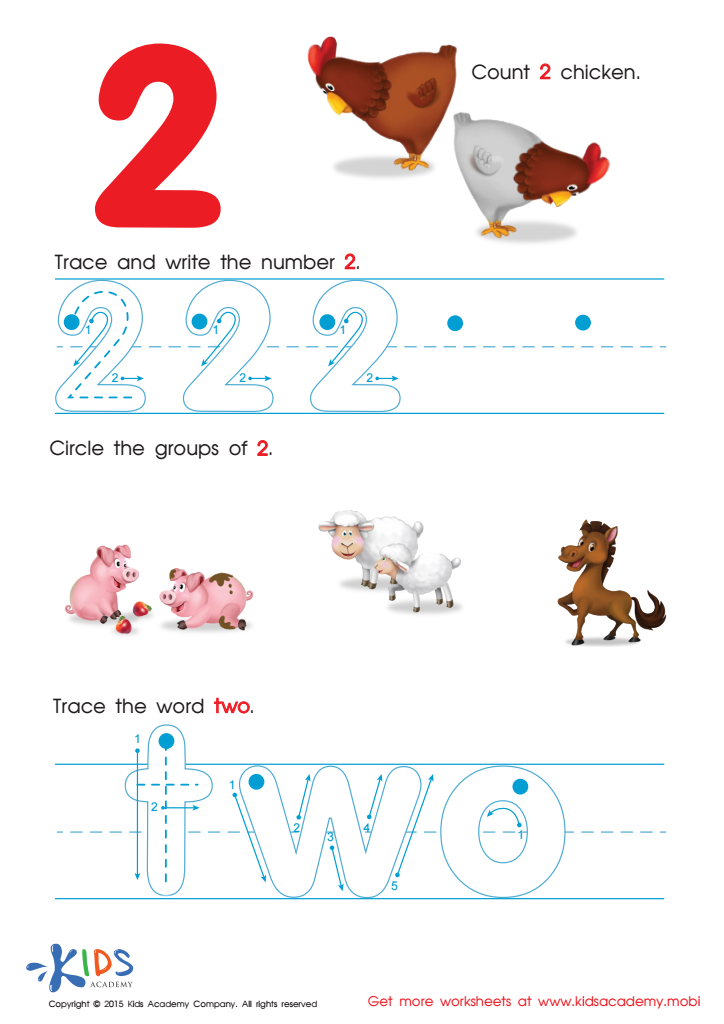
Teaching numbers should be fun! Ask your kids to count the two chicks, circle the groups of two among the animals, then trace and write the number and word. Get more fun worksheets from Kids Academy.
Learn to Write the Number 2 Worksheet
Worksheet
Octopus 8’s Worksheet
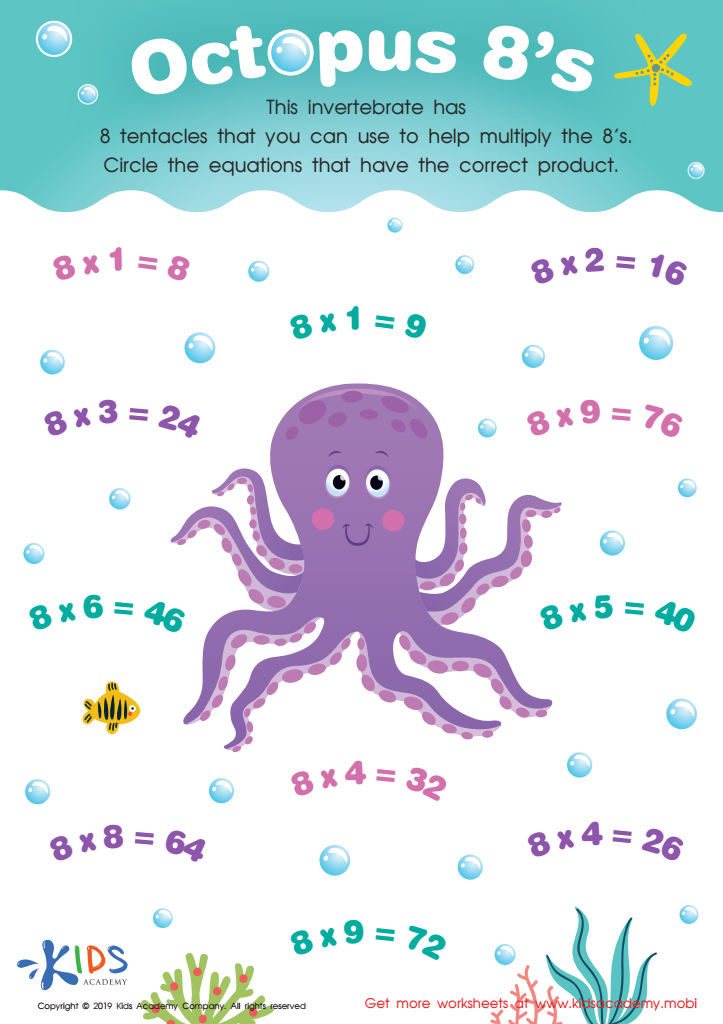
Can your child identify the octopus in the worksheet? It's an invertebrate with 8 tentacles. Have your child circle the equations with the correct products, and see if they can tell you some other features of the octopus too.
Octopus 8’s Worksheet
Worksheet
Join Kids Academy for Free
Who is primarily going to use this learning content?







Fine motor skills are crucial for the development of various abilities that extend beyond simple tasks. For 9-year-olds, strong fine motor skills enhance their math capabilities. Writing numbers neatly, aligning them in columns for addition or subtraction, and manipulating math tools—such as rulers, protractors, or manipulatives—are all connected to fine motor proficiency. When children have well-developed fine motor skills, they can focus on problem-solving instead of struggling with the mechanics of writing or handling tools, thus reinforcing learning.
Moreover, fine motor skills impact a child's ability to engage in other academic areas and daily tasks. This skill set fosters independence and boosts confidence, both critical aspects of a child's emotional and social development. As they practice and improve their fine motor skills, they gain a sense of accomplishment that spills over into their overall educational experience.
For parents and teachers, investing time in activities that bolster fine motor skills—such as arts and crafts, puzzles, or hands-on math exercises—can create a solid foundation for effective learning. Recognizing the interplay between fine motor skills and math readiness helps in tailoring educational approaches to support mastery, ultimately enriching children's learning journeys.








