Reading comprehension Normal Word Problems Worksheets for 9-Year-Olds
9 filtered results
-
From - To
Boost your 9-year-old's reading comprehension and problem-solving skills with our specially designed Normal Word Problems Worksheets. These printable worksheets offer engaging word problems that challenge young minds to understand context, interpret data, and apply mathematical concepts effectively. Each worksheet is meticulously crafted to enhance critical thinking and improve literacy, while making math practice enjoyable. Perfect for classroom use or at-home learning, our worksheets align with educational standards to support your child's academic growth seamlessly. Turn reading comprehension into a fun and rewarding activity with Kids Academy’s expert-designed resources. Download today and pave the way for your child’s success!
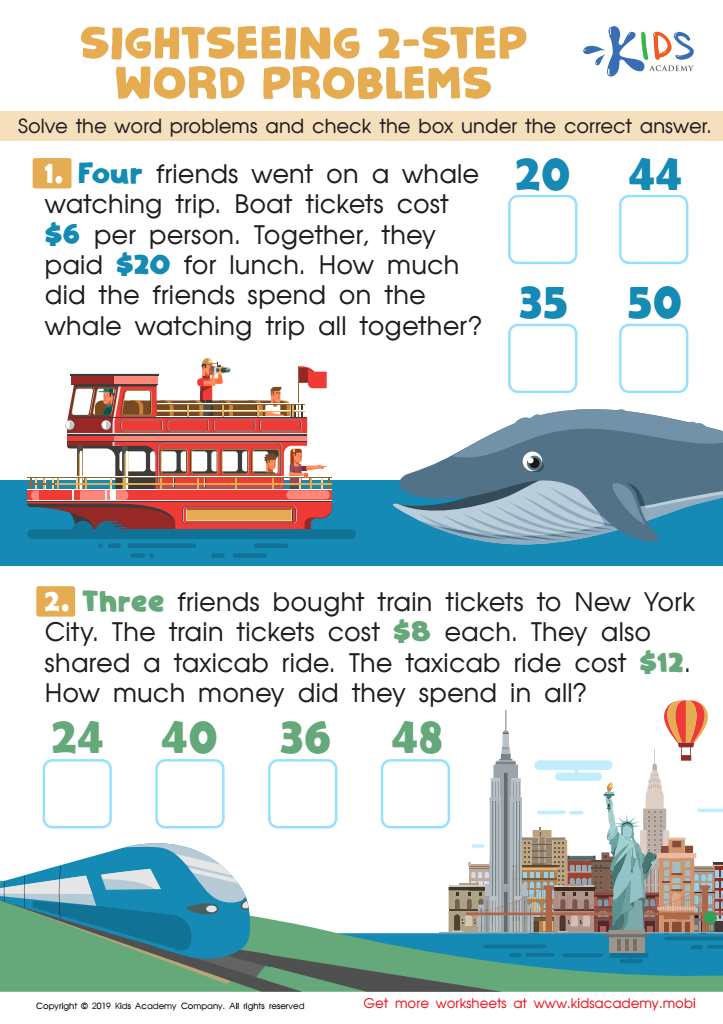
Sightseeing 2-Step Word Problems Worksheet
 Assign to My Students
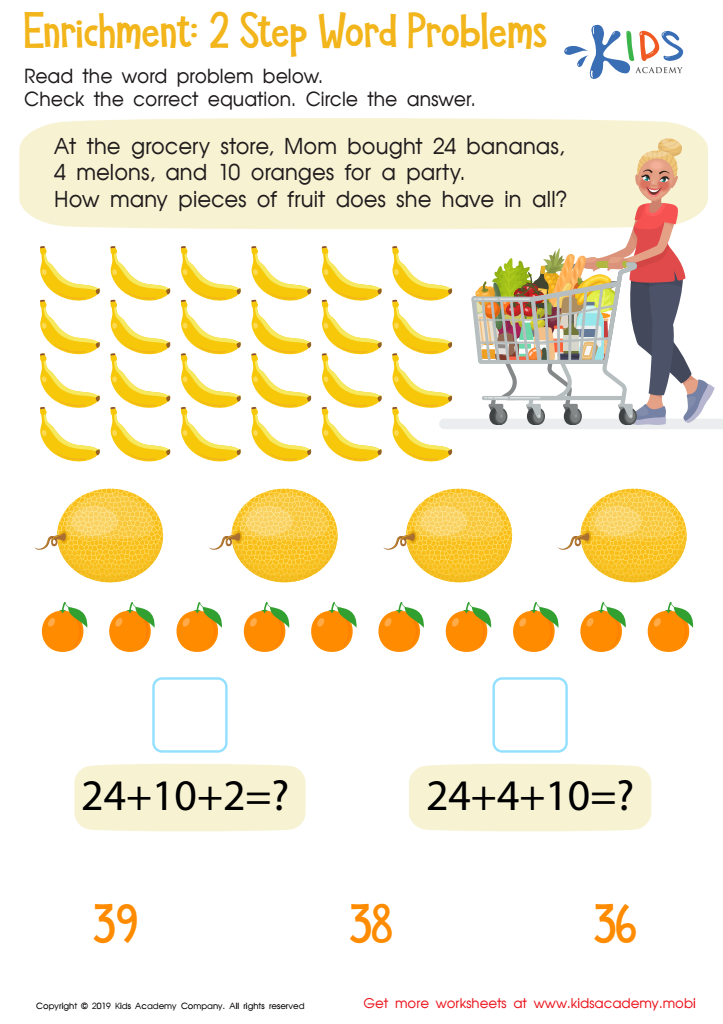
Enrichment -2 Step Word Problems Worksheet
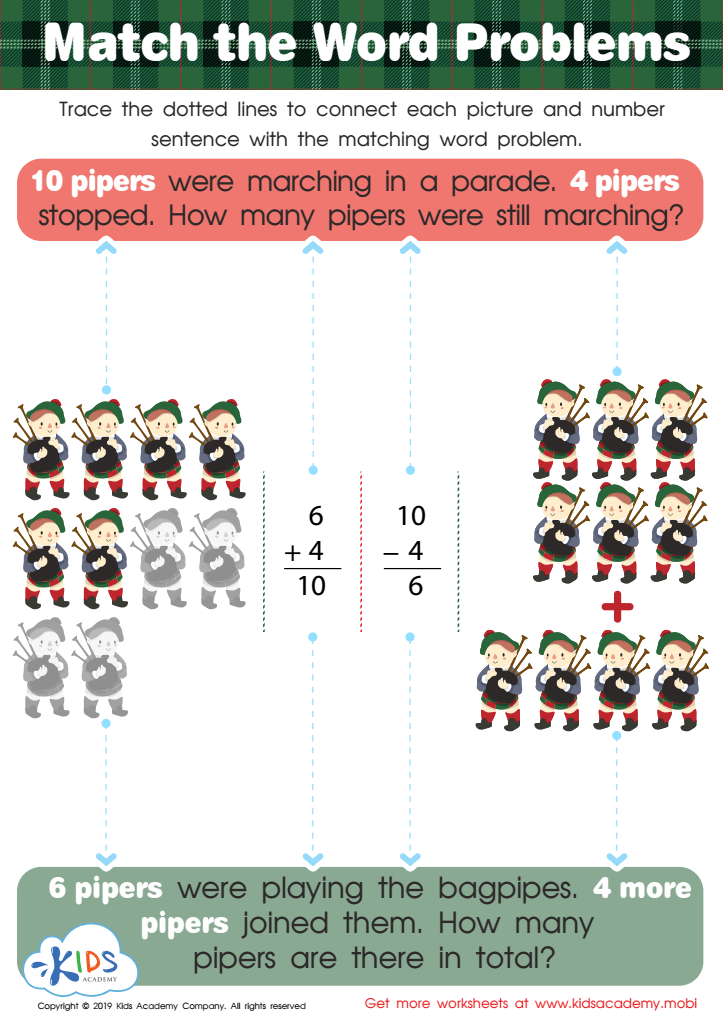
Match the Word Problems Worksheet
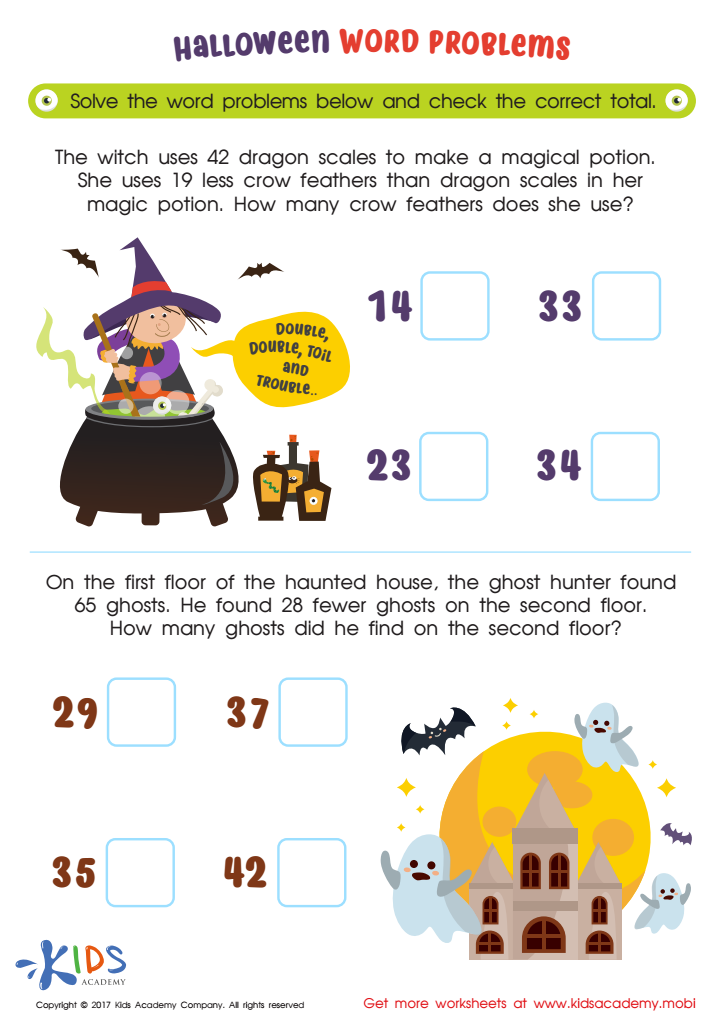
Halloween Word Problems Printable
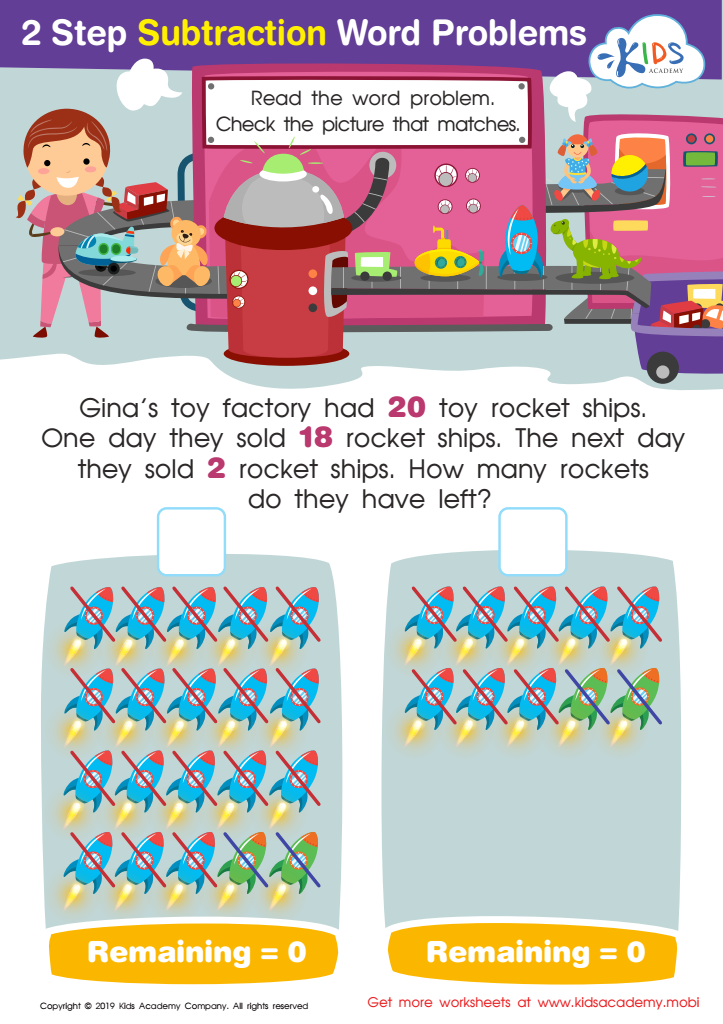
Step Subtraction Word Problems Worksheet
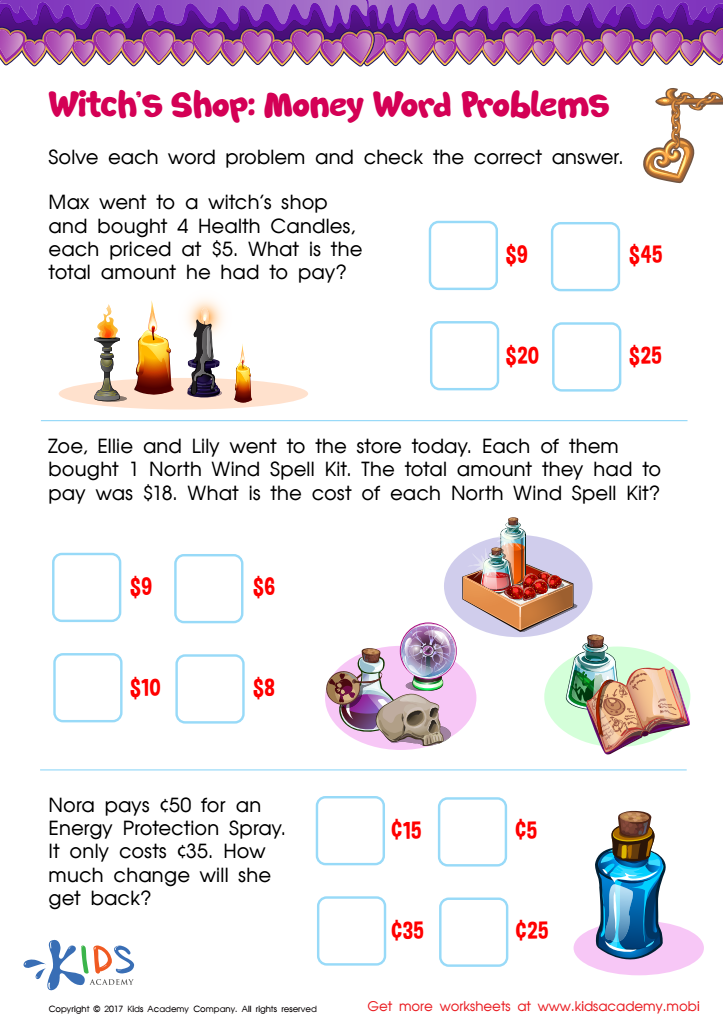
Money Word Problems Printable
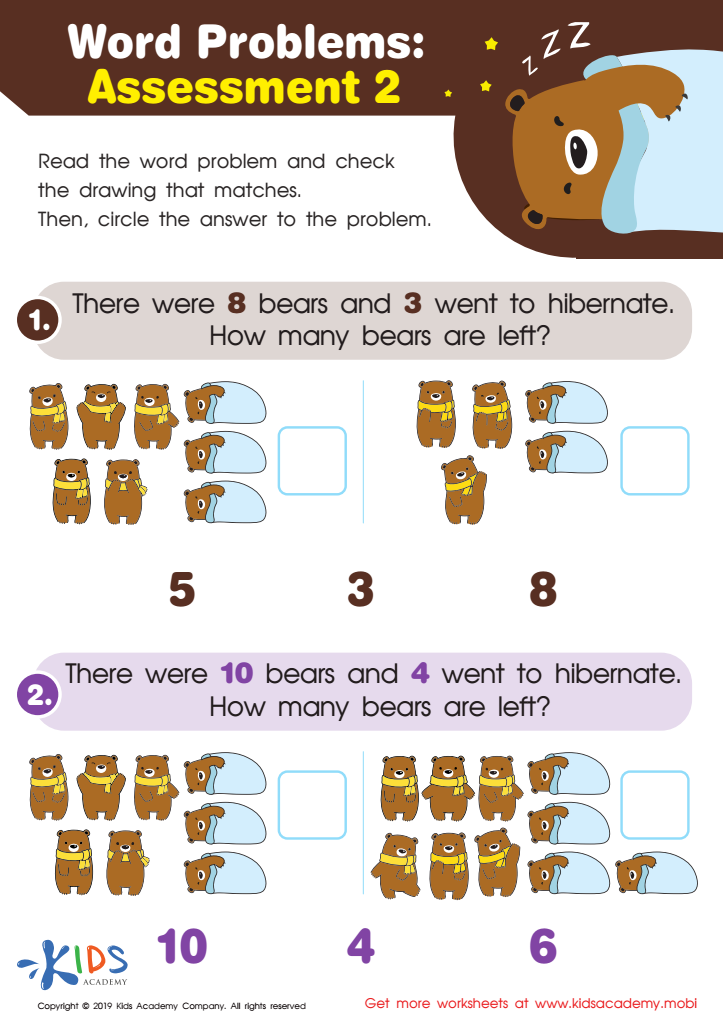
Word Problems: Assessment 2 Worksheet
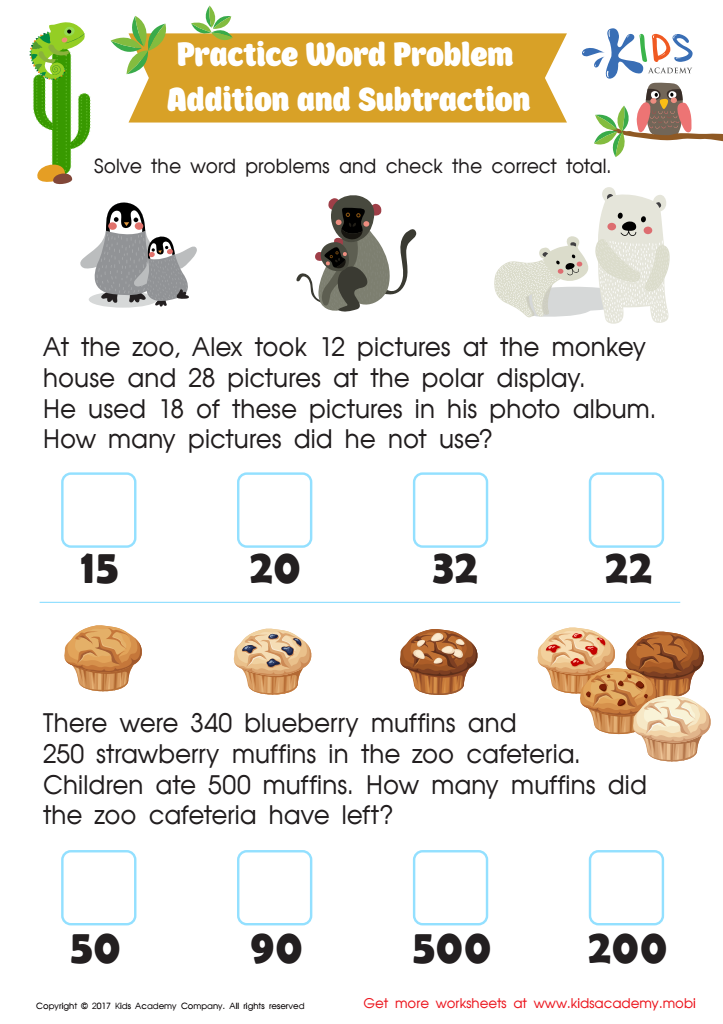
Addition and Subtraction: Word Problems Worksheet
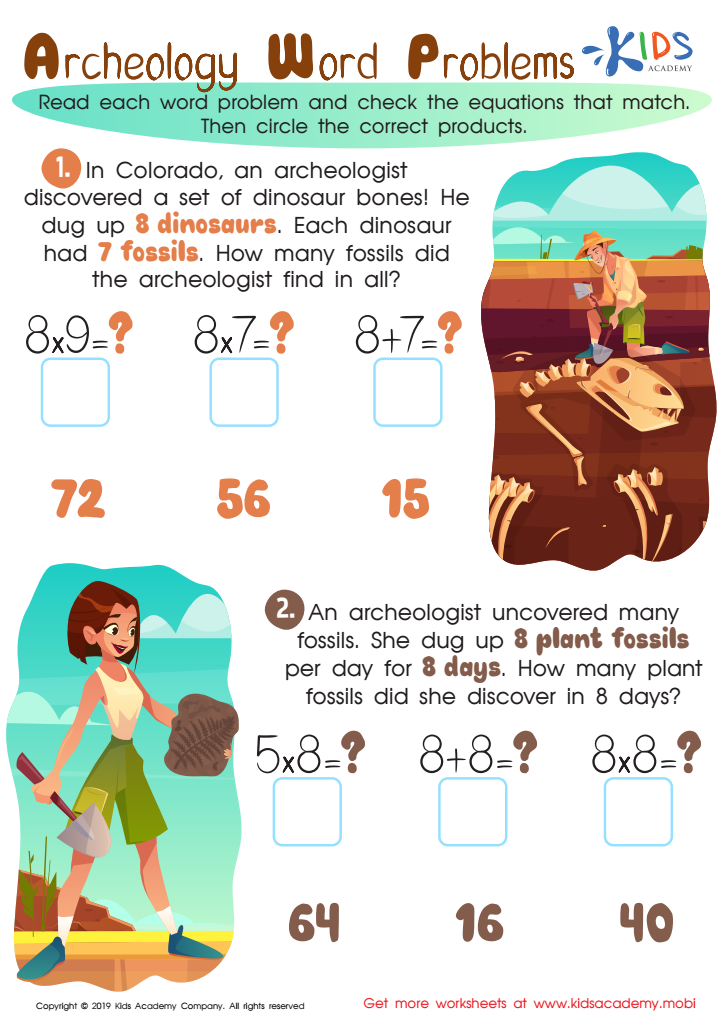
Archeology Word Problems Worksheet








Reading comprehension is a cornerstone of academic success, and for 9-year-olds, mastering it through normal word problems is particularly beneficial. At this age, children's cognitive skills are expanding rapidly, and tackling word problems helps them learn to interpret, analyze, and infer information from text. This bridges their reading skills with real-world application in math, enhancing their ability to grasp and utilize arithmetic concepts naturally and contextually.
Parents and teachers should care because strong reading comprehension skills are vital across all subjects. Decoding word problems requires understanding the question, synthesizing information, and formulating a strategy to find the solution—all critical thinking skills. By practicing with word problems, 9-year-olds not only improve their reading comprehension but also cultivate problem-solving abilities, logical reasoning, and perseverance.
Furthermore, reading comprehension in math word problems can boost children's confidence. Realizing that they can decode and solve problems bolsters their academic self-esteem and motivates them to tackle more challenging tasks. Over time, these skills manifest as robust learning habits that contribute to overall academic growth and future educational success. Consequently, fostering such skills early on lays a solid foundation for lifelong learning and intellectual curiosity.








