Filters

7 filtered results

Clear all filters
Favorites
With answer key
Interactive

7 filtered results

Difficulty Level

Grade


Enhance your child's reading skills with our "Word Recognition Normal Consonants Worksheets." Designed for early learners, these engaging worksheets focus on familiar consonant sounds to help children develop essential word recognition abilities. By practicing with fun and interactive activities, kids will reinforce their understanding of consonant sounds, improving their phonetic skills and vocabulary. Perfect for home or classroom use, our worksheets provide a structured approach to learning, making reading enjoyable and effective. Whether your child is a beginner or looking to strengthen their existing skills, these resources offer the support they need to read confidently and thrive academically. Start your journey to literacy today!

Check out this FREE Normal Trial Lesson on Consonants!

Review Blends

Favorites
With answer key
Interactive
  • Word Recognition
  • Consonants
  • Normal
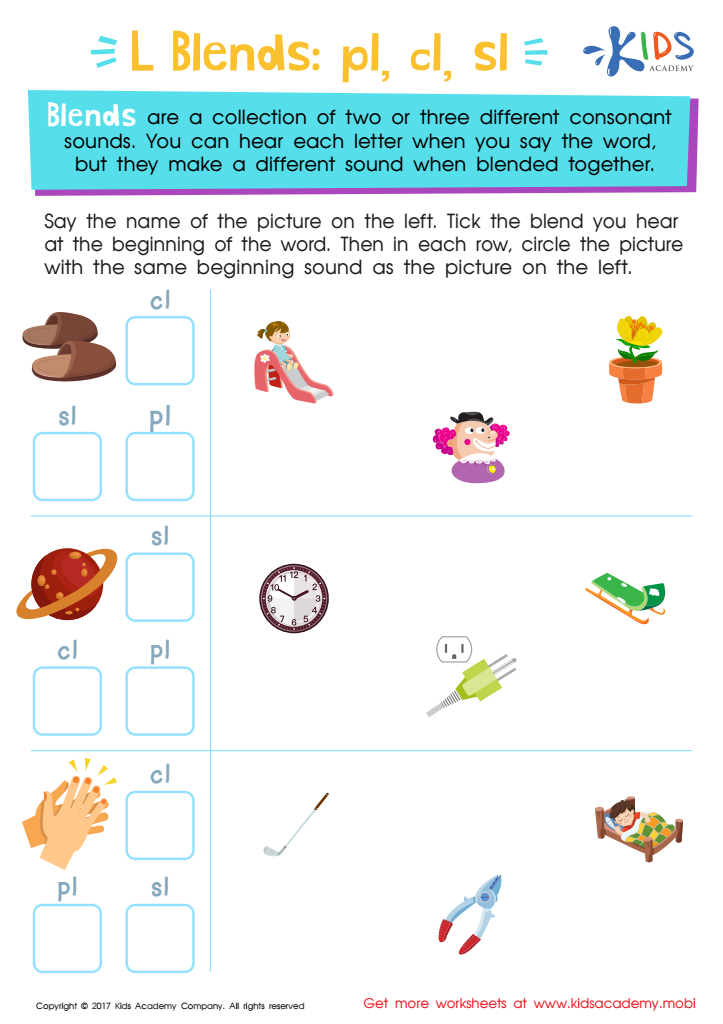
Consonant Blends Pl, Cl, and Sl Printable Worksheet

L Blends: "Pl", "Cl" and "Sl" Printable

This printable worksheet will help your child recognize and identify the Pl, Cl, and Sl consonant blends, sound them out, and identify them in print. Improve your child's reading and writing skills with fun and colorful phonics practice!
L Blends: "Pl", "Cl" and "Sl" Printable
Worksheet
The /wh/ Sound Worksheet

The /wh/ Sound Worksheet

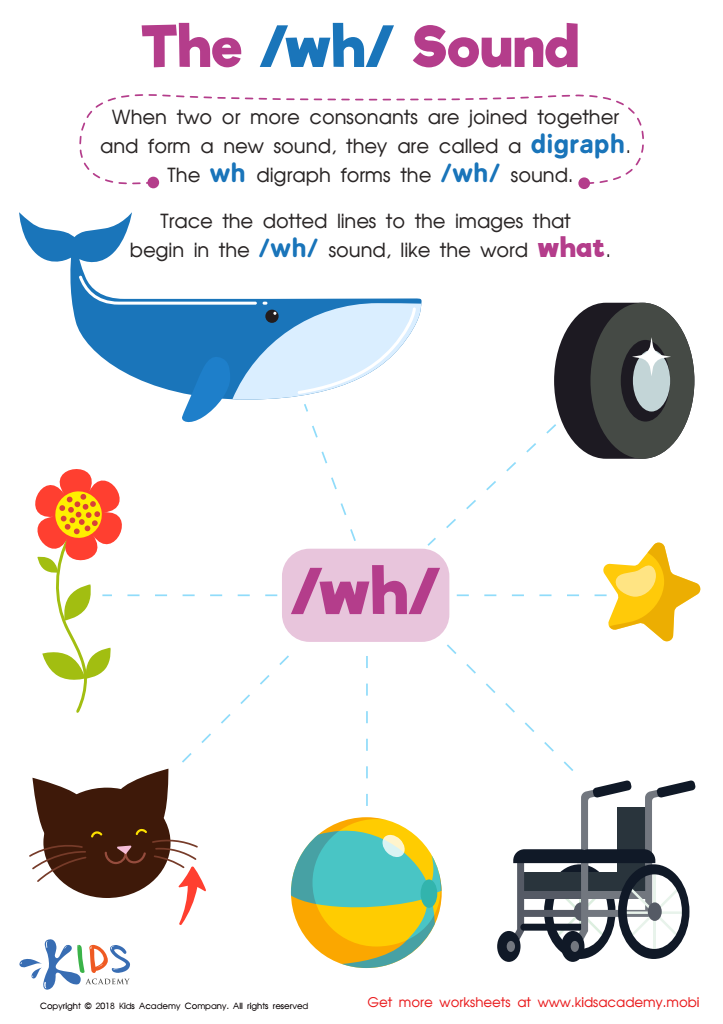
Digraphs join two consonants to make a new sound, like /wh/. Give examples, like "whale", "when" and "why". Ask kids to name pictures in a worksheet and trace dotted lines to images beginning with the /wh/ sound; "what" is one example.
The /wh/ Sound Worksheet
Worksheet
The SH Digraph Worksheet

The SH Digraph Worksheet

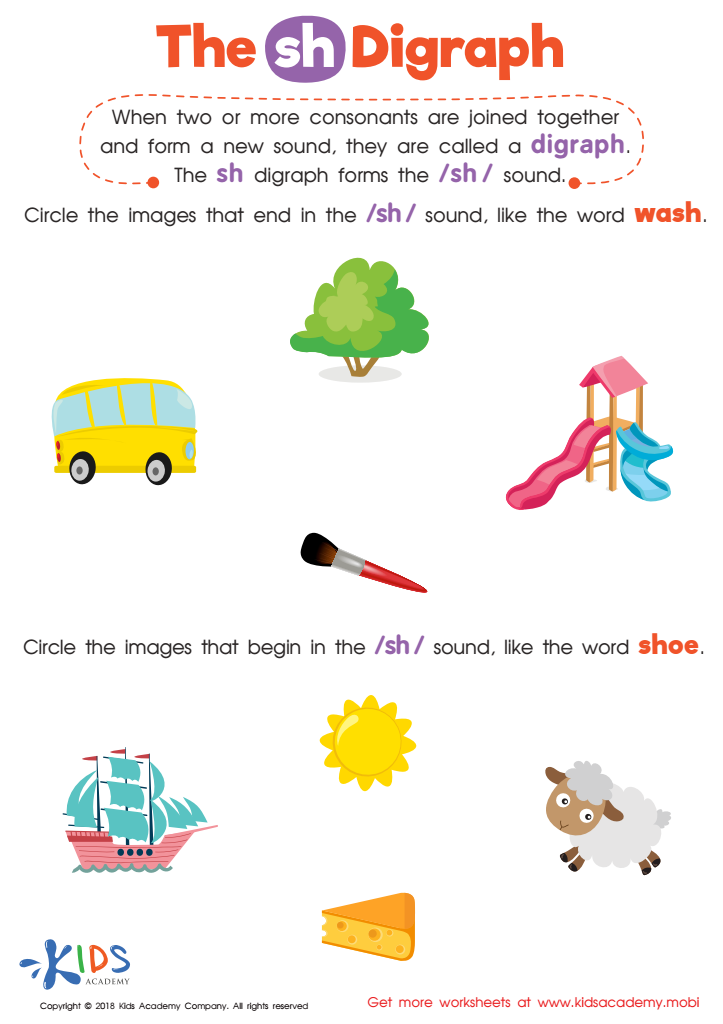
There are many phonetic sounds, each with its own unique sound. When two or more consonants are combined to create a new sound, it's called a digraph. Example: the sh digraph creates the /sh/ sound. Have kids look at the pictures and say the words aloud. Help them circle the images ending with /sh/, like 'wash'.
The SH Digraph Worksheet
Worksheet
Missing Digraph: Part 2 Worksheet

Missing Digraph: Part 2 Worksheet

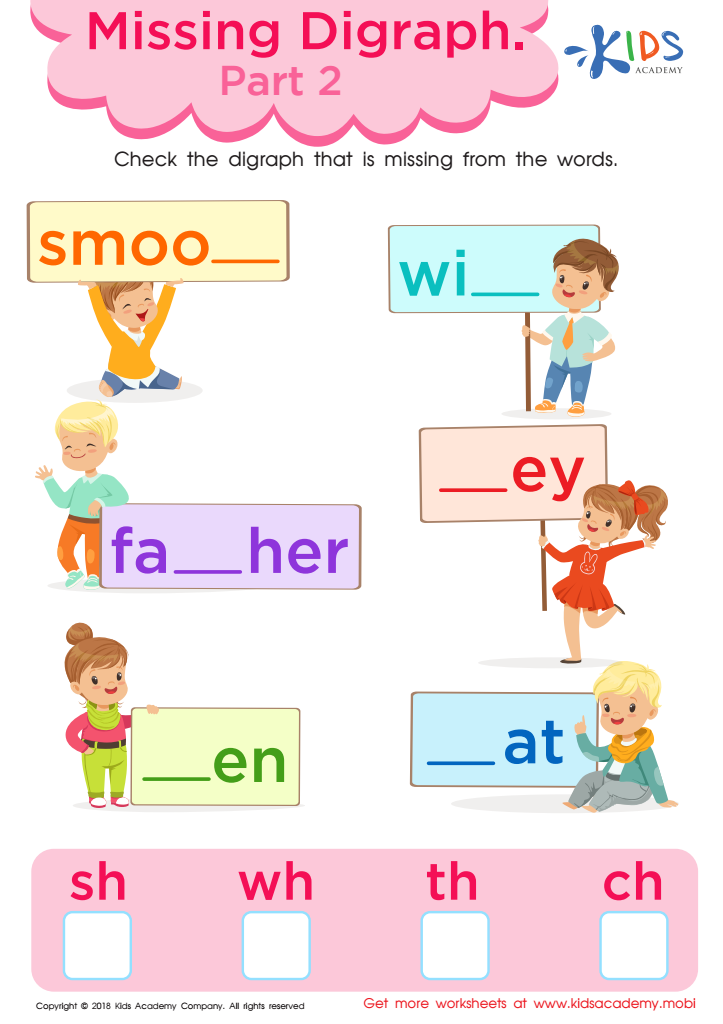
Practice the "th" digraph with this fun worksheet from Kids Academy! See how it appears at the beginning, middle, or end of words and help learners fill in the blanks. Check if they got it right by finding the th digraph at the bottom!
Missing Digraph: Part 2 Worksheet
Worksheet
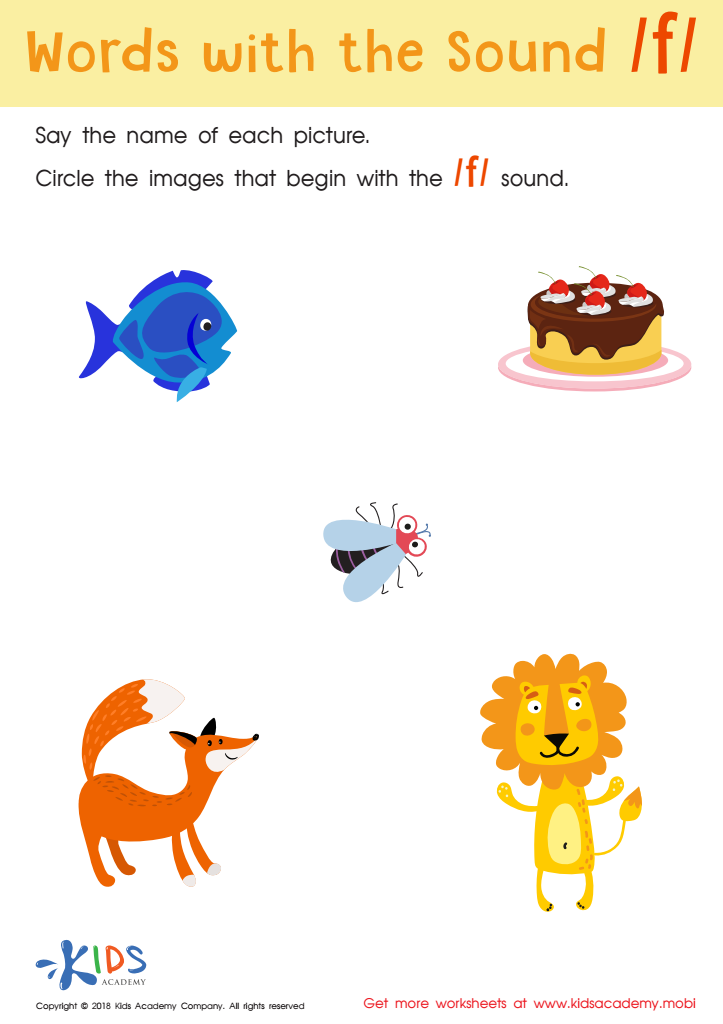
Words with sound f Reading Worksheet

Words with sound f Reading Worksheet

This illustrated phonics worksheet is ideal for preschool or kindergarten. It helps boost learners' literacy skills with a focus on the letter "f". Ask your child to name all the pictures, listening for that sound. Examples are fish, fox, lion, bug. When they can identify which words start with "f", have them circle the images. Congratulate them on a job well done!
Words with sound f Reading Worksheet
Worksheet
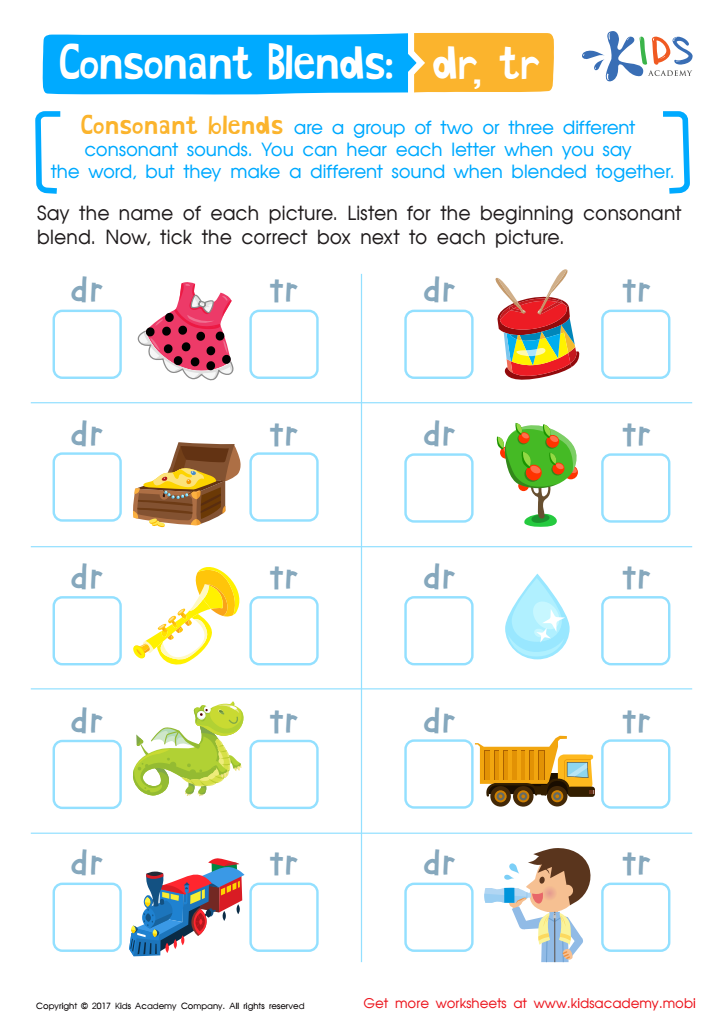
Consonant Blend Dr and Tr Printable Worksheet

Consonant Blends: "Dr" and "Tr" Printable
Pictures of the words provide a visual cue, and sound-outs help with auditory cues.
Consonant Blends: "Dr" and "Tr" Printable
Worksheet
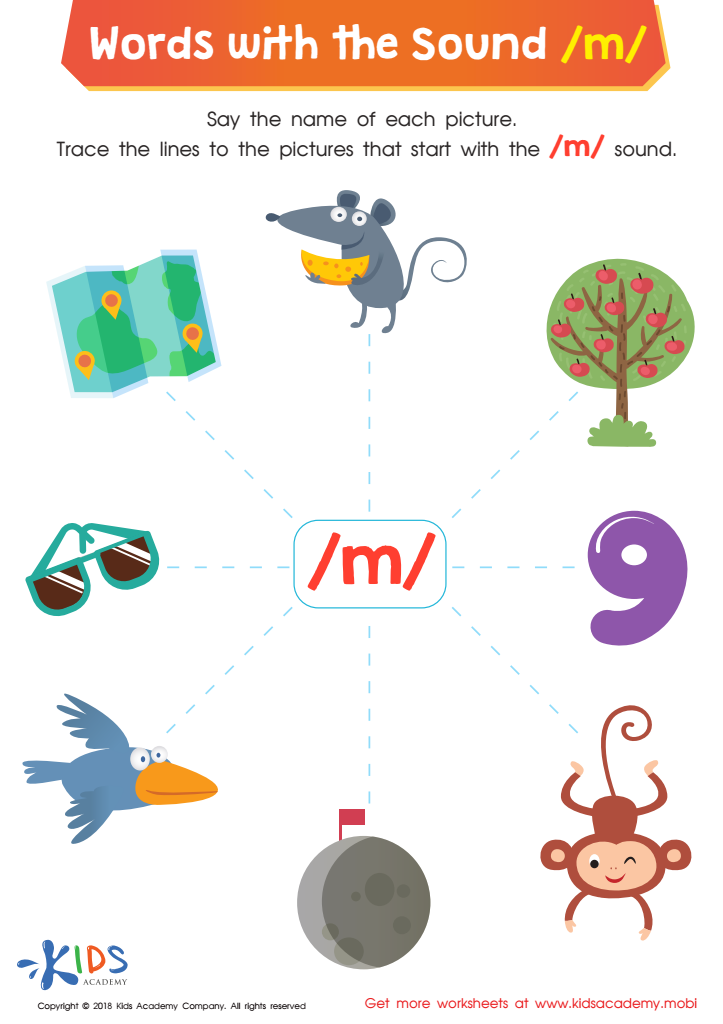
Words with Sound M Reading Worksheet


Words with Sound M Reading Worksheet

Emerging readers will use this traceable worksheet to name and trace pictures with the letter sound «m». Bright, engaging pictures make this fun and build confidence while strengthening fine motor skills. They won't even know they're also working on reading skills!
Words with Sound M Reading Worksheet
Worksheet


Word recognition is a critical skill in early literacy development, and understanding normal consonant recognition is an essential part of that process. For parents and teachers, recognizing the significance of consonants can help students decode words effectively, which in turn enhances reading fluency and comprehension.

Consonants make up a fundamental element of most words, providing essential phonetic cues. When children learn to identify these sounds, they build a strong foundation for recognizing and pronouncing various words, which is vital for building vocabulary and literacy skills. Mastering consonant sounds enables children to apply phonics rules, aiding them in sounding out unfamiliar words.

Moreover, strong word recognition skills promote confidence in children as they read, fostering a love for reading that can last a lifetime. Parents can support this skill by engaging in activities like reading together, word games, and phonics exercises, while teachers can create structured learning environments that emphasize consonants in phonemic awareness programs.

By prioritizing understanding of normal consonants, both parents and teachers help ensure that children develop the necessary skills to navigate the complexities of language, opening doors to academic success and effective communication in their future.