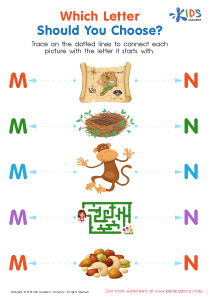
Letter recognition Normal Lowercase/Small Letters Worksheets
10 filtered results
-
From - To
Explore our engaging lower case letter recognition worksheets designed for young learners! These printable activities help children familiarize themselves with the alphabet's small letters through fun exercises and interactive challenges. Ideal for early grades, our worksheets feature a variety of tasks, including tracing, matching, and identifying lowercase letters to reinforce letter recognition skills. Teachers and parents can easily access these resources to support literacy development in a playful way. Perfect for classroom activities or at-home learning, our worksheets foster a love for reading and writing while building essential foundational skills. Start your child's literacy journey today with our exciting letter recognition worksheets!
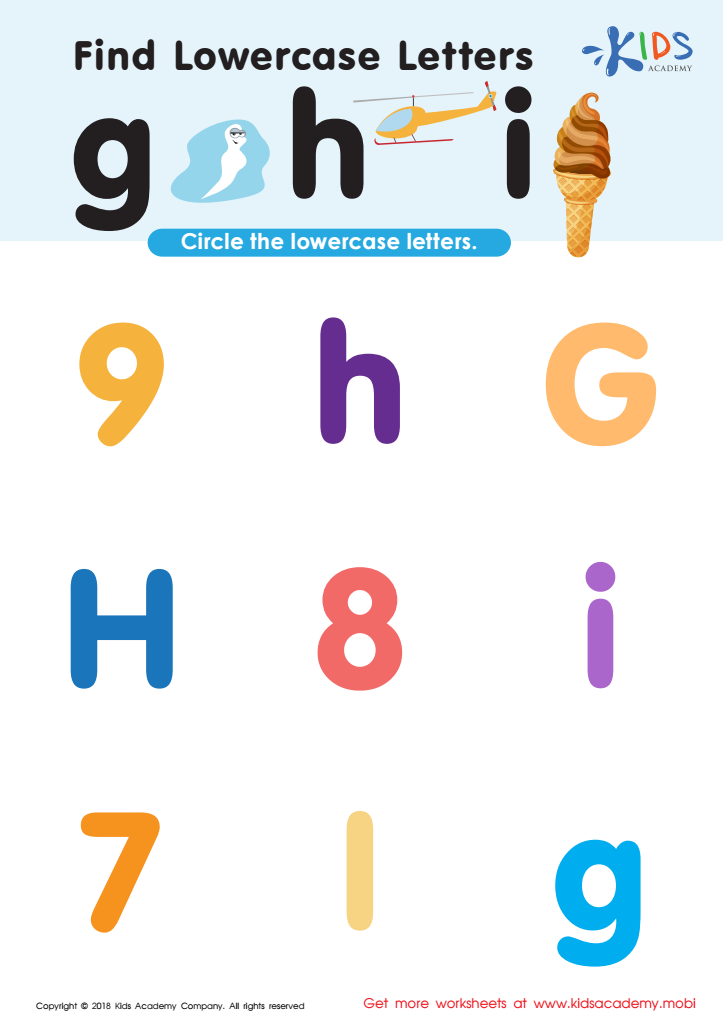
Find Lowercase Letters g h i Worksheet
 Assign to My Students
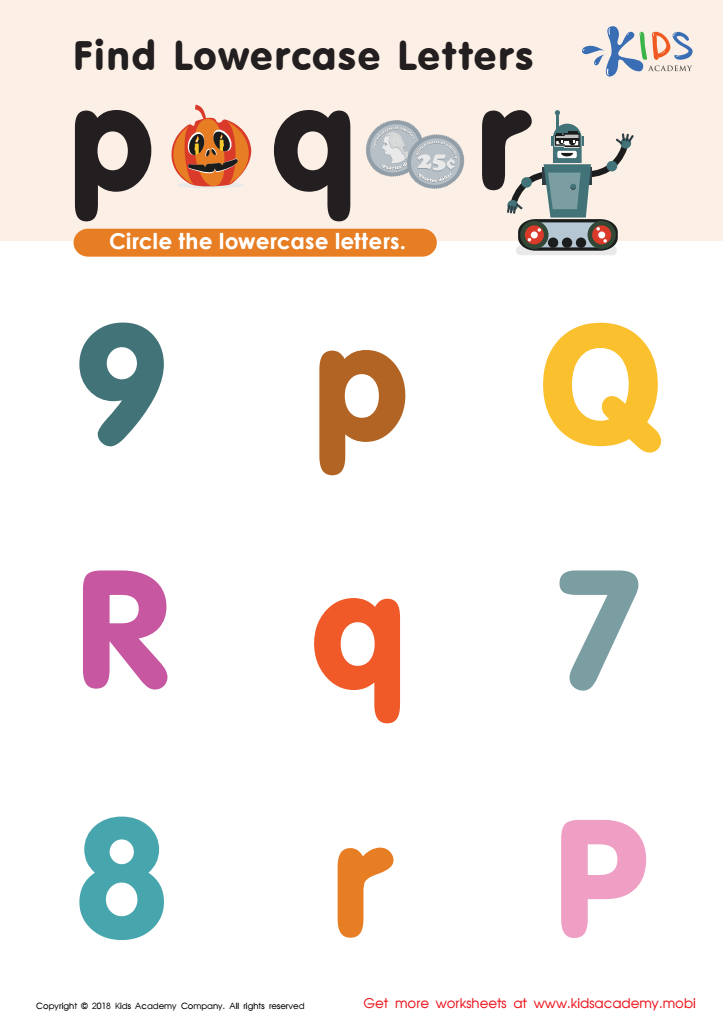
Find lowercase Letters p q r Worksheet
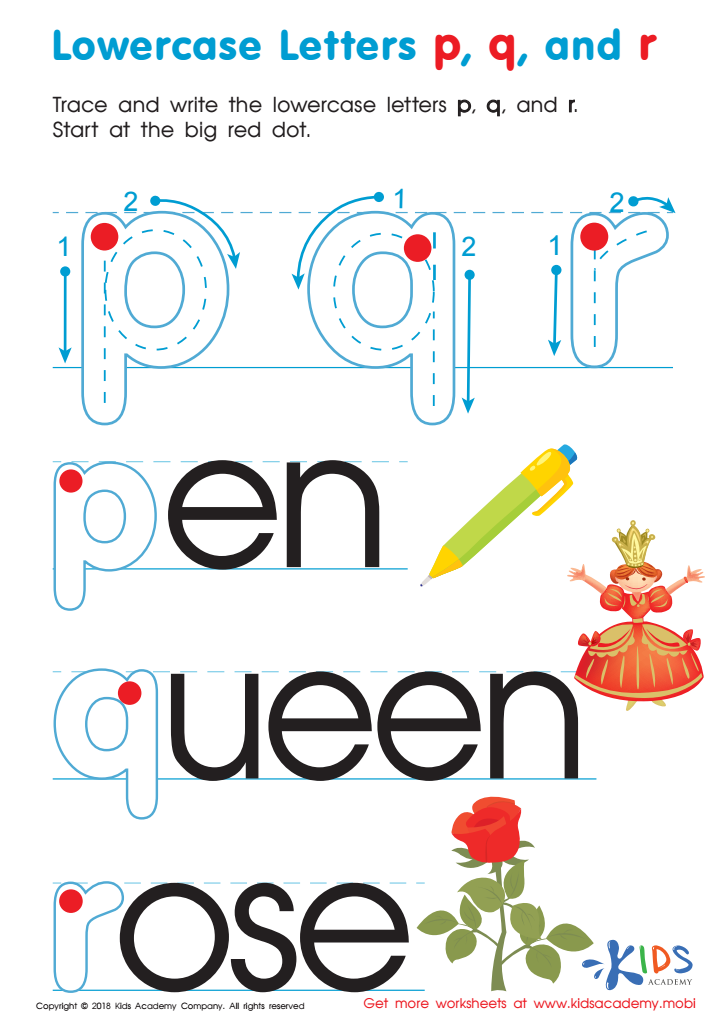
Lowercase Letters p q r Worksheet
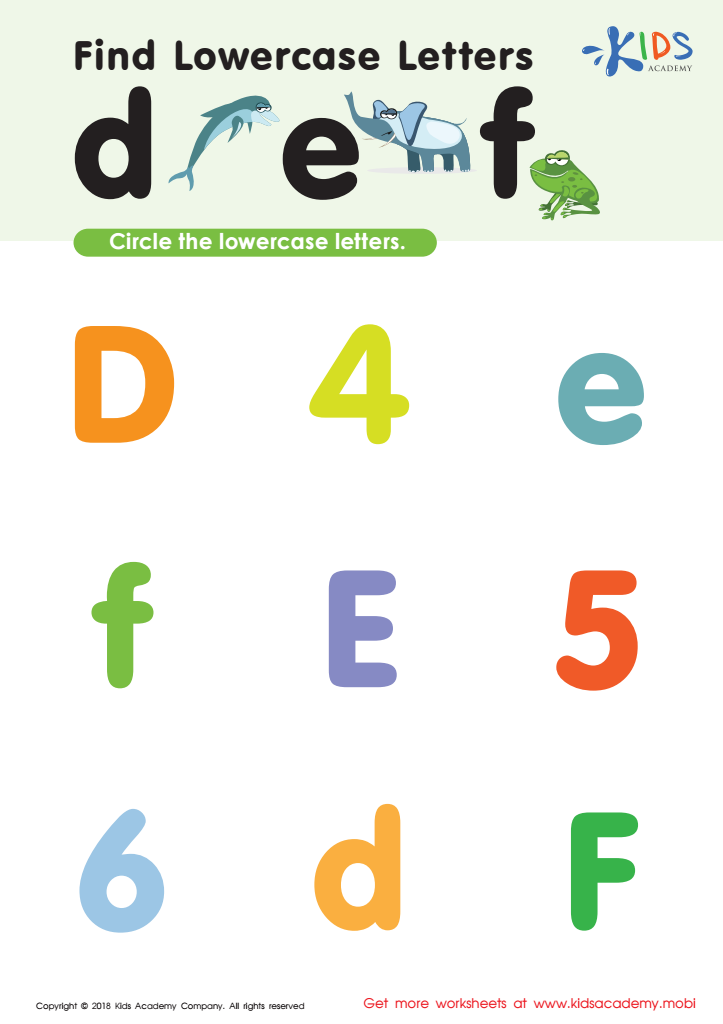
Find Lowercase Letters d e f Worksheet
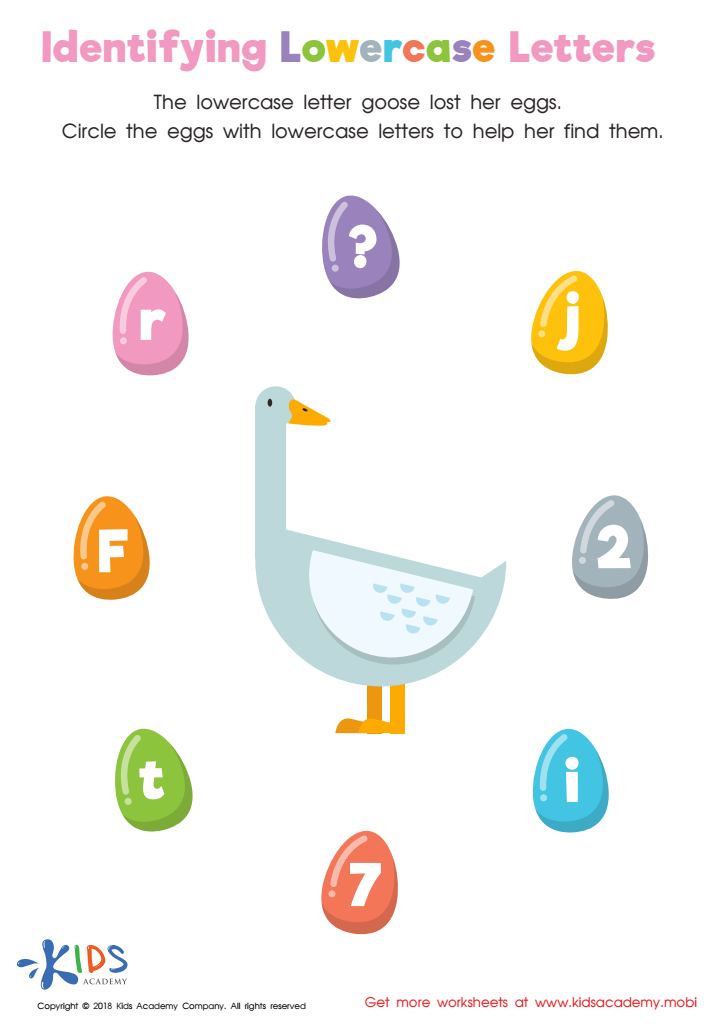
Identifying Lowercase Letters Worksheet
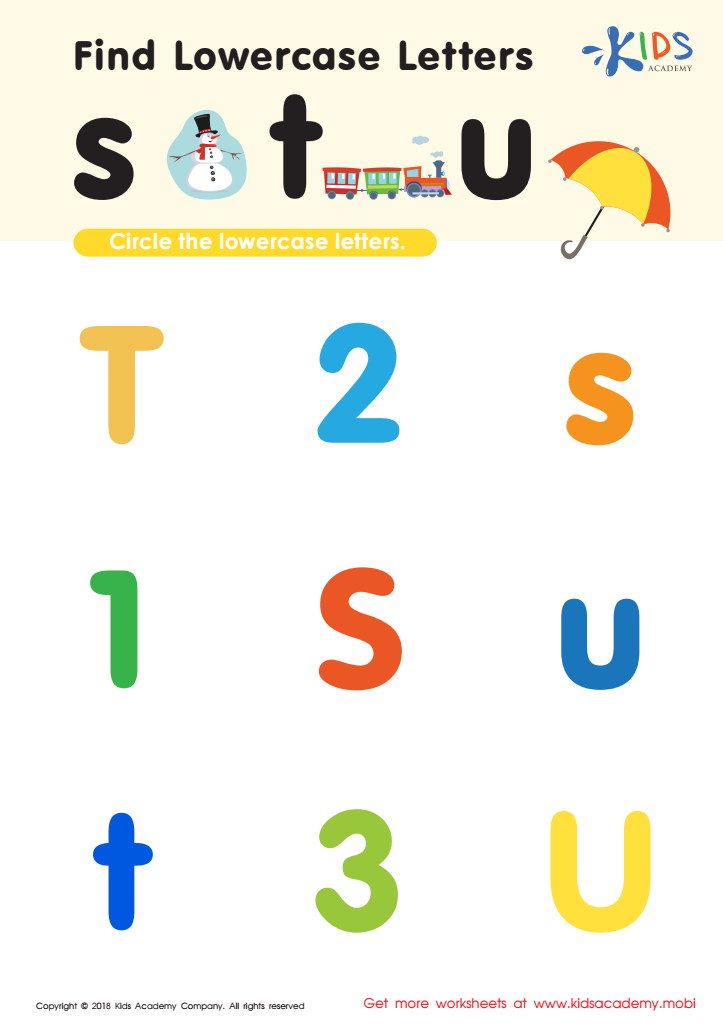
Find lowercase Letters s t u Worksheet
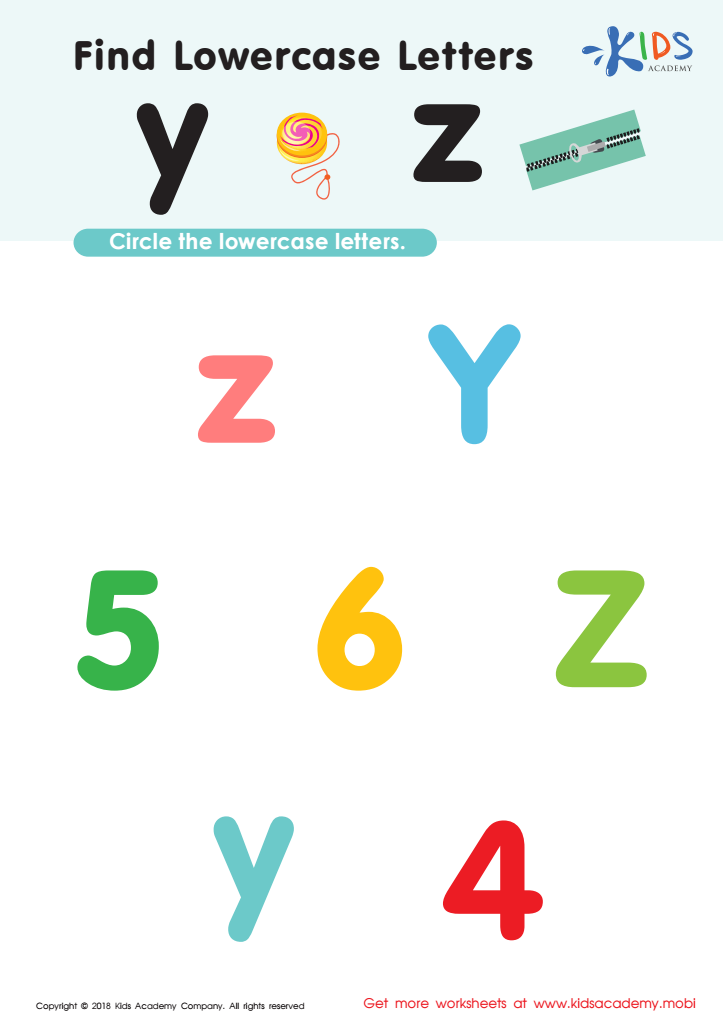
Find Lowercase Letters y z Worksheet
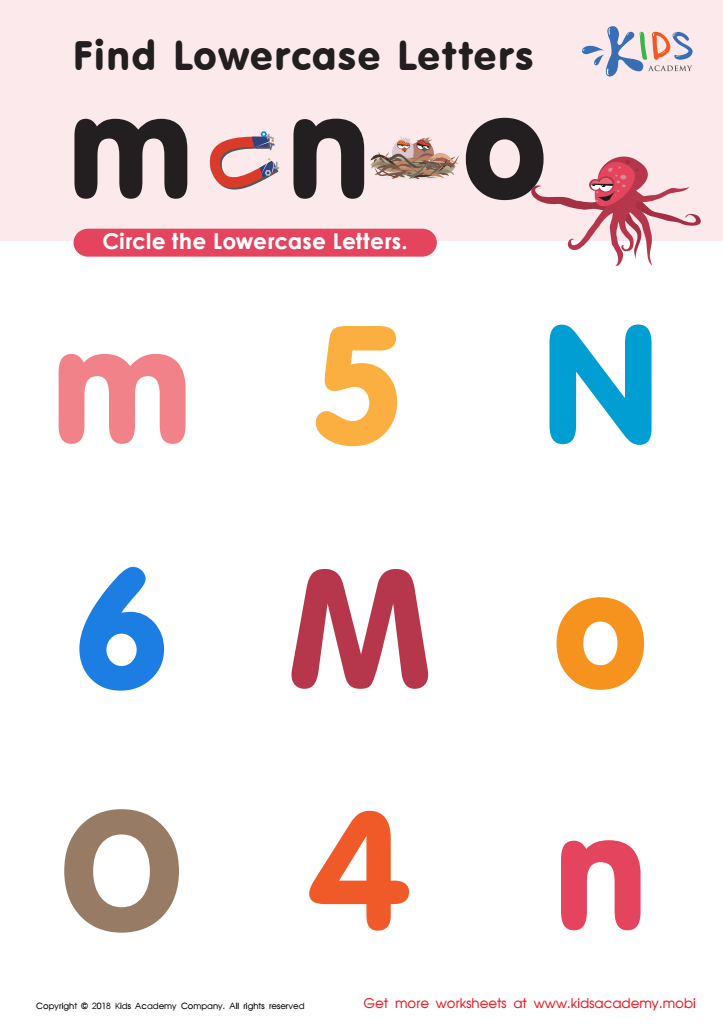
Find Lowercase Letters m n o Worksheet
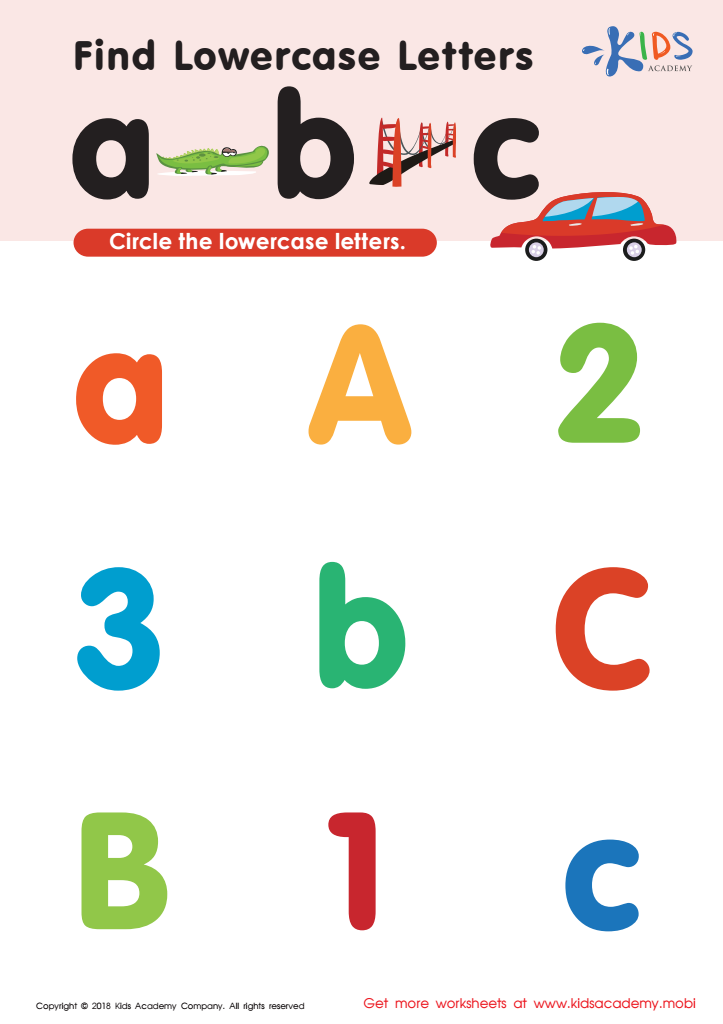
Find lowercase letters a b c Worksheet
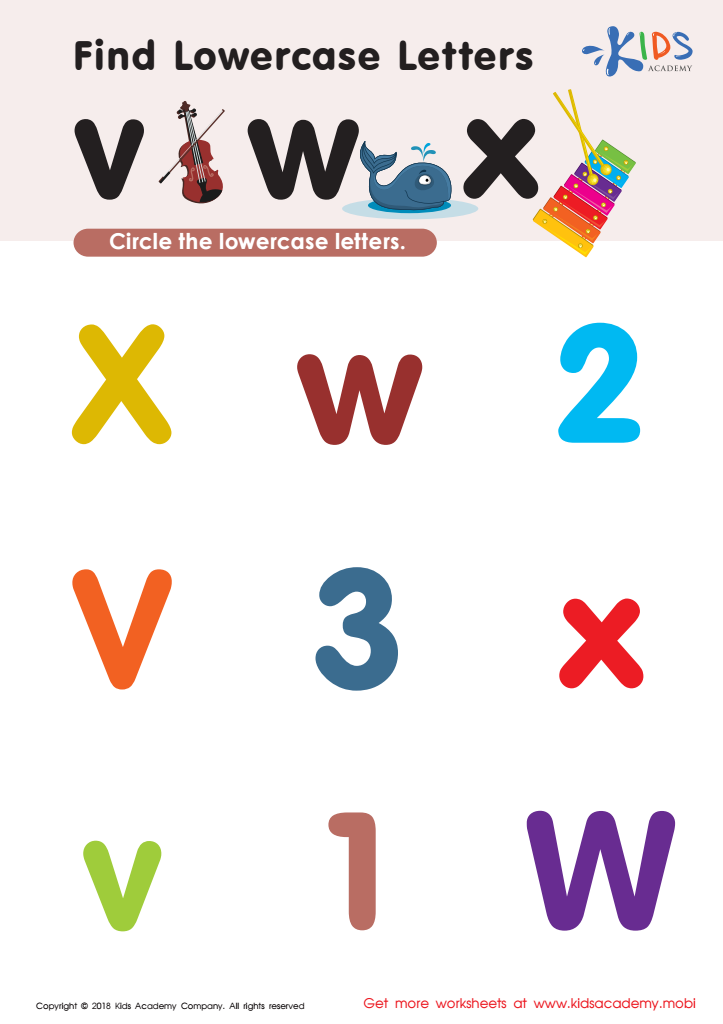
Find Lowercase Letters v w x Worksheet


Letter recognition, particularly of lowercase letters, is crucial for early literacy development. For parents and teachers, understanding this impacts children's reading and writing skills. Lowercase letters are predominant in texts, and mastering them lays the foundation for proficient reading. Children often encounter words in lowercase in their everyday experiences, so familiarity with these letters enhances their ability to decode and understand written language.
Furthermore, recognizing lowercase letters fosters self-confidence in young learners. Once children can identify these letters, they are more likely to attempt reading independently, boosting their motivation and engagement. This recognition also aids in writing, as children learn to form letters correctly, developing their fine motor skills and hand-eye coordination.
Additionally, early letter recognition is a predictor of future academic success. Children who can easily identify and sound out lowercase letters typically excel in various literacy assessments in later grades. For parents and teachers, promoting recognition through interactive games, reading aloud, and hands-on activities can significantly enhance a child's learning experience. By prioritizing lowercase letter recognition, caregivers equip children with essential tools for effective communication and academic achievement. Understanding its significance helps in designing a nurturing and enriching learning environment.