Counting skills Normal Grade 1 Addition Worksheets
3 filtered results
-
From - To
Boost your child's mathematical skills with our Normal Grade 1 Addition Worksheets, designed to enhance counting and addition abilities. These worksheets provide engaging exercises tailored for first graders, helping them to understand foundational math concepts effortlessly. Each worksheet features colorful and interactive problems that make learning fun and effective. From simple counting tasks to more complex addition challenges, our resources build confidence and competence in young learners. Perfect for both classroom use and homeschooling, these worksheets are a vital tool in fostering early arithmetic skills for children. Download now to give your child the added advantage in math!
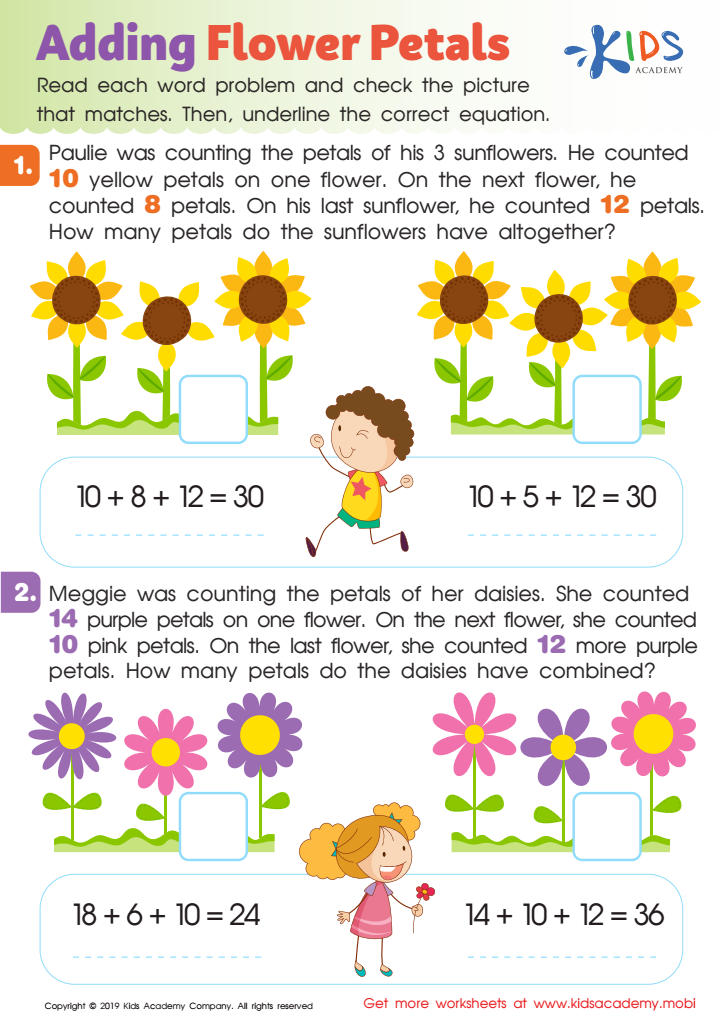
Adding Flower Petals Worksheet
 Assign to My Students
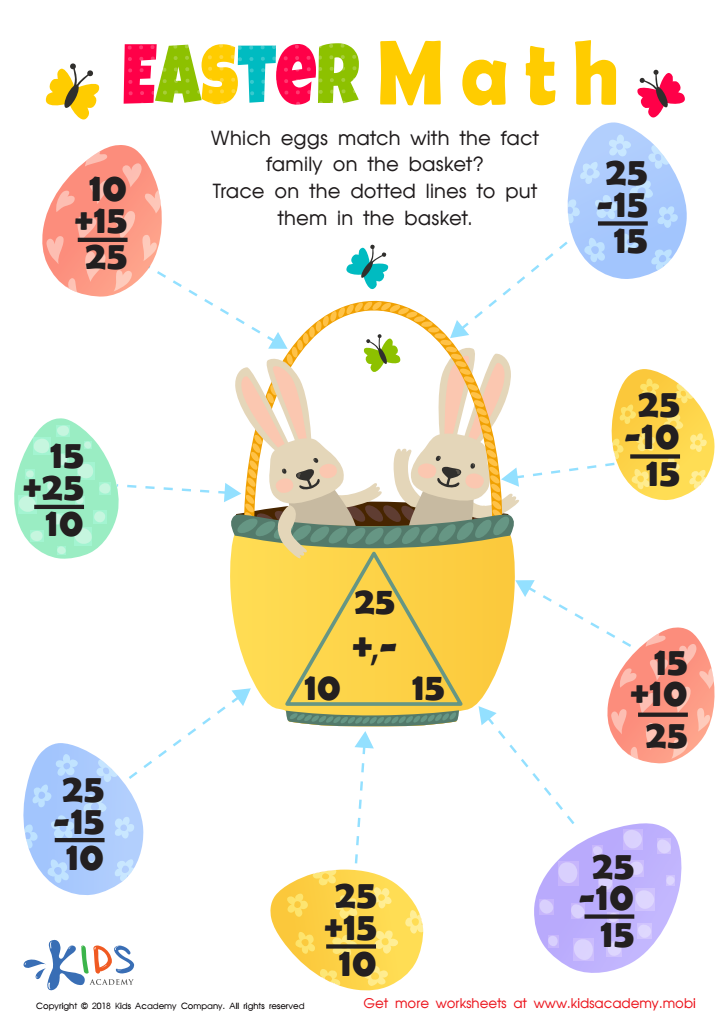
Fact Families: Easter Math Worksheet
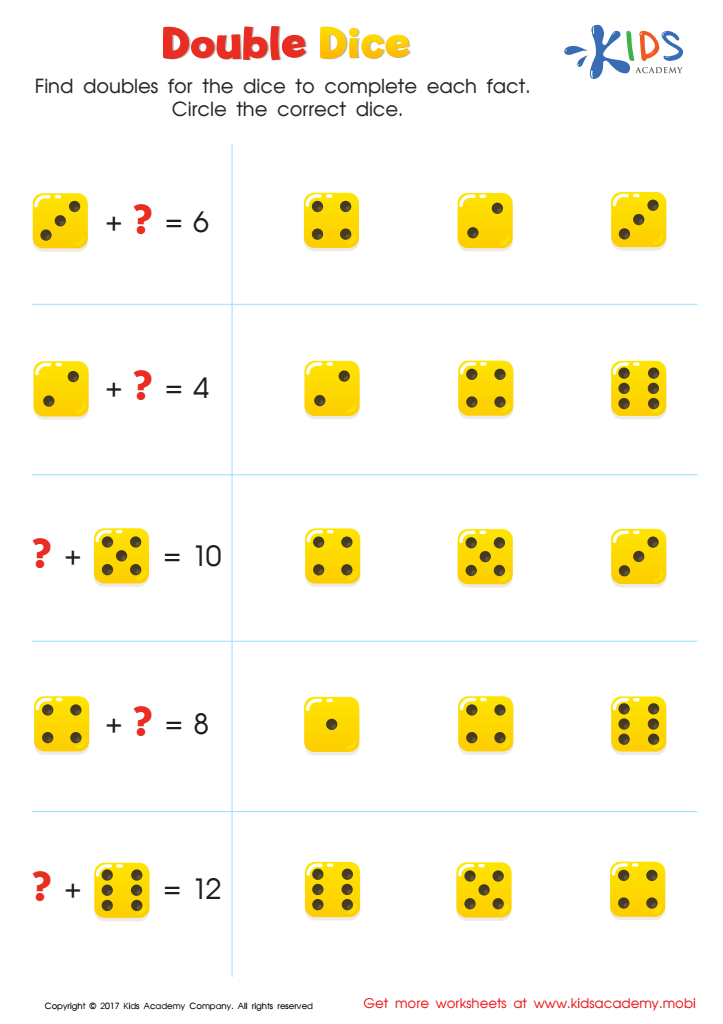
Addition Facts: Double Dice Worksheet








Counting skills and basic addition are essential building blocks for a child's mathematical development and overall academic success in the first grade. These foundational skills are critical for several reasons:
-
Numerical Understanding: Mastery of counting helps children understand the concept of numbers and their order. This understanding is crucial as it provides the groundwork for tackling more complex mathematical concepts in subsequent grades.
-
Problem-Solving Abilities: Early addition teaches children basic problem-solving and analytical skills. By learning to add numbers, children begin to develop logical thinking and reasoning, which are essential skills in every subject and in everyday life.
-
Confidence Building: Proficiency in counting and addition instills a sense of achievement and boosts self-confidence. Children who feel confident in their math skills are more likely to participate in class and are eager to tackle new challenges.
-
Linking to Real World: Counting and basic addition are practical skills used in daily life, such as in making purchases, telling time, and measuring ingredients in a recipe. When children recognize the usefulness of what they are learning, they are more engaged and motivated to learn.
-
Educational Foundation: Competence in early math skills sets the stage for future learning.