Categorizing objects Normal Worksheets
4 filtered results
-
From - To
Welcome to our "Categorizing Objects Normal Worksheets" page, designed to enhance children's cognitive skills through engaging activities. These worksheets help young learners identify, sort, and classify various objects based on distinct characteristics. By practicing categorization, students improve their critical thinking and organizational skills while having fun. Our printable worksheets offer an array of themes and difficulty levels, catering to diverse learning needs. Perfect for classrooms, homeschooling, or summer learning, these resources support early education and reinforce essential concepts. Explore our collection to make learning enjoyable and effective, setting a strong foundation for your child's academic journey!
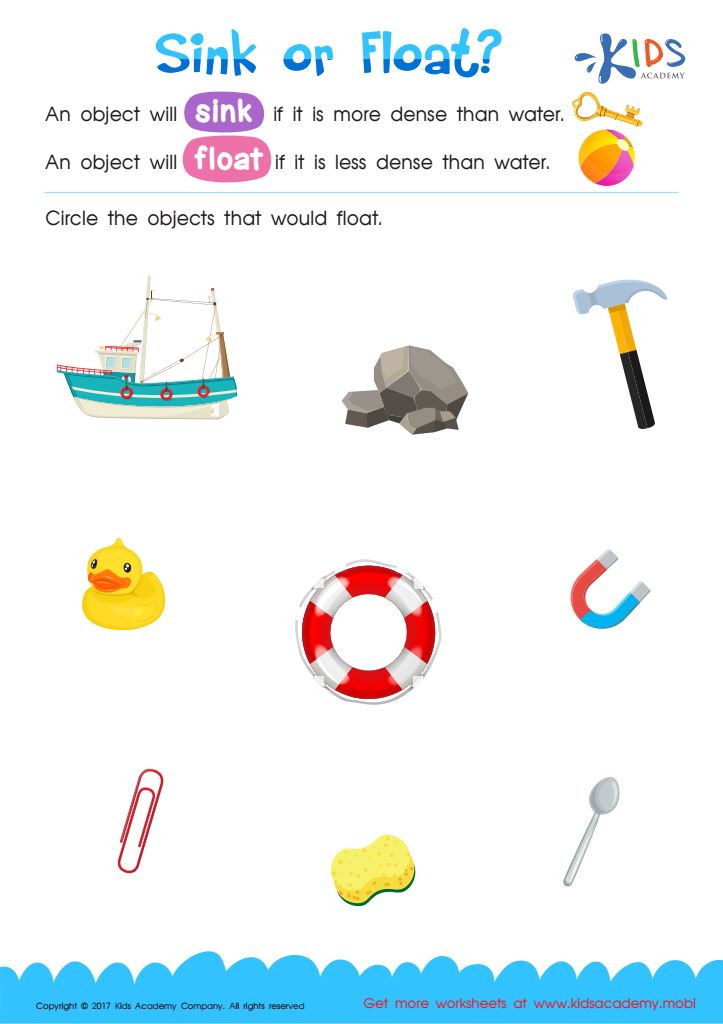
Sink or Float Printable
 Assign to My Students
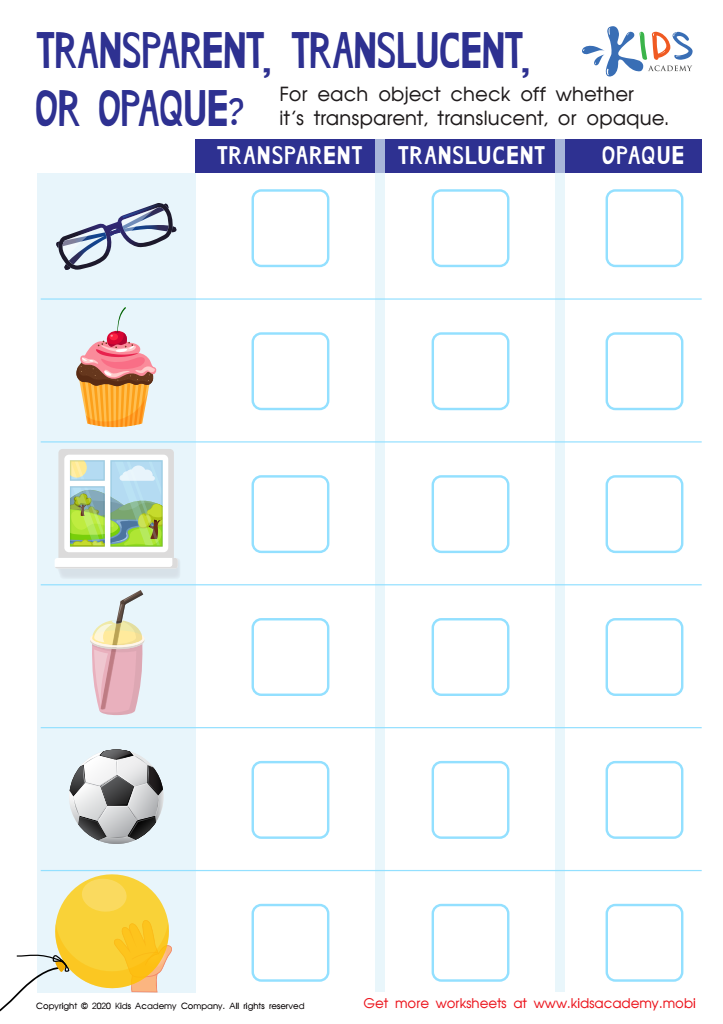
Transparent, Translucent, or Opaque Worksheet
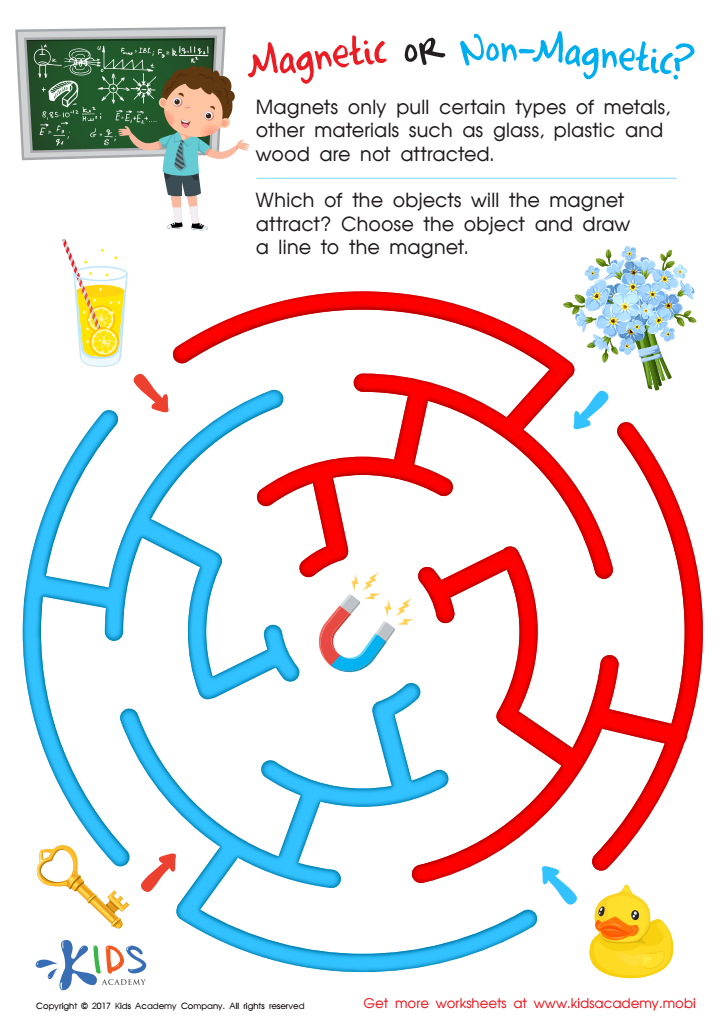
Magnetic or Non–Magnetic Worksheet
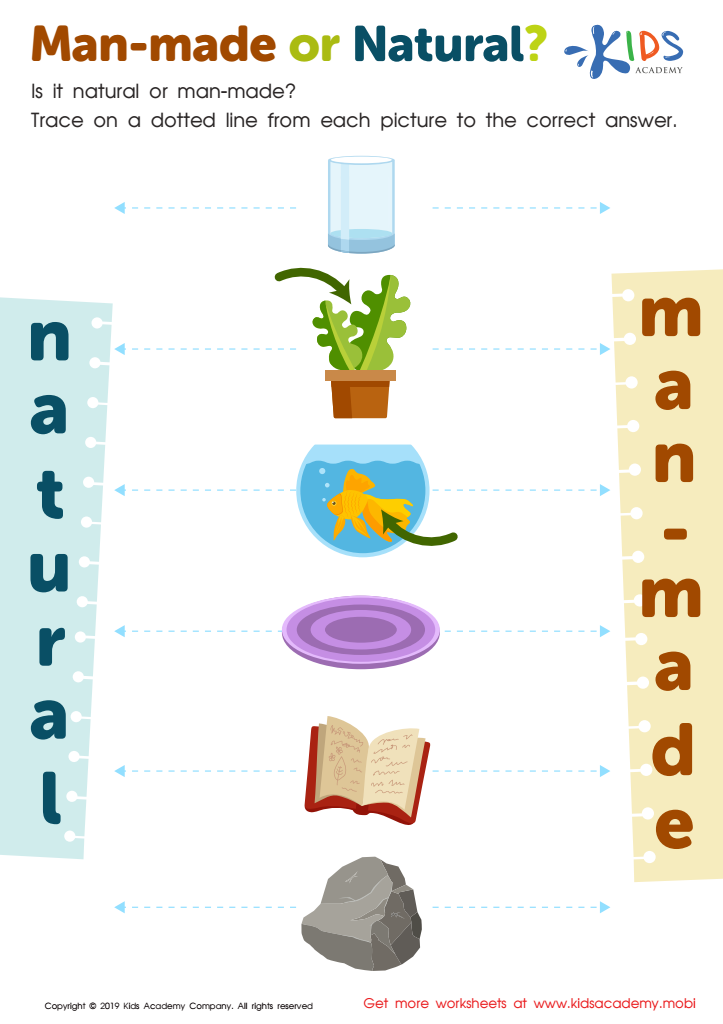
Man-Made or Natural? Worksheet




Categorizing objects is a crucial educational practice for early-grade children because it serves as a foundational cognitive skill. When parents and teachers encourage children to classify objects based on attributes such as size, color, shape, or function, they lay the groundwork for critical thinking and reasoning abilities.
First, categorization fosters pattern recognition. Children learn to observe relationships and similarities among objects, which enhances their ability to connect concepts across various subjects. This foundational skill is vital in understanding mathematics and science principles later in their education.
Moreover, categorizing helps improve language development. As children learn to label and describe different categories, they expand their vocabulary and communication skills, which are essential in all areas of learning.
Additionally, this skill fosters problem-solving abilities. Children who can categorize objects effectively begin to apply these logical processes in decision-making and everyday situations, cultivating independence and confidence.
Finally, by engaging children in categorization activities, parents and teachers promote social skills. Group activities, such as sorting objects, encourage collaboration, negotiation, and respectful disagreement. Overall, supporting the development of categorization skills is integral to providing a well-rounded education that prepares children for future academic challenges and life experiences.








