
Letter Tracing Practice Normal Worksheets
6 filtered results
Difficulty Level
Grade
Age
-
From - To
Subject
Activity
Standards
Discover our comprehensive "Letter Tracing Practice Normal Worksheets" designed to enhance your child's handwriting skills and letter recognition. These engaging worksheets provide a structured approach for young learners to practice tracing both uppercase and lowercase letters. Each page features clear, spacious lines that guide children in forming letters correctly, fostering confidence and fine motor development. Perfect for preschool and kindergarten students, these worksheets combine fun and education, making learning an enjoyable experience. Download our printable resources today and help your child master the fundamentals of writing with ease and flair! Ideal for home and classroom use.
Favorites
With answer key
Interactive
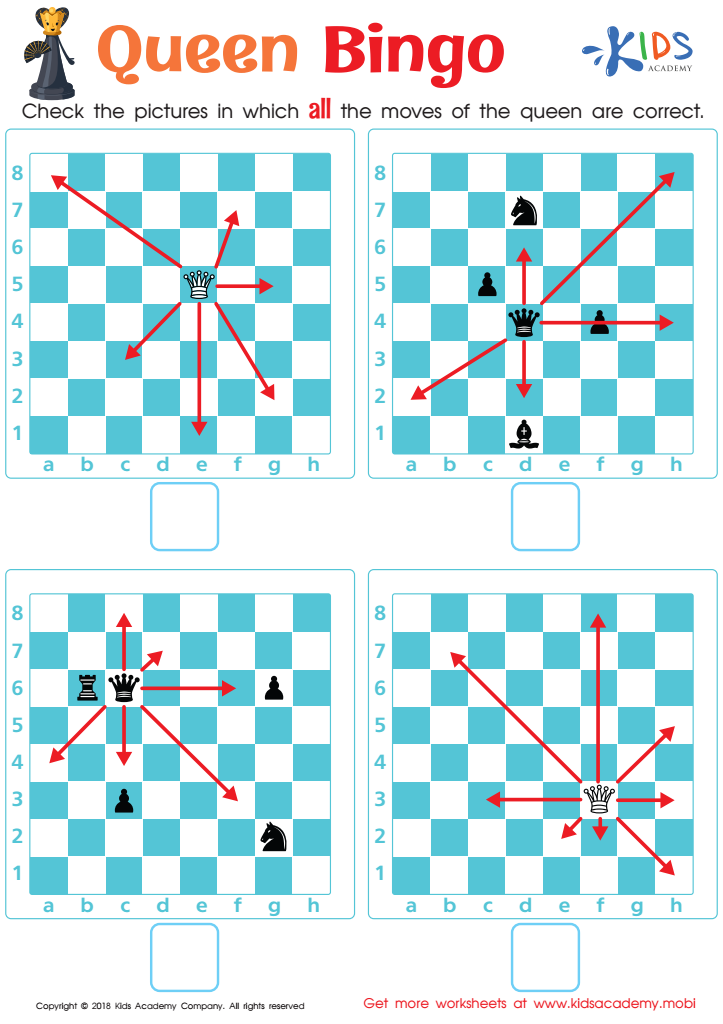
Queen Bingo Worksheet
Test your child's knowledge of chess rules and moves with this free worksheet! Kids look at four pictures and must decide if the queen moves are correct. This exercise helps hone your little one's chess skills!
Queen Bingo Worksheet
Worksheet
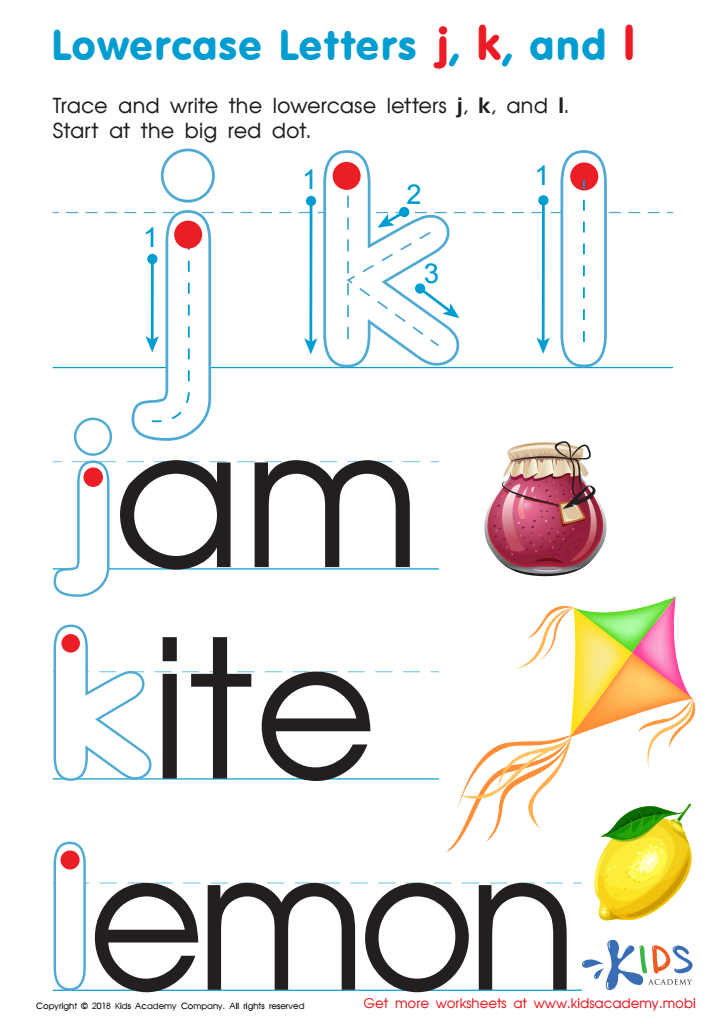
Lowercase Letters j k l Worksheet
Teach your child the difference between uppercase and lowercase letters. Have them trace and write the lowercase letters j, k, and l, starting at the red dot. Guide your child's hand to form the letters correctly.
Lowercase Letters j k l Worksheet
Worksheet
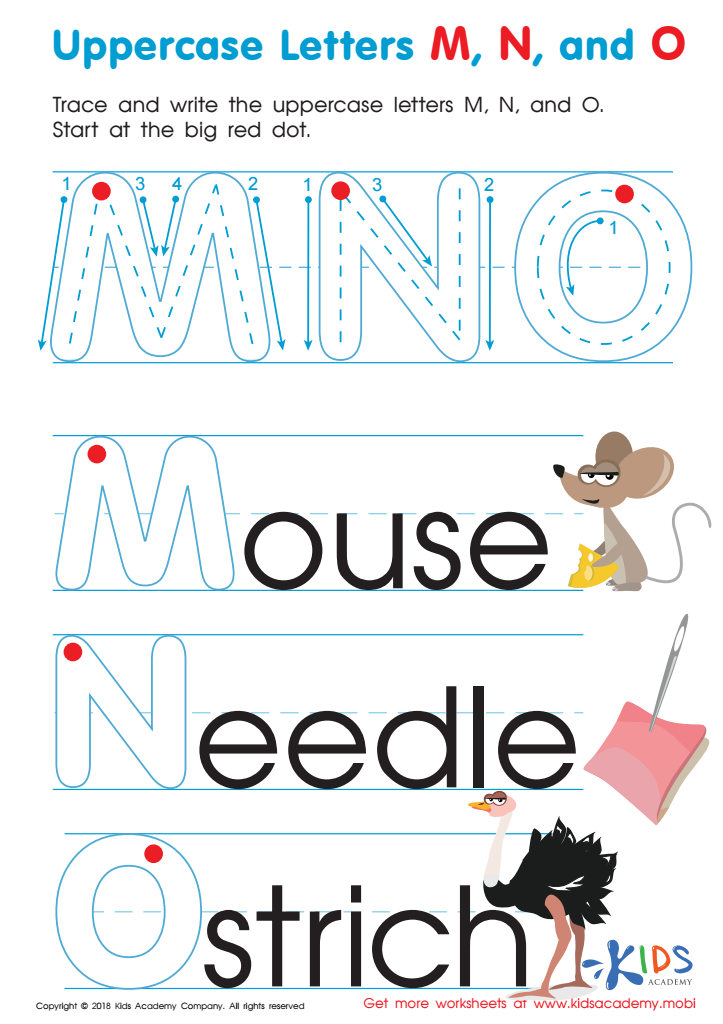
Uppercase Letters M, N, and O Worksheet
Download our easy-to-understand worksheet to help kids write M and N with ease! They'll trace dotted lines and follow arrows as they fill in the letters using a big red dot as a guide. The cute graphics will help them remember sounds too! Get your child writing quickly and confidently with this fun activity.
Uppercase Letters M, N, and O Worksheet
Worksheet
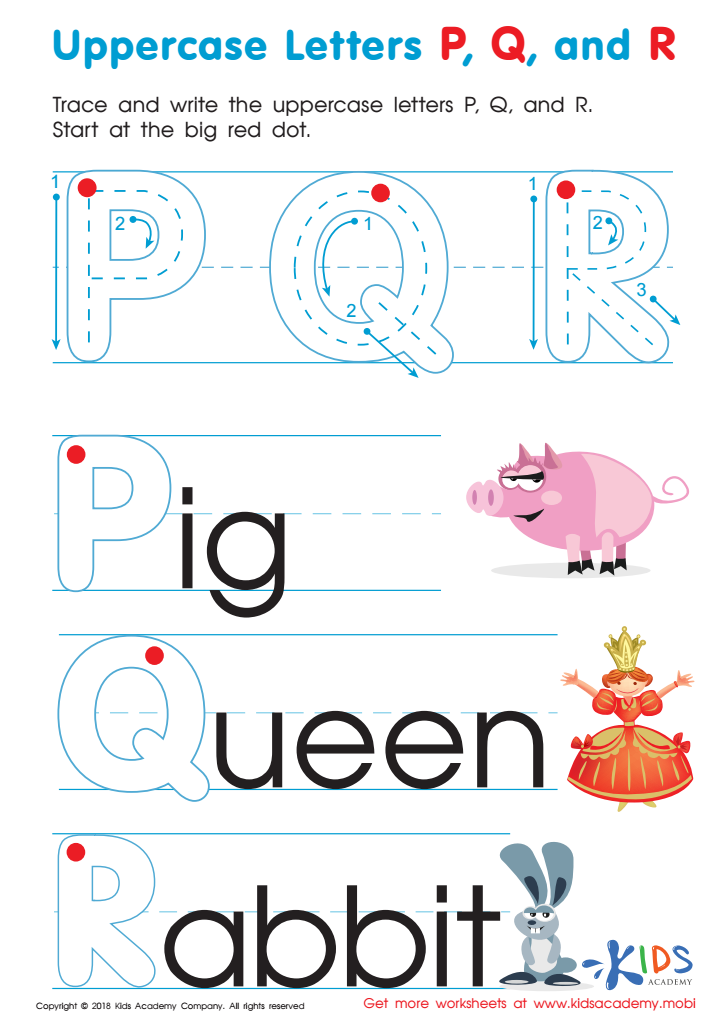
Uppercase Letters P, Q, and R Worksheet
Cute images of a pig, queen and rabbit make it fun to learn letter sounds. Follow the arrows to learn the strokes, then trace each letter from the big red dot. Perfect for kids to learn how to read and write P, Q, and R!
Uppercase Letters P, Q, and R Worksheet
Worksheet
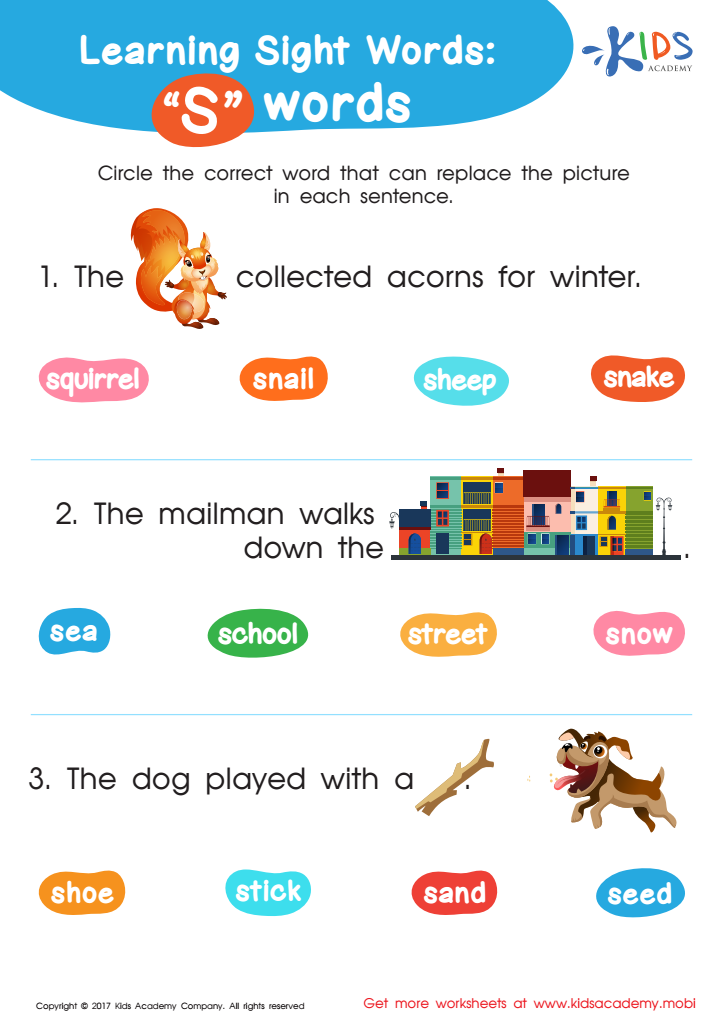
S Words Sight Words Worksheet
This 2nd grade worksheet encourages kids to practice using context clues when identifying sight words that begin with 's'. Engage them with colorful pictures to enhance the learning, helping them to understand the context of each sentence and choose the correct word.
S Words Sight Words Worksheet
Worksheet
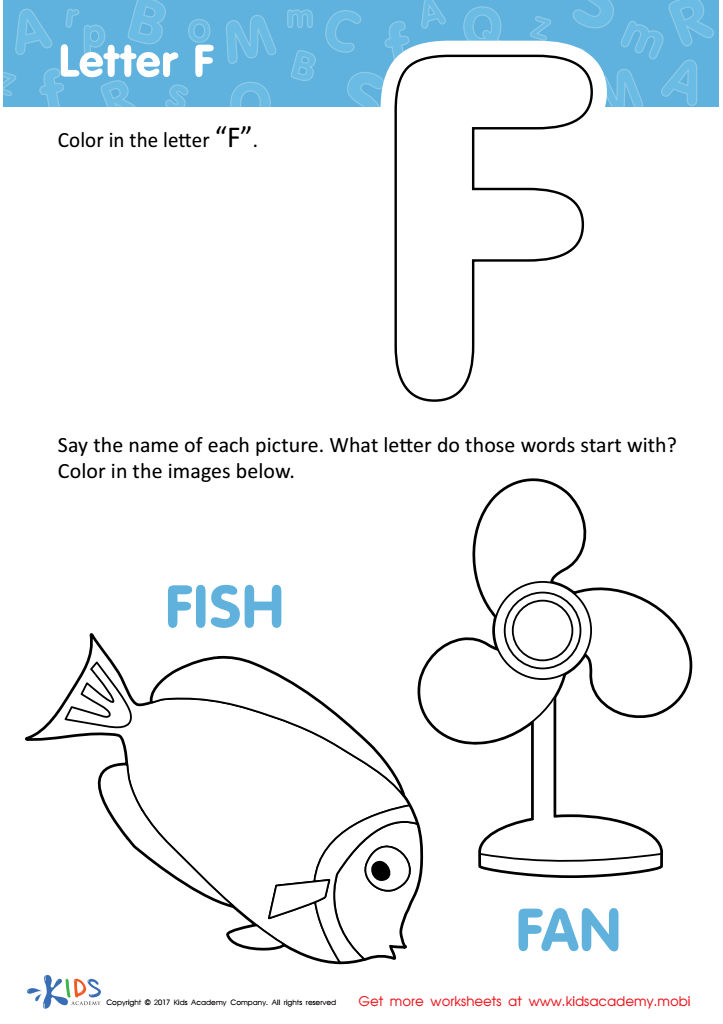
Letter F Coloring Sheet
Coloring pages help kids learn to recognize letters and sounds. Our "F" page has kids color a fish and a fan. It's a great way to introduce them to the letter "F" using words they already know.
Download (PDF)
 Assign to My Students
Assign to My Students
Letter F Coloring Sheet
Worksheet
Join Kids Academy for Free
Who is primarily going to use this learning content?







Letter tracing practice is an essential early literacy skill that benefits both parents and teachers in various ways. Firstly, it aids in developing fine motor skills, which are crucial for young children as they learn to control writing instruments. When children trace letters, they enhance their hand-eye coordination, helping them master the physical act of writing.
Moreover, letter tracing practice reinforces letter recognition and promotes familiarity with the alphabet. Young learners who actively engage in tracing can better retain the shapes and sounds of letters, making the transition to independent writing more seamless. This practice fosters confidence, as children see their progress and ability to form letters aesthetically.
For parents, engaging in letter tracing activities creates valuable bonding time that supports their child’s educational journey. Teachers, on the other hand, can utilize tracing activities as versatile tools for diverse learning environments, accommodating different learning styles and paces.
Furthermore, consistent letter tracing can support the development of phonemic awareness, enhancing literacy skills as children begin to connect letters with sounds. Ultimately, letter tracing practice sets the foundation for future communication skills, making it an integral focus for both parents and educators in nurturing confident, competent readers and writers.








