
Hand-eye Coordination Normal Addition & Subtraction Worksheets
3 filtered results
Difficulty Level
Grade
Age
-
From - To
Subject
Activity
Standards
Boost your child's learning with our Hand-eye Coordination Normal Addition & Subtraction Worksheets! These thoughtfully designed worksheets help develop crucial hand-eye coordination skills while making math enjoyable. Each exercise encourages children to practice addition and subtraction in a playful manner, reinforcing their math abilities alongside fine motor skills. With vibrant visuals and engaging activities, students will easily grasp foundational math concepts. Ideal for early learners, parents, and educators, these worksheets are perfect for home or classroom use. Give your child a fun way to improve their math skills and coordination—download our worksheets today and watch them flourish!
Favorites
With answer key
Interactive
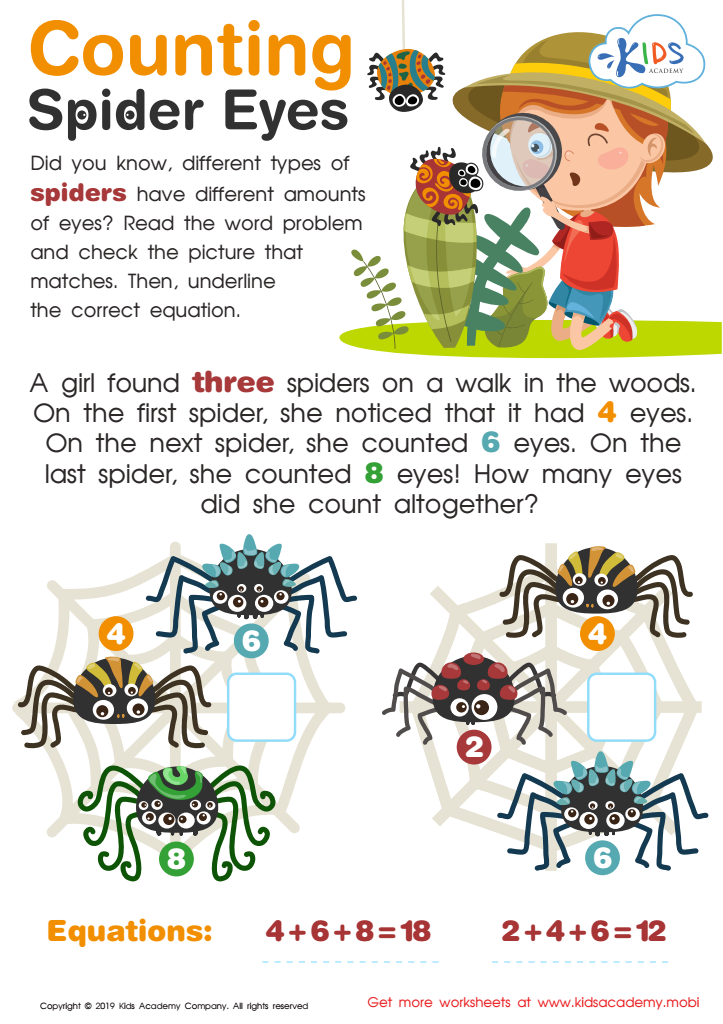
Counting Spider Eyes Worksheet
Did you know different spiders have different eye numbers? Kids will love learning this fact and solving the spider word problems on this free worksheet! Word problems promote a deeper understanding of the concept, plus they get to add up the spiders’ eyes while solving addition problems with more than one addend. Fun and math all in one!
 Assign to My Students
Counting Spider Eyes Worksheet
Worksheet
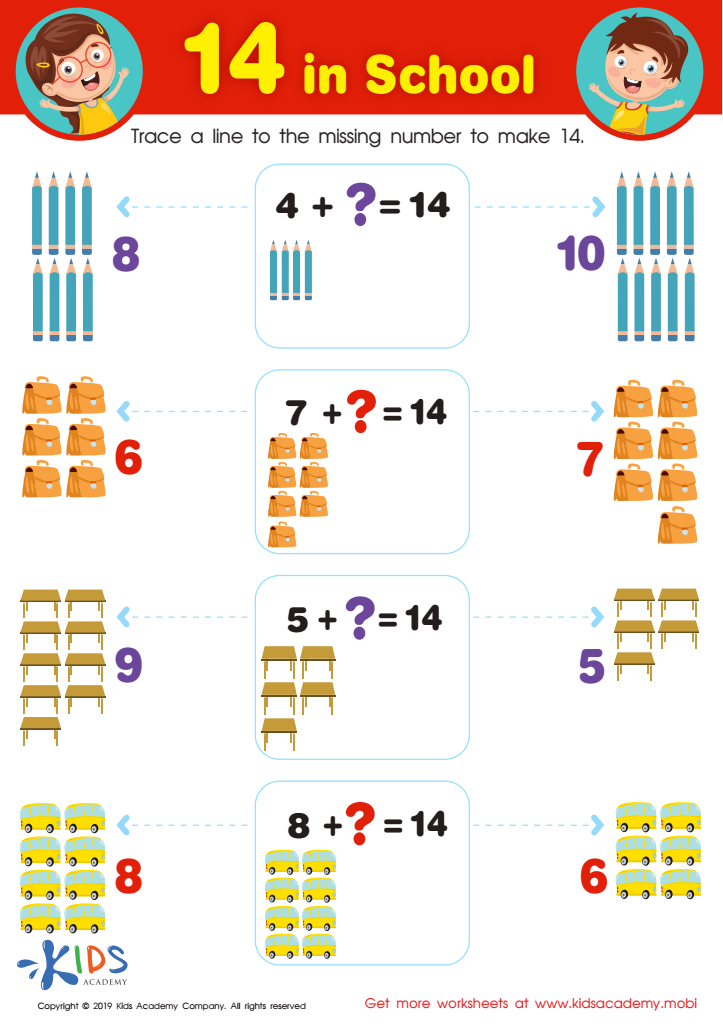
14 in School Worksheet
Remind your kids that adding different sets of numbers can give the same total (e.g. 2+3=5, 4+1=5). Ask them for more examples. Afterwards, work through the exercise. Help them count the objects and trace a line to the missing number that makes the total 14.
14 in School Worksheet
Worksheet
Join Kids Academy for Free
Who is primarily going to use this learning content?








Parents and teachers should prioritize hand-eye coordination and foundational math skills, such as normal addition and subtraction, because these abilities play a crucial role in a child's overall development. Hand-eye coordination is essential for various tasks, from writing and drawing to participating in sports and everyday activities. Improving this skill enhances fine motor control, aiding children's ability to perform well in school and in life.
Meanwhile, mastering basic math operations like addition and subtraction lays the groundwork for more intricate mathematical concepts. These skills not only help children solve problems but also develop critical thinking and reasoning abilities. Proficiency in these areas fosters a sense of confidence, significantly impacting academic performance and self-esteem.
Additionally, both hand-eye coordination and basic math skills promote cognitive development, encouraging children to engage with the world around them. Engaging in activities that improve these skills, such as puzzles or interactive games, can make learning enjoyable.
Supporting children in these areas ultimately equips them with essential life skills and prepares them for future academic challenges. For parents and teachers, investing time in enhancing these competencies is crucial for nurturing well-rounded and capable learners.








