Reading comprehension Normal Addition & Subtraction Worksheets
17 filtered results
-
From - To
Enhance your child's math and reading skills with our engaging Reading Comprehension Normal Addition and Subtraction Worksheets! Designed for early learners, these printable worksheets encourage students to practice basic addition and subtraction while also improving their critical reading abilities. Each worksheet features clear instructions and captivating scenarios that help children grasp mathematical concepts in context. With a variety of questions that blend math with literacy, students will develop both their math proficiency and comprehension skills effectively. Ideal for home and classroom use, these resources make learning fun and interactive, ensuring a strong foundation in both subjects. Perfect for young scholars eager to excel!
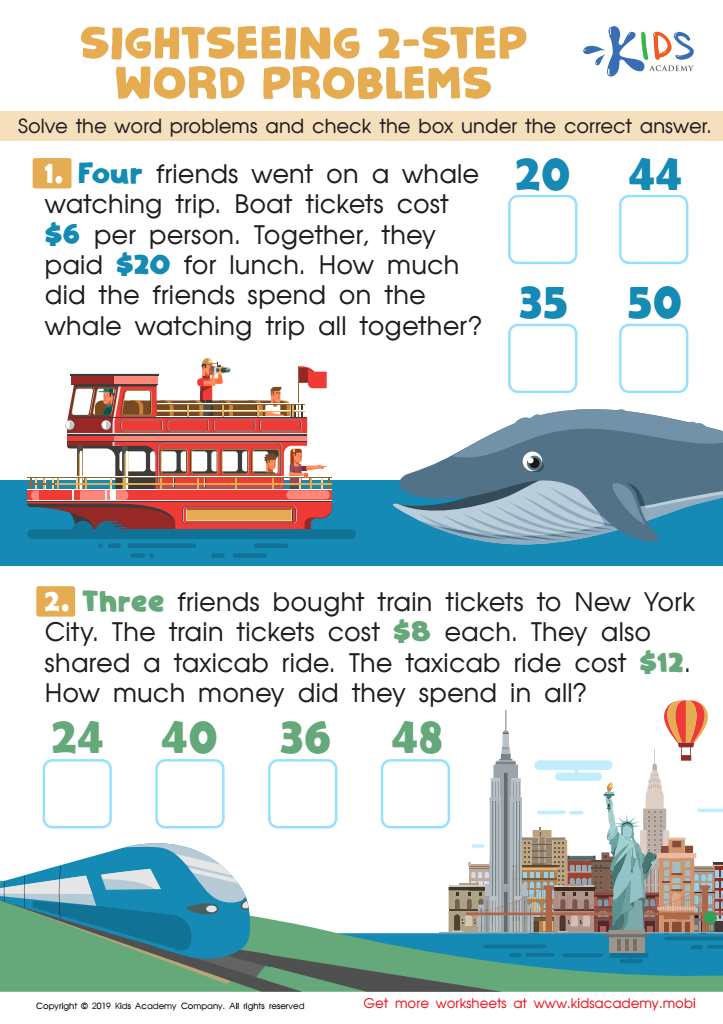
Sightseeing 2-Step Word Problems Worksheet
 Assign to My Students
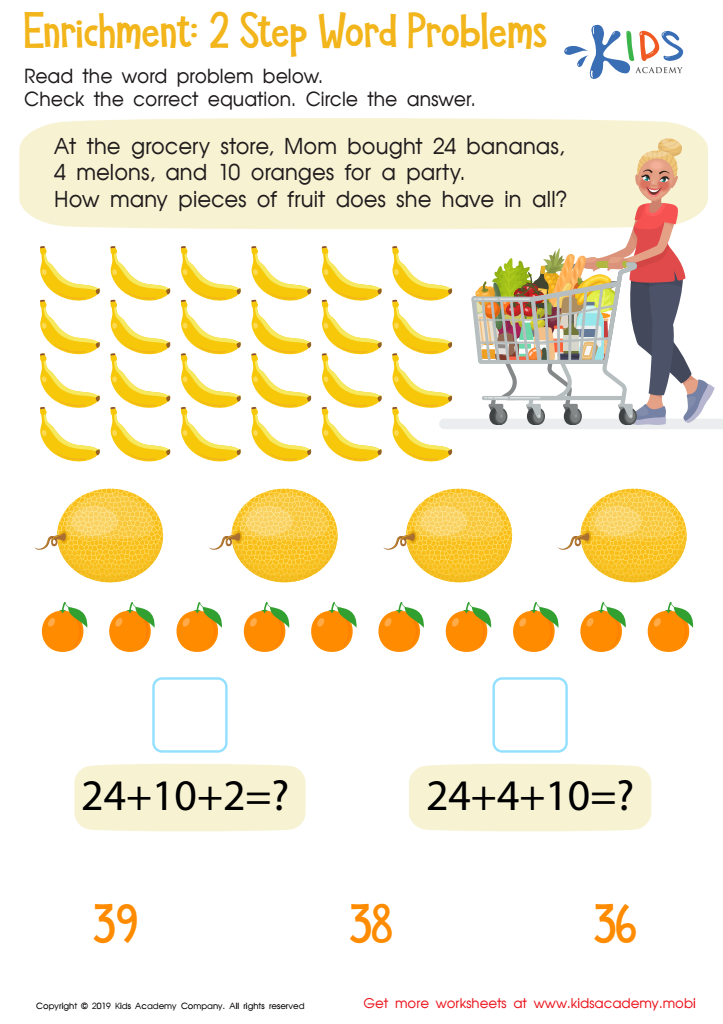
Enrichment -2 Step Word Problems Worksheet
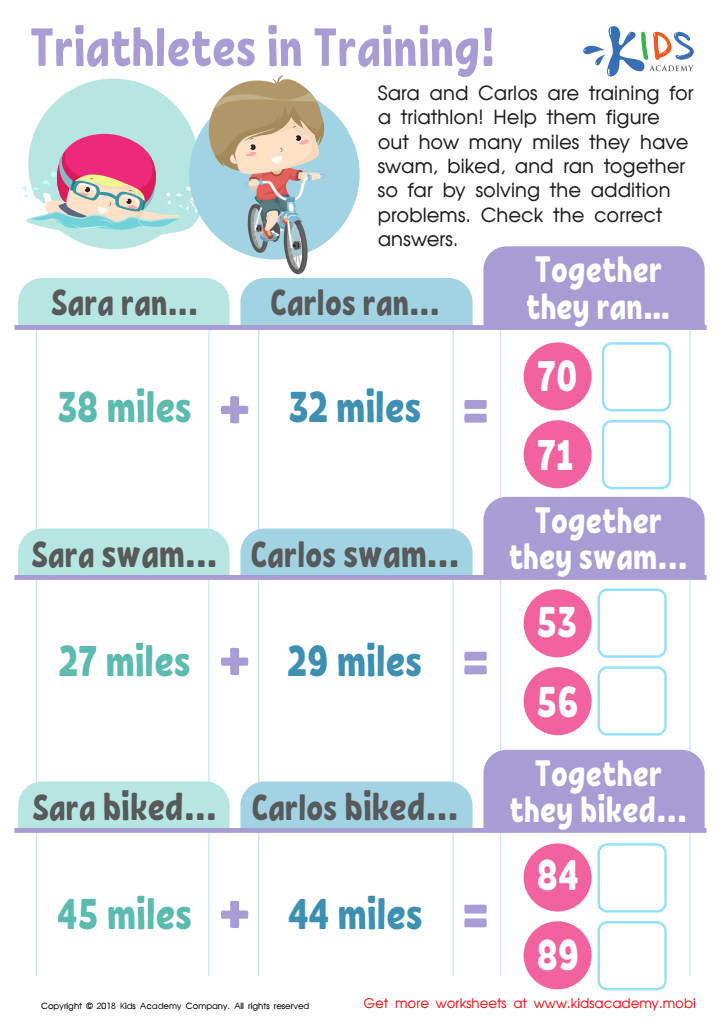
Triathletes in Training Worksheet
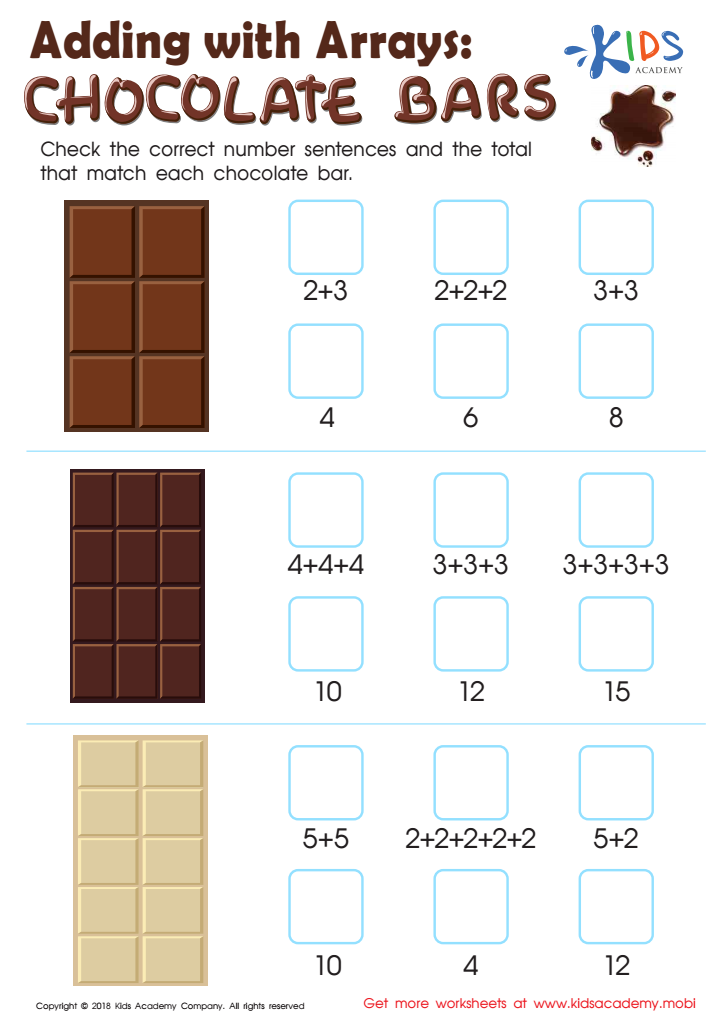
Adding with Arrays: Chocolate Bars Worksheet
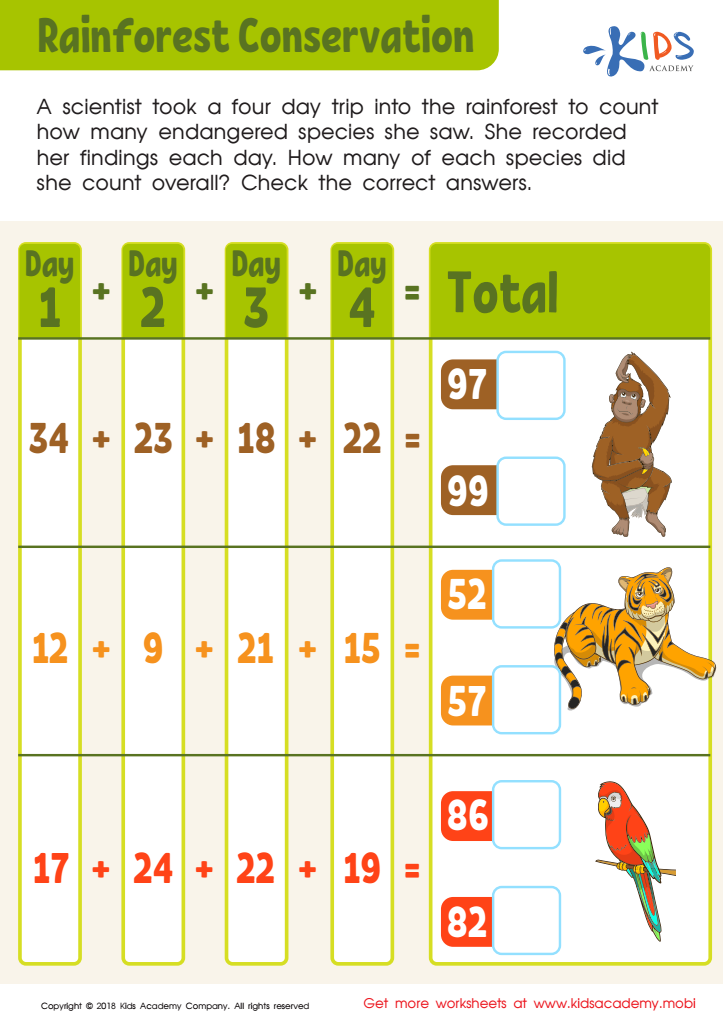
Rainforest Conservation Worksheet
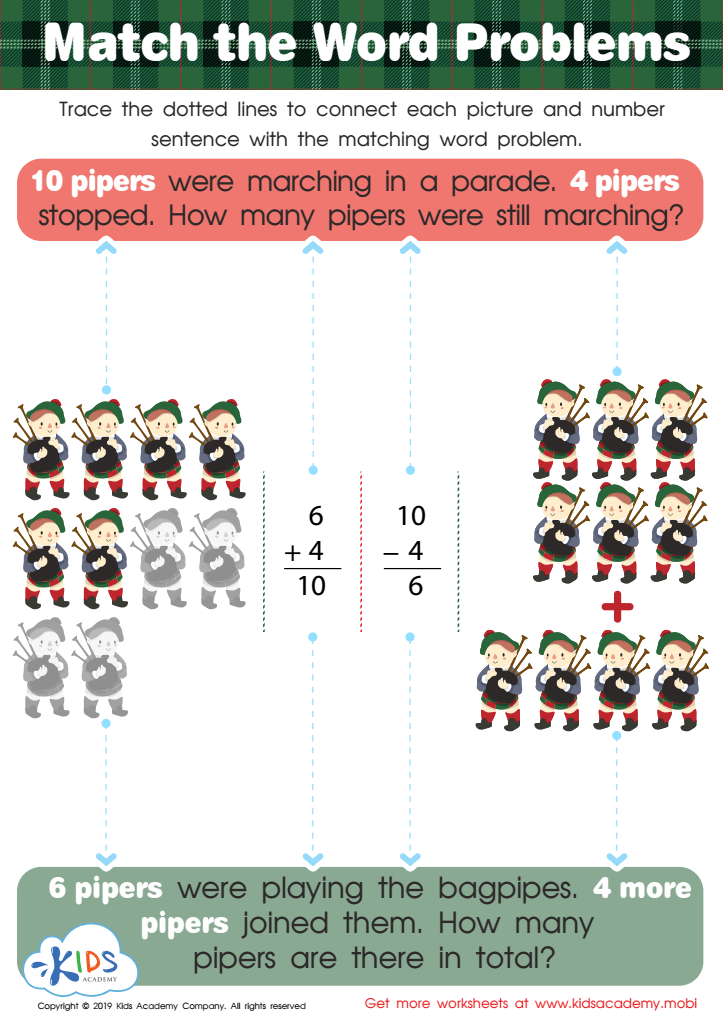
Match the Word Problems Worksheet
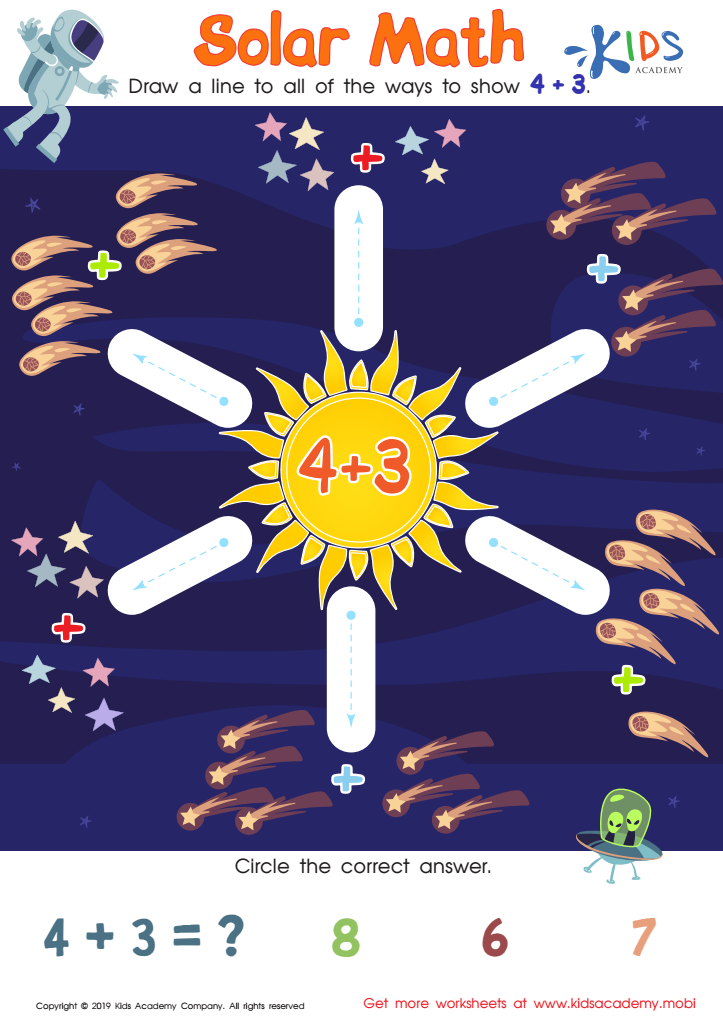
Solar Math Worksheet
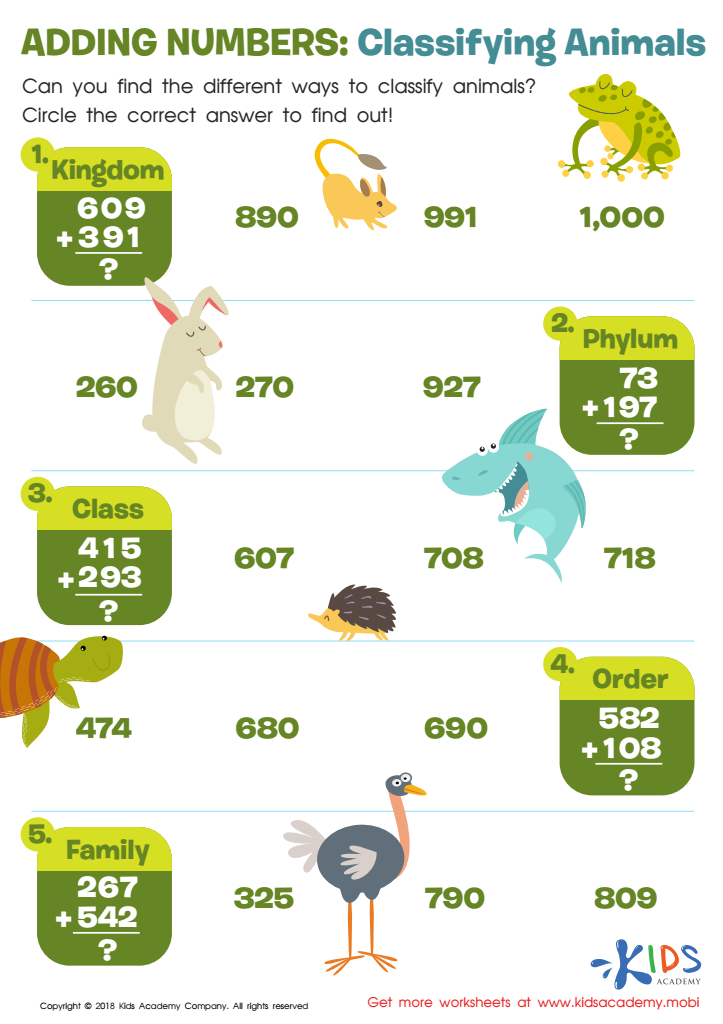
Adding Numbers: Classifying Animals Worksheet
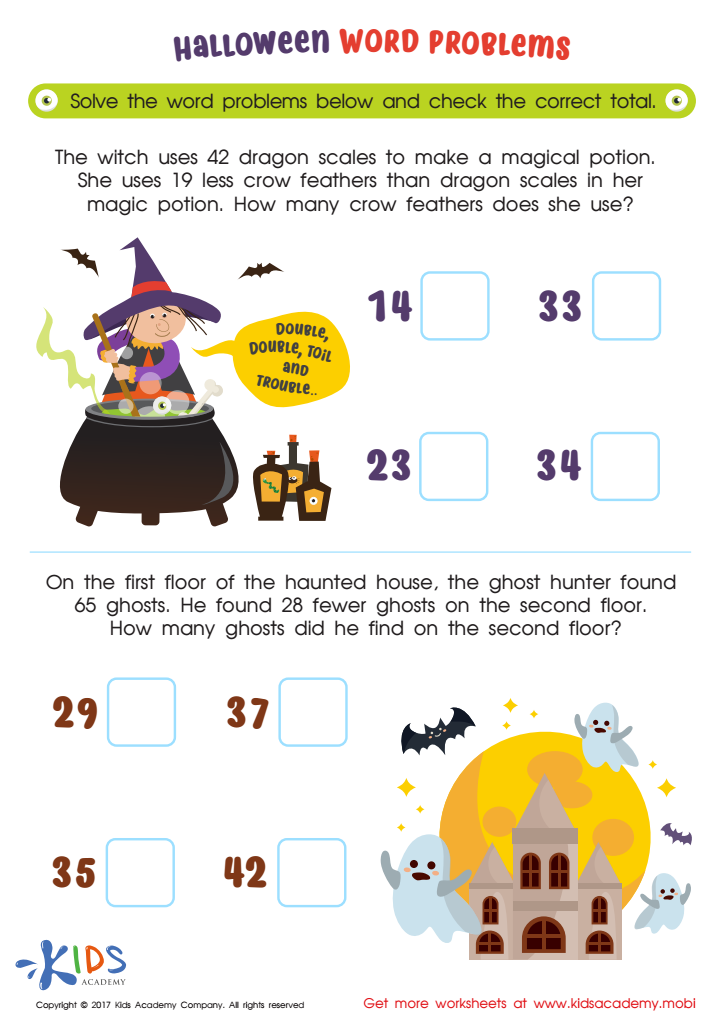
Halloween Word Problems Printable
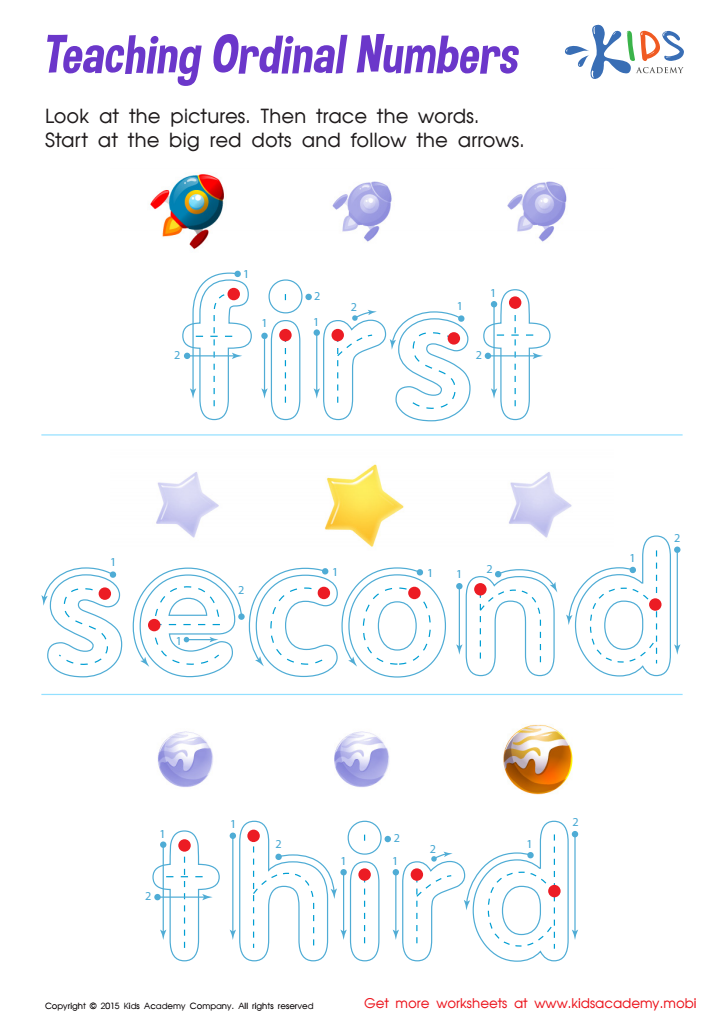
Ordinal Numbers: Teaching Ordinal Numbers Printable
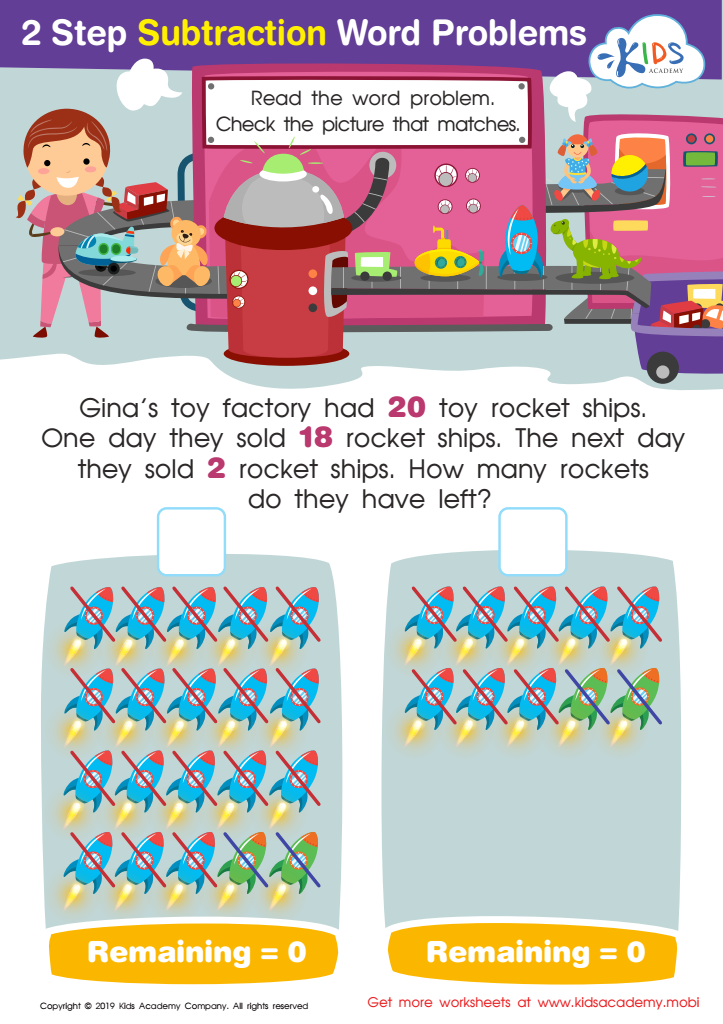
Step Subtraction Word Problems Worksheet
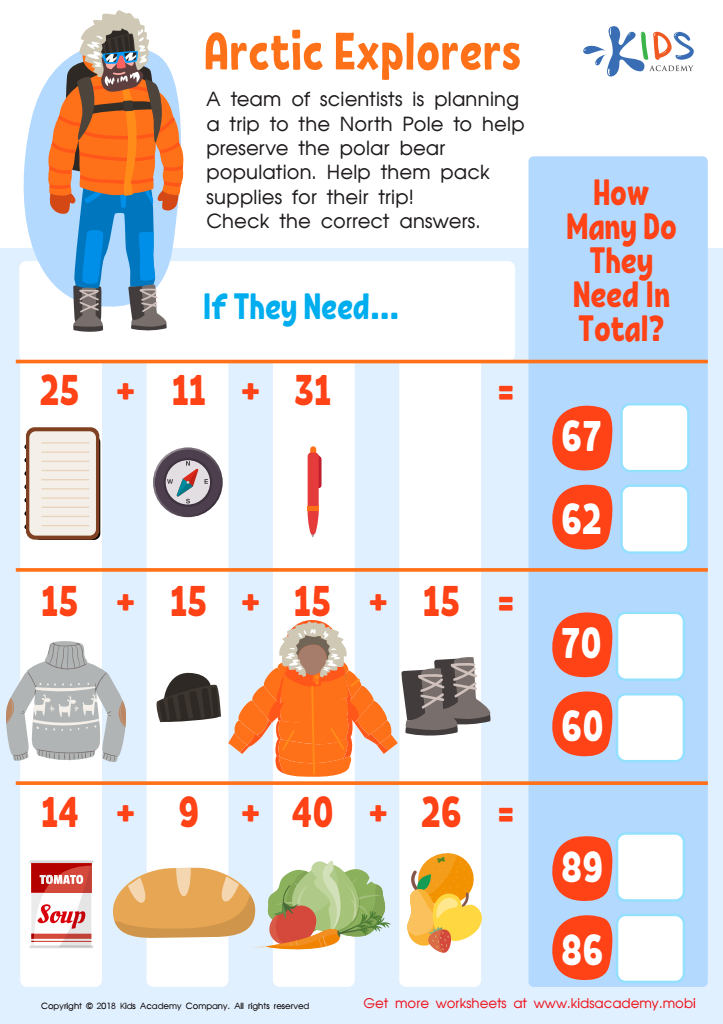
Arctic Explorers Worksheet
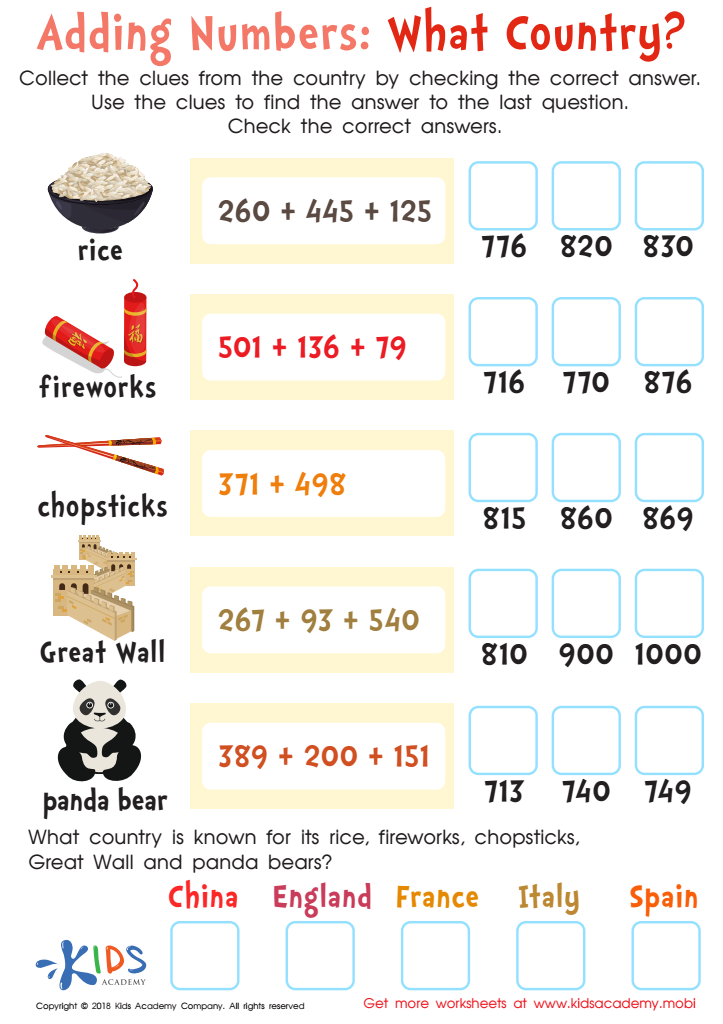
Adding Numbers: What Country Worksheet
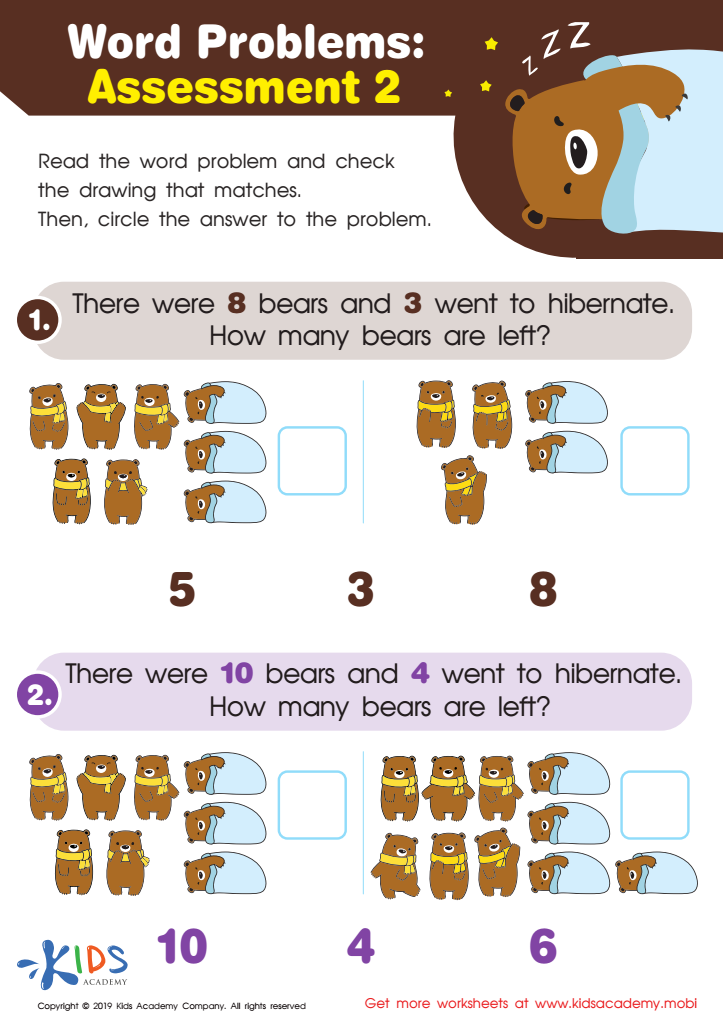
Word Problems: Assessment 2 Worksheet
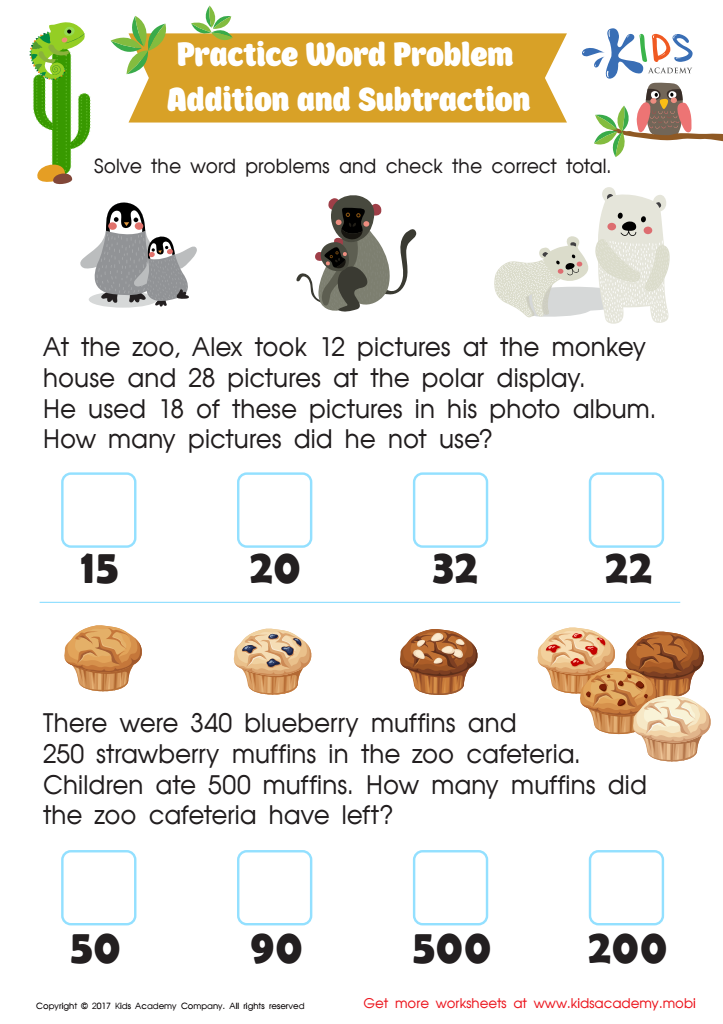
Addition and Subtraction: Word Problems Worksheet
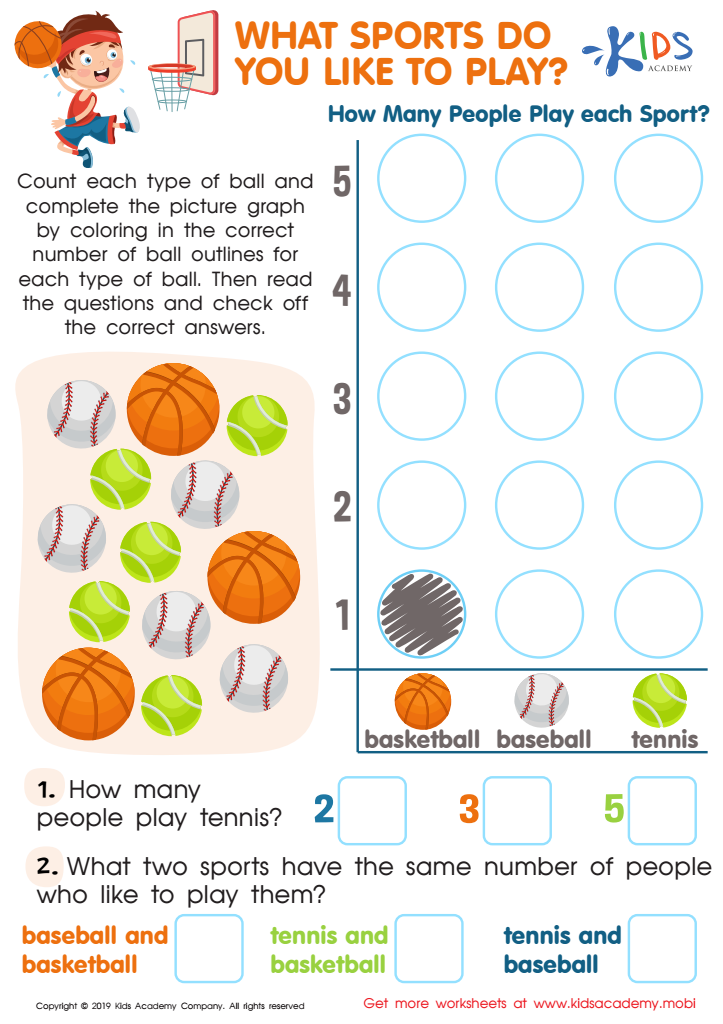
What Sports Do You Like to Play Worksheet
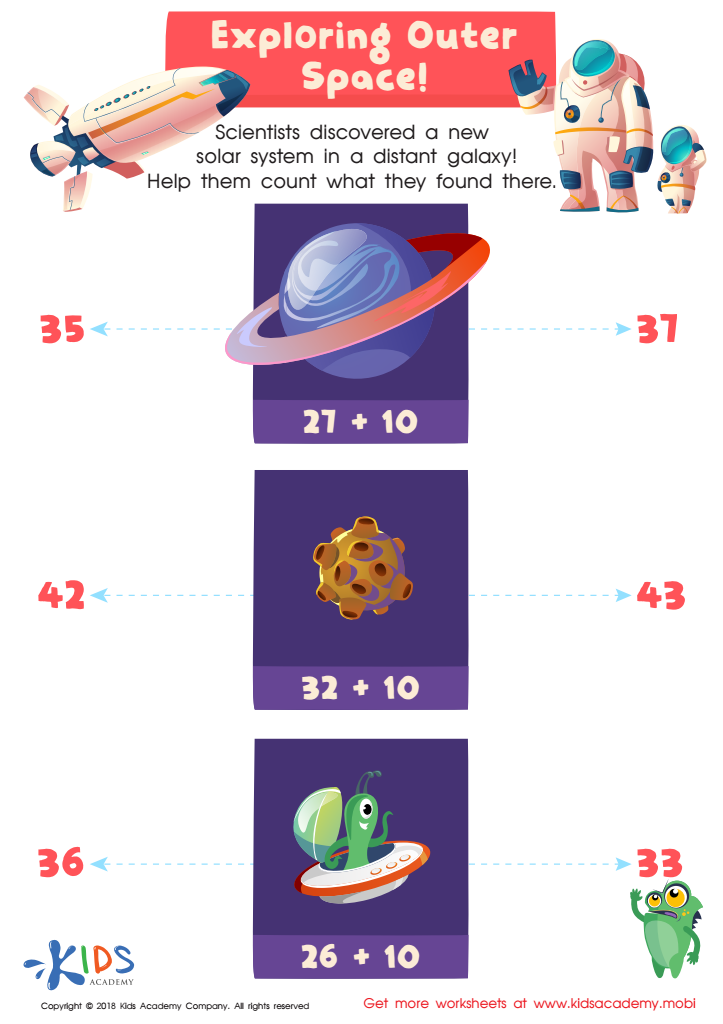
Exploring Outer Space Worksheet








Reading comprehension is a fundamental skill that underpins a child's academic success across all subjects, including mathematics. When students can read and understand mathematical problems, they can effectively apply normal addition and subtraction concepts in real-life situations. Parents and teachers should care about this link because strong reading skills enhance a child’s ability to interpret math problems, fostering critical thinking and problem-solving abilities.
Furthermore, comprehension skills help children grasp the significance of numbers and operations in context. For instance, when they read a word problem, they must identify key information, deduce what is being asked, and determine the appropriate mathematical operation to solve it. This process integrates literacy with numeracy, reinforcing both skill sets simultaneously.
Engaging in activities that promote reading comprehension alongside basic math skills also nurtures a child's confidence. When children understand what they read, they are more likely to engage positively with math, reducing anxiety.
Ultimately, a strong foundation in reading comprehension creates learners who are equipped to tackle future challenges across all subjects. Therefore, it is essential for parents and teachers to prioritize this development for a well-rounded education, laying the groundwork for lifelong learning.








