Spatial reasoning Normal Geometry Worksheets
3 filtered results
-
From - To
Enhance your child's spatial reasoning skills with our Spatial Reasoning Normal Geometry Worksheets! Designed for early learners, these printable worksheets provide engaging activities that foster understanding of shapes, spatial relationships, and geometric concepts. Through fun exercises, children practice visualizing and manipulating objects, improving their ability to think critically and solve problems. Each worksheet is designed to cater to different skill levels, ensuring that every child can develop confidence in their geometry skills. Compatible with various learning styles, our resources will make geometry enjoyable and accessible. Explore our collection today and empower your child to excel in mathematics!
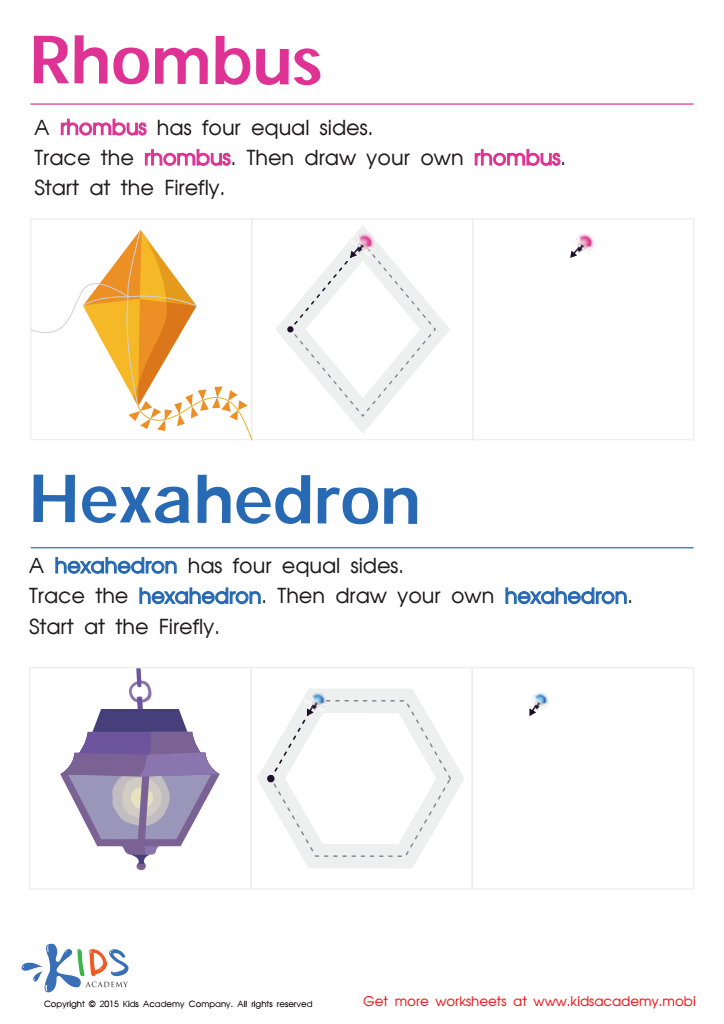
Draw a Rhombus And a Hexahedron Printable
 Assign to My Students











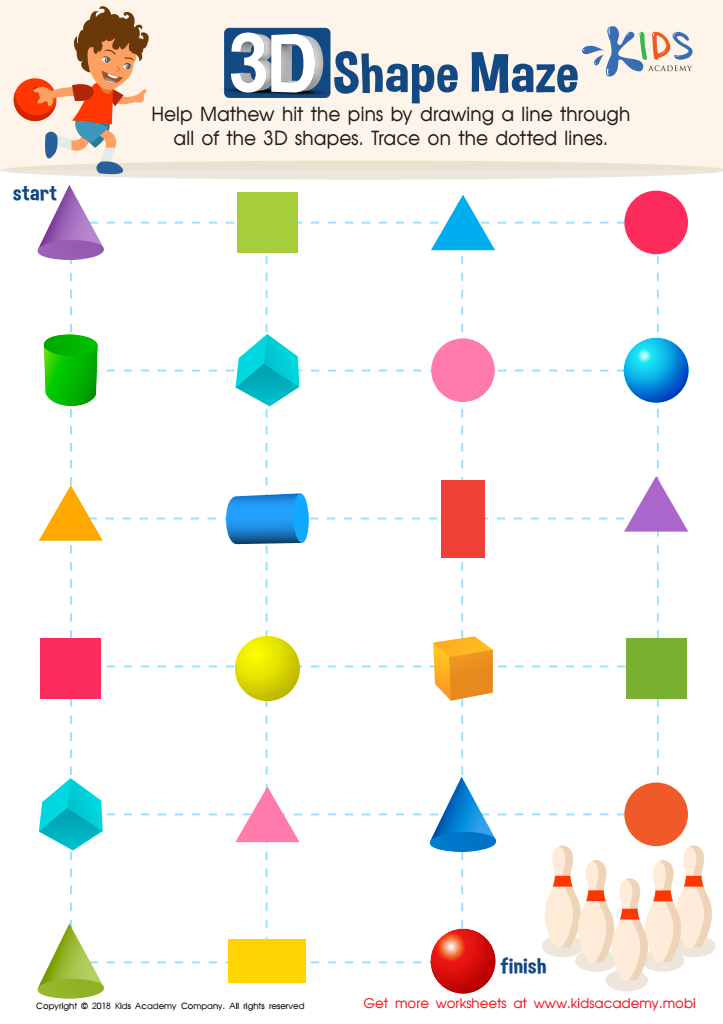
Shapes Maze Geometry Worksheet
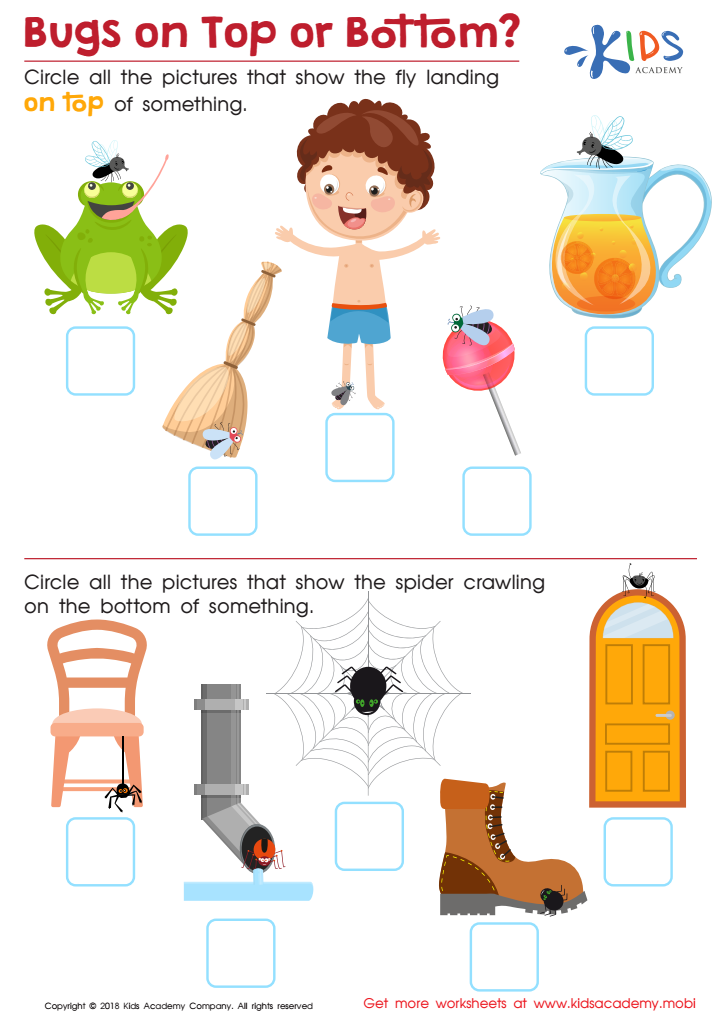
Bugs on Top or Bottom? Worksheet








Spatial reasoning and understanding of normal geometry play a crucial role in a child's cognitive development and overall academic performance. Parents and teachers should care about these areas because spatial reasoning is linked to problem-solving skills and the ability to think three-dimensionally, which is vital in subjects like mathematics and science.
When children grasp geometric concepts, they enhance their ability to visualize and manipulate objects in space, aiding in everyday tasks and advanced learning. For instance, spatial reasoning skills are foundational for fields such as architecture, engineering, and technology—areas that are increasingly important in our rapidly evolving world.
Moreover, fostering spatial reasoning can boost children's confidence in math, leading to a positive attitude toward learning and exploration. Engaging activities, such as puzzles, building blocks, and interactive spatial games, stimulate this type of thinking and make learning enjoyable.
Incorporating spatial reasoning and geometry into early education can bridge the gap in STEM education and equip children with essential life skills. Hence, parents and teachers should prioritize these skills, recognizing their long-term impact on children's educational and career opportunities. Ultimately, nurturing spatial awareness sets the cornerstone for balanced cognitive development and critical thinking abilities.








